#1 Overall Winner
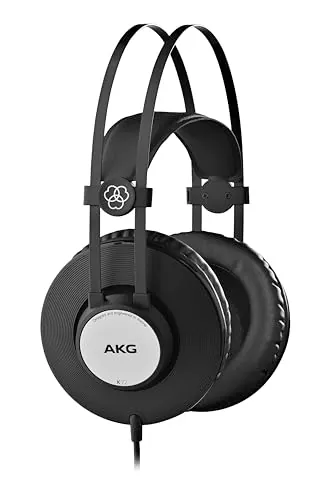
AKG Pro Audio K72 Over-Ear Closed-Back Studio Headphones
- Comfort-focused fit with a self-adjusting headband and lightweight over-ear design (strong usability scoring and repeated review praise).
Comparison
The AKG K72 and AKG K92 are both wired, closed-back, over-ear studio headphones built around 40mm drivers and aimed at monitoring, tracking, and everyday listening. In the provided scoring, the K72 comes out slightly ahead overall thanks to stronger usability/comfort and satisfaction, while the K92 posts a small edge in audio quality/performance. If comfort and easy long sessions are the priority, the K72 is the safer pick; if you want the best audio score of the two, the K92 has the advantage.
#1 Overall Winner
Contender
Choose the AKG K72 if you want the most comfortable, easy-to-live-with option in this pair, with strong value and high satisfaction in the provided data.
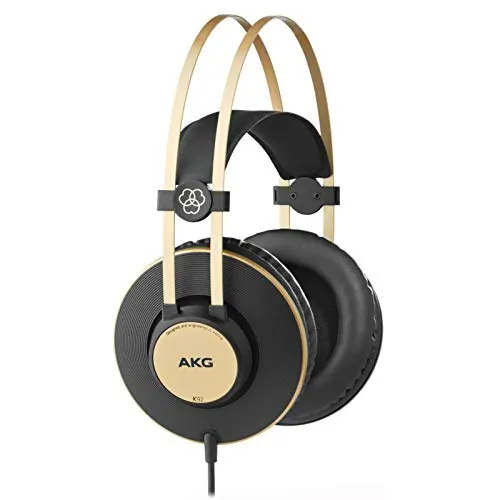
Choose the AKG K92 if you’re prioritizing the slightly higher audio/performance scoring and like the idea of a neutral, studio-oriented presentation, and you’re not sensitive to ear-pad sizing.
Overall winner
Depends on your needs
| Feature | AKG Pro Audio K72 Over-Ear Closed-Back Studio Headphones | AKG K92 Closed-back studio headphones | Winner |
|---|---|---|---|
| Overall score | Higher (79) | Slightly lower (78) | AKG Pro Audio K72 Over-Ear Closed-Back Studio Headphones |
| Audio quality score | 81 | 82 | AKG K92 Closed-back studio headphones |
| Performance score | 78 | 80 | AKG K92 Closed-back studio headphones |
| Usability score | 84 | 76 | AKG Pro Audio K72 Over-Ear Closed-Back Studio Headphones |
| Build quality score | 62 | 62 | Tie |
| Design score | 82 | 74 | AKG Pro Audio K72 Over-Ear Closed-Back Studio Headphones |
| Driver type / size | Dynamic, 40mm | Dynamic, 40mm | Tie |
| Impedance | 32 ohms | 32 ohms | Tie |
| Sensitivity | 112 dB | 113 dB | Tie |
| Stated frequency range | 16 Hz–20 kHz | 16 Hz–20 kHz (details also mention up to 22 kHz) | AKG K92 Closed-back studio headphones |
| Included adapter | 3.5mm to 1/4-inch screw-on adapter | 3.5mm to 1/4-inch screw-on adapter | Tie |
| Cable information provided | Long cord noted in reviews (length not specified in specs) | 3m cable (listed) | AKG K92 Closed-back studio headphones |
| Customer rating (stars) | 4.4/5 | 4.4/5 | Tie |
| Review count | 4,512 | 5,656 | AKG K92 Closed-back studio headphones |
| Customer satisfaction score | 88 | 84 | AKG Pro Audio K72 Over-Ear Closed-Back Studio Headphones |
In real-world terms for studio headphones, “performance” mostly comes down to whether you can hear detail reliably and make monitoring decisions confidently. The provided scoring gives the AKG K92 a small lead on performance and audio quality, aligning with its product positioning around neutral, accurate reproduction.
The AKG K72 still performs well for its class and is widely described as clear and suitable for monitoring, but several reviews indicate it can sound flatter from weaker sources and improves with a better amp/DAC. If you’ll be driving the headphones from an audio interface or dedicated headphone output, either can work; if your source is inconsistent, the K72’s “scales with amplification” feedback is worth considering.
Neither model is free of negative feedback. The AKG K72 has mixed reliability/durability sentiment with notable cable/wire concerns mentioned in both the aggregated summary and individual reviews. The AKG K92 also has mixed feedback (including a strong negative review), but its reliability score is slightly higher in the provided scoring.
If reliability is your top priority, consider how you’ll handle and store them; both appear to benefit from careful cable management and avoiding strain at the entry point.
The AKG K72 is the stronger pick for usability in the provided scoring. Review feedback emphasizes that it’s very lightweight and comfortable for multi-hour sessions, which directly impacts day-to-day use (editing, tracking, practice).
The AKG K92 is also frequently described as comfortable for long sessions, but it has more notable fit-related risk from the provided reviews, including a complaint about insufficient inside ear clearance for large ears. If you’re sensitive to pressure points or have larger ears, usability may depend on how the ear cups fit you in practice.
The provided scoring favors the AKG K72 on design. Both models use an over-ear, closed-back form factor with self-adjusting headbands intended to reduce pressure hotspots. The K72’s design feedback leans heavily toward “light and comfortable,” while the K92’s design perception is more mixed due to ear-pad sizing complaints from some users.
Both headphones land at the same build-quality score in the provided dataset, and both have some mixed feedback. The K72 is clearly positioned as plastic construction and has mixed durability reports, including wire/cable break concerns. The K92 also receives at least one blunt complaint that it feels extremely cheap, while other reviews are positive overall.
Given the similar scoring, the practical takeaway is to treat both as budget studio tools: avoid yanking the cable, store them carefully, and don’t assume premium materials based on appearance alone.
Durability is close between the two in the provided scoring, with the K92 slightly higher. The K72 has more explicit user complaints about wire/cable breakage, while K92 reviews include both praise and criticism about overall quality.
For either model, durability will likely come down to handling: avoid twisting the cable, don’t toss them in a bag unprotected, and reduce repeated bending near the ear-cup connection.
Both can work as portable wired headphones, but they’re still full-size over-ear studio models. The AKG K72 scores slightly higher for portability in the provided scoring, aligning with frequent comments about being very light and comfortable.
The AKG K92 is also described as lightweight and is easy to use anywhere you have a headphone jack, but portability will still depend on your willingness to carry full-size headphones and manage a long cable.
Feature-wise, these are both straightforward wired studio headphones rather than app-driven or wireless models. Both include a screw-on 3.5mm-to-1/4-inch adapter, which is helpful for interfaces and mixers, and both use a closed-back over-ear design focused on isolation.
The AKG K92 listing explicitly calls out a 3m cable, while the K72 has “long cord” feedback in reviews but no length stated in the provided specs. Beyond that, the core “features” are similar: simple wired operation, studio-oriented intent, and comfort-focused headband design.
Setup is simple for both because they’re wired headphones: plug in via 3.5mm (or use the included 1/4-inch adapter) and start monitoring. The provided setup scores slightly favor the AKG K72, but both are high and both avoid the typical setup friction of wireless pairing, apps, or firmware.
The only “setup” variable that matters here is your source: some K72 owners report better results with a stronger headphone output (DAC/amp). If you’re monitoring from an interface or amp already, setup should be quick for either.
Both are compatible with common analog headphone outputs via 3.5mm, and both ship with a screw-on adapter for 1/4-inch studio jacks. The product listing for the K92 explicitly calls out desktops, laptops, tablets, and mobile phones, while the K72 specifies devices with a 3.5mm jack or compatible adapter.
The provided scoring rates the K72 higher for compatibility, which may reflect fewer reported issues in the dataset, but either should be a straightforward match for most headphone jacks and interfaces.
On audio quality, the scoring gives a slight edge to the AKG K92. Its description emphasizes neutral monitoring and accurate reproduction, and reviews often describe clear, well-balanced playback suitable for detailed listening and recording work.
The AKG K72 is also well-regarded for sound at its price, with users noting clear monitoring and solid bass definition, but there are repeated comments that it can sound better when properly driven (DAC/headphone amp). If you value plug-and-play consistency from weaker devices, pay close attention to your source gear; if you already have solid headphone output, both can be effective.
Both headphones are wired with a 3.5mm jack and include a 3.5mm-to-1/4-inch adapter, making them broadly usable with phones (where supported), laptops/desktops, and many audio interfaces.
In the provided scoring, the AKG K72 rates higher for connectivity/compatibility than the AKG K92. Practically, connectivity is still simple for both (no pairing, no apps), but the K92 listing includes some inconsistent spec fields, so it’s worth double-checking the exact cable/plug details on the seller’s page before ordering.
On value, this is close: both have strong value scoring in the provided data and both are widely reviewed with the same star rating. The AKG K72 combines high satisfaction and usability scoring with strong value sentiment, which makes it an easy recommendation for buyers prioritizing comfort-per-dollar.
The AKG K92 competes well by pairing strong audio/performance scoring with broad adoption (higher review count). If you want the higher audio score without paying for extra features you won’t use, the K92 can still represent strong value—assuming the fit works for your ears.
Both models come from AKG, which helps keep brand familiarity consistent across the comparison. In the provided scoring, brand-trust is higher for the AKG K72 than the AKG K92, but both benefit from being part of the same studio-oriented product family.
If brand trust and purchase confidence matter, focus on seller legitimacy and returns: the K72 listing notes that the manufacturer’s limited warranty applies only when purchased from authorized North American dealers.
Both headphones have 4.4/5 stars with thousands of reviews, which indicates broadly positive customer sentiment. The AKG K92 has the higher review count (more buyer volume), while the provided scoring rates the AKG K72 higher for customer satisfaction.
Review themes overlap: comfort and value are frequently praised. The most repeated negatives are also similar—mixed build/durability impressions and mixed isolation/fit outcomes—so your experience may depend heavily on head/ear fit and how you use and store the headphones.
Warranty/support details are limited in the provided data. The AKG K72 listing mentions a manufacturer’s limited warranty that applies only when purchased from AKG authorized North American dealers. For the AKG K92, no warranty/support specifics are provided in the dataset.
If warranty coverage matters, confirm the seller’s authorization status and keep documentation, and review the return window before buying either model.
Between these two budget AKG closed-back studio headphones, the AKG K72 is the best overall pick on the provided scoring, driven by stronger usability/comfort, high satisfaction, and a consistently good value profile. It’s the safer choice if you’ll wear headphones for hours at a time and want a straightforward monitoring tool for tracking and practice.
The AKG K92 is still a strong alternative and may be the better option if your decision is primarily about audio/performance scoring and you want the model that rates slightly higher for sound in the dataset. However, pay attention to fit (especially for larger ears) and manage expectations about isolation in very noisy environments. With similar pricing and star ratings, your best choice comes down to comfort priorities vs a small edge in audio scoring.
Overall winner
Depends on your needs
Based on the provided scoring, the AKG K72 has a slightly higher overall score, driven by stronger usability/comfort and broad satisfaction signals. The AKG K92 scores a bit better for audio quality/performance in the breakdown, so the “better” choice depends on whether you prioritize comfort/ease of use (K72) or a small edge in audio scoring (K92).
The provided audio-quality score favors the AKG K92 by a small margin, and its product positioning emphasizes a neutral signature and accurate reproduction. The AKG K72 is also repeatedly described in reviews as clear and suitable for basic recording monitoring, but some users report it improves noticeably with a stronger headphone amp/DAC.
Both models highlight a self-adjusting headband and lightweight over-ear design, and both have reviews praising long-session comfort. In the provided score set, the AKG K72 rates higher for usability, aligning with repeated comments about wearing them for hours without discomfort. Fit is still individual, and both have some mixed fit/ear-pad feedback.
Both are marketed as closed-back designs aimed at reducing leakage and outside noise. Real-world feedback is mixed: the K72 has reviews praising isolation but also complaints of severe leakage, while the K92 is described as good for keeping sound out of a microphone by at least one recording-focused reviewer, yet the provided interpretation notes only average isolation in very noisy environments.
Neither product data says an amp is required, and both are 32 ohms with high sensitivity on paper. However, multiple AKG K72 reviews specifically mention the sound opening up when used with a better DAC/headphone amp, while sounding flatter or muffled from weaker outputs. For the AKG K92, reviews also mention benefits from amplification/EQ, but less consistently.
Both models are positioned as closed-back headphones designed to reduce leakage. If you want the most direct evidence from the provided reviews, the AKG K92 has a detailed review from an audiobook narrator stating it helped prevent sound from leaking into the microphone while recording. The AKG K72 is designed for the same goal, but user reports on leakage are more mixed.
Neither model has uniformly positive durability feedback. The AKG K72 has mixed durability reports, including mentions of wires breaking. The AKG K92 also has mixed comments on build feel, including at least one negative review about cheap feel and sound. In the provided scoring, reliability/durability slightly favor the K92, but not by a wide margin.
Both are wired 3.5mm headphones and include a 3.5mm-to-1/4-inch screw-on adapter, which helps with many audio interfaces, mixers, and headphone amps. The K72 product data explicitly mentions compatibility with devices that have a 3.5mm jack (or adapter). The provided scoring rates the K72 higher for compatibility than the K92, but both are broadly oriented to standard analog outputs.
Check our rankings and expert guides to find the best electronics products for your goals.