#1 Overall Winner
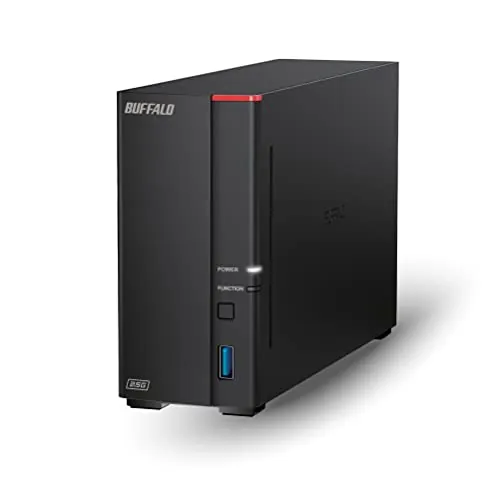
BUFFALO LinkStation 710 2TB 1-Bay NAS
- Centralized 2TB network storage with the hard drive included.
Comparison
The BUFFALO LinkStation 710 and fanxiang S101 are storage products with very different jobs. Choose the LinkStation for shared 2TB network storage, backups, and personal-cloud features; choose the S101 for a faster 128GB local SATA upgrade in a compatible computer. The fanxiang leads on overall score, but the BUFFALO is the relevant choice when NAS functionality is required.
#1 Overall Winner
Contender
Choose the BUFFALO LinkStation 710 for centralized home storage, backup automation, shared folders, and remote-access features. Choose the fanxiang S101 for a compatible laptop or desktop that needs faster local storage and boot performance. For essential files, use either product alongside at least one additional backup.
Overall winner
Depends on your needs
| Feature | BUFFALO LinkStation 710 2TB 1-Bay NAS | fanxiang S101 128GB SATA SSD | Winner |
|---|---|---|---|
Product type |
1-bay network-attached storage |
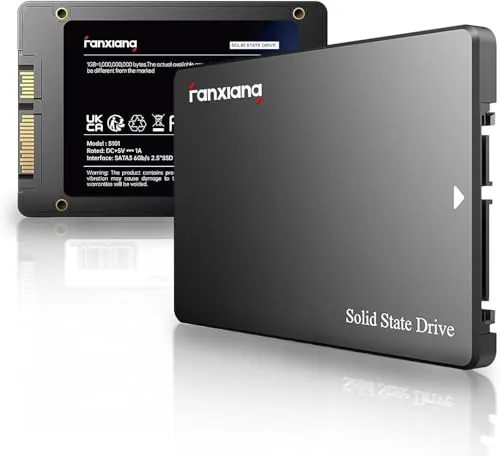
2.5-inch internal SATA SSD |
Depends |
Included capacity |
2TB |
128GB |
BUFFALO LinkStation 710 2TB 1-Bay NAS |
Local speed focus |
Mixed network-speed feedback |
Up to 500MB/s read |
fanxiang S101 128GB SATA SSD |
Network sharing |
Ethernet NAS with shared folders |
No direct network function |
BUFFALO LinkStation 710 2TB 1-Bay NAS |
Backup tools |
PC backup software and automated backups |
No backup tools stated |
BUFFALO LinkStation 710 2TB 1-Bay NAS |
Cloud features |
Personal cloud and Dropbox, Azure, OneDrive sync |
None stated |
BUFFALO LinkStation 710 2TB 1-Bay NAS |
Installation |
Router connection and software configuration |
Internal SATA installation |
fanxiang S101 128GB SATA SSD |
Portability |
Compact NAS, 1.66kg |
Small internal SSD |
fanxiang S101 128GB SATA SSD |
Reliability feedback |
Mixed; failures reported |
Tie |
Compatibility |
Windows and macOS stated; mixed review feedback |
Compatible systems stated; mixed recognition feedback |
Tie |
Warranty coverage |
Two-year warranty including hard drive |
Three-year quality assurance |
fanxiang S101 128GB SATA SSD |
Overall buyer satisfaction |
3.9/5 from 3,254 reviews |
4.5/5 from 23,083 reviews |
fanxiang S101 128GB SATA SSD |
The fanxiang S101 is the better performer for local computer storage. Its stated read speed reaches up to 500MB/s, and buyers frequently report noticeably faster boot times, application loading, and transfers compared with a hard drive. The BUFFALO LinkStation 710 is not intended as an internal performance upgrade; it serves files over a network. Some users find it fast for their needs, while others describe slow transfers, so performance depends on the network and workload.
The fanxiang S101 wins on speed for a local installation, with up to 500MB/s stated read speed and strong review feedback for boot and transfer improvements. The LinkStation is a network storage appliance rather than a direct-attached SSD, and its speed score and customer feedback are more mixed. It can work well for central storage and backups, but it is not the choice for making one computer feel faster.
Reliability is a caution area for both products. The LinkStation’s review overview notes that some units work well while others fail, and its single-drive design does not provide built-in redundancy. The S101 also has mixed reliability feedback, including reports of drives that stopped working after use. Use a layered backup plan, verify restore procedures, and avoid relying on either unit as the sole copy of vital data.
The S101 is generally easier for users with a compatible SATA bay because installation is commonly described as straightforward and it requires no network administration. The LinkStation can be simple when the quick-start process works, but it has more configuration steps. Reviews mention difficulty with discovery software, permissions, shares, and navigating the interface. The NAS is more capable, but the SSD has the lower everyday management burden.
The BUFFALO is designed to remain beside a router as always-available shared storage, measuring 8.07 by 1.77 by 5.02 inches. The fanxiang is a 2.5-inch internal SATA drive intended to disappear inside a laptop, desktop, or compatible device. The LinkStation is more practical for a shared home network; the S101 is more practical where compact internal storage is required.
The LinkStation is a complete 1.66kg network appliance with a compact black enclosure, installed HDD, Ethernet cable, and power adapter. The S101 is a lightweight solid-state internal component designed to sit inside a compatible device. Neither product has uniformly strong long-term durability feedback: the LinkStation has reports of device failures, while some S101 users report failure after use. Their physical designs are optimized for different environments rather than directly comparable build goals.
The S101’s solid-state construction avoids the moving parts of a conventional hard drive, while the LinkStation includes an HDD inside a NAS enclosure. However, the provided review data does not establish a clear durability winner. Both have mixed reliability-related feedback, and the LinkStation’s one-bay configuration increases the impact of a single drive failure. The S101 has a stated three-year quality assurance period compared with the LinkStation’s stated two-year warranty.
The fanxiang S101 is more portable as a small internal SSD, though it needs a host device or compatible enclosure to be used externally. The LinkStation is compact for a NAS but is designed to stay connected to mains power and a router. It is more transportable than a large server, yet it is not a travel-oriented storage device.
The LinkStation 710 has the broader feature set: personal-cloud access, automated backups, NAS management software, folder-level access restrictions, SSL-encrypted transfers, and Dropbox, Azure, and OneDrive synchronization. The S101 offers a straightforward storage upgrade rather than a software platform. Its relevant features are the 2.5-inch SATA interface, 128GB capacity, and 3D NAND TLC chips. Choose the NAS for storage services and the SSD for simple internal capacity and speed.
The LinkStation includes NAS Navigator and backup software, but software experience is mixed. Some reviewers find setup and the web interface simple, while others describe navigation, detection, permissions, and documentation as difficult. No companion app or management software is stated for the fanxiang S101, so there is little app experience to assess; it is managed through the host device’s operating system.
The LinkStation is the clear winner for connected features, with personal-cloud access, remote file access, user permissions, SSL encryption, automated backup support, and selected cloud-service synchronization. The fanxiang S101 has no smart or cloud functions stated. It is a conventional internal SSD whose value comes from local storage performance rather than connected services.
The S101 has the easier setup path when the computer has an available compatible 2.5-inch SATA connection. Reviews often report simple installation, although cloning, formatting, firmware settings, or recognition issues can occur. The LinkStation requires connection to a router, software installation, updates where needed, and configuration of folders or permissions. Its quick-start guide works well for some users, but network and software issues make the process less consistent.
The LinkStation is stated to support Windows and macOS 26 and connects through a home network, but reviews report some Windows, Mac M1, and network-recognition problems. The S101 is stated to work with desktops, laptops, all-in-one PCs, and Windows, Linux, and Mac OS environments, yet some reviews report that systems or adapters did not recognize it. Confirm the LinkStation’s network environment or the S101’s 2.5-inch SATA support before buying.
The LinkStation 710 connects by Ethernet to a router and is built for multi-device network access. It also supports cloud synchronization with Dropbox, Azure, and OneDrive. The S101 connects through SATA 6Gb/s inside a compatible device and has no direct networking capability. The LinkStation has more connectivity scope, but its review feedback includes network connection issues; the S101 requires a compatible SATA interface and has some recognition-related review complaints.
The S101’s solid-state design is better suited to low-power local storage, while the LinkStation is intended to remain connected as shared network storage. The provided data does not include measured energy use for either product. The LinkStation’s always-available role may be worthwhile for central access and backups, whereas the S101 is the more natural fit for an efficient internal upgrade.
Value depends on the required storage role. The fanxiang S101 has stronger value feedback and a lower stated price, but that advantage is meaningful primarily for buyers needing a 128GB internal SATA SSD. The LinkStation costs more because it includes 2TB of storage, a network enclosure, backup tools, access controls, personal-cloud functions, and cloud integration. It offers better functional value only for users who will use those NAS capabilities.
BUFFALO has the stronger brand-trust result in the provided scoring and states that the LinkStation is made in Japan with 24/7 US-based support. However, review experiences with support and software are not uniformly positive. fanxiang has a lower brand-trust result but a much stronger customer-satisfaction result for this SSD listing. Neither product’s review data removes the need for careful backup planning and compatibility checks.
The fanxiang S101 has stronger customer satisfaction, with a 4.5/5 rating from 23,083 reviews versus 3.9/5 from 3,254 reviews for the LinkStation. S101 reviews often praise value, speed, and installation, although failures and recognition issues are reported. LinkStation buyers praise central storage, backup features, and compact design, but comments are more divided on reliability, speed, software usability, compatibility, and connectivity.
The LinkStation listing states a two-year warranty that includes the hard drive and 24/7 US-based support. The S101 states a three-year quality assurance period. The S101 therefore offers the longer stated coverage period, while the LinkStation provides more clearly described live support availability. A negative LinkStation review raises concerns about data-recovery costs, so buyers should read the coverage terms and avoid assuming recovery of data is included.
The fanxiang S101 is the best overall option only for buyers seeking affordable, fast local storage in a compatible computer. It has the stronger overall score, higher buyer rating, and better results for speed, setup, usability, value, and customer satisfaction. Its 128GB capacity and SATA-only internal design, however, make it unsuitable as a replacement for shared home storage.
The BUFFALO LinkStation 710 remains the better purchase for its intended NAS role. It includes 2TB of storage and adds centralized backups, shared access, permissions, SSL file transfers, personal-cloud functions, and cloud sync. Its weaker reliability, compatibility, connectivity, and software feedback mean buyers should configure it carefully and maintain another copy of important data. The right choice is determined by whether you need a network storage service or a local SSD upgrade.

Overall winner
Depends on your needs
They serve different purposes. The BUFFALO LinkStation 710 is the more suitable choice for shared network storage, automated backups, remote file access, and family file sharing. The fanxiang S101 is better for increasing the local speed of one compatible laptop or desktop. Its higher overall score reflects strong speed, setup, value, and customer-satisfaction results, not a replacement for NAS functionality.
No. The S101 is a 128GB internal 2.5-inch SATA SSD that installs in a compatible device. It does not connect to a router as shared storage and does not provide the LinkStation’s personal-cloud access, user permissions, automated multi-computer backup tools, or cloud synchronization. It can be local storage within a computer that also accesses a NAS.
For a compatible computer’s local operating system, apps, and files, the fanxiang S101 is the stronger option. It lists read speeds up to 500MB/s, and reviews often mention quicker booting and more responsive laptops. The LinkStation is designed for network storage instead; its real transfer performance depends on the network, and reviews provide mixed speed feedback.
The BUFFALO LinkStation 710 is better suited to this task because it is network attached and includes PC backup software, NAS Navigator, and automated-backup support. It can centralize files from multiple devices. However, its single-bay design has no built-in redundancy, so important data should also be retained in another backup location.
Experiences are mixed. Several reviews describe straightforward setup using the quick-start guide, and the product includes 24/7 US-based installation support. Other reviewers report problems with software discovery, permissions, share configuration, and network connectivity. It is more involved than fitting an internal SSD, especially for users unfamiliar with network settings.
Reviews commonly describe installation as straightforward in compatible desktops and laptops, and the product has a strong setup score. Buyers still need to confirm that their device accepts a 2.5-inch SATA drive rather than another interface. Some review feedback reports recognition or cloning issues, so checking the drive in the system firmware and operating system is sensible.
Neither product has consistently strong reliability feedback. Both have mixed reports, including cases of drive failure. The LinkStation adds central backup and security features but remains a single-drive NAS without redundancy. The S101 is a simple internal SSD with a three-year quality assurance period. For either option, maintain additional copies of important data.
The fanxiang S101 has the stronger value result for buyers who only need a small, fast local SATA SSD, with many reviews praising its budget upgrade benefits. The LinkStation costs more but includes a 2TB drive, networking hardware, backup utilities, personal-cloud features, and cloud integration. Its value is stronger when those NAS-specific capabilities are genuinely needed.
Check our rankings and expert guides to find the best electronics products for your goals.