#1 Overall Winner
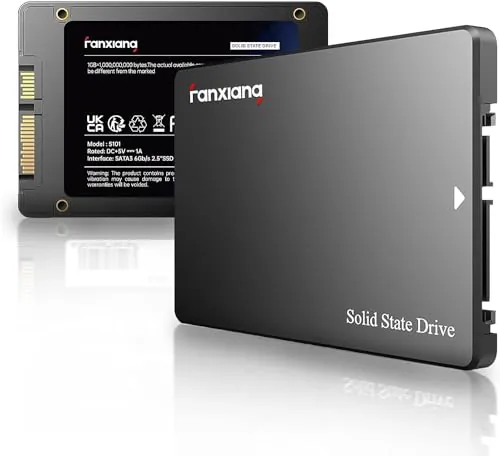
fanxiang S101 512GB SSD
- Uses a 2.5-inch SATA III form factor for upgrades to compatible laptops and desktops.
Comparison
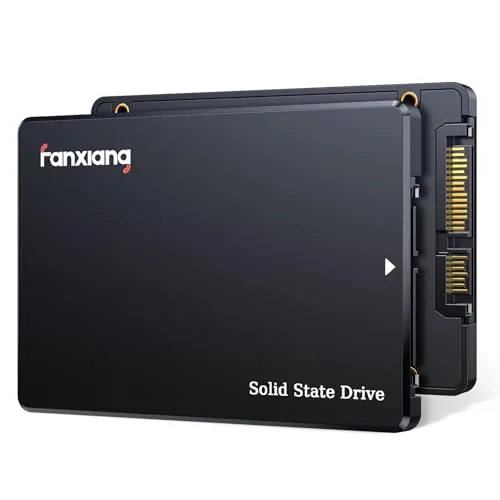
The fanxiang S101 and fanxiang S101Q are 512GB 2.5-inch SATA SSDs aimed at upgrading compatible laptops and desktops from mechanical hard drives. The S101Q is the stronger all-round option in the supplied scores, with slightly higher listed speeds and more stated drive-management features, while the S101 offers a larger base of customer feedback and a stated TLC NAND configuration.
#1 Overall Winner
Contender
Choose the S101Q for the more complete feature list, higher stated speed figures, stronger setup and compatibility scores, and better overall balance. Choose the S101 if its stated TLC NAND and much larger review base matter more to you, provided you are comfortable with its more mixed reports of recognition and reliability.
Overall winner
Depends on your needs
| Feature | fanxiang S101 512GB SSD | fanxiang S101Q 512GB SATA SSD | Winner |
|---|---|---|---|
| Capacity | 512GB | 512GB | Tie |
| Form factor | 2.5-inch | 2.5-inch | Tie |
| Interface | SATA 6Gb/s | SATA III 6Gb/s | Tie |
| Listed read speed | Up to 550MB/s | Up to 560MB/s | fanxiang S101Q 512GB SATA SSD |
| Listed write/media speed | 450MB/s media speed | Up to 490MB/s write | fanxiang S101Q 512GB SATA SSD |
| Flash and cache details | 3D NAND TLC listed | 3D NAND with SLC cache listed | Depends |
| Listed management features | Not specified | TRIM, S.M.A.R.T., ECC, RAID, wear leveling, garbage collection | fanxiang S101Q 512GB SATA SSD |
| Setup | Easy-install feedback; some cloning issues | Strong easy-install feedback | fanxiang S101Q 512GB SATA SSD |
| Compatibility | Windows, Linux, Mac OS; mixed feedback | Windows, Linux, Mac OS; SATA backward compatibility | fanxiang S101Q 512GB SATA SSD |
| Reliability feedback | Mixed; failure and detection reports | Mostly positive but some early-failure concerns | fanxiang S101Q 512GB SATA SSD |
| Customer rating | 4.5/5 from 23,083 reviews | 4.5/5 from 5,646 reviews | Tie |
| Support statement | 3-year quality assurance | 3-year after-sales service; lifetime technical support | fanxiang S101Q 512GB SATA SSD |
| Overall assessment | Overall score: 68 | Overall score: 80 | fanxiang S101Q 512GB SATA SSD |
Both drives are designed to make SATA-based systems feel more responsive than they do with mechanical hard drives, and reviews for both describe faster startup and application loading. The S101Q has the edge on the supplied performance score and listed specifications, with up to 560MB/s read and 490MB/s write compared with the S101's up-to-550MB/s read and 450MB/s media speed. The real-world difference may be modest in ordinary desktop use, but the S101Q is the better-supported choice on the available data.
The S101Q wins the speed comparison on both provided scoring and listed figures. It is rated for up to 560MB/s read and 490MB/s write, while the S101 is rated for up to 550MB/s read with 450MB/s media speed. Both remain SATA drives, so their performance ceiling is determined by the SATA interface rather than the much higher potential speeds associated with NVMe storage.
Reliability is a caution area for both drives. The S101's feedback includes reports of failures after use and inconsistent recognition, producing the lower supplied reliability score. The S101Q scores better and many reviews report normal operation, but there are still reports of early failure and one serious capacity-related complaint involving a different capacity variant. Neither option should be the sole storage location for important files; retain independent backups.
Both drives are generally described as straightforward upgrades, particularly when replacing an older hard disk. The S101Q has the stronger usability score and reviews mention uncomplicated installation. The S101 also receives frequent praise for easy installation, but some users encountered formatting, cloning, BIOS/UEFI, or detection issues. For the smoother first-time upgrade experience, the supplied evidence favors the S101Q.
These are very similar physically: both are slim 2.5-inch SATA drives measuring 3.94 inches long and 0.28 inches thick. The S101Q is slightly wider at 2.75 inches versus 2.72 inches for the S101, a difference unlikely to affect a standard 2.5-inch bay. The S101Q has a higher design score, but neither drive offers a meaningful form-factor advantage for a typical internal installation.
The S101Q has the higher supplied build-quality score and is described in reviews as well made. Its listing also identifies shock resistance. The S101 uses an ABS+PC enclosure, while the S101Q lists a polycarbonate enclosure. Neither listing provides enough detail for a definitive materials comparison, but the S101Q has the stronger available build-quality assessment.
The S101Q has the higher durability score and its listing explicitly describes it as shockproof, supported by stated data-protection-oriented features. The S101 highlights TLC NAND as offering a longer write lifespan than QLC in its product description. Both are solid-state drives without moving parts, but the available evaluation gives the S101Q a modest edge while the S101's TLC claim remains relevant for buyers focused on the stated flash type.
Both SSDs are compact, lightweight 2.5-inch drives that can also be used in a compatible SATA-to-USB enclosure. The S101 weighs 0.13 pounds, while the S101Q weighs 1.6 ounces. This difference is minor in practical use, and both are easy to carry compared with larger external storage hardware. The S101Q has a small scoring advantage for portability.
The S101Q has the more detailed listed feature set. Alongside 3D NAND and SLC cache, it states support for garbage collection, wear leveling, RAID, ECC, TRIM, and S.M.A.R.T. The S101 emphasizes its 3D NAND TLC chips and SATA performance but does not list the same set of maintenance and monitoring functions. For buyers comparing the available product information alone, the S101Q is more feature-complete.
The S101Q is the better choice for setup based on its higher setup score and customer feedback describing a simple replacement process. The S101 can also be simple to install, and several reviews report successful cloning or replacement in under a short session. Still, its review set contains more reports of initial formatting, cloning, or recognition problems. New upgraders should prepare installation media or a backup and verify drive detection before relying on either SSD.
Both products are listed for Windows, Linux, and Mac OS on compatible laptops, desktops, and all-in-one computers. The S101Q adds explicit backward compatibility with SATA II and SATA interfaces and earns a much higher compatibility score. Buyers should not treat either product as universally compatible: confirm that the computer has a 2.5-inch SATA bay and connector, rather than an M.2-only or NVMe-only storage arrangement.
Both drives connect through SATA 6Gb/s and require an appropriate internal SATA connection or a compatible external SATA enclosure. The S101Q has the stronger connectivity and compatibility scores and explicitly states backward compatibility with SATA II and SATA interfaces. The S101 supports SATA-600 and is listed for Windows, Linux, and Mac OS, but reviews include more reports of the drive not being recognized. The S101Q is the safer pick where broad interface compatibility is the priority.
Both solid-state drives should avoid the spinning mechanism of a traditional hard drive, and the S101 receives positive feedback for running cool and quiet. The S101Q has the higher supplied power-efficiency score, but neither listing provides comparable measured power-consumption or standby figures. Treat the S101Q as the slight data-led preference rather than a proven large efficiency difference.
With the same listed price, the S101Q offers the better overall value according to the supplied evaluation. It combines slightly higher stated speeds, a more extensive listed feature set, stronger setup and compatibility scores, and a higher overall score. The S101 remains a potentially useful basic upgrade, supported by many more reviews and a TLC NAND claim, but its lower reliability and compatibility scoring weaken its value case. In either case, value depends on confirmed fit with your system and a backup plan.
Both drives come from fanxiang, so this is not a comparison between different brand ecosystems. The S101Q has the higher brand-trust score in the supplied data, driven by its stronger broader evaluation and stated support offering. However, customer reports for both products include reliability concerns, and the available information does not establish a major brand-level distinction beyond the individual listings and their support statements.
Both products have a 4.5/5-star average. The S101 has a much larger review count of 23,083 compared with 5,646 for the S101Q, giving it a broader pool of buyer feedback. However, the S101Q receives the higher customer-satisfaction score, reflecting stronger positive themes around setup, performance, and build quality. Both review profiles still include negative reports, particularly around failure or detection issues.
The S101 lists a three-year quality assurance. The S101Q lists three years of after-sales service and lifetime technical support, which supports its higher warranty-and-support score. The exact procedures, exclusions, and retailer return terms are not provided in the source material. Buyers should verify those details before purchase, especially if the drive will be used for operating-system storage or important files.
The fanxiang S101Q 512GB SATA SSD is the best overall option in this comparison. It earns the higher overall score and leads on the supplied measures for performance, features, speed, setup, connectivity, compatibility, reliability, value, and support. Its listed 560MB/s read and 490MB/s write speeds, plus its stated SLC cache and storage-management features, give it a clear advantage on paper.
The fanxiang S101 remains a viable alternative for a compatible SATA upgrade. It has the same capacity and rating, substantially more customer reviews, and a listing that specifies TLC NAND. However, its lower scores and more prominent mixed reports around drive detection, cloning, and reliability make it less compelling at the same listed price. Whichever model you choose, use it only in a confirmed 2.5-inch SATA system and keep independent backups of important files.

Overall winner
Depends on your needs
The fanxiang S101Q 512GB SATA SSD is the stronger overall choice in the supplied scoring, with better results for performance, setup, compatibility, reliability, and value. It also has higher listed read and write speeds and a broader stated feature set. The S101 remains a reasonable option for compatible SATA upgrades, particularly for buyers who value its larger review history and stated TLC NAND.
On the listed specifications, yes. The S101Q is rated for up to 560MB/s read and 490MB/s write, while the S101 is listed at up to 550MB/s read with a 450MB/s media speed. The difference is small for many everyday SATA tasks, but the S101Q also receives the higher supplied speed and performance scores.
Both drives are 2.5-inch SATA internal SSDs intended for compatible laptops and desktops, and reviews describe successful hard-drive replacements. Before buying, confirm that the computer accepts a 2.5-inch SATA drive rather than an M.2 or NVMe drive. It is also sensible to check drive thickness, available mounting hardware, and the method for moving or reinstalling the operating system.
Both products receive positive installation feedback, with reviewers describing them as straightforward upgrades. However, the S101Q has the higher supplied setup score, and its reviews include reports of simple drop-in installation and fast Windows installation. The S101 also has many reports of easy installation, but some buyers experienced cloning or recognition issues that required troubleshooting.
Both listings state compatibility with Windows, Linux, and Mac OS, provided the host device has the required 2.5-inch SATA connection. The S101Q additionally states backward compatibility with SATA II and SATA interfaces. Real-world compatibility feedback is mixed for both products, so confirm the computer interface and update or check BIOS/UEFI settings if the drive is not detected.
The S101Q receives the higher supplied reliability score, but neither drive has entirely consistent feedback. The S101 has reports of failures and recognition issues, while the S101Q has some early-failure reports and a serious complaint involving a higher-capacity variant. For either model, maintain backups and test the drive soon after installation rather than relying on it as the only copy of important data.
The S101Q has the higher value score while carrying the same listed price as the S101. Its advantage is based on its slightly higher stated speeds, broader listed feature set, and stronger supplied scores for setup, compatibility, and reliability. The S101 can still suit a basic SATA upgrade, but its mixed detection and reliability feedback makes the S101Q the more balanced value choice in this comparison.
The S101 listing states a three-year quality assurance. The S101Q listing states three years of after-sales service plus lifetime technical support. Support experience beyond those listing statements is not provided, so buyers should verify the applicable policy and retailer return terms at the time of purchase, especially if the drive will be used for important files.
Check our rankings and expert guides to find the best electronics products for your goals.