#1 Overall Winner
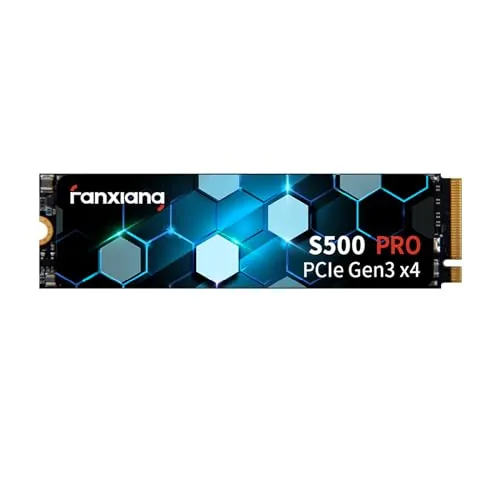
fanxiang S500 Pro 512GB NVMe SSD
- Up to 3200MB/s read and 1300MB/s write ratings for PCIe Gen3x4 storage.
Comparison
The fanxiang S500 Pro is a 512GB PCIe Gen3x4 M.2 SSD that leads this comparison on overall score, usability, value, and customer satisfaction. The fanxiang S660 is the more specialized choice for PS5 owners and users who need 2TB capacity, a heatsink, and higher listed PCIe 4.0 transfer speeds, but its reliability feedback is less reassuring.
#1 Overall Winner
Contender
Choose the fanxiang S500 Pro for a compact PC or laptop upgrade with stronger overall value, setup convenience, and review-backed everyday performance. Choose the fanxiang S660 for a PS5-focused 2TB upgrade with a heatsink and higher stated PCIe 4.0 speed, provided you verify compatibility and are comfortable with the weaker reliability signals in the available feedback.
Overall winner
Depends on your needs
| Feature | fanxiang S500 Pro 512GB NVMe SSD | fanxiang S660 PCIe 4.0 2TB SSD with Heatsink | Winner |
|---|---|---|---|
Compared capacity |
512GB |
2TB |
fanxiang S660 PCIe 4.0 2TB SSD with Heatsink |
Interface |
PCIe Gen3x4 NVMe 1.4 |
PCIe 4.0 NVMe |
fanxiang S660 PCIe 4.0 2TB SSD with Heatsink |
Listed maximum speed |
Up to 3200MB/s read; 1300MB/s write |
Up to 5000MB/s |
fanxiang S660 PCIe 4.0 2TB SSD with Heatsink |
Overall score |
Higher |
Lower |
fanxiang S500 Pro 512GB NVMe SSD |
Performance score |
Higher |
Lower |
fanxiang S500 Pro 512GB NVMe SSD |
PS5 suitability |
Not specifically stated |
Explicit PS5 compatibility |
fanxiang S660 PCIe 4.0 2TB SSD with Heatsink |
Cooling |
Graphite heat-dissipation stickers |
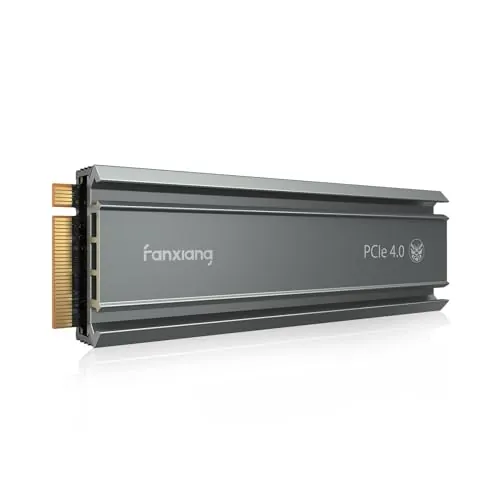
Pre-installed heatsink |
fanxiang S660 PCIe 4.0 2TB SSD with Heatsink |
Setup |
Included screws and screwdriver |
Positive PS5 installation feedback |
Depends |
Reliability score |
Higher |
Lower |
fanxiang S500 Pro 512GB NVMe SSD |
Durability score |
Higher |
Lower |
fanxiang S500 Pro 512GB NVMe SSD |
Compatibility focus |
Windows, macOS, laptops and desktops |
PS5 and PC |
Depends |
Quality assurance |
3 years |
5 years |
fanxiang S660 PCIe 4.0 2TB SSD with Heatsink |
Value score |
Higher |
Lower |
fanxiang S500 Pro 512GB NVMe SSD |
Customer satisfaction score |
Higher |
Lower |
fanxiang S500 Pro 512GB NVMe SSD |
The S660 has the stronger headline hardware proposition: PCIe 4.0, 2TB capacity, a heatsink, and an up-to-5000MB/s rating. These traits are useful for PS5 game storage and compatible PC systems. The S500 Pro is rated up to 3200MB/s read and 1300MB/s write, yet it receives the higher supplied performance and speed scores. Its reviews describe fast booting, responsive systems, quick game loading, and effective everyday operation. In practical terms, the S660 is the better fit for higher-capacity PS5 or PCIe 4.0 use, while the S500 Pro has the stronger evidence-backed overall performance assessment for its class.
On listed specifications, the S660 leads with an up-to-5000MB/s transfer rate versus the S500 Pro’s up-to-3200MB/s read and 1300MB/s write ratings. The S660’s PCIe 4.0 interface can be an advantage in a compatible host. However, the S500 Pro has the higher supplied speed score and multiple reviews noting fast booting, copying, game loading, and general responsiveness. Do not assume either drive will reach its headline figure in every system: the available reviews note that motherboard capability, enclosure use, and file type can affect actual throughput.
The S500 Pro has the better reliability score, though its feedback is not uniformly positive. Its summary includes isolated reports of early failure or initialization problems alongside many reports of stable use over months. The S660 has a lower reliability score, and its review overview specifically notes multiple reports of a drive dying after roughly one week. Positive long-term reports exist for both products, but buyers prioritizing risk reduction should favor the S500 Pro on the supplied evidence and maintain backups with either choice.
Both drives are positively reviewed for ease of installation. The S500 Pro has the higher usability and setup scores, and its package includes screws and a screwdriver. Several reviews call it plug-and-play or straightforward to install in PCs and enclosures. The S660 also performs well here, especially for PS5 users: reviews report that it fits the expansion slot, is recognized quickly, and is simple to install. The S500 Pro wins narrowly for general usability; the S660 is the more convenient choice when the intended device is a PS5.
Both drives use the compact M.2 2280 format. The S500 Pro is notably slim and light in the provided measurements, making it a straightforward fit for compatible laptops and desktops. The S660 retains the M.2 format but adds a 0.39-inch-thick heatsink assembly, which is useful for cooling but requires attention to available clearance. Choose the S500 Pro where a slim M.2 installation is important; choose the S660 where PS5-oriented heatsink integration is the priority.
The S500 Pro uses a slim M.2 2280 design with graphite heat-dissipation stickers and a stated 320TBW endurance figure. The S660 is thicker because it has an integrated heatsink intended to manage temperatures during extended workloads. The S500 Pro has the higher build-quality score, while the S660’s dedicated heatsink is a practical advantage for its PS5-focused role. Long-term confidence is not decisive for either drive: both have reported failures, and the S660 has the lower reliability and durability assessments.
The S500 Pro has the higher durability score and states a 320TBW endurance rating for this 512GB version. Its solid-state design is also described as shock resistant. The S660’s heatsink may help thermal management during long gaming sessions, but its durability score is lower and early-failure reports are a concern. One review concerning a separate 4TB S660 variant also questioned the advertised flash type, so the exact model and capacity should be verified. The S500 Pro is the safer choice in this comparison for durability evidence.
Neither product is portable storage in the usual external-drive sense; both are internal M.2 SSDs. The S500 Pro is the more compact and lighter listed unit, at 0.08 inches thick and 0.06 pounds. The S660 measures 0.39 inches thick due to its heatsink and weighs 30 grams. The S500 Pro is the better choice where thin M.2 clearance or low weight matters, while the S660 accepts a larger profile to provide integrated cooling.
The S500 Pro centers on PC and laptop upgrades, pairing PCIe Gen3x4 NVMe 1.4 connectivity with SLC cache, stated 3D NAND TLC, graphite heat-dissipation stickers, and included mounting hardware. The S660 adds a more gaming-focused package: PCIe 4.0, 2TB capacity, an integrated heatsink, explicit PS5 compatibility, and five-year quality assurance. The S660 therefore offers the more specialized feature set for console expansion, whereas the S500 Pro’s included screwdriver and broader stated operating-system compatibility are useful practical touches for a standard PC installation.
The S500 Pro earns the higher setup score and includes mounting screws and a screwdriver, helping users who do not already have small installation tools. Reviews describe it as easy to assemble and plug-and-play in compatible systems. The S660 also has a strong setup score; buyers frequently report quick PS5 installation, immediate recognition, and an advantage from the pre-installed heatsink. For a general PC installation, the S500 Pro is better equipped in the box. For PS5 installation, the S660 is the more directly tailored product.
The S500 Pro is explicitly presented for desktops, laptops, and all-in-one computers, with stated Windows and macOS support, provided the motherboard has an M.2 interface. The S660 is explicitly positioned for PS5 and PC, and review feedback confirms successful PS5 use. The S660 is therefore preferable for PS5 expansion. The S500 Pro is the more clearly documented option for a laptop upgrade. Neither listing eliminates the need to check the host device’s M.2 slot, physical clearance, and supported PCIe generation.
The S500 Pro specifies PCIe Gen3x4 NVMe 1.4 and explicitly lists Windows 7, 8, 10, 11, macOS 10.9 and later, laptops, desktops, and all-in-one PCs, assuming an M.2 interface is available. The S660 specifies PCIe 4.0 and is explicitly compatible with PS5 as well as PC use. The S660 has the more relevant compatibility statement for a PS5 owner, while the S500 Pro has the clearer laptop and operating-system compatibility information. In either case, buyers should confirm that the device has the required M.2 slot and supports the chosen interface.
Both drives are solid-state NVMe storage products, but the supplied information does not provide comparable power-consumption or standby figures. The S500 Pro has the higher power-efficiency score in the provided data. The S660’s heatsink is designed to support lower operating temperatures during intensive use, which is a cooling characteristic rather than a direct measure of energy consumption. Buyers needing a power-sensitive upgrade should seek device-specific consumption data before deciding.
The S500 Pro is the stronger value choice in the supplied scoring because it combines solid everyday performance, installation convenience, positive customer feedback, and a higher overall assessment. That does not make the S660 poor value: its 2TB capacity, PS5 focus, integrated heatsink, PCIe 4.0 interface, and five-year quality assurance give it a different value case. Choose the S500 Pro when 512GB is sufficient and balanced value matters most. Choose the S660 when its extra capacity and PS5-ready design solve a genuine storage need, while accounting for its weaker reliability signals.
Both products are from fanxiang, so there is no brand-versus-brand distinction. The S500 Pro receives the higher brand-trust score in the provided assessments, likely reflecting its stronger balance of customer satisfaction and reliability indicators. The S660’s lower brand-trust result is influenced by reported early failures and a review concerning a different 4TB variant that disputed the listed flash type. The comparison data does not provide detailed support-history information beyond the stated quality-assurance periods.
Both listings show a 4.6 out of 5 star rating, with the S500 Pro supported by 6,028 reviews and the S660 by 3,650 reviews. The S500 Pro has the higher customer-satisfaction score. Its recurring praise covers value, speed, simple installation, and improved responsiveness, although some failures are reported. S660 buyers often praise PS5 compatibility, capacity, heatsink installation, and quick game transfers, but its review overview identifies more serious durability concerns. The S500 Pro has the more favorable customer-satisfaction profile overall.
The S660 has the stronger stated coverage period, with five-year quality assurance and five years of EU spare-part availability listed. The S500 Pro provides three-year quality assurance. This gives the S660 the advantage for stated warranty duration. However, neither listing provides detailed return procedures or replacement terms in the supplied information, so buyers should review seller-specific conditions and retain purchase documentation.
The fanxiang S500 Pro is the best overall option in this comparison. Although it has less capacity and a lower listed transfer rate, it earns the higher overall score and leads in performance, speed, usability, value, reliability, durability, and customer satisfaction. It is the more balanced choice for a laptop or desktop owner seeking a 512GB M.2 2280 NVMe upgrade.
The fanxiang S660 remains the better choice for a specific buyer: a PS5 owner or compatible PC user who genuinely needs 2TB, wants a pre-installed heatsink, and values its PCIe 4.0 and up-to-5000MB/s positioning. Its longer stated quality assurance is also an advantage. Still, the lower reliability and durability scores, plus multiple early-failure reports, mean it should be selected for its capacity and console-focused fit rather than as the safer all-purpose recommendation.

Overall winner
Depends on your needs
The S500 Pro is the better overall choice in the supplied scoring, with stronger overall, value, usability, speed, and customer-satisfaction results. The S660 is the more purpose-built option for PS5 storage expansion because it offers 2TB capacity, a pre-installed heatsink, PCIe 4.0 connectivity, and explicit PS5 compatibility. The right choice therefore depends on platform and required capacity.
For PS5 expansion, the S660 is the clearer fit. Its listing specifically states PS5 compatibility, it includes a heatsink, and reviews repeatedly describe simple installation and successful console recognition. The S500 Pro is described as compatible with laptops, desktops, and all-in-one computers, but its provided listing does not make the same PS5-focused claim.
The S660 configuration compared here has 2TB of capacity, while the S500 Pro has 512GB. That makes the S660 the practical choice for users storing a larger game library, extensive media files, or multiple large applications. Capacity needs should be checked before purchase because both product lines are offered in more than one size.
The S660 has the higher stated maximum transfer figure, up to 5000MB/s, compared with the S500 Pro’s up-to-3200MB/s read and 1300MB/s write ratings. Actual results still depend on the host system, interface support, and workload. The S500 Pro nevertheless has the higher speed score in the supplied comparison data.
Both drives have positive installation feedback. The S500 Pro includes mounting screws and a screwdriver, which can simplify a basic PC installation. The S660 is repeatedly described as easy to install in a PS5 and comes with its heatsink already fitted. Choose based on the device you are upgrading rather than expecting a major usability gap.
The S500 Pro has the stronger reliability and durability scores in the supplied data, although it also has isolated early-failure reports. Reliability concerns are more significant for the S660: its review overview notes multiple reports of failure after about a week, and its reliability and durability scores are lower. Back up important data regardless of the drive selected.
Yes, but the approaches differ. The S500 Pro listing describes graphite heat-dissipation stickers. The S660 has a dedicated pre-installed heatsink designed to help it operate at lower temperatures during extended, intensive usage. The S660’s cooling arrangement is especially relevant to its stated PS5 gaming role and its thicker physical profile.
The S660 has the longer stated quality assurance at five years, while the S500 Pro lists three years. Longer stated coverage is a useful advantage for the S660, but it does not remove the need to consider the reported reliability concerns, return terms, exact seller conditions, and backup practices before buying.
Check our rankings and expert guides to find the best electronics products for your goals.