#1 Overall Winner
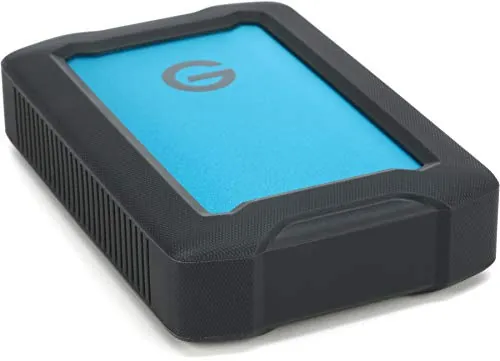
G-Technology 5TB ArmorATD All-Terrain Rugged Portable External Hard Drive
- 5TB capacity provides substantially more room for large photo, video, backup, and media libraries.
Comparison
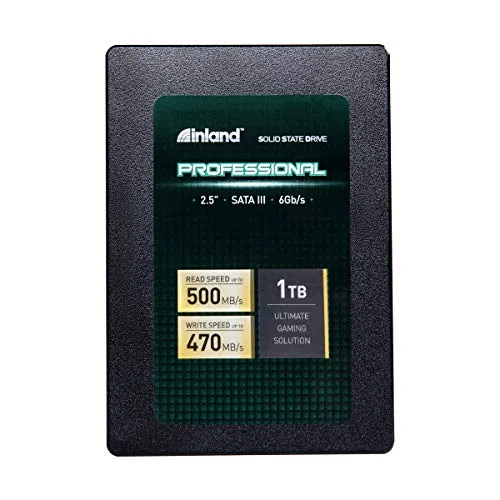
The G-Technology ArmorATD 5TB and INLAND Professional 1TB SATA SSD solve different storage problems: one is a rugged, high-capacity portable external hard drive, while the other is a speed-oriented internal SATA upgrade. The INLAND scores higher overall for compatible PC and laptop upgrades, whereas the ArmorATD is the more appropriate choice for carrying large files with specified external protection.
#1 Overall Winner
Contender
Choose the INLAND Professional 1TB SATA SSD for a compatible internal laptop or desktop upgrade where faster everyday operation matters most. Choose the G-Technology ArmorATD 5TB when you need much more portable storage and a rugged USB enclosure for travel or field use.
Overall winner
Depends on your needs
| Feature | G-Technology 5TB ArmorATD All-Terrain Rugged Portable External Hard Drive | INLAND Professional 1TB SATA SSD | Winner |
|---|---|---|---|
Product type |
Portable external mechanical hard drive |
Internal 2.5-inch SATA solid-state drive |
Depends |
Capacity |
5TB |
1TB |
G-Technology 5TB ArmorATD All-Terrain Rugged Portable External Hard Drive |
Everyday performance |
Mechanical drive; mixed speed feedback |
Up to 500MB/s read and 470MB/s write |
INLAND Professional 1TB SATA SSD |
Connection |
USB 3.1 / USB-C ready |
SATA III 6Gb/s |
Depends |
Rugged protection |
IP54, triple-layer shock resistance, 1,000-pound crush rating |
Shock-resistant flash storage |
G-Technology 5TB ArmorATD All-Terrain Rugged Portable External Hard Drive |
Installation role |
External drive |
Internal drive |
Depends |
Setup score |
Lower; some formatting feedback |
Higher; reviews often note easy installation |
INLAND Professional 1TB SATA SSD |
Portability |
Portable external unit |
Small internal component |
G-Technology 5TB ArmorATD All-Terrain Rugged Portable External Hard Drive |
Power efficiency |
Lower score |
Higher score; no moving parts |
INLAND Professional 1TB SATA SSD |
Reliability feedback |
Failure and cable complaints reported |
Some early-failure complaints reported |
INLAND Professional 1TB SATA SSD |
Overall score |
72 |
76 |
INLAND Professional 1TB SATA SSD |
The INLAND has the performance advantage for a compatible internal system. It lists sequential read/write speeds up to 500MB/s and 470MB/s, and review feedback associates it with faster startup and improved day-to-day responsiveness. The ArmorATD's performance focus is capacity and portable access rather than SSD-like responsiveness; review feedback on transfer speed is mixed. For OS, applications, and routine internal storage, the INLAND is the more suitable performer. For moving or storing large volumes externally, the ArmorATD's 5TB capacity is its practical advantage.
The INLAND wins on speed. Its specified sequential performance reaches up to 500MB/s read and 470MB/s write, and it has the higher speed score. The ArmorATD is a mechanical drive with a listed 130 megabits-per-second data transfer rate and mixed review feedback on real-world transfers. The ArmorATD may be sufficient for bulk storage, but the INLAND is the better option for operating-system duties and faster everyday access.
Both products require cautious expectations and a backup plan. The ArmorATD has the lower reliability score, with aggregated feedback citing spontaneous failures, drives not being recognized, and cable-related disconnections. The INLAND's reliability score is higher, and some reviews describe extended satisfactory use, but other reports mention failures within months and quality-control concerns. The INLAND has the comparative edge, but neither review profile supports relying on a single drive for irreplaceable files.
The INLAND receives the higher usability score because it is commonly reported as easy to install and effective as a boot drive, provided the computer accepts a 2.5-inch SATA drive. The ArmorATD is physically simple to connect as an external USB drive, but its usability feedback is less consistent: some reviewers report difficulty with formatting, access methods, and drive recognition. The right usability winner therefore depends first on whether you can install an internal SATA drive.
The ArmorATD is designed as a self-contained portable drive with an external USB connection and protective housing. The INLAND is a thin 2.5-inch, 7mm internal SATA SSD designed to fit inside compatible computers. The ArmorATD is more practical for carrying files between locations; the INLAND is more practical when storage should remain installed in a laptop or desktop. Neither design is universally better because their intended placement differs.
The ArmorATD clearly leads on build quality. Its enclosure is specified with triple-layer shock resistance, IP54 rain-and-dust resistance, and a 1,000-pound crush rating, while reviews often describe it as sturdy or tank-like. The INLAND's solid-state construction avoids moving parts and is described as shock resistant, but it is an unprotected internal component rather than a rugged external device. The ArmorATD is the stronger choice where enclosure protection is important.
The ArmorATD is the durability leader because its product data specifically addresses external hazards: triple-layer shock resistance, IP54 protection from rain and dust, stated crush resistance, and drop resistance information. The INLAND benefits from SSD architecture that is resistant to shock, vibration, and movement, but it lacks an external protective enclosure. For transport and physically demanding storage use, the ArmorATD is the more purpose-built device.
The ArmorATD has the portability advantage because it is explicitly built as a portable external drive and includes rugged physical protection for use away from a desk. The INLAND is physically small and thin, but it is intended for installation inside a computer, not standalone travel use. Choose the ArmorATD for carrying storage between systems; choose the INLAND when the drive should stay inside a compatible machine.
The ArmorATD offers features targeted at travel and field storage: a USB-C-ready external connection, Mac and Windows readiness, triple-layer shock protection, IP54 rain-and-dust resistance, and a stated 1,000-pound crush rating. The INLAND focuses on internal-computing features, including SATA III connectivity, 3D TLC NAND, silent operation, shock resistance, and stated endurance up to 660TBW. The ArmorATD has more protective external features; the INLAND has the more relevant feature set for a conventional internal PC upgrade.
The INLAND has the higher setup score and is frequently praised as an easy internal installation, assuming the user has a compatible SATA bay and is comfortable opening the device. The ArmorATD avoids internal installation because it connects externally, but reported formatting, Time Machine access, cable fit, and recognition issues can complicate first use. For technically compatible internal upgrades, the INLAND is more consistently rated for setup; for plug-in external storage, the ArmorATD has the simpler physical concept.
Both products list Mac and PC-oriented compatibility, but the practical requirements differ. The ArmorATD is an external USB drive and is stated to be ready for Mac and Windows, though some reviews report formatting and recognition issues. The INLAND supports desktop and laptop use through SATA and is listed for PC, Mac, and laptop hardware, but some buyers report Windows 10 detection problems. Confirm USB ports for the ArmorATD or a 2.5-inch SATA connection for the INLAND.
The ArmorATD uses USB 3.1 and is USB-C ready, with stated USB 3.0 and Thunderbolt 3 compatibility, making it the more convenient external connection option. The INLAND uses SATA III 6Gb/s and requires compatible internal hardware. Both have some reported compatibility friction: ArmorATD reviews include recognition complaints, while INLAND feedback includes reports of Windows 10 not recognizing the drive. Check ports, drive bays, and operating-system support before purchase.
The INLAND has the higher power-efficiency score. Its solid-state design has no moving parts and is described as having no noise or overheating, which aligns with an efficient internal-upgrade role. The ArmorATD is a mechanical external hard drive, so its strengths are capacity and rugged portability rather than SSD-style efficiency. The INLAND is preferable where lower-power solid-state storage is the priority.
The INLAND has the stronger value score because it combines SSD-class stated speed, simple installation feedback, and a three-year limited warranty for mainstream internal upgrades. That does not make it automatically better for every buyer. The ArmorATD delivers four times the capacity along with specific rugged external protection, which can be more valuable to users needing portable bulk storage. Value depends on whether fast internal performance or high-capacity protected external storage is the actual requirement.
The ArmorATD has the higher brand-trust score, while the INLAND's score is more modest. However, the supplied review data for both products includes reliability and compatibility concerns, so brand confidence should not replace a careful backup strategy. The available data does not provide a detailed support-history comparison beyond the INLAND's stated three-year limited warranty and the respective warranty-support scores.
Both products have strong aggregate Amazon ratings: 4.5 out of 5 from 2,811 reviews for the ArmorATD and 4.6 out of 5 from 4,669 reviews for the INLAND. The INLAND has a slightly higher customer-satisfaction score and more reviews, with frequent praise for startup improvements, easy installation, and value. ArmorATD customers regularly praise its rugged build, capacity, and portability, but its review summary contains more pronounced cable, recognition, speed, and sudden-failure concerns.
The INLAND has the stronger warranty-support score and explicitly states a three-year limited parts and labor warranty. The supplied ArmorATD data does not state warranty terms, and it receives a lower warranty-support score. Buyers considering either drive should confirm current warranty coverage, return conditions, and data-recovery options with the retailer or manufacturer before committing important data.
The INLAND Professional 1TB SATA SSD is the better overall-scoring product and the more compelling choice for a compatible internal PC or laptop upgrade. Its stronger performance, speed, usability, setup, power-efficiency, value, and warranty-support assessments fit users seeking faster booting and everyday responsiveness. Positive reviews also commonly note quick installation and an appreciable improvement over older hard drives.
The G-Technology ArmorATD 5TB is still the better purchase for a distinctly different job: portable, high-capacity storage with a rugged enclosure. Its 5TB capacity and stated environmental protection are advantages the internal INLAND cannot provide. The decision should not come down to the overall score alone. Choose the INLAND for internal SSD performance; choose the ArmorATD for rugged external bulk storage, and back up critical data with either option.

Overall winner
Depends on your needs
The INLAND Professional 1TB SSD has the higher overall score and is the stronger choice for a compatible internal system upgrade, everyday responsiveness, and straightforward installation. The ArmorATD is not a direct replacement, however: its advantage is portable 5TB storage with a rugged external enclosure. Choose based on whether you need internal speed or external capacity and protection.
No. The INLAND lists sequential read/write performance up to 500MB/s and 470MB/s, while the ArmorATD is a mechanical external hard drive with mixed speed feedback and a lower speed score. The ArmorATD may be adequate for portable storage and backups, but the INLAND is the better fit when faster booting, application loading, and routine internal-drive performance matter.
The G-Technology ArmorATD offers 5TB, compared with 1TB for the INLAND Professional SSD. That makes the ArmorATD more suitable when capacity is the central requirement, such as carrying large photo, video, backup, or media collections. The INLAND's 1TB capacity is more oriented toward an internal operating-system drive or a mainstream personal-computing upgrade.
Not by itself. The INLAND is specified as a 2.5-inch internal SATA SSD and needs compatible SATA hardware or a suitable external enclosure not included in the supplied product data. The ArmorATD is the ready-to-use portable option because it is an external USB drive with USB-C readiness. Check your computer's available connections before choosing.
The ArmorATD is the clearer travel and field-storage choice. It is a portable external drive with a stated IP54 rain-and-dust-resistant enclosure, triple-layer shock resistance, and a 1,000-pound crush rating. Its 5TB capacity also suits large files. Buyers should still maintain backups, as the review data includes reports of cable, recognition, and failure issues.
For a laptop with a compatible 2.5-inch SATA connection, the INLAND Professional SSD is the better upgrade path. Reviews highlight easier installation, faster startup, and improved responsiveness relative to older hard drives. Confirm physical bay compatibility and SATA support first. The ArmorATD is external storage and does not serve as an internal replacement drive without a different use case.
Neither product should be the only copy of important files. The ArmorATD has reviews reporting spontaneous failures, recognition problems, and cable-related disconnections. The INLAND has some reports of early failure and mixed Windows recognition, despite many positive long-term and installation reports. Use a separate backup strategy regardless of which drive better fits your needs.
The INLAND receives the stronger setup score and is commonly described as easy to install, but it requires opening or otherwise accessing a compatible computer's internal SATA connection. The ArmorATD is externally connected and physically convenient, though reviews mention formatting, access, cable, and compatibility friction for some users. The easier option depends on whether your system accepts an internal SATA drive.
Check our rankings and expert guides to find the best electronics products for your goals.