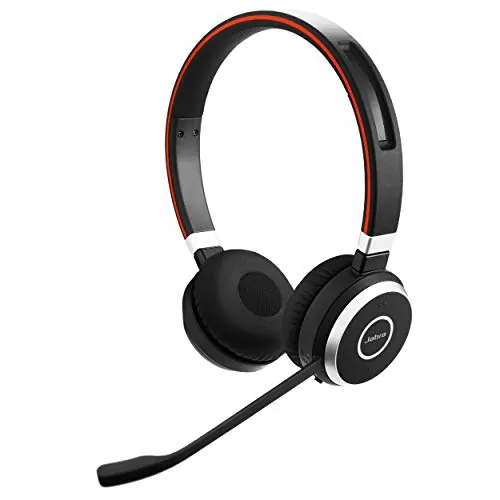
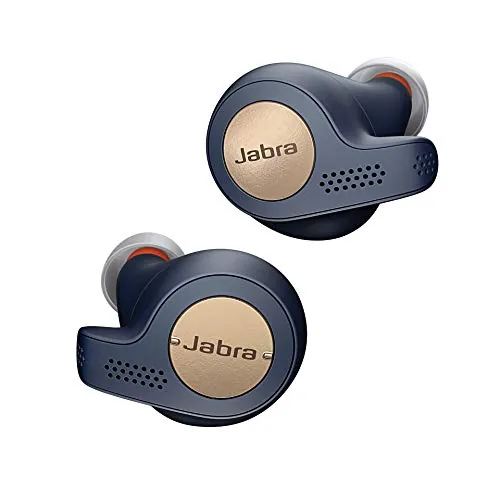
#1 Overall Winner
Jabra Elite Active 65T True Wireless Earbuds & Charging Case - Copper Blue (100-99010000-02)
- Exercise-focused fit and stability designed for sports and movement.
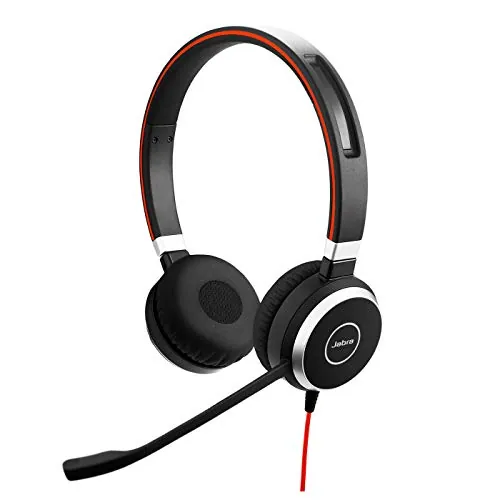
Comparison
The Jabra Elite Active 65t and Jabra Evolve 40 are built for different priorities: the 65t is a true wireless, exercise-focused earbud, while the Evolve 40 is a wired, UC-optimized headset aimed at professional calls. On scores alone, Elite Active 65t leads overall, but Evolve 40 can be the better pick if your day is dominated by meetings and you want a boom mic, USB/3.5mm connectivity, and desk-friendly controls.
#1 Overall Winner
Contender
Pick the Jabra Elite Active 65t if you want true wireless earbuds for commuting, studying, and workouts, with app sound customization and a compact charging case.
Pick the Jabra Evolve 40 if you mainly need a wired work headset with USB/3.5mm connections, UC-focused features like busylight and inline controls, and strong call-oriented microphone performance.
Overall winner
Depends on your needs
| Feature | Jabra Elite Active 65T True Wireless Earbuds & Charging Case - Copper Blue (100-99010000-02) | Jabra Evolve 40 Professional Wired Headset, Stereo, UC-Optimized – 3.5mm Jack/USB Connection | Winner |
|---|---|---|---|
| Overall score | 78 overall score | 68 overall score | Jabra Elite Active 65T True Wireless Earbuds & Charging Case - Copper Blue (100-99010000-02) |
| Category fit / intended use | Sports & exercise true wireless earbuds | Professional UC wired on-ear headset | Depends |
| Audio quality (score) | 84 audio quality score | 82 audio quality score | Jabra Elite Active 65T True Wireless Earbuds & Charging Case - Copper Blue (100-99010000-02) |
| Call performance emphasis | 4-microphone call tech; mixed user feedback | Boom mic; many reviews praise call clarity | Jabra Evolve 40 Professional Wired Headset, Stereo, UC-Optimized – 3.5mm Jack/USB Connection |
| Connectivity type | Bluetooth 5.0 (wireless) | USB + 3.5mm (wired) | Depends |
| Connectivity (score) | 82 connectivity score | 84 connectivity score | Jabra Evolve 40 Professional Wired Headset, Stereo, UC-Optimized – 3.5mm Jack/USB Connection |
| Battery runtime | Up to 5 hours per charge; up to 15 hours with case | No battery (wired) | Depends |
| Water/sweat resistance | IP56 water & dust resistance; sweat/dust warranty (registration required) | Not water resistant | Jabra Elite Active 65T True Wireless Earbuds & Charging Case - Copper Blue (100-99010000-02) |
| Comfort (usage style) | In-ear; comfort is mixed in reviews | On-ear; many reviews praise all-day comfort | Jabra Evolve 40 Professional Wired Headset, Stereo, UC-Optimized – 3.5mm Jack/USB Connection |
| Usability (score) | 76 usability score | 80 usability score | Jabra Evolve 40 Professional Wired Headset, Stereo, UC-Optimized – 3.5mm Jack/USB Connection |
| Setup (score) | 78 setup score | 86 setup score | Jabra Evolve 40 Professional Wired Headset, Stereo, UC-Optimized – 3.5mm Jack/USB Connection |
| App features | Jabra Sound+ app personalization | No app features listed | Jabra Elite Active 65T True Wireless Earbuds & Charging Case - Copper Blue (100-99010000-02) |
| Durability (score) | 80 durability score | 45 durability score | Jabra Elite Active 65T True Wireless Earbuds & Charging Case - Copper Blue (100-99010000-02) |
| Reliability (score) | 66 reliability score | 52 reliability score | Jabra Elite Active 65T True Wireless Earbuds & Charging Case - Copper Blue (100-99010000-02) |
| Portability (score) | 85 portability score (charging case) | 70 portability score (wired headset) | Jabra Elite Active 65T True Wireless Earbuds & Charging Case - Copper Blue (100-99010000-02) |
| Compatibility (score) | 83 compatibility score (Bluetooth devices) | 88 compatibility score (universal; UC platforms) | Jabra Evolve 40 Professional Wired Headset, Stereo, UC-Optimized – 3.5mm Jack/USB Connection |
In real-world performance, these two “headphones” perform best in different scenarios. The Elite Active 65t is designed to stay stable while moving and to keep playback going without wires; it also scores higher overall and slightly higher for performance. It’s frequently used for workouts, commuting, and general listening, with reviews often describing clear sound and generally stable wireless behavior (though not universally).
The Evolve 40 performs best when the “performance” goal is meeting and call performance at a desk. Reviews repeatedly emphasize clear voice transmission and reliable connectivity to laptops through USB, and its usability/setup scores are strong. If your daily “performance metric” is fewer meeting headaches, the wired design can be an advantage.
Reliability is mixed for both products in the provided data. The Elite Active 65t has a higher reliability score, and some reviews praise stable connectivity and day-to-day dependability. However, aggregated feedback also mentions units that stop working and charging-related problems.
The Evolve 40 has more pronounced reliability concerns in scoring and review summaries, including reports of it stopping working after short periods and adaptor-related failures. If you choose it for work, it’s wise to test the USB connection, inline controls, and microphone early during the return window.
For everyday usability, the Evolve 40 has the edge in a typical work setting. Its wired connections reduce pairing friction, it’s described as plug-and-play in reviews, and the inline controller keeps common actions within reach. The on-ear design is also frequently described as comfortable for long calls.
The Elite Active 65t is more convenient when you’re moving—no cable, easy pocket carry, and automatic connect behavior noted in reviews. However, usability depends more on achieving the right fit and tip size, and some users report comfort issues or occasional glitches (for example, when a phone is in a pocket during movement).
Design comes down to in-ear portability versus on-ear work ergonomics. The Elite Active 65t is a compact, true wireless design intended to “lock” into the ear for active use, and it scores higher for design and portability. It also includes a small charging case that reviewers note fits well in pockets.
The Evolve 40 uses an on-ear, leather-feel cushion design geared toward all-day wear, plus a rotatable boom mic and an inline control puck that naturally fits desk setups. If you dislike in-ear pressure or prefer a headset feel, its design may be more comfortable—though some users report fit issues.
The scoring and review summaries suggest different build risks. The Elite Active 65t scores notably stronger for build quality and durability, and it’s also rated IP56 for water and dust resistance—important for sweat, rain, and outdoor use.
The Evolve 40 has more mixed build and durability feedback. While some reviewers describe it as well-built and lightweight, the aggregated review summary also mentions concerns like the headpiece cracking and the wire breaking. If you expect heavy daily wear-and-tear at a desk, this durability feedback is worth factoring in.
The Elite Active 65t scores much higher for durability and is also rated IP56 for water/dust resistance, aligning with sports use. Some long-term user feedback also suggests it can survive tough situations (for example, accidental wash incidents mentioned in a review).
The Evolve 40 shows durability risk in the aggregated review summary, including mentions of cracking headpieces and fragile wiring. Even if it feels comfortable and lightweight, the long cable and daily desk use can become failure points for some users.
The Elite Active 65t is the clear portability winner. True wireless earbuds plus a small charging case are easier to carry daily, and it scores very highly for portability.
The Evolve 40 can travel, but the on-ear shape and fixed cable are less convenient for pockets and quick on/off use. It’s better suited to a laptop bag and a predictable desk setup.
The Elite Active 65t leans into consumer/fitness features: a charging case, Bluetooth multi-pairing (up to 8 paired devices and 2 connected at a time), app-based sound personalization with Jabra Sound+, and support for multiple voice assistants (listed in the product description). It also includes multiple sizes of EarGels to tune fit.
The Evolve 40 focuses on office workflow features: a busylight, UC-optimized compatibility (including Skype for Business/Cisco/Avaya mentions), and flexible wired connections (USB and 3.5mm). Its inline control puck is frequently mentioned in reviews as convenient for mute/volume/call control.
The Elite Active 65t uses the Jabra Sound+ app for sound personalization and registration-dependent warranty coverage for sweat/dust. Its app experience score is moderate, aligning with a feature-rich but sometimes variable app-dependent experience.
The Evolve 40 does not list a companion app in the provided data, and its app-related scores are not present. If you prefer a product that works without app setup, the Evolve 40 aligns better with that preference.
The Elite Active 65t includes more “smart” elements in the provided data, including support for multiple voice assistants and app-based configuration through Jabra Sound+.
The Evolve 40 is more of a straightforward wired headset; its standout “smart-like” productivity feature is the busylight, but it does not list voice assistants or a companion app in the provided information.
The Evolve 40 is generally simpler to get running in a work environment: plug into USB or 3.5mm and start calling, with reviews describing plug-and-play behavior on laptops. Its setup score is higher.
The Elite Active 65t requires Bluetooth pairing, and you may also want the Sound+ app for customization and registration steps for the sweat/dust warranty. Setup is still straightforward for most users, but it includes more steps than a wired headset.
The Elite Active 65t is positioned as compatible with Bluetooth 5.0-ready devices including phones, computers, and tablets, and it’s described as Apple and Android compatible. It also lists support for multiple voice assistants.
The Evolve 40 is positioned for broad workplace compatibility: it’s UC-optimized, listed as certified for Skype for Business and Cisco (and mentions Avaya), and uses universal wired connections (USB/3.5mm). On the provided compatibility scores, Evolve 40 ranks higher.
Both products are reviewed as strong performers for sound, but the emphasis differs. The Elite Active 65t scores slightly higher for audio quality and is often praised for clear, detailed sound; it also supports sound personalization through the Sound+ app, which can help tailor the sound signature to preference.
The Evolve 40 is widely praised for clarity in calls, and many users buy it specifically for meeting audio and microphone performance. For music, feedback is more mixed: some reviewers enjoy the sound, while at least one notes the speaker sound can be mediocre compared with its call strengths. If music is the priority, the Elite Active 65t is better aligned with that use case from the provided data.
The Elite Active 65t uses Bluetooth 5.0 with an advertised wireless range up to 33 feet/10 meters, plus multi-pairing (up to 8 devices) and the ability to connect to two devices simultaneously. That makes it convenient for switching between phone and computer, though wireless experiences can vary by environment and fit.
The Evolve 40 provides wired connectivity via USB and 3.5mm. For many work setups, that can mean fewer surprises and faster troubleshooting. It also advertises broad UC/platform compatibility and is commonly described as reliably connecting to laptops through USB.
The Elite Active 65t is rated for up to 5 hours on a single charge and up to 15 hours total with the charging case, with a listed 2-hour charge time. Reviews are mixed: some users report battery life as advertised, while others mention charging issues.
The Evolve 40 is wired, so there’s no battery runtime to manage. If you regularly forget to charge devices or want guaranteed all-day operation without a charging case, that’s a practical advantage of the wired headset.
Power efficiency is only meaningfully comparable for the Elite Active 65t, since it runs on battery and includes a charging case. Its power-efficiency score is moderate, and reviews are mixed about charging consistency.
The Evolve 40 is wired and therefore doesn’t face the same battery drain/charging efficiency considerations for daily use. Practically, that means no runtime anxiety—though it also means you’re tethered to a device.
Value depends on whether you will actually use each product’s strengths. The Elite Active 65t offers a broad feature set for mobile use—true wireless portability, IP56 protection, a charging case, and app personalization—backed by a strong overall score and a very large review base. Mixed feedback on reliability and charging can reduce value for some buyers.
The Evolve 40 can be strong value for meeting-heavy roles because it pairs wired connectivity with UC compatibility, desk controls, and a call-oriented mic experience that many reviewers praise. However, its lower build/durability and warranty/support scoring mean its value can fall if you run into early failures.
Both products come from Jabra and share the same brand-trust score in the provided data. In practice, that means the decision is less about brand reputation and more about picking the right tool for the job: workout-ready true wireless earbuds versus a UC-optimized wired headset.
Both products have strong overall Amazon ratings and high review counts, with the Elite Active 65t having a much larger review base. For the Elite Active 65t, customer sentiment highlights good sound and convenience, with mixed feedback on fit, comfort, battery consistency, and occasional failures.
For the Evolve 40, customers frequently praise call clarity and comfort, but the review summary notes mixed reliability, mixed perceptions of noise cancellation effectiveness, and durability complaints (cracking/wire issues). Overall satisfaction is similar by score, but the main complaint themes differ.
Warranty and support clarity differ in what’s explicitly provided. The Elite Active 65t mentions a 2-year warranty against sweat and dust with registration required through the Jabra Sound+ app. Beyond that, reliability feedback is mixed.
For the Evolve 40, the provided scoring indicates weaker warranty/support, and reviews include examples where an adaptor failed with limited replacement options mentioned. If support matters, verify the seller’s return policy and what is covered before purchase.
The Jabra Elite Active 65t is the better overall pick on the provided scoring, combining strong audio performance with true wireless portability, app customization, and an IP56 rating that makes it better suited to exercise and daily carry. It’s the more versatile option when your listening happens across many places—home, commute, gym, and campus.
The Jabra Evolve 40 remains a smart choice for a specific buyer: someone who is meeting-heavy and wants a dedicated wired work headset with UC-optimized compatibility, desk-friendly controls, and a boom mic that reviews often praise for clarity. Its main caveat is mixed reliability/durability feedback, so it’s best purchased with a clear return path and tested early in your workflow.
Overall winner
Depends on your needs
Based on the provided overall scores, the Jabra Elite Active 65t rates higher overall (78) than the Jabra Evolve 40 (68). The better pick still depends on what you need: Elite Active 65t is built around portable, exercise-friendly true wireless use, while Evolve 40 is aimed at professional wired calling with a boom mic, busylight, and UC-focused workflow.
The Jabra Evolve 40 is the more purpose-built option for long work calls: it’s UC-optimized, supports USB and 3.5mm connections, and many reviews specifically praise clear voice pickup and meeting performance (Zoom/WebEx/Skype-style use). The Elite Active 65t can also handle calls and is described as having strong call performance, but it’s designed first as a true wireless sports earbud.
The Jabra Elite Active 65t is the better fit for workouts. It’s explicitly positioned for sports and exercise, focuses on secure in-ear stability, and is IP56 rated for water and dust resistance (with the noted sweat/dust warranty after app registration). The Evolve 40 is an on-ear wired headset listed as not water resistant, making it a weaker match for heavy sweat or outdoor exercise.
Only the Jabra Elite Active 65t is battery-powered. It’s specified at up to 5 hours on a charge and up to 15 hours total with the charging case. Reviews are mixed on consistency, with some users satisfied and others mentioning charging issues. The Jabra Evolve 40 is a wired headset, so there’s no battery runtime to compare.
The Jabra Evolve 40 typically has the simplest start because it’s wired via USB or 3.5mm, and reviews describe plug-and-play use on computers. The Elite Active 65t uses Bluetooth pairing and can be customized in the Jabra Sound+ app; that adds flexibility but also adds a bit more setup. Both products have generally solid setup scores, with Evolve 40 scoring higher.
Both products score well for audio quality, but they prioritize different listening styles. The Elite Active 65t is frequently praised in reviews for clean, detailed sound and benefits from app-based sound personalization. The Evolve 40 is often praised for clear audio in calls, while at least one review notes the speakers can be mediocre for music compared with its call strengths. For music-first listening, Elite Active 65t is typically the safer bet from the provided feedback.
The Jabra Elite Active 65t is more travel-friendly because it’s true wireless and includes a pocketable charging case. It also supports Bluetooth 5.0 and multi-device pairing, which can help when switching between phone and computer. The Jabra Evolve 40 can travel too, but the fixed cable and on-ear headset form factor are less pocketable, and it’s best suited to desk or laptop use.
Neither product is free of reliability concerns in the provided data. The Elite Active 65t has a higher reliability score than the Evolve 40, but customer summaries for both mention mixed experiences, including reports of units stopping working or charging/adaptor issues. If reliability is critical, consider buying from a seller with clear return options and test thoroughly early (pairing, charging, mic, and controls).
From the provided descriptions, the Evolve 40 focuses on passive noise cancellation and users report mixed results depending on environment. The Elite Active 65t is often described by reviewers as relying heavily on in-ear isolation plus an awareness/pass-through option, with at least one review stating it’s not the right choice if you want “true” noise cancel. If noise reduction is your top priority, set expectations accordingly.
Check our rankings and expert guides to find the best electronics products for your goals.