#1 Overall Winner
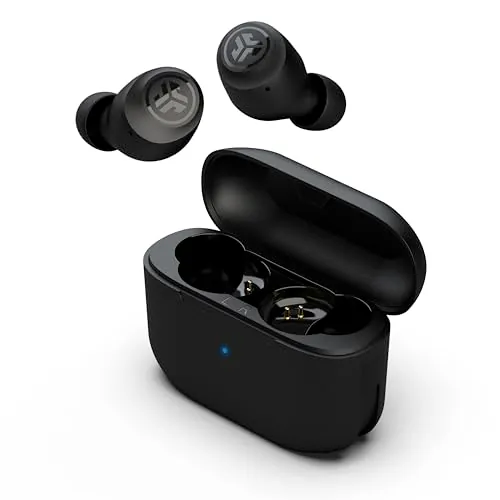
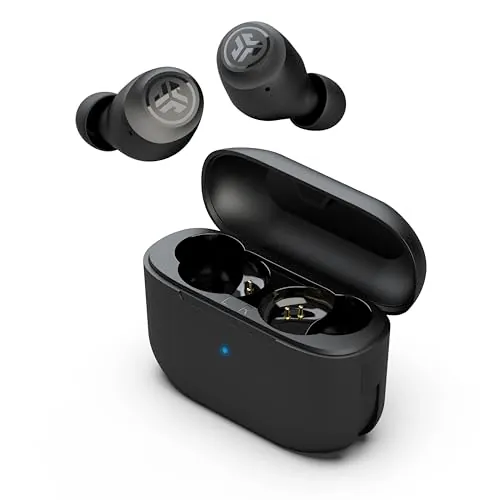
JLab Go Air Pop+ True Wireless Earbuds
- Strong overall score in the provided scoring (overall 86).
Comparison
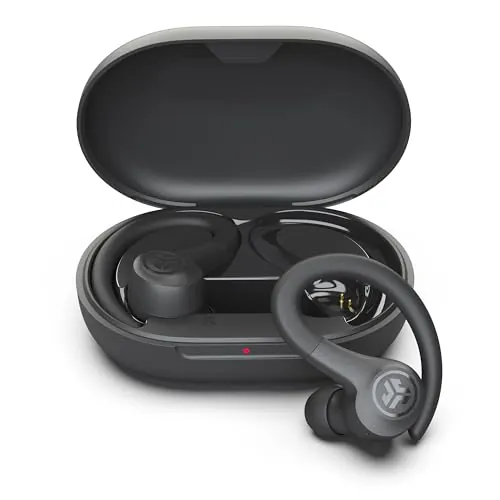
The JLab Go Air Pop+ and JLab Go Sport+ are budget-friendly true wireless earbuds with app EQ, Be Aware mode, and a similar 35+ hour total battery claim. The main decision is fit and use case: Go Air Pop+ emphasizes a compact pocketable design and scores higher overall, while Go Sport+ targets workouts with an earhook design and a stated IP55 rating. If you want the more well-rounded pick by the provided scores, Go Air Pop+ leads; if you need a more secure sport fit, Go Sport+ can be the better match.
#1 Overall Winner
Contender
Pick JLab Go Air Pop+ if you want the more well-rounded option by the provided scores, with a very compact case, Bluetooth 5.3, and stronger battery/audio scoring.
Pick JLab Go Sport+ if you prioritize a secure earhook fit for workouts and want an explicit IP55 sweat resistance rating, even if sound/battery feedback is more mixed.
Overall winner
Depends on your needs
| Feature | JLab Go Air Pop+ True Wireless Earbuds | JLab Go Sport+ Wireless Workout Earbuds | Winner |
|---|---|---|---|
| overall score (provided) | 86 | 82 | JLab Go Air Pop+ True Wireless Earbuds |
| amazon rating / review count | 4.5/5 (6,151) | 4.1/5 (29,669) | Depends |
| design focus | small in-ear, pocketable case | secure earhook sport design | Depends |
| water/sweat resistance (stated) | water resistant; sweatproof (no IP rating listed) | IP55 sweat resistance rating | JLab Go Sport+ Wireless Workout Earbuds |
| battery (claimed) | 35+ hours total; 2h charge time | 35+ hours total; 2.2h charge time | Tie |
| battery life score (provided) | 92 | 86 | JLab Go Air Pop+ True Wireless Earbuds |
| bluetooth version | 5.3 | 5.0 | JLab Go Air Pop+ True Wireless Earbuds |
| bluetooth range (listed) | 10 meters | 10 meters | Tie |
| audio driver type (listed) | balanced armature | dynamic | Depends |
| audio quality score (provided) | 83 | 74 | JLab Go Air Pop+ True Wireless Earbuds |
| app + EQ presets | JLab app; EQ presets; control customization | JLab app; EQ presets; control customization | Tie |
| be aware / transparency | Be Aware mode (mixed feedback in reviews) | Be Aware mode (praised by some reviewers) | Depends |
| portability score (provided) | 95 | 92 | JLab Go Air Pop+ True Wireless Earbuds |
| setup score (provided) | 90 | 82 | JLab Go Air Pop+ True Wireless Earbuds |
| reliability score (provided) | 68 | 66 | JLab Go Air Pop+ True Wireless Earbuds |
| value score (provided) | 93 | 90 | JLab Go Air Pop+ True Wireless Earbuds |
For real-world earbud performance, the biggest split is sound consistency and everyday listening versus stability during activity. In the provided scoring, Go Air Pop+ leads in performance and audio quality, aligning with review themes that it sounds impressively good for the price. The Go Sport+ is often praised for workout use, but its aggregated feedback is more mixed on sound quality (including reports of tinny sound from some buyers).
Neither model is presented as an ANC product; both rely on sound isolation and fit/seal for reducing outside noise.
Reliability is a caution area for both products. The provided scoring is close (Go Air Pop+ slightly higher), and both have mixed review summaries around connectivity and units failing (for example, reports of an earbud not working or not connecting). If reliability is your top concern, it may be worth buying from a retailer with easy returns and testing pairing, charging, and single-earbud use early in the return window.
In the provided scoring, Go Air Pop+ rates higher for usability and setup. Reviews also highlight quick pairing, automatic reconnect, and a compact case that’s easy to carry. Go Sport+ is still rated strongly for usability, and many buyers emphasize comfort and the ability to keep one ear open for awareness at work or during exercise.
On both models, touch controls can be convenient but may be prone to accidental activation depending on how you adjust the earbuds, as reflected in user feedback.
Design is the clearest difference. The Go Air Pop+ prioritizes a small, lightweight, pocketable setup, with a rounded-tip in-ear design and a compact case. The Go Sport+ uses an over-ear hook for stability and an angular earpiece shape aimed at sports. If traditional earbuds tend to loosen during movement, the Go Sport+ form factor is purpose-built to address that; if you dislike earhooks and want the smallest carry, the Go Air Pop+ is more streamlined.
Both earbuds list plastic enclosure materials and score similarly for build quality in the provided scoring. Customer feedback for both includes positive comments about durability for the price, but each also has mixed reliability feedback (reports of earbuds not working or connection issues). If you expect heavy sweat/dirt exposure, the Go Sport+ has the advantage of stating an IP55 sweat resistance rating.
Durability looks broadly similar in scoring, but use case matters. The Go Sport+ is positioned for training and lists IP55 sweat resistance, which can be a practical advantage if you frequently expose earbuds to sweat and dirt. The Go Air Pop+ is described as sweatproof/water resistant, and some reviews mention it holding up to drops and day-to-day wear, but no IP rating is provided in the supplied data.
Both are portable true wireless earbuds, but Go Air Pop+ is the more pocket-first design, described as extremely small with a compact case and it leads portability scoring. The Go Sport+ remains travel-friendly, but the earhook form factor is inherently bulkier to store and carry than a minimal in-ear bud shape. If you’re prioritizing the smallest kit for pockets or small bags, Go Air Pop+ is the better match.
Both earbuds cover the fundamentals: JLab app support, EQ presets (Signature/Balanced/Bass Boost), Be Aware mode, touch controls, and Google Fast Pair for Android. Go Air Pop+ adds a clearly stated Dual Connect capability and lists Bluetooth 5.3. Go Sport+ differentiates with its sport earhook design and an explicit IP55 rating, which may matter more than Bluetooth version for heavy training and sweat exposure.
Both earbuds support the JLab app for adjusting EQ presets and touch controls and for managing Be Aware settings. In the provided scoring, Go Air Pop+ rates higher for app experience, but both are described by reviewers as usable, and some users consider the app optional rather than required. If you like fine-tuning controls, both models offer that path.
Smart features are similar: both list Be Aware mode, Google Fast Pair, and app-based customization of EQ and controls. Neither listing includes voice assistant specifics beyond standard phone assistant activation via touch controls as implied by user feedback. Overall, the smart feature set is close, with differences coming more from physical design and Bluetooth version than from software features.
Go Air Pop+ emphasizes auto on and auto connect when removed from the case and scores higher for setup in the provided scoring. Go Sport+ setup is also described as simple by reviewers, often pairing quickly once initial steps are done. If you want the most frictionless first-time experience, the scoring and positioning favor Go Air Pop+.
Both list compatibility with common devices such as laptops and tablets, and both include Google Fast Pair for Android. The Go Sport+ explicitly lists a broader set (including gaming consoles) in the provided specs. In practice, if you plan to move between many device types, either should be workable based on the provided compatibility fields, but Go Sport+ is the one that explicitly names the widest set.
Audio-wise, the provided scoring favors the Go Air Pop+ (higher audio quality score) and reviews frequently describe clear sound with strong perceived value. The Go Sport+ can sound “great” for many users, but aggregated feedback is more mixed, including reports of tinny sound from some buyers.
Both include EQ presets through the JLab app, so you can tailor the sound signature to an extent. Neither listing includes active noise cancelling; both rely on sound isolation and fit to manage external noise, plus a Be Aware mode for letting sound in.
Go Air Pop+ lists Bluetooth 5.3 and slightly higher connectivity scoring, while Go Sport+ lists Bluetooth 5.0. Both list a 10-meter Bluetooth range. In reviews and aggregated summaries, connectivity is mixed for both: many users report easy pairing and stable use, while others describe disconnects or failure to connect. If your top priority is the newest Bluetooth spec on the listing, Go Air Pop+ has the edge; if you prioritize workout fit, that may outweigh the Bluetooth version difference.
Both models advertise the same total runtime: 9+ hours per earbud and 26+ additional hours from the case (35+ hours total). In the provided scoring, Go Air Pop+ rates stronger for battery life. The Go Sport+ battery feedback is more mixed in the aggregated review summary, including reports of batteries that stop holding charge for some users, while the Go Air Pop+ feedback trends more positive for long-lasting use.
Both models score strongly for value in the provided scoring, reflecting a broad feature set (app EQ, long claimed battery, Be Aware, touch controls) at budget pricing. Go Air Pop+ rates slightly higher for value and also has a higher Amazon star rating in the provided data, which can be a useful signal for buyers who want the safest “all-around” budget pick. Go Sport+ can be the better value when you specifically need the earhook stability and IP55 rating for gym or outdoor training.
This is a close comparison on brand trust because both products are from JLab and have similar brand trust scoring. Confidence signals include large review volume (especially for Go Sport+) and consistent emphasis on value. The main brand-related caution is that both products show mixed reliability feedback, so return policy and early testing matter.
Customer satisfaction indicators lean toward Go Air Pop+ in this head-to-head: it has a higher Amazon rating (4.5/5) and a higher customer satisfaction score in the provided scoring. The Go Sport+ still has strong overall satisfaction for many buyers, but its average rating is lower (4.1/5) and its aggregated feedback includes more mixed commentary on sound, battery, and connectivity. The extremely high review count for Go Sport+ can still be valuable for understanding common pros/cons.
No detailed warranty terms are provided for either product in the supplied data. The provided scoring shows the same warranty/support score for both, so neither has a clear advantage here based on available information. If warranty clarity is important, verify coverage and return windows on the seller page before purchasing.
The JLab Go Air Pop+ is the best overall option in this comparison based on the provided scoring (86 vs 82), with clear strengths in battery life, portability, setup ease, and audio quality. If you want an everyday true wireless pair that’s easy to carry and generally well-liked by reviewers, it’s the safer all-around pick here.
The JLab Go Sport+ remains a strong alternative when your primary use is fitness. Its secure earhook design and explicit IP55 sweat resistance rating can outweigh the lower overall score for runners and gym-goers who struggle with earbuds falling out.
Because both models have mixed connectivity/reliability feedback, prioritize a seller with a solid return window and verify fit, pairing, and charging behavior as soon as you receive them.

Overall winner
Depends on your needs
Based on the provided scoring, the JLab Go Air Pop+ ranks higher overall (86 vs 82). It also leads in battery life, portability, setup, and customer satisfaction scores. The Go Sport+ can still be a better pick if your top priority is a secure earhook fit and a sport-focused design for workouts, since that is its main differentiator.
The JLab Go Sport+ is the more workout-specific option because it uses a secure earhook sport design and lists an IP55 sweat resistance rating. While the Go Air Pop+ is marketed as small and gym-friendly, its fit feedback is mixed in reviews. If you’re doing high-movement training where staying in place matters most, Go Sport+ is typically the safer bet.
Yes. Both the Go Air Pop+ and Go Sport+ list support for the JLab app and include EQ presets such as JLab Signature, Balanced, and Bass Boost. The app is also described as a way to adjust touch controls and Be Aware settings. If app tuning is important to you, either model fits that requirement.
Both products list the same battery claim: 9+ hours per earbud plus 26+ hours from the case for a total of 35+ hours. In the provided scoring, the Go Air Pop+ scores higher for battery life. Review summaries are mixed for the Go Sport+ battery longevity, while the Go Air Pop+ feedback is more consistently positive for long-lasting charges.
On paper, the Go Air Pop+ lists Bluetooth 5.3, while the Go Sport+ lists Bluetooth 5.0. In the scoring, Go Air Pop+ also rates slightly higher for connectivity. That said, both products have mixed connectivity feedback in aggregated reviews (some users report disconnects or pairing issues), so real-world experience can depend on your phone and environment.
Neither product is described as having active noise cancelling in the provided data. Both list noise control: sound isolation, which is passive noise reduction from the in-ear seal. Both also include a Be Aware mode that intentionally lets in ambient sound. If you specifically need ANC, you’ll want to confirm the listing includes it—these two are positioned around isolation and awareness instead.
Comfort depends on fit preference. The Go Air Pop+ is described as smaller and lighter, and multiple reviews mention wearing it for hours comfortably. The Go Sport+ gets strong comfort feedback as well, especially from active users who like the earhook stability and softer ear pads. If typical earbuds fall out for you, the Go Sport+ design may feel more secure over long sessions.
Both models score highly for value in the provided scoring, but the Go Air Pop+ rates slightly higher for value and overall score. It also has a higher Amazon star rating (4.5/5 vs 4.1/5) in the provided data. The Go Sport+ may be better value specifically for buyers who will use the earhook fit and IP55-rated sport durability features regularly.
Check our rankings and expert guides to find the best electronics products for your goals.