
#1 Overall Winner
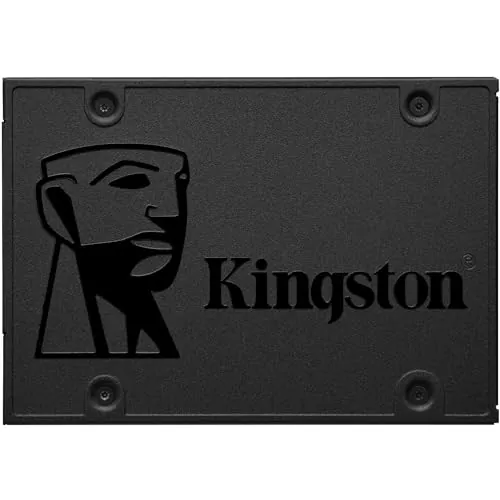
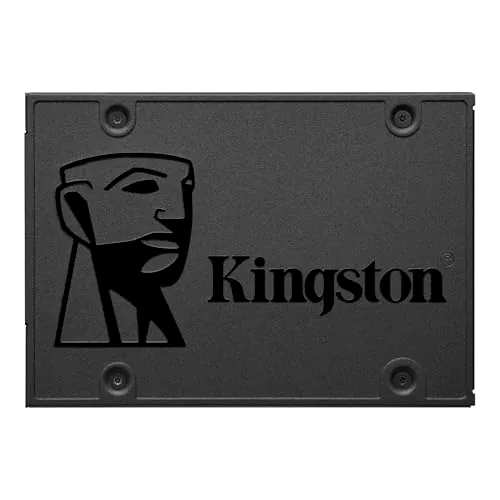
Kingston 240GB Q500 SATA3 2.5 SSD
- 500MB/s rated read speed for a basic SATA upgrade.
Comparison
The Kingston Q500 240GB and Kingston A400 480GB are entry-level 2.5-inch SATA SSDs designed to replace slower mechanical hard drives. The A400 is the broader recommendation because it combines twice the capacity with higher overall, performance, setup, value, and customer-satisfaction scores. The Q500 is still a credible choice for a modest operating-system upgrade where its stronger reliability and compatibility scoring better match the buyer's needs.
#1 Overall Winner
Contender
Choose the Kingston A400 480GB for the more complete everyday upgrade: it has more capacity, higher overall scoring, easier setup feedback, and stronger value results. Choose the Kingston Q500 240GB for a smaller OS-focused upgrade when its better reliability and compatibility scores align with your system and storage needs.
Overall winner
Depends on your needs
| Feature | Kingston 240GB Q500 SATA3 2.5 SSD | Kingston 480GB A400 SATA 3 2.5 Internal SSD | Winner |
|---|---|---|---|
| Capacity | 240GB | 480GB | Kingston 480GB A400 SATA 3 2.5 Internal SSD |
| Rated read speed | 500MB/s | Up to 500MB/s | Tie |
| Rated write speed | Not stated in supplied specifications | Up to 450MB/s | Kingston 480GB A400 SATA 3 2.5 Internal SSD |
| Overall assessment | Strong overall score | Higher overall score | Kingston 480GB A400 SATA 3 2.5 Internal SSD |
| Reliability | Higher reliability score | Lower reliability score | Kingston 240GB Q500 SATA3 2.5 SSD |
| Compatibility | Higher compatibility score | Lower compatibility score | Kingston 240GB Q500 SATA3 2.5 SSD |
| Setup | Strong setup score | Higher setup score | Kingston 480GB A400 SATA 3 2.5 Internal SSD |
| Value | Strong value score | Higher value score | Kingston 480GB A400 SATA 3 2.5 Internal SSD |
| Customer rating | 4.6/5 from 9,746 reviews | 4.8/5 from 204,504 reviews | Kingston 480GB A400 SATA 3 2.5 Internal SSD |
| Form factor | 2.5-inch SATA | 2.5-inch, 7mm SATA | Tie |
| Best fit | Light OS and everyday upgrade | Higher-capacity everyday upgrade | Depends |
The A400 leads in the supplied performance and speed assessments. Its stated up-to-500MB/s read and 450MB/s write ratings, combined with recurring reports of improved boot and application loading, make it the stronger general-purpose option. The Q500 is also rated at 500MB/s reads and is consistently described as fast for normal PC use, OS installs, and laptop upgrades.
For either drive, the ceiling is defined by SATA rather than PCIe. Review feedback for both models also indicates that DRAM-less entry-level SSD designs are less appropriate for demanding mixed workloads or extensive small-file writes. The A400 wins for routine performance, while the Q500 remains sufficient for lighter tasks.
The A400 has the higher speed score and is rated for up to 500MB/s reads and 450MB/s writes. Reviews regularly cite faster startup, program loading, and general system responsiveness after an HDD replacement. The Q500's 500MB/s read specification and positive review feedback indicate solid SATA-class speed for ordinary use.
The gap should not be overstated: both operate within SATA limits, and neither is meant to deliver NVMe-level throughput. The A400 is the better fit for buyers prioritizing the stronger provided speed assessment and added capacity, while the Q500 is adequate for basic boot-drive duties.
The Q500 has the stronger reliability score, and its reviews repeatedly characterize it as stable and dependable for daily laptop or PC upgrades. The A400 also has a solid reliability assessment and a large number of positive reports, including feedback describing sustained operation over years.
The A400's review overview includes mixed compatibility experiences, with some recognition issues reported. That does not prove a universal fault, but it makes system compatibility checks especially important. The Q500 has the edge in the supplied reliability data; both drives should be backed up because no storage device is failure-proof.
The A400 has the higher usability score and receives frequent praise for uncomplicated installation and the immediate practical improvement it brings to older systems. The Q500 also has a strong usability assessment, with review feedback describing it as a stable, manageable choice for operating-system and everyday laptop use.
Both require the buyer to check physical and SATA compatibility, decide whether to clone an existing drive or install an operating system, and initialize or format the drive when applicable. The A400 is the better choice for users who prioritize a well-supported, higher-capacity everyday upgrade experience.
Both drives use the practical 2.5-inch SATA internal-drive format intended for laptop and desktop upgrades. The A400 has the higher design score and is specifically described as a 7mm design intended for slimmer notebooks and systems with constrained space. The Q500 is listed as 0.28 inches thick and weighs 41g.
There is no major visual or ergonomic distinction because these are internal components. For most buyers, physical fit is the important design consideration: check the available bay, mounting hardware, thickness clearance, and SATA connector in the target device.
Both are compact flash-based SATA drives with no moving parts, an inherent advantage over mechanical hard drives for shock and vibration exposure. The Q500 is explicitly listed as shock resistant and has a slightly lower build-quality score than the A400. The A400 is described as shock- and vibration-resistant in its supplied product information and has the higher durability score.
The provided data does not establish a meaningful materials or casing-quality advantage beyond those broad assessments. Both should be mounted correctly in a compatible system and protected by regular backups.
The A400 has the higher durability score and is described as shock- and vibration-resistant, with no moving parts. The Q500 is also shock resistant and uses solid-state storage, making both more suitable for mobile computing than a mechanical hard drive in terms of physical movement.
Long-term durability still depends on workload. Review feedback for both drives indicates that these DRAM-less, entry-level SATA models are not designed around demanding write-intensive use. For typical operating-system, office, browsing, and light media duties, either is aligned with the stated purpose.
Both are small internal 2.5-inch SATA SSDs that add little physical burden to a laptop or compact desktop. The Q500 has the higher portability score and a listed weight of 41g. The A400 is also lightweight at a listed 1.44 ounces and its 7mm thickness is designed for thin notebooks.
Because both are internal drives, portability is mostly about fit rather than carrying convenience. The Q500 has a slight scoring advantage, but either is practical for a compatible mobile computer.
Both products are straightforward internal 2.5-inch SATA SSDs with flash storage and no smart or advanced connected features. The A400's main functional advantage is its 480GB capacity and stated 7mm form factor, while its supplied description also identifies SATA Revision 2.0 backward compatibility. The Q500 offers 240GB, shock resistance, and stated support for SATA 3.0Gb/s and 6.0Gb/s connections.
Neither model is feature-rich in the way a premium NVMe drive may be. The decision is chiefly between the A400's extra storage and stronger general score profile versus the Q500's stronger supplied reliability and compatibility results.
The A400 wins setup based on its higher setup score and recurring review comments that installation, including Windows installation, was quick and simple. The standard 2.5-inch 7mm SATA format is also intended to fit many systems. The Q500 has a good setup score and is similarly straightforward as a conventional internal SATA drive.
Neither product removes the need for basic preparation. Buyers may need mounting screws or brackets, a SATA cable in some desktops, drive cloning software or installation media, and formatting or initialization steps. Check what is included with the host device and drive package.
The Q500 leads on the supplied compatibility score and lists PC and laptop hardware platforms, with gaming-console compatibility also included in its specifications. The A400 is described for laptops and mobile computing devices, and its product information notes backward compatibility with SATA Revision 2.0.
However, the A400's review overview includes some reports of systems not recognizing the drive. Both products require a compatible 2.5-inch SATA bay or appropriate adapter, and neither should be assumed to fit a device designed only for M.2 or NVMe storage.
Both drives connect through SATA and are intended for compatible internal 2.5-inch drive installations. The Q500 has the higher connectivity and compatibility scores, with supplied hardware connectivity listed as SATA 3.0Gb/s and SATA 6.0Gb/s. The A400 uses SATA Revision 3.0 at 6Gb/s and is described as backward compatible with SATA Revision 2.0 at 3Gb/s.
The A400's lower compatibility score reflects mixed review feedback: many buyers report immediate recognition, while some report that their computer did not recognize the drive. Verify the host device's SATA support and any required mounting adapter before purchase.
The Q500 has a marginally higher power-efficiency score. Its supplied review feedback notes low heat during long operation, while the A400 is described as cooler and quieter than a mechanical hard drive. Both solid-state designs avoid the moving parts of HDDs and are suited to laptop upgrades.
The provided data does not include measured power draw or battery-runtime testing, so the difference should be treated as a modest score-based distinction rather than a quantified battery-life claim.
The A400 has the higher value score. That advantage is supported not only by its higher-capacity 480GB configuration but also by stronger overall performance, usability, setup, and customer-satisfaction results. Its very large review base frequently highlights its effectiveness as an affordable HDD replacement.
The Q500 also has a strong value assessment and is a sensible purchase when 240GB is genuinely enough for the intended operating-system and light-use role. It should not be selected solely because it is the lower-capacity option; buyers should weigh the storage requirement, compatibility needs, and the limitations of both drives under write-heavy workloads.
This is effectively a Kingston-versus-Kingston comparison, so there is no meaningful brand-level split. The Q500 has a slightly higher brand-trust score, while the A400 has an exceptionally large review base and higher customer-satisfaction score. Both benefit from broadly positive buyer feedback for basic SATA upgrade use.
Product-level evidence matters more than brand choice here: the Q500 has stronger supplied reliability and compatibility scores, while the A400 leads in overall results, value, setup, and customer satisfaction.
The A400 leads in customer satisfaction, with a 4.8/5 average from 204,504 reviews and the higher supplied customer-satisfaction score. Feedback commonly praises fast boot times, easy installation, dependable everyday use, and the improvement achieved when replacing a mechanical hard drive.
The Q500 also performs well, with a 4.6/5 average from 9,746 reviews and positive comments about speed, stable operation, and laptop upgrades. The A400's advantage is substantial in review volume and rating, though the Q500 still has a strong customer record.
The supplied data does not provide a clear, directly comparable warranty or after-sales support policy for both models. One Q500 review mentions a three-year warranty, but this is review-level information rather than a complete policy statement. The A400 has a lower warranty-support score, while no detailed support terms are supplied.
Before buying, verify the current warranty terms, seller status, return window, and regional support conditions for the exact model and listing.
The Kingston A400 480GB is the best overall option in this comparison. It earns the higher overall score and leads in performance, speed, usability, setup, value, and customer satisfaction. Its 480GB capacity is also the more practical long-term choice for most people upgrading an older computer from a mechanical hard drive.
The Kingston Q500 240GB should not be dismissed. It is a strong basic SATA SSD for a smaller boot-drive role, with better supplied reliability and compatibility scores and positive feedback for stable everyday operation. Select it when 240GB is enough and system compatibility confidence outweighs the A400's capacity advantage. Whichever model you choose, treat it as an entry-level SATA solution: it is well suited to normal computing and HDD replacement, but not positioned for demanding, write-heavy professional workloads.
Overall winner
Depends on your needs
The Kingston A400 480GB is the stronger overall choice in the supplied scoring, particularly for performance, usability, setup, value, and customer satisfaction. Its 480GB capacity is also more flexible. The Kingston Q500 240GB remains a sensible option for a lighter operating-system-focused upgrade, with stronger reliability and compatibility scores.
Yes. This Kingston A400 model has 480GB of capacity, compared with 240GB on the Kingston Q500. That difference is important if the drive will hold applications, personal files, media, or games as well as the operating system. The Q500 is more naturally suited to a smaller boot-drive role.
Both drives are 2.5-inch SATA SSDs intended to improve an older system over a mechanical hard drive. The A400 is the more practical default if the laptop supports a 7mm 2.5-inch SATA drive and additional capacity is useful. Choose the Q500 when 240GB is sufficient and its stronger compatibility score is a priority.
The A400 has the higher speed and performance scores, and it is specified for up to 500MB/s reads and 450MB/s writes. The Q500 is also rated at 500MB/s read speed and receives positive feedback for everyday responsiveness. Both are SATA drives, so neither is positioned as a replacement for a faster NVMe SSD.
Both can be used for general gaming storage in a compatible 2.5-inch SATA system, but capacity is the key difference. The A400's 480GB offers more room than the Q500's 240GB. Neither product is presented as a high-end option for demanding write-heavy workloads, and the supplied data does not establish game-specific performance advantages beyond general responsiveness.
The A400 has the higher setup and usability scores, and reviews frequently describe installation as simple. The Q500 also has a solid setup score and is a standard internal 2.5-inch SATA drive. Before choosing either, confirm that the device has a compatible SATA connection, a 2.5-inch mounting location, and sufficient thickness clearance.
The Q500 has the higher reliability score, and its reviews commonly describe stable, everyday operation. The A400 also receives substantial positive reliability feedback, including longer-term reports, but a small number of compatibility reports note recognition issues. Both are solid-state drives without moving parts, but neither should replace a regular backup routine.
Neither is the clearest choice for demanding mixed or write-intensive workloads based on the supplied information. Review feedback for both entry-level SATA models notes limitations associated with DRAM-less designs, especially with many small writes or mixed high-IO tasks. They are better aligned with operating systems, general computing, and HDD replacement duties.
Check our rankings and expert guides to find the best electronics products for your goals.