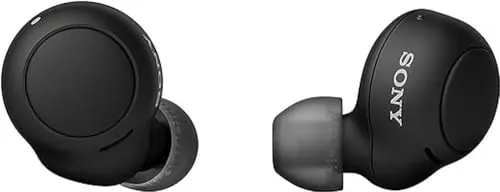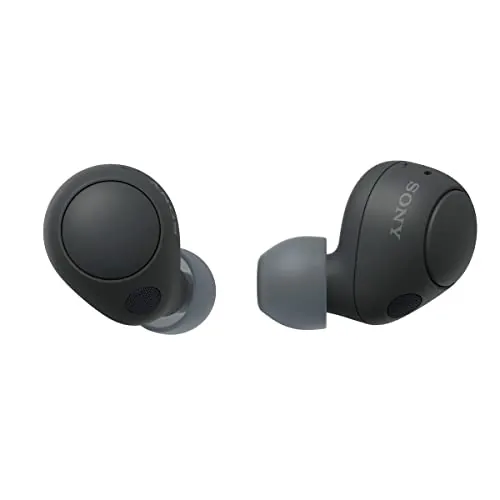
#1 Overall Winner
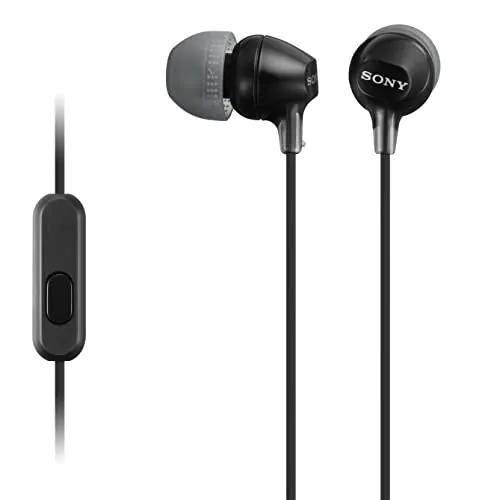
Sony MDREX15AP In-Ear Earbud Headphones with Mic, Black (MDREX15AP/B)
- Strong value and broad buyer approval with a 4.3/5 rating across 28,294 reviews.
Comparison
The Sony MDREX15AP and Sony WF-1000XM5 target very different buyers: one is an ultra-simple wired earbud with a mic, while the other is a premium true wireless model with active noise cancellation and advanced features. Even though both have the same overall score in the provided data, the WF-1000XM5 wins for features and ANC performance, while the MDREX15AP stands out for value, simplicity, and higher customer ratings.
#1 Overall Winner
Contender
Pick the Sony MDREX15AP if you want a cheap, lightweight, plug-and-play wired earbud with a mic and strong overall buyer ratings.
Pick the Sony WF-1000XM5 if you want premium true wireless convenience with active noise cancellation, multipoint, touch controls, and fast charging—while accepting more mixed reliability and satisfaction feedback.
Overall winner
Depends on your needs
| Metric | Sony MDREX15AP (Wired) | Sony WF-1000XM5 (Wireless) | Winner | Explanation |
|---|---|---|---|---|
| Connection type | Wired (3.5 mm) | Bluetooth (no jack) | Depends | Wired is simplest and has no charging; wireless is more convenient for commuting and modern phones. |
| Noise control | Passive isolation | Active Noise Cancellation | WF-1000XM5 | ANC is a major advantage when you want to reduce external noise. |
| Battery | No battery required | Up to 8 hours (24 with case) listed; fast charge | Depends | MDREX15AP is “always ready,” while WF-1000XM5 offers portable runtime but must be charged. |
| Feature set | In-line controls, mic | ANC, multipoint, touch control, voice assistant, app-style features | WF-1000XM5 | WF-1000XM5 is built as a premium, feature-heavy true wireless model. |
| Ease of setup | Plug-and-play | Pairing + charging + settings | MDREX15AP | Wired earbuds typically have less friction to start using. |
| Portability | Very lightweight and compact | Compact with case | MDREX15AP | Both travel well, but the wired model scores higher for portability and doesn’t require a case. |
| Water resistance | Not water resistant | Water resistant / sweatproof positioning | WF-1000XM5 | WF-1000XM5 is better aligned to sport and sweat-prone use. |
| Customer ratings | 4.3/5 (28,294 reviews) | 3.8/5 (5,923 reviews) | MDREX15AP | The wired model has stronger average rating and much larger review volume. |
| Value (scoring profile) | Higher value score | Lower value score | MDREX15AP | Scores indicate MDREX15AP delivers stronger value relative to what you get. |
| Reliability (scoring + review summaries) | Mixed; failures and durability complaints | Mixed; significant concern with reports of units stopping | MDREX15AP | Both have issues reported, but WF-1000XM5 shows lower customer satisfaction and similar reliability concerns in the summary. |
In overall earbud performance, the WF-1000XM5 rates higher in the provided scoring for performance and audio quality, and it adds ANC to improve real-world listening in noisy places. The MDREX15AP performs well for its class, with reviewers frequently describing the sound as clear and strong “for the price,” but it relies on passive isolation and tip fit rather than active processing.
Practically: if you listen on commutes, in gyms, or in other noisy environments, the WF-1000XM5’s ANC-oriented design is the bigger performance lever. If your listening is mostly at a desk or at home—and you prefer “it just works” reliability from a cable—the MDREX15AP’s wired approach can be the more predictable day-to-day experience.
“Speed” in earbuds is mostly about how quickly you can start listening and how responsive controls feel. The MDREX15AP is instant: plug in and press play. The WF-1000XM5 adds a pairing step (and sometimes switching) but can be quick once you’re in the habit, especially with multipoint. If you prioritize zero waiting and zero pairing friction, the wired model is faster in practice.
Reliability is mixed for both models in the provided data. The MDREX15AP has a stronger customer satisfaction score and a large review base, but the aggregated summary includes repeated complaints about durability and one earbud failing. The WF-1000XM5 has a lower customer satisfaction score and the review summary highlights reliability as a significant concern, including multiple reports of earbuds stopping completely, plus mixed connectivity and battery consistency.
If you want the more “predictable” system design, wired often reduces variables, but the MDREX15AP’s cable and strain points are still a common failure mode. For the XM5, the risk appears more tied to electronics/battery longevity based on the summary.
For pure ease of use, the MDREX15AP has the advantage: plug into a 3.5 mm port and go. There’s no charging cycle and no wireless pairing to troubleshoot, and its usability/setup scoring reflects that.
The WF-1000XM5 is still straightforward for a premium TWS earbud, but it introduces extra layers—charging, Bluetooth pairing, and touch/voice controls. A review also notes that Sony’s app ecosystem can feel complicated for people who don’t want to tinker, even though those tools can be useful if you like to adjust sound and features.
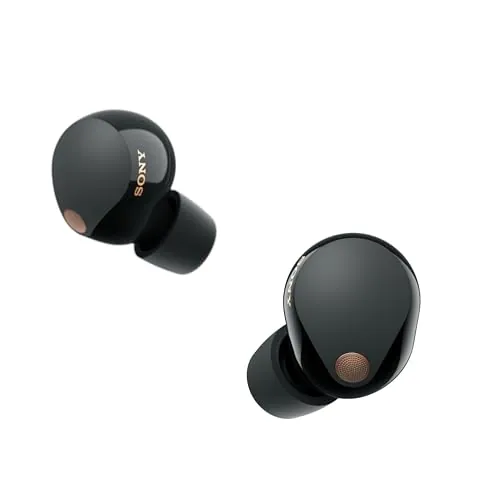
Both are in-ear designs, but their physical approach differs. The MDREX15AP is extremely lightweight and uses rounded silicone tips; it’s often described as comfortable and unobtrusive. The WF-1000XM5 focuses on a smaller premium true wireless form with a glossy finish and touch controls.
Fit is the swing factor. Both include multiple tip sizes, and both product notes/review summaries emphasize that seal can impact sound and call performance. If you prefer a cable and simple in-line controls, the MDREX15AP’s design is more straightforward. If you prefer cable-free ergonomics and touch input, the WF-1000XM5 is the more modern layout.
On the provided scores, the WF-1000XM5 rates notably higher for build quality than the MDREX15AP. That said, real-world feedback matters: the MDREX15AP’s aggregated reviews mention durability concerns (including reports of breakage and one side failing), while the WF-1000XM5’s review summary flags reliability issues, including reports that units stopped working completely.
In short: XM5 looks stronger on build scoring and materials positioning, but both have buyer-reported issues—wired wear-and-tear for the MDREX15AP, and more serious “stopped working” complaints in the XM5 summary.
Durability feedback favors neither product perfectly. The MDREX15AP shows notable durability concerns in the review summary (including reports of breakage after a month and cable/earbud failures). The WF-1000XM5 scores higher for durability in the provided scoring, but the aggregated reviews still warn about reliability and some failures over time.
If durability is your top concern, treat both as items where careful handling matters: avoid yanking cables on the MDREX15AP and keep the WF-1000XM5’s charging routine and fit consistent to reduce day-to-day issues.
Both are portable, but they travel differently. The MDREX15AP is extremely light and doesn’t require a charging case, though the cable can be an extra thing to manage. The WF-1000XM5 is cable-free and pocketable with its charging case, which adds bulk but enables longer total runtime and quick top-ups.
The WF-1000XM5 is the clear feature leader. It includes active noise cancellation, multipoint connection, touch controls, and voice-assistant support, plus a charging case and fast charging. The MDREX15AP keeps things minimal with a wired 3.5 mm connection, hybrid silicone tips, and an integrated in-line remote/mic.
If you want tuning and “smart” behavior, the XM5’s platform is built for that. If you want fewer moving parts (no pairing, no battery, no app learning), the MDREX15AP’s simpler feature set may actually be a benefit.
Only the WF-1000XM5 meaningfully involves an app-driven experience (as indicated by its app experience score and review mention of Sony’s Connect app). One detailed review notes the app can feel complicated for non-technical users, while still being useful for people who want to tweak sound and features. The MDREX15AP avoids this entirely—no app, no accounts, no firmware workflow.
The WF-1000XM5 is the only model here with true smart features: Alexa built-in is listed, and it supports voice control and other advanced functionality. The MDREX15AP has no smart features—it’s a traditional wired earbud with in-line controls.
The MDREX15AP is as simple as it gets: choose the best-fitting ear tips and plug in. The WF-1000XM5 requires charging and Bluetooth pairing, and your results with ANC and sound will depend on getting a strong seal with the included tip sizes. If you want the least setup friction, the MDREX15AP is the easier start.
The MDREX15AP is best for devices that still support 3.5 mm audio (or when you’re willing to use an adapter). It’s listed as compatible with smartphones and is commonly used on PCs in the reviews.
The WF-1000XM5 is compatible with Bluetooth-enabled devices and adds multipoint for multi-device use. If you’re moving between phone/tablet/laptop frequently and want wireless switching, XM5 is the more flexible choice. If you want universal “plug in anywhere” compatibility, MDREX15AP is excellent—so long as the jack is available.
Audio is one of the clearest separations in this matchup. The WF-1000XM5 scores higher for audio quality and is designed for wide frequency reproduction (listed 20 Hz to 40 kHz). Reviews include enthusiastic feedback on bass, detail, and overall musicality, though the aggregated summary still notes that opinions are mixed overall.
The MDREX15AP holds up well for basic wired listening: it uses a 9 mm dynamic driver and is repeatedly described as clear with enjoyable bass “for the price,” contributing to strong overall satisfaction. If you want the higher-end tuning and wireless feature set, XM5 leads; if you want inexpensive, acceptable everyday sound, MDREX15AP is the safer budget bet.
Connectivity comes down to your devices and preferences. The MDREX15AP uses a 3.5 mm wired connection—reliable and low-friction when your device supports it, but it may require an adapter for phones without a headphone jack.
The WF-1000XM5 uses Bluetooth 5.3 (10 m range listed) and supports multipoint for switching between devices. However, customer feedback includes mixed notes on connectivity and reliability, so the “best” option depends on whether you value cable-free convenience more than the predictable behavior of a wired connection.
The comparison here is fundamentally different. The MDREX15AP has no battery, so it will never die mid-listen and is always ready as long as your device has power.
The WF-1000XM5 offers a listed up to 8 hours of listening (and 24 hours with the case), plus fast charging (up to 1 hour from 3 minutes). Reviews are mixed: some praise battery life, while others report charging issues. If you want the simplicity of zero charging, MDREX15AP wins; if you want wireless runtime with a case, WF-1000XM5 is the intended solution.
The MDREX15AP effectively “wins” power efficiency in everyday life because it has no internal battery to manage—power comes from the device. The WF-1000XM5 has good on-paper battery features (8 hours plus case, fast charging), but user feedback includes some charging inconsistencies, so real-world efficiency can vary.
On the provided scoring, the Sony MDREX15AP is the stronger value choice. It delivers the basics—sound, comfort, and a mic—at a very low cost with high customer satisfaction and a massive review base.
The Sony WF-1000XM5 can still be good value for the right buyer because it bundles premium capabilities (ANC, multipoint, touch controls, fast charging), but its value is held back by mixed reliability and satisfaction feedback in the provided review summary. If you will use ANC and wireless features daily, the premium may be justified; if not, the MDREX15AP is the more efficient spend.
Both products come from Sony, and both score well for brand trust in the provided data. The difference is less about brand and more about category risk: true wireless earbuds (like the WF-1000XM5) tend to depend on battery health, charging, and firmware behavior, while wired earbuds (like the MDREX15AP) depend more on cable strain and physical wear. If you’re choosing based on brand alone, it’s effectively a draw.
The MDREX15AP has stronger customer satisfaction signals: 4.3/5 across 28,294 reviews, and the summary highlights comfort and value as repeated positives (with durability/mic as key negatives). The WF-1000XM5 shows more polarized sentiment with a 3.8/5 average across 5,923 reviews; its summary mentions mixed views on sound/ANC/fit and flags reliability as a significant concern.
If you prioritize “known quantity” satisfaction, the MDREX15AP has the clearer edge based on the provided review data.
The provided data does not include clear warranty/support details for either model (the WF-1000XM5 warranty support score is listed as 0, suggesting missing/unknown data rather than a confirmed lack). Because specifics aren’t provided, treat warranty as a pre-purchase check: confirm the seller, return window, and coverage terms—especially for the WF-1000XM5 given the reliability concerns noted in review summaries.
The scores show a 72–72 overall tie, but these earbuds serve different priorities. The Sony WF-1000XM5 is the better technical package: stronger performance and audio scoring, a much richer feature set, and active noise cancellation for noisy environments. If you want a premium true wireless experience, it’s the more capable choice on paper.
The Sony MDREX15AP is the more practical pick for many shoppers: it’s plug-and-play, highly portable, and it has stronger customer satisfaction and value signals from the provided data. It’s also easier to live with if you dislike charging and app complexity. Pick the XM5 when you’ll truly use ANC and wireless features; pick the MDREX15AP when you want low-cost, low-friction listening and a proven review track record.
Overall winner
Depends on your needs
On the provided scoring, they tie on overall score (72), but they win in different ways. The WF-1000XM5 scores higher for features, ANC-focused performance, and audio. The MDREX15AP scores better for value, ease of use, setup simplicity, and portability, and it also has a stronger Amazon star rating and much larger review base.
The Sony WF-1000XM5 is the clear choice for noise control because it includes Active Noise Cancellation and ships with Noise Isolation Earbud Tips. The MDREX15AP only provides sound isolation (passive). Review summaries for both models mention that real-world results depend a lot on getting the right tip fit and seal.
Based on the provided scoring, the WF-1000XM5 rates higher for audio quality and overall performance. The MDREX15AP still reviews well for sound “for the price,” with its 9 mm driver and multiple reviewers noting clear audio and enjoyable bass. If you want the more premium tuning and feature set, the WF-1000XM5 is the stronger pick.
The WF-1000XM5 is positioned around call clarity in its product details, but customer feedback is mixed overall. The MDREX15AP also has mixed mic feedback—some reviewers say it’s clear on calls, while others say it isn’t great. If calls are critical, consider that fit, environment, and device compatibility can affect results for both models.
The MDREX15AP is typically simpler: it’s wired, uses a 3.5 mm jack, and doesn’t require charging or Bluetooth pairing. The WF-1000XM5 adds touch controls and more advanced features, but that also introduces more setup and learning. One review also notes Sony’s app experience can feel complicated for users who prefer minimal configuration.
Neither is perfect in the provided summaries, but the MDREX15AP shows stronger overall customer satisfaction (4.3/5 across 28k+ reviews) even though durability complaints appear frequently. The WF-1000XM5 has a lower average rating (3.8/5) and the aggregated feedback calls out reliability as a significant concern, including reports of units stopping completely.
For travel, the WF-1000XM5 is usually the better match due to ANC, wireless convenience, and a charging case for longer overall runtime. The MDREX15AP can still work well as a travel backup because it’s compact and doesn’t need charging, but it won’t match true wireless convenience or active noise cancelling.
The MDREX15AP uses a 3.5 mm headphone jack, so phones without a headphone port may require a dongle/adapter. The WF-1000XM5 has no headphone jack and connects over Bluetooth, so it won’t need a 3.5 mm adapter—just a compatible Bluetooth device.
Check our rankings and expert guides to find the best electronics products for your goals.