#1 Overall Winner
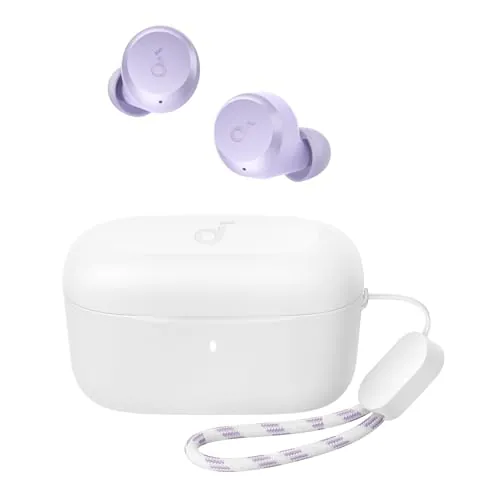
Soundcore by Anker A20i True Wireless Earbuds (Purple)
- Excellent battery value: rated for 9 hours per charge and up to 28 hours with the case, plus quick top-ups.
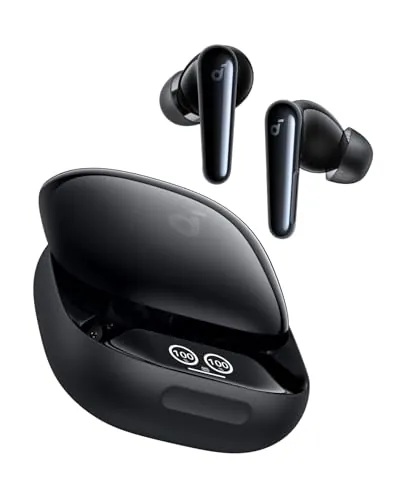
Comparison
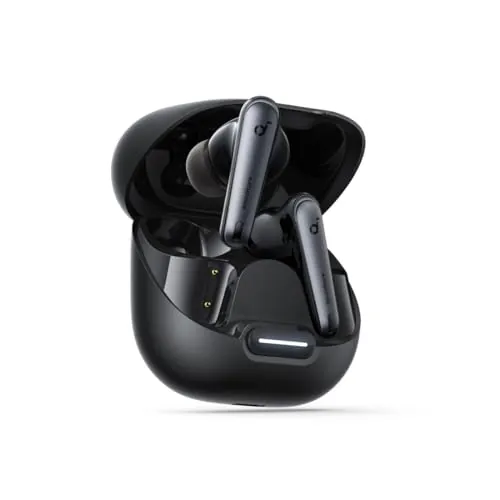
Soundcore A20i and Soundcore Liberty 4 Pro are both Bluetooth 5.3 true wireless earbuds with app-based EQ and control customization, but they target very different buyers. A20i leans hard into affordability, comfort, and battery-per-dollar, while Liberty 4 Pro adds active noise cancelling, faster charging claims, and a more feature-rich case. Overall scores are close, so the right choice usually comes down to whether you need ANC and premium features (Liberty 4 Pro) or straightforward value and portability (A20i).
#1 Overall Winner
Contender
Choose Soundcore A20i if you want the best mix of comfort, portability, battery-for-the-money, and simple setup—without paying for premium extras.
Choose Soundcore Liberty 4 Pro if you want active noise cancelling, faster charging claims, more advanced call hardware, and more on-device/case control over noise modes.
Overall winner
Depends on your needs
| Metric | Soundcore A20i | Soundcore Liberty 4 Pro | Winner | Explanation |
|---|---|---|---|---|
| Overall score | 84 | 83 | A20i | A20i edges overall due to stronger usability, battery, portability, and value scoring. |
| Noise control approach | Sound isolation | Active Noise Cancellation (7 sensors, adaptive) | Liberty 4 Pro | Liberty 4 Pro is explicitly built around ANC and real-time adaptation; A20i does not list ANC. |
| Battery rating (with case) | Up to 28 hours | Up to 40 hours | Liberty 4 Pro | Liberty 4 Pro claims longer total playtime with the case. |
| Fast charging claim | 10 min = 2 hours | 5 min = 4 hours | Liberty 4 Pro | Liberty 4 Pro’s stated quick-charge benefit is stronger. |
| Audio score | 85 | 88 | Liberty 4 Pro | Liberty 4 Pro scores higher for audio, aligning with its multi-driver architecture details. |
| App + EQ customization | 22 EQ presets; control remapping | App-based tuning + case controls | Draw | Both support the soundcore app for personalization; Liberty adds case-level adjustments while A20i emphasizes EQ presets and tap control customization. |
| Call hardware | 2 mics + AI | 6 mics + AI + wind reduction | Liberty 4 Pro | More microphones and explicit wind-reduction features suggest a stronger call-focused design. |
| Portability score | 94 | 88 | A20i | A20i is smaller/lighter-focused with a compact case and lanyard, and it scores higher for portability. |
| Customer rating & volume | 4.4/5 (15,150) | 4.2/5 (3,181) | A20i | A20i has a higher average rating and a much larger review count. |
| Build quality score | 68 | 75 | Liberty 4 Pro | Liberty 4 Pro scores higher for build, though both list plastic materials and both have some mixed durability/reliability feedback. |
In overall performance scoring, Liberty 4 Pro leads (86 vs 82). The biggest real-world difference is that Liberty 4 Pro is designed to handle noisy environments through active noise cancellation with real-time adaptation, while the A20i relies on passive sound isolation and fit.
For basic listening—music, podcasts, and day-to-day calls—both are positioned as capable. A20i gets strong feedback for sound quality at its price, while Liberty 4 Pro is more consistently framed around higher-end audio and travel-focused noise reduction. If your “performance” needs include commuting or flights, Liberty 4 Pro’s ANC-centric design is the practical differentiator.
“Speed” here mainly comes down to charging convenience and responsiveness. Liberty 4 Pro leads in speed score and fast-charging claims (5 minutes for 4 hours) and also aims to reduce friction with case-level controls for noise modes. A20i still performs well for quick top-ups (10 minutes for 2 hours) and scores very highly for setup, which matters for “getting going” quickly.
Neither model is a clean reliability runaway. A20i has mixed reports, including some users saying the earbuds malfunctioned within a year, which matches its lower reliability score. Liberty 4 Pro scores a bit higher for reliability, but reviews also mention issues like microphones stopping after several months and occasional channel/battery complaints.
If you depend on earbuds for daily calls or work meetings, the practical takeaway is to prioritize retailers with a straightforward return policy and to test mic/calls early in ownership.
A20i is the easier day-to-day pick based on usability and setup scoring (and review descriptions of quick, simple pairing). Its feature set is simpler, and the core interactions are straightforward: take them out, connect, and optionally tune EQ/controls in the app.
Liberty 4 Pro adds convenience features (like case-based adjustments), but that also introduces more complexity. Reviews mention that some controls can be inconsistent, which aligns with its lower usability score versus A20i. If you want minimal friction, A20i has the edge; if you enjoy tweaking, Liberty 4 Pro offers more to work with.
Design is close (A20i 81 vs Liberty 4 Pro 80) but with different priorities. A20i focuses on compact portability and comfort, including a lightweight build and a case lanyard. Liberty 4 Pro emphasizes a more advanced ecosystem feel, with its case touch bar/display enabling quick noise-control adjustments.
If you value small-and-simple for pockets and travel light packing, A20i’s design approach fits. If you want a design that supports frequent mode changes (ANC/transparency adjustments) without reaching for the phone, Liberty 4 Pro’s case-driven design is more functional.
Both earbuds list plastic materials, but scoring favors Liberty 4 Pro for build quality (75 vs 68). A20i reviews commonly accept the value trade-off but describe the case as plasticky or less premium in hand feel.
Durability and reliability sentiment is mixed for both models. A20i has more pronounced mixed long-term reliability feedback in the overview, while Liberty 4 Pro also has reports of mic/channel issues after months. If build feel and a more “premium” impression matter, Liberty 4 Pro is the safer choice based on scoring and positioning.
Durability scoring slightly favors Liberty 4 Pro (70 vs 66). Both are listed as waterproof/water-resistant, which helps for workouts and commuting. A20i’s case and overall build feel are more explicitly described as budget/plastic, while Liberty 4 Pro is positioned a step up.
That said, durability and reliability are not identical; both show some mixed long-term feedback. For either model, careful case handling and avoiding drops is especially important given the plastic construction.
A20i is the portability winner (94 vs 88). It’s specifically described as small and lightweight with a compact case and includes a lanyard—useful if you clip it to keys or a bag. Liberty 4 Pro remains portable (still true wireless earbuds), but its case adds extra controls and has specified dimensions, suggesting a more “feature” case rather than the smallest possible footprint.
Liberty 4 Pro is the feature winner. It includes adaptive ANC (7 sensors), a case touch bar/display to adjust noise control, very fast charging claims, wireless charging support, and a 6-mic call system with wind reduction.
A20i is more streamlined but still competitive for the price: soundcore app EQ with 22 presets, customizable tap controls, single-earbud mode, fast charging, and a portability-focused case with a lanyard. If you want the most features and tuning options beyond EQ—especially around noise modes—Liberty 4 Pro is built for that.
A20i scores higher for app experience and reviews repeatedly call out the usefulness of EQ presets and control customization, plus extra in-app audio options. Liberty 4 Pro also gets positive app feedback (including fit/leak tests and personalization), but reviews include some mixed notes about app behavior and the overall control experience.
If the app is central to how you plan to tune your earbuds, A20i looks more consistently positive based on the provided scores, while Liberty 4 Pro’s advantage is more about ANC and hardware features than the app alone.
Liberty 4 Pro offers the stronger smart/advanced feature set in practice: adaptive ANC behavior, wind noise reduction, and more control access via the case interface. A20i still provides meaningful “smart” value through app EQ presets, control remapping, and features like single-earbud mode.
A20i is the easier setup winner (90 vs 81). Review feedback describes quick pairing out of the box and a low-friction initial experience. Liberty 4 Pro setup can include firmware updates and more feature configuration (ANC, fit testing, personalization), which may take longer but also enables more customization.
Compatibility is strong on both: each lists support for cellphones, desktops, laptops, and tablets over Bluetooth. Scores slightly favor Liberty 4 Pro (77 vs 73), but there’s no provided data indicating major platform restrictions for either model.
One A20i reviewer notes it does not connect to multiple devices at the same time and describes how to re-pair to a different device. For multi-device users, it’s worth confirming your intended switching workflow during the return window.
Both earbuds are rated well for audio, but Liberty 4 Pro scores higher (88 vs 85) and includes more detailed audio hardware claims (10.5mm bass driver, titanium-coated tweeter, digital crossover). Reviews highlight crisp highs and strong bass, with extensive EQ personalization through the app.
A20i also receives strong sound-for-price feedback, and its app-based EQ (22 presets) is a major part of how you tailor the sound. The main difference is that A20i’s audio proposition is “good sound at low cost,” while Liberty 4 Pro pushes toward a more premium tuning and the ability to pair that sound with ANC for more consistent listening in noisy places.
On paper, connectivity is similar: both use Bluetooth 5.3 with a listed 10-meter range and support common devices like phones, tablets, laptops, and desktops. Scores are close, with A20i slightly ahead (74 vs 72).
In customer feedback, both show mixed reports—some users say connections are solid, while others mention dropouts or issues over time. If connection stability is a top concern, the data here doesn’t show a guaranteed winner; buying from a seller with easy exchanges is a practical safeguard.
A20i has the stronger battery life score (92 vs 84) and is rated for 9 hours per charge and 28 hours with the case. Review feedback frequently praises battery and quick charging.
Liberty 4 Pro is rated higher on paper for total playtime (10 hours per charge, 40 hours with the case) and highlights faster charging (5 minutes for 4 hours). If you want the highest stated total runtime and quickest top-ups, Liberty 4 Pro has the spec advantage; if you want the stronger score-driven battery consistency and value angle, A20i stands out.
Power efficiency scoring slightly favors A20i (78 vs 74). Both deliver long stated runtimes with their cases, but Liberty 4 Pro’s feature set (ANC, multiple sensors, advanced processing) can reasonably demand more power depending on settings. If you prioritize stretching battery with fewer features running, A20i’s simpler design may be easier to manage.
A20i is the stronger value pick in the data (value score 92 vs 86), supported by its low price and a high volume of positive reviews emphasizing sound quality, comfort, and battery life for the money.
Liberty 4 Pro can still be good value if you will use what you’re paying for: adaptive ANC, faster charging, case-based controls, and a more advanced mic array. If those features aren’t priorities, A20i delivers a more efficient “cost-to-satisfaction” package.
Both products come from Soundcore (Anker), which helps keep brand expectations consistent across the comparison. Scores slightly favor Liberty 4 Pro on brand trust, but both benefit from the same manufacturer ecosystem and app approach.
A20i leads in customer satisfaction signals: it has a higher average rating (4.4/5 vs 4.2/5) and a much larger review count (15,150 vs 3,181). Review summaries praise A20i’s sound quality, battery life, comfort, and value, while noting mixed fit/connectivity and some reliability concerns.
Liberty 4 Pro reviews emphasize crisp sound, strong ANC, and good battery life, but also include mixed feedback on connectivity and occasional issues developing over time (for example, microphone problems). Overall, A20i looks more broadly consistent among buyers, while Liberty 4 Pro has higher highs for features.
Based on the provided warranty/support scoring, Liberty 4 Pro rates higher for warranty/support (60 vs 45). The review content also includes at least one A20i buyer describing a frustrating support interaction. Neither listing includes detailed warranty terms in the provided data, so the safest approach is to verify seller return windows and keep documentation for any defects.
Soundcore A20i is the best overall pick on the provided scores (84 vs 83) and makes the most sense for most shoppers who want reliable day-to-day enjoyment without paying for premium extras. It combines strong sound-for-the-money sentiment, excellent battery scoring, and very easy setup, and it’s supported by a large volume of customer reviews.
Soundcore Liberty 4 Pro is still the better choice when your needs are specific: you want active noise cancelling that adapts to your environment, more on-case control over noise modes, and a higher feature ceiling (plus higher audio and feature scores). If you’ll actually use ANC and the richer controls, Liberty 4 Pro justifies its higher price; otherwise, A20i remains the more efficient buy.
Overall winner
Depends on your needs
On overall scoring, Soundcore A20i is slightly ahead (84 vs 83), mainly driven by its high battery, usability, portability, and value scores. Liberty 4 Pro is the better choice if your priority is feature depth and performance elements like active noise cancelling and its more advanced audio/call hardware. The “better” pick depends on whether you want maximum features or maximum budget efficiency.
No. Liberty 4 Pro explicitly lists Active Noise Cancellation, including 7 sensors and real-time adaptive noise reduction. A20i lists sound isolation rather than ANC. If you specifically want ANC for planes, trains, or noisy offices, Liberty 4 Pro is the more direct match based on the provided product details.
They’re strong in different ways. A20i is rated for 9 hours on a charge and 28 hours with the case, and it scores very highly for battery life. Liberty 4 Pro is rated for 10 hours on a charge and 40 hours with the case, which is higher on total case runtime. Your best choice depends on whether you value the score-driven battery consistency (A20i) or the larger stated total (Liberty 4 Pro).
Liberty 4 Pro has the stronger fast-charge claim: a 5-minute recharge for 4 hours of playtime, plus “2× faster charging.” A20i is also fast-charge capable, with 10 minutes for an extra 2 hours. If quick top-ups are a major priority, Liberty 4 Pro has the advantage based on the stated specs.
Liberty 4 Pro is positioned more heavily for calls: it lists 6 mics, AI noise reduction, and a wind noise reduction algorithm. A20i also targets call clarity with an AI algorithm and 2 mics, and it scores well for everyday usability. Reviews for both mention clear calls, but both also have some mixed long-term reliability feedback, so consistency may vary by unit.
A20i rates higher for usability and setup, and reviews describe quick pairing and straightforward everyday use. Liberty 4 Pro offers more controls and tuning (including case-based adjustments), but that extra functionality can add complexity; some reviewers also describe touch/gesture behavior as inconsistent. If you want fewer moving parts and simpler operation, A20i is generally the safer bet.
Yes. For A20i, the app is central to its value: it provides 22 EQ presets (including BassUp) and lets you customize tap controls. For Liberty 4 Pro, the app supports EQ and noise-control customization, and reviews mention fit/leak tests and personalization. If you don’t want to use an app, you may miss key tuning and control options on both.
A20i is the stronger value-focused choice based on its very high value score, lower price, and large volume of positive reviews highlighting sound and battery for the cost. Liberty 4 Pro can still be good value if you will actually use its premium features (ANC, case controls, faster charging, expanded mic array). Value here depends on whether those features matter to you.
Both have some mixed reliability signals. A20i reviews include reports of malfunctioning within a year, which aligns with a lower reliability score. Liberty 4 Pro reviews include issues such as microphones stopping after several months and occasional channel/battery complaints. Neither set of data suggests universal problems, but if reliability is your top priority, it’s worth buying from a retailer with easy returns.
Check our rankings and expert guides to find the best electronics products for your goals.