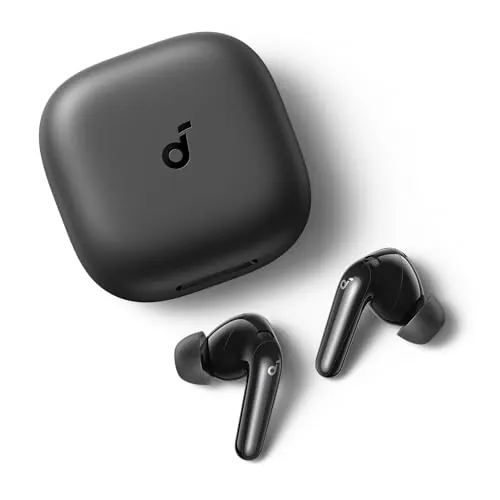
#1 Overall Winner
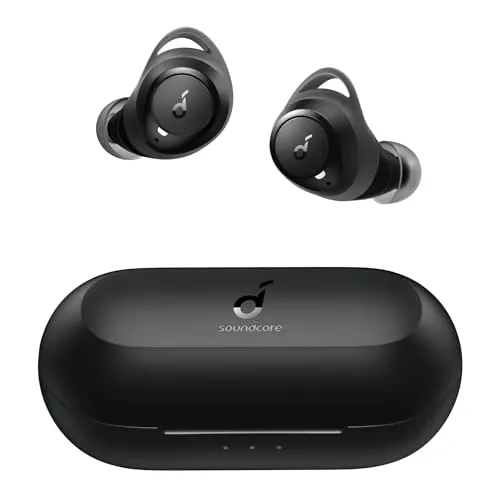
Soundcore by Anker Life A1 True Wireless Earbuds
- Excellent battery-focused scoring with standout battery life and portability scores.
Comparison
Soundcore Life A1 and Soundcore P20i are budget true wireless earbuds from the same brand, but they prioritize different things. Life A1 leans into long playtime, wireless charging, and an IPX7 waterproof rating, while P20i scores higher overall with stronger usability, connectivity, and app customization (including EQ presets and Find My Earbuds). For most shoppers, P20i is the better all-rounder, while Life A1 can be the better pick if you specifically want wireless charging and higher stated total playtime.
#1 Overall Winner
Contender
Choose Soundcore P20i if you want the best all-around experience for the lowest price—easy setup, better connectivity scoring, stronger app EQ/control customization, and better customer satisfaction signals.
Choose Soundcore Life A1 if wireless charging and an IPX7 waterproof rating are must-haves, and you prioritize the higher stated total battery figure.
Either way: both models show mixed reliability feedback in reviews, so buying from a retailer with a straightforward return process is sensible.
Overall winner
Depends on your needs
| Metric | Soundcore Life A1 | Soundcore P20i | Winner | Explanation |
|---|---|---|---|---|
| Overall score | 79 | 88 | P20i | P20i rates higher overall in the provided scoring data. |
| Audio approach | 8mm dynamic drivers; sound modes (Signature/Bass Booster/custom) | 10mm dynamic drivers; 22 EQ presets via app | P20i | Both are customizable, but P20i has higher audio score and deeper app EQ options listed. |
| Battery claim (total) | Up to 40H playtime (listed) | Up to 30H playtime (listed) | Life A1 | Life A1 lists a higher total playtime figure; both score very high for battery. |
| Charging options | USB-C + wireless charging (listed) | Fast charging listed; wireless charging not listed | Life A1 | Life A1 includes wireless charging support in the product details. |
| Bluetooth version | Bluetooth 5.0 | Bluetooth 5.3 | P20i | Newer Bluetooth version and higher connectivity score for P20i. |
| Calls | General call use mentioned in reviews; no AI call feature listed | 2 mics + AI clear calls (listed) | P20i | P20i is explicitly built around clearer calls in the provided product details. |
| Water protection | IPX7 waterproof (listed) | Water-resistant (listed, no IP rating provided) | Life A1 | Life A1 provides a specific IPX rating in the provided data. |
| App features | Sound modes listed; app not clearly specified in the provided specs | Find My Earbuds + EQ + control customization (listed) | P20i | P20i has a stronger, explicitly described app feature set. |
| Customer satisfaction signals | 4.3/5 from 43,146 reviews | 4.4/5 from 105,225 reviews | P20i | P20i has a slightly higher rating and substantially more reviews in the provided data. |
| Reliability (score + sentiment) | Reliability score 65; mixed reports (earbud stops/connection drops) | Reliability score 66; mixed reports (one earbud stopped working) | Tie | Both show mixed reliability feedback; scores are very close. |
For real-world performance, both Life A1 and P20i are tuned toward mainstream listening with an emphasis on bass and convenience. In the scoring data, P20i leads on performance and audio quality, and it also offers deeper EQ preset control through the app, which can help adapt the sound to different content.
Life A1 still performs well for the price and is frequently praised for sound and battery endurance, but its overall performance picture is slightly held back by weaker connectivity and mixed reliability feedback in reviews. If your use is mostly stable listening (podcasts, commuting) and you value charging flexibility, it remains competitive.
“Speed” for earbuds mainly comes down to how quickly they pair/connect and how frictionless they feel when you take them in and out of the case. The score data favors P20i (higher speed and setup scoring), and its specs explicitly describe an instant pairing workflow after first use.
Life A1 can still be quick in practice, but its lower connectivity score and mixed feedback around disconnections suggest the experience may be less consistent depending on device and environment.
Reliability is mixed for both earbuds in the provided data. The reliability scores are very close, and both have customer feedback mentioning cases where one earbud stopped working.
Life A1’s review summary also highlights mixed connectivity/reliability (including reports of the right earbud stopping after first use). P20i’s review summary similarly mentions that reliability is mixed and that some customers report one earbud stopped working. If reliability is your top concern, plan to test thoroughly during the return window.
In the provided scoring data, P20i is the more user-friendly earbud overall, with higher usability and setup scores. Its specs describe an “instant pairing” flow that should feel straightforward for most users.
Life A1 is generally easy to live with, but customer feedback is more mixed around fit/comfort and occasional connection quirks. If you expect to frequently adjust earbuds during use, keep in mind that fit disagreements are more prominent on Life A1 in the aggregated review summary.
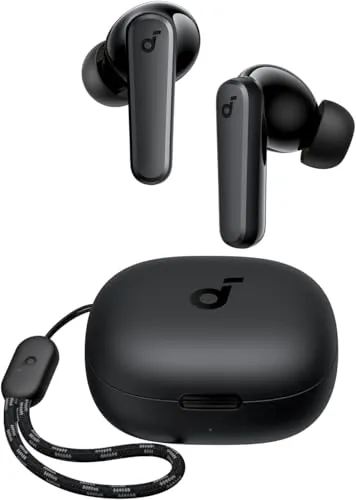
P20i has the design advantage in the score data, with a higher design score and an explicitly compact case that includes a lanyard for clipping to a bag or keys. It’s positioned as an easy carry option.
Life A1 is also designed for portability and scores well there, but reviews show mixed reactions to fit and comfort. If you care most about an on-the-go case design and straightforward carry, P20i has the clearer advantage. If you care most about water protection and charging flexibility, Life A1’s design choices may matter more.
Both are budget earbuds with non-premium materials listed (Life A1: plastic; P20i: PC+ABS). In the score data, Life A1 rates slightly higher for build quality and durability, while P20i rates lower in those areas despite stronger overall performance elsewhere.
Customer reviews for both include some longevity concerns (e.g., one earbud stopping). For buyers prioritizing hardware feel and long-term wear resistance, the data suggests neither is a guaranteed “set and forget” option—though Life A1 has a small edge in build/durability scoring.
From the score data, Life A1 has a modest advantage in durability. It also lists an IPX7 waterproof rating, which is a practical benefit for sweat and rain exposure (assuming fit is secure).
P20i is described as water-resistant but has a lower durability score. Some P20i reviewers mention physical issues after drops. For heavier outdoor/sports use where water exposure is likely, Life A1 has the clearer spec-level advantage.
Both earbuds score highly for portability, but P20i leads with the higher portability score and a case design that’s explicitly described as compact and lightweight with a lanyard for clipping to bags or keys.
Life A1 is still very portable and has excellent battery-focused travel convenience, but if pocketability and carry options are your main goal, P20i has the edge in the provided data.
Soundcore P20i is the more feature-rich option in software: it includes 22 EQ presets, control customization, and Find My Earbuds through the app, plus a call-focused setup with 2 mics and an AI algorithm.
Soundcore Life A1 focuses its feature set on listening modes (Signature, Bass Booster, and custom modes) and charging convenience (USB-C + wireless charging). It also lists an IPX7 waterproof rating, which is a concrete, spec-level advantage if you expect sweat or rain exposure.
P20i clearly leads on app experience in the provided data, with a higher app experience score and explicit app functionality: 22 EQ presets, customizable controls, and Find My Earbuds.
Life A1 does not list the same depth of app functionality in the provided details/specs, and its app experience score is lower. If you like to fine-tune audio and controls from your phone, P20i is the better supported choice.
Neither model is positioned as “smart” in the premium sense (no voice assistant/ANC ecosystem claims are provided), but P20i offers more software-driven features through the soundcore app, including Find My Earbuds and control customization.
Life A1 focuses more on onboard listening modes and charging convenience. If “smart features” to you means app-driven tools and customization, P20i is the stronger match.
P20i is the simpler setup pick based on the score data (notably higher setup score) and its instant pairing description (pairing mode on first use by opening the case and taking the earbuds out, then auto-connect thereafter).
Life A1 setup can still be straightforward, but reviews mention occasional pairing friction (e.g., needing to toggle Bluetooth) and more mixed fit experiences, which can add time before everything feels “dialed in.”
P20i shows stronger compatibility in the provided score data and lists compatibility across cellphones, desktops, laptops, and tablets. It also uses Bluetooth 5.3.
Life A1 lists compatible devices as cellphones and has a lower compatibility score. If you expect to switch between phone and computer use, the provided data points to P20i as the more broadly positioned choice.
In the provided score data, P20i leads on audio quality and also provides more explicit tuning flexibility via the soundcore app (22 EQ presets). Its 10mm driver spec and “big bass” positioning match many customer impressions that emphasize strong bass and clear vocals for the price.
Life A1 remains a strong budget performer with positive sound feedback and an audio score that is still high. It emphasizes sound modes (Signature/Bass Booster/custom modes) rather than the large preset library described on P20i. If you prefer simple switching between modes, Life A1 can be easier; if you want deeper tuning options, P20i is better supported by the provided data.
P20i is the better pick for connectivity on paper: it uses Bluetooth 5.3 and has a higher connectivity and setup score. Customer feedback also commonly mentions easy pairing, though some users still report connectivity issues.
Life A1 uses Bluetooth 5.0 and has a lower connectivity score, with the aggregated review summary noting mixed connectivity and reports of frequent disconnections for some buyers. If stable pairing is a top priority, the data supports choosing P20i.
Both models are strong on battery in the scoring data, but Life A1 has the edge in stated total playtime (40 hours listed vs 30 hours listed for P20i) and a slightly higher battery life score. Both list the same practical fast-charge claim: 10 minutes for 2 hours.
If you want the longest stated total runtime and also want wireless charging for the case, Life A1 is more compelling. If you’re satisfied with 30 hours total and prefer better overall usability and app features, P20i remains an excellent battery-friendly option.
Both models score well for power efficiency, with P20i slightly ahead in the provided scoring data. In practical terms, both emphasize long total playtime and fast top-ups (10 minutes for 2 hours listed for each), which typically correlates with a low-friction charging routine.
If you want the most efficient everyday “grab and go” cycle, P20i’s higher setup/usability scores suggest it will feel more seamless, while Life A1’s wireless charging can be a convenience win if you already use charging pads.
Both earbuds are positioned as strong value buys, but P20i is the more convincing value leader in the provided score data: higher overall score, higher value score, and stronger customer satisfaction signals (higher star rating and far more reviews).
Life A1 can still be the better “value” for certain buyers because it includes wireless charging and a clear IPX7 waterproof rating. If those features prevent you from needing a more expensive alternative, Life A1’s value proposition improves despite its lower overall score.
Both products come from Soundcore by Anker, so baseline brand expectations are similar. The score data gives P20i a higher brand trust score, aligning with its stronger overall and customer satisfaction results in the provided dataset.
That said, both have mixed reliability reports in reviews, so brand trust here is less about “no issues ever” and more about how confidently you feel buying a budget earbud with a clear return/support path.
P20i leads on customer satisfaction in the provided data: 4.4/5 with 105,225 reviews and a higher customer satisfaction score. Feedback commonly highlights sound quality, comfort, value, and easy connection, with some reports of connectivity and earbud failures.
Life A1 also performs well with 4.3/5 from 43,146 reviews and strong value/battery praise. However, its aggregated summary is more mixed on fit/comfort and highlights connectivity and reliability concerns more prominently.
The provided score data favors Life A1 for warranty/support, while P20i has a notably lower warranty/support score. Beyond scoring, the dataset doesn’t provide a full warranty policy for both products in a consistent way, so it’s best to verify coverage and return terms before purchase.
If after-sales support clarity is a major priority, the score data points to Life A1 as the safer pick, but you should still confirm the warranty period and process on the listing you’re buying from.
Soundcore P20i is the better overall choice in this matchup based on the provided scoring data. It scores higher overall and is stronger where budget earbuds often succeed or fail: easy setup, everyday usability, and connectivity. It also adds meaningful app features (EQ presets, control customization, Find My Earbuds) and a call-focused mic/AI design that many shoppers will appreciate.
Soundcore Life A1 remains a smart alternative when your priorities are specific: wireless charging convenience, an IPX7 waterproof rating, and the higher stated 40-hour playtime. The trade-off is that Life A1’s dataset shows more mixed fit/comfort outcomes and weaker connectivity/reliability scoring. If you know you want wireless charging and water protection, Life A1 is worth choosing; otherwise, P20i is the safer all-round pick.

Overall winner
Depends on your needs
Based on the provided scoring data, Soundcore P20i is the stronger overall pick (higher overall score) with particularly strong results in value, usability, setup, and customer satisfaction. Soundcore Life A1 still makes sense if wireless charging and its IPX7 waterproof rating matter most, and it also scores extremely well for battery life and value.
Both are positioned as bass-forward budget earbuds, but the scoring data gives P20i a higher audio quality score than Life A1. P20i also offers 22 EQ presets in the app, which can help tailor the sound. Life A1 highlights multiple sound modes (including Bass Booster) and gets plenty of positive sound feedback, but audio performance is slightly stronger on P20i in the score set.
Life A1 is listed with 40 hours of playtime, while P20i is listed with 30 hours total with the case. In the scoring data, both rate extremely well for battery life, with Life A1 edging it. If your priority is maximizing time between charges, Life A1 has the advantage on the stated playtime, while P20i remains strong for everyday use.
Soundcore P20i is the clearer choice for ease of use in the provided scoring data, with higher setup and usability scores. Its specs also describe a simple instant pairing flow (open case, remove earbuds to enter pairing mode). Life A1 is generally straightforward too, but user feedback includes occasional connection quirks and mixed fit/comfort experiences that can affect day-to-day convenience.
Soundcore Life A1 is more explicitly sports-oriented in the product data, with an IPX7 waterproof rating and “Sports and Exercise” listed as a specific use. P20i is described as water-resistant (without an IP rating in the provided data) and is lightweight/portable. In both cases, workout success depends heavily on fit—Life A1 reviews show some users find the fit secure while others report they can fall out.
Soundcore P20i is more call-focused on paper, listing 2 mics and an AI algorithm intended to improve voice pickup. Life A1 reviews include positive call experiences from some buyers, but it doesn’t emphasize an AI call feature in the provided specs. If calls are a primary use, P20i has the clearer feature emphasis, while real-world results can still vary by environment and fit.
Both products have some reports of connectivity issues in customer feedback, but the scoring data favors P20i with a higher connectivity score and a higher setup score. Life A1’s connectivity is a more notable weak spot in its score profile, and its aggregated review summary mentions frequent disconnections for some users. If stable everyday pairing is your top concern, P20i is the safer bet from the provided data.
Neither product is listed with active noise cancelling in the provided data. Life A1 explicitly lists Noise Control: None. P20i lists Noise Control: Sound Isolation, which generally indicates passive isolation from the ear seal rather than electronic ANC. Some reviewers describe good isolation depending on fit, but that isn’t the same as ANC.
Both score well for value, but Soundcore P20i leads clearly in the provided scoring data with a higher value score and higher overall score, alongside very high customer satisfaction and a large review count. Life A1 is also widely considered a strong value and adds wireless charging plus an IPX7 rating, so it can be better value specifically for buyers who want those features.
Check our rankings and expert guides to find the best electronics products for your goals.