#1 Overall Winner
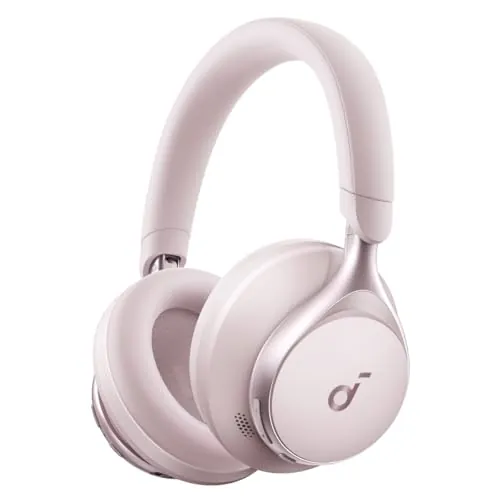
Soundcore Space One
- Strong all-round audio + ANC: High scores for audio quality and performance, with product claims around adaptive ANC and “2X stronger voice reduction” vs Life Q30.
Comparison
Soundcore Space One and Soundcore Sport X20 both target affordable noise-cancelling audio, but they fit very different lifestyles: over-ear travel/desk listening vs true-wireless workouts. With identical overall scores in the provided data, the “winner” comes down to whether you want long over-ear battery life and LDAC (Space One) or secure hooks and IP68 protection (Sport X20).
#1 Overall Winner
Contender
Choose Soundcore Space One if you want an over-ear headset with long ANC battery life (40 hours listed), LDAC Hi-Res support, and comfort for work, commuting, and calls.
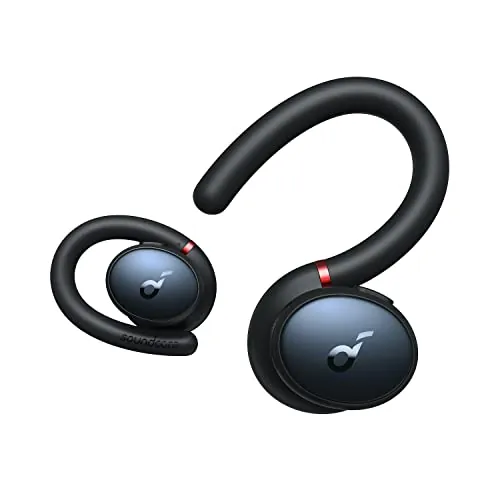
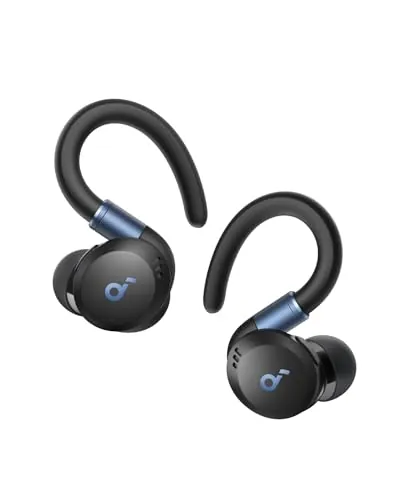
Choose Soundcore Sport X20 if you need true-wireless portability, a secure ear-hook fit for training, and IP68 waterproof/sweatproof/dustproof protection.
Overall winner
Depends on your needs
| Metric | Soundcore Space One | Soundcore Sport X20 | Winner | Explanation |
|---|---|---|---|---|
| Overall score | 86 | 86 | Tie | Both products land at the same overall score, so the best choice depends on form factor and intended use. |
| Form factor | Over-ear headphones | True-wireless in-ear with ear hooks | Depends | Over-ears tend to prioritize comfort and passive isolation; in-ears prioritize portability and sport stability. |
| Noise cancelling approach | Active + adaptive ANC; “2X voice reduction” vs Life Q30 (claim) | ANC with manual adjustment + adaptive ANC (listed) | Depends | Space One targets commuting/voice-heavy environments; Sport X20 targets gym noise and movement. |
| Audio features | 40mm drivers; LDAC Hi-Res Wireless (listed) | 11mm drivers; BassUp (listed) | Space One | LDAC support is explicitly listed on Space One; Sport X20 emphasizes bass-forward workout sound. |
| Battery (listed) | 40h ANC on / 55h ANC off; 2h charge time | 12h earbud avg life; 48h with case; 12h charge time (listed) | Space One | For uninterrupted long sessions, Space One’s listed runtime with ANC is a standout. |
| Water/sweat protection | Not water resistant (listed) | IP68 waterproof/sweatproof/dustproof (listed) | Sport X20 | Sport X20 is designed for sweat, dust, and water exposure. |
| Portability | 259 g; full-size over-ear; includes protective case | Small earbuds + charging case; high portability scoring | Sport X20 | True-wireless earbuds are easier to pocket and carry daily. |
| Connectivity range (listed) | 15 m Bluetooth range; BT 5.3 | 10 m Bluetooth range; BT 5.3 | Space One | Space One lists a longer Bluetooth range. |
| Controls | Buttons + app control (listed) | Touch control (listed) | Depends | Some users prefer physical buttons for fewer accidental presses; others prefer touch controls for simplicity. |
| Customer satisfaction (Amazon) | 4.4/5 from 14,713 reviews | 4.2/5 from 13,299 reviews | Space One | Space One has a slightly higher rating and more reviews, indicating broader satisfaction in this data. |
| Durability score | 72 | 86 | Sport X20 | Sport X20 scores higher for durability and is built for sweat/water/dust-heavy use. |
In the provided scoring, Sport X20 edges performance slightly (88 vs 87), while both rate as strong performers for their respective designs. In real-world terms, Space One is tuned for stable, long over-ear listening and commuting, with adaptive ANC positioning and LDAC support listed. Sport X20 is tuned for movement, gym noise, and staying seated securely in-ear while still delivering strong sound and ANC in a smaller package.
Neither product is “perfect” on reliability in the provided data. Space One has a higher reliability score (74 vs 68), but its customer summary still mentions some reports of units stopping working. Sport X20 has more mixed reliability feedback in the review summary, including charging issues and occasional connection/static complaints. If reliability is a top priority, it’s sensible to test early (pairing, charging, ANC modes) during the return period for either model.
Space One uses button controls plus app control (listed) and is frequently described as easy to connect and comfortable for long wear. Its over-ear design can also be simpler for longer sessions where you don’t want to adjust in-ear fit. Some owners mention practical downsides like bulk and cleaning concerns for the ear pads.
Sport X20 is designed for grab-and-go use: multiple reviews describe quick pairing and immediate connection when taken out of the case. The adjustable hooks can improve fit but also add a small step to dialing in comfort. A few reviews note usability drawbacks around charge-status visibility and occasional connection/static issues.
This is a split decision driven by form factor. Space One is an over-ear design with rotating cups and a padded headband aimed at comfort, but some users call it bulky. Sport X20 scores very highly for design (90) because its adjustable ear hooks are purpose-built for stability during training and it’s easy to carry.
Sport X20 rates higher for build quality (80 vs 72) and is explicitly designed for water/sweat/dust exposure (IP68 listed). Reviews also include use in dirty work environments with generally positive durability feedback.
Space One is often praised for comfort, but its build is described as more plasticky by some owners and reflected in its lower build/durability scores. If your usage involves sweat, rain, or dust, Sport X20 is the safer hardware choice.
Sport X20 is the clear durability leader: it has an IP68 rating listed and a much higher durability score (86 vs 72). It’s designed for sweat, water, and dust, and some reviews describe using it in dirty environments.
Space One is listed as not water resistant and has lower durability/build scores. For intense workouts or outdoor use where moisture is expected, Sport X20 is the safer choice.
Sport X20 is much more portable, scoring very highly for portability and using a pocketable charging case. Space One is a full-size over-ear design (259 g listed) and some owners call it bulky, though it includes a carrying case and can be more comfortable for extended wear once you’re seated.
Space One leans into travel/desk features: LDAC Hi-Res, app control/EQ, and included accessories like an AUX cable and protective case. It also lists adaptive ANC with a focus on voice reduction.
Sport X20 focuses on sport-specific features: rotatable/extendable ear hooks, BassUp, and IP68 protection. It also includes a charging case for extended total playtime. If you want the more specialized “sport tool,” Sport X20 has the more purpose-built feature set; if you want broader everyday flexibility and Hi-Res codec support, Space One is stronger.
Both products support the Soundcore app and score similarly for app experience. Space One reviews mention EQ customization and a sound test/profile feature. Sport X20 reviews mention the app working well and firmware being up to date out of the box, plus EQ settings that improve sound for some listeners. In both cases, the app is a meaningful part of getting the most out of the headphones/earbuds.
Both have similar smart-features scoring in the provided data. Space One highlights app control and adaptive ANC calibration, while Sport X20 highlights adaptive/manual ANC and workout-focused modes/features like BassUp and a focus-friendly ANC positioning. If your “smart features” priority is codec support and listening customization, Space One has the clearer listing advantage via LDAC; if it’s workout utility, Sport X20 is more specialized.
Sport X20 scores higher for setup (86 vs 83) and multiple reviews describe quick first pairing and instant reconnection when taking the earbuds out of the case. Space One is also generally described as easy to connect, with positive feedback around multi-device use. The main setup “difference” is practical: Sport X20 may require a little time to adjust the ear hooks and ear tips to get the best seal.
Both are listed as compatible with common devices such as smartphones, laptops/desktops, and tablets. Space One also lists compatibility with gaming consoles and includes an AUX cable, which can help in situations where wireless is inconvenient. Sport X20 focuses on wireless use with a charging case and does not list a wired option.
Space One leads slightly on the audio score (90 vs 88) and lists LDAC Hi-Res Wireless with 40mm dynamic drivers, which may matter if you use compatible devices/services and want that codec support. Reviews frequently praise sound quality, and some note it competes well with more expensive brands in overall quality (with bass expectations varying by listener).
Sport X20 emphasizes BassUp and 11mm dynamic drivers for energetic listening, and reviews commonly praise crisp highs and strong bass with app EQ options. If you want a more workout-forward tuning and a smaller form factor, Sport X20 is strong; for Hi-Res codec support and a slightly higher audio score, Space One has the edge.
Both use Bluetooth 5.3. Space One lists a 15 m Bluetooth range versus 10 m on Sport X20, which can help if you move around at home/office. Space One’s review summary highlights easy multi-device use/dual connectivity, while Sport X20’s review summary includes some connection complaints (though many users also report smooth pairing and stable everyday use).
Space One is the battery-life standout for long sessions, with up to 40 hours with ANC on and 55 hours with ANC off listed, plus a 2-hour charge time listed. Its battery life score is also higher.
Sport X20 lists 12 hours average life and 48 hours total with the case. Many reviews praise battery life, but the aggregated feedback notes mixed battery/charging experiences for some users. If you want fewer charging touchpoints, Space One is simpler; if you prefer topping up via a case, Sport X20 fits that style.
Both score well for power efficiency. Space One pairs strong efficiency with very long listed runtime (especially with ANC on), while Sport X20 focuses on managing power through a charging case for multiple top-ups. If you value fewer charging cycles during travel, Space One’s battery approach is more convenient; if you want small devices that recharge frequently in a case, Sport X20 fits better.
Both rate as strong values in the provided scoring, with Space One slightly higher on value. Space One’s value case is helped by its strong battery life, LDAC support, and broad comfort/ANC feedback for an over-ear product. Sport X20’s value comes from its workout-specific fit, IP68 protection, and punchy sound features like BassUp.
If you’ll actually use the sport durability and secure hooks, Sport X20 can be the better “value for your needs.” If you want maximum everyday versatility and long ANC runtime, Space One presents the stronger all-round value proposition.
This is essentially even: both are from Soundcore (Anker) and have the same brand trust score in the provided data. Review volume is high for both products, suggesting broad adoption. Brand trust here is more about selecting the right form factor for your use and buying through channels with good return support in case you encounter the reliability issues mentioned in some reviews.
Space One shows slightly stronger customer satisfaction in the provided Amazon snapshot, with 4.4/5 across 14,713 reviews versus 4.2/5 across 13,299 for Sport X20. Space One feedback commonly highlights sound quality, noise cancellation, comfort, and battery life, with some reliability complaints.
Sport X20 feedback strongly highlights secure fit, comfort, and ANC, but includes mixed notes on reliability, connection, and charging. If you want the more consistently rated option, Space One has the edge.
Warranty/support scoring is the same for both products in the provided data. No specific warranty terms are included in the product data provided here, so the practical takeaway is to verify return/warranty details at checkout and keep an eye on early charging/connectivity behavior—especially given the mixed reliability comments for both products.
With identical overall scores, Soundcore Space One and Soundcore Sport X20 are best viewed as two strong value picks for different situations rather than direct substitutes. Space One is the more versatile everyday option if you want comfortable over-ears, LDAC listed for Hi-Res wireless, and long listed runtime with ANC—making it a better match for commuting, work, and travel.
Sport X20 is the better specialist choice: if you need secure fit under movement and strong protection against sweat, water, and dust (IP68), it’s the safer buy for the gym and outdoors. If your routine mixes both desk days and workouts, your decision should prioritize fit and durability first, then battery style (single-charge vs charging case).
Overall winner
Depends on your needs
On the provided scoring, they’re effectively tied overall (both have an overall score of 86). The better choice mainly depends on your use case: Space One makes more sense if you want an over-ear fit, LDAC support, and very strong battery life with ANC. Sport X20 is the better pick for workouts thanks to its adjustable ear hooks and IP68-rated protection.
Space One is the clearer winner for long listening sessions on a single charge, with up to 40 hours with ANC on (and 55 hours with ANC off) listed. Sport X20 is designed around a charging case, with 48 hours total playtime listed and 12 hours average life listed for the earbuds themselves. For travel without frequent charging, the over-ears have the edge.
Soundcore Sport X20 is purpose-built for training. It has rotatable and extendable ear hooks for a locked-in fit and an IP68 waterproof/sweatproof/dustproof rating. Reviews also frequently mention the buds staying in place and being comfortable for long wear. Space One can work for light workouts, but it’s listed as not water resistant.
Both score strongly for audio quality, with Space One slightly higher on the provided audio score (90 vs 88). Space One also lists LDAC Hi-Res Wireless support. Sport X20 emphasizes BassUp and 11mm drivers for workout motivation, and reviews frequently praise bass and EQ options in the app. Choose Space One for Hi-Res features; choose Sport X20 for sporty, bass-forward tuning.
Both are positioned around effective ANC. Space One highlights adaptive noise cancelling and claims up to 98% noise reduction under test conditions, plus “2X stronger voice reduction” versus the Life Q30. Sport X20 positions its ANC for gyms (manual adjustment and adaptive ANC) and reviews often call its noise cancelling excellent. If you want over-ear isolation for commuting, Space One is a natural fit; for workouts, Sport X20 is the targeted option.
Space One is frequently praised for its soft padding and over-ear comfort, and its rotating ear cups are designed to reduce pressure points for extended wear. Sport X20 also receives strong comfort feedback (some users report wearing them for hours without pain), but in-ear comfort can be more individual. If you typically prefer not having anything in your ear canal, Space One is the safer comfort bet.
Sport X20 is the clear durability pick on paper and in the scoring: it has an IP68 waterproof/sweatproof/dustproof rating and a higher durability score. Space One is listed as not water resistant, and its build/durability scoring is lower, with reviews mentioning a more plasticky feel. For heavy sweat, rain, or dusty work environments, Sport X20 is better aligned.
Yes, both have some caveats in review summaries. Space One has reports from some customers that the headphones can stop working, which aligns with a mid-range reliability score. Sport X20 has mixed reliability feedback too, including some reports of charging issues and occasional connection/static complaints. If reliability is critical, buy from a retailer with straightforward returns and test thoroughly during the return window.
Sport X20 wins on portability: it’s a true-wireless design with a charging case and scores very highly for portability. Space One is a full-size over-ear headset (259 g listed) and can feel bulkier, though it includes a protective case and an AUX cable in the box. For pockets and quick trips, Sport X20 is simpler; for long flights, Space One’s comfort and long runtime can be more convenient.
Check our rankings and expert guides to find the best electronics products for your goals.