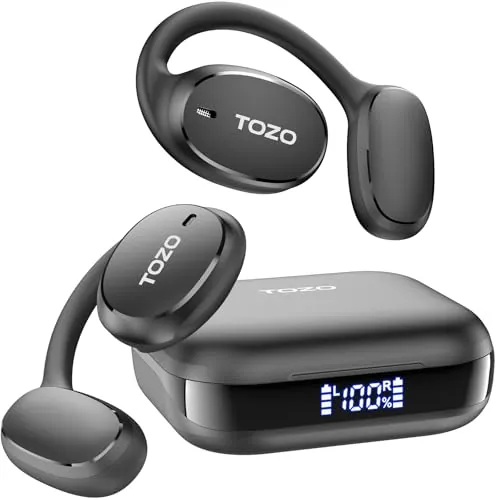
#1 Overall Winner
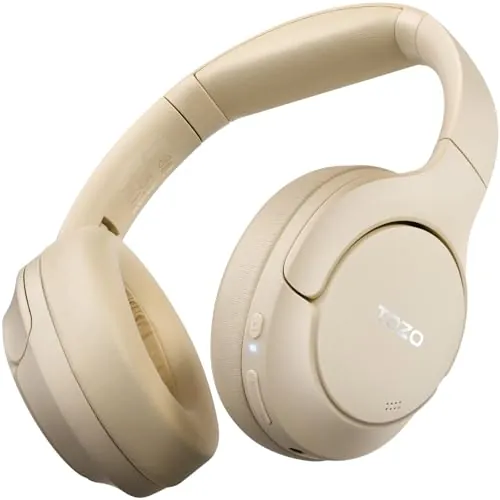
TOZO HT2 Hybrid Active Noise Cancelling Headphones
- Long battery life: rated up to 60 hours (ANC off) with fast 2-hour charge time.
Comparison
TOZO HT2 and TOZO NC3 target budget-friendly active noise cancelling, but they fit different lifestyles: HT2 is an over-ear headset built for long, comfortable sessions, while NC3 is a portable in-ear option with a feature-rich case and IPX8 rating. Based on the provided scores, HT2 is the stronger overall pick , while NC3 makes more sense if you specifically want compact earbuds and workout-ready water resistance.
#1 Overall Winner
Contender
Choose TOZO HT2 if you want comfortable over-ear headphones for long workdays, travel, and consistent day-to-day use—plus a 3.5mm wired option when you’re out of battery.
Choose TOZO NC3 if you want compact earbuds with a charging case, Transparency Mode, IPX8 waterproofing for workouts, and lots of app EQ presets.
Overall winner
Depends on your needs
| Metric | TOZO HT2 | TOZO NC3 | Winner | Explanation |
|---|---|---|---|---|
| Overall score | 85 | 79 | TOZO HT2 | Higher overall score with standout battery/value/customer satisfaction. |
| Form factor | Over-ear, foldable | In-ear with charging case | Depends | HT2 favors comfort; NC3 favors pocket portability. |
| Noise cancelling (claimed) | Hybrid ANC (3 ANC mics) | Hybrid ANC up to -45 dB | TOZO NC3 (on paper) | NC3 includes a specific -45 dB claim; HT2 describes broad frequency noise control without a dB figure. |
| Call noise reduction | ENC calls | 6-mic ENC clear calls | TOZO NC3 | NC3 is more explicitly call-focused with a 6-mic array. |
| Battery life emphasis | Up to 60h (ANC off) | Up to 68h total (ANC off); 13h per charge | Depends | HT2 leads for single-device runtime; NC3 leads for total with case and adds quick-charge figures. |
| Connectivity score | Stronger (score-based) | Lower (score-based) | TOZO HT2 | HT2 scores higher for connectivity and reviews are less mixed on dropouts. |
| Latency (listed) | 90 ms | 45 ms | TOZO NC3 | NC3 has the lower stated audio latency. |
| Wired option | 3.5mm AUX supported | No wired option | TOZO HT2 | HT2 can keep going with a cable when battery is depleted. |
| Water resistance | Listed “waterproof” (no IP rating provided) | IPX8 | TOZO NC3 | NC3 provides a clear IPX8 rating for workouts and rain. |
| Customer satisfaction | 4.5★ / 4,724 reviews | 4.3★ / 27,308 reviews | TOZO HT2 | HT2 has a higher star rating and higher customer satisfaction score; NC3 has far more reviews but more mixed fit/reliability feedback. |
For real-world performance, both products focus on reducing common background noise like commutes and office chatter. TOZO HT2 is frequently praised in reviews for noticeably reducing airplane and household/office noise, and it scores higher overall for performance in the provided scoring. Its over-ear seal can also help passively reduce sound before ANC is applied.
TOZO NC3 includes a specific hybrid ANC claim of up to -45 dB and is designed to reduce steady low-frequency noise (subway rumble, engine noise, AC hum). Where NC3 can vary more is consistency: in-ear ANC performance depends heavily on getting a good ear-tip seal, and the product’s own review summary notes mixed fit feedback.
For video and gaming, the listed latency favors TOZO NC3 (45 ms) over TOZO HT2 (90 ms). HT2 users also mention that noticeable delay can occur until enabling a dedicated game mode via the headphone controls.
NC3’s listing explicitly mentions low-latency connection for videos and gaming, and its lower stated latency supports that. If you’re sensitive to lip-sync delay, NC3 has the clearer advantage based on the provided numbers.
TOZO HT2 scores notably higher for reliability (86 vs 68) and has review excerpts describing continued use over long periods with stable performance. The main “reliability-like” complaint in the data is more about feature limitations (for example, ANC behavior in wired mode) rather than random failures.
TOZO NC3 has a more mixed reliability story: while many customers are happy, the aggregated feedback notes some cases where an earbud stops working (often the right) and some reports of disconnections. If you want the safer reliability bet based on the provided data, HT2 is the stronger choice.
TOZO HT2 uses physical buttons plus app control, which many users find predictable for tasks like switching modes and adjusting volume. Reviewers also mention easy Bluetooth connectivity and convenience when using the headphones across devices.
TOZO NC3 uses touch controls and adds convenience features like auto-pairing when you open the case and a one-key reset. However, daily usability can depend on fit: if the earbuds don’t stay secure, you may spend more time adjusting them, and the review summary notes mixed fit and connectivity experiences. If you want the most “set and forget” experience, HT2 tends to be the safer bet in the provided data.
TOZO HT2 is designed for comfort-first listening: over-ear earcups, adjustable fit, and a foldable structure to reduce bag space. At 225 g, it’s still a full-size headset, which some users may find less convenient for pocket carry.
TOZO NC3 is designed for carry-anywhere use: lightweight in-ear buds and a compact charging case. This form factor is ideal for commuting and errands, but comfort depends more on ear shape and tip selection—something reflected in the mixed fit feedback.
Both products use plastic-based enclosures (HT2 lists ABS; NC3 lists ABS + PC). In the scoring, build quality is similar (HT2: 73; NC3: 74), suggesting neither is positioned as a premium-material option.
Where they differ is how they’re used: HT2 reviewers describe drops and multi-year use with minimal wear, though comfort materials (pleather/protein leather) can feel warm. NC3 has durability praise in some reviews, but its reliability feedback is more mixed overall (including reports of one earbud failing), which can affect perceived “build quality” in day-to-day ownership.
NC3 is better specified for harsh conditions because it includes an IPX8 waterproof rating, which aligns well with workouts and outdoor use. Some reviews also describe the earbuds surviving tough scenarios.
HT2 gets practical durability praise in reviews (surviving drops and showing minimal wear), but it lacks a stated IP rating in the provided specs. For fitness and rain exposure, NC3 is the clearer pick; for general everyday use and travel handling, HT2’s owner feedback is reassuring.
TOZO NC3 is the portability winner because it’s a true wireless earbud set with a compact charging case and low overall weight. It’s easy to carry in a pocket and top up throughout the day.
TOZO HT2 is portable for an over-ear headset thanks to its foldable, lightweight design, but it still takes more bag space than earbuds. If you travel light or want something always on you, NC3 is the better fit.
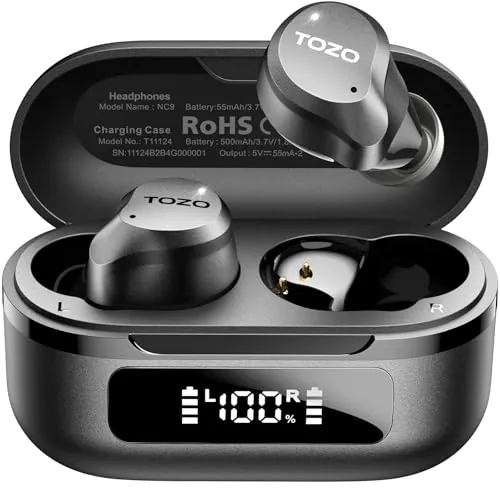
NC3 is the more feature-forward pick on paper. It adds Transparency Mode, an LED battery display on the charging case, quick-charge behavior (10 minutes for up to 1 hour), and 32 EQ presets in the app. It’s also rated IPX8 for water resistance, making it more suited to workouts and outdoor use.
HT2 counters with full-size headphone practicality: foldability for travel bags, button controls plus app control, and a 3.5mm wired mode for situations where Bluetooth isn’t ideal or the battery is depleted. If you value “always usable,” HT2’s wired fallback is a meaningful feature difference.
Both products support app interaction for sound customization. NC3 clearly lists 32 EQ presets and the ability to share EQ settings, which makes the app a central part of the product’s identity.
HT2 also supports app control and EQ customization. Review feedback mentions saving EQ settings to the headphones (and then not needing the app constantly), which can be convenient if you prefer minimal app dependence after initial setup.
TOZO NC3 emphasizes smart listening features with Transparency Mode, app EQ sharing (“EQ Zone”), and in-app help including AI chat features (as listed). These are useful if you like customizing sound profiles or switching quickly between isolation and awareness.
TOZO HT2 focuses more on core headphone functionality: ANC/ENC, app control, and physical controls for mode switching. If your priority is more modes and app-driven options, NC3 is stronger; if you want simple, predictable operation, HT2’s approach is often easier in daily use.
TOZO NC3 is designed for quick start: open the case to auto-pair and use a one-key reset if pairing needs to be restored. That’s a strong fit for everyday carry.
TOZO HT2 is also described as easy to connect in reviews, and it adds a simple operational fallback: if Bluetooth isn’t available or the battery is low, you can switch to wired use with the included 3.5mm cable. If you value the quickest pocket setup, NC3 wins; if you value having more than one way to connect, HT2 is more flexible.
Both products list compatibility with mainstream iOS/Android phones, tablets, and laptops. NC3 explicitly lists a wider set of compatible devices (including desktops and gaming consoles in its listing). HT2 adds a practical compatibility benefit with its 3.5mm wired option, which can be useful for older devices and wired-only sources.
If you need maximum “it works with anything,” HT2’s wired fallback can matter. If you only use Bluetooth devices and want compact carry, NC3 fits well.
Both products score well for audio quality in the provided data (HT2: 88, NC3: 84). HT2 uses dual 40mm dynamic drivers and is positioned for “Hi-Res” listening, with reviews commonly describing satisfying sound and strong bass for the price. It also supports wired listening via 3.5mm, which some users prefer for certain sources.
NC3 uses a 12mm dynamic driver with “Bass Plus” tuning and emphasizes fuller low end and clearer vocals for music and spoken-word content. It also offers extensive EQ preset options through the TOZO app. If you want the more immersive, long-session over-ear presentation, HT2 is favored by the audio score; if you want pocket audio with lots of EQ options, NC3 is the more configurable setup.
Both products use Bluetooth 5.3 and list broad compatibility with iOS/Android phones, tablets, and laptops. The listed range favors NC3 (20 m) vs HT2 (10 m), but real-world stability is reflected more strongly in the scoring and review summary.
In the provided scores, HT2 leads for connectivity (85 vs 73) and is often described as easy to pair with reliable connections. NC3 has mixed feedback: many users find it stable, but others report disconnections. If connection reliability is a priority, HT2 has the stronger data signal.
TOZO HT2 is rated up to 60 hours of listening with ANC off, with a listed 2-hour charge time. Reviews repeatedly highlight multi-day use and strong standby/endurance. It also includes a 3.5mm cable for continued use if the battery is depleted.
TOZO NC3 is rated up to 13 hours per charge with ANC off and 68 hours total with the case (or up to 9.5 hours per charge / 40 hours total with ANC on). It also lists a quick-charge feature (10 minutes for up to 1 hour). Choose HT2 if you want long runtime without relying on a case; choose NC3 if you prefer “top-up” charging and quick boosts between meetings or commutes.
Both products score well for battery/power efficiency in the provided data, with HT2 slightly ahead on the power efficiency score. NC3 includes SmartPow power management claims and provides detailed ANC-on vs ANC-off battery figures, plus quick-charge behavior.
If you want fewer charging cycles on a single device, HT2’s long runtime is compelling. If you want efficient “top-ups” across a week, NC3’s case system and quick-charge detail are practical advantages.
Both products score extremely well for value (HT2: 93; NC3: 92), and both are priced in the budget range in the provided data. TOZO HT2 pairs strong comfort, long battery, and stable satisfaction into a straightforward package, which helps it edge value in the scoring.
TOZO NC3 offers impressive features for the price—Transparency Mode, an LED display case, IPX8 rating, and extensive EQ presets—making it a high-feature value pick if it fits your ears well and you don’t experience the connectivity or one-earbud issues mentioned in the customer summary.
Both products come from TOZO and share similar positioning. In the provided scoring, HT2 rates higher for brand trust (82 vs 76), and its review excerpts include repeat buyers who mention good experiences across multiple TOZO products.
NC3 has very large review volume and plenty of positive feedback, but also more mixed reliability/fit sentiment, which can affect buyer confidence. If you want the stronger brand-trust signal from the provided data, HT2 is ahead.
TOZO HT2 has a higher star rating (4.5/5) with 4,724 reviews and a high customer satisfaction score. The review themes are consistent: comfort, strong battery life, and ANC that works well for the price.
TOZO NC3 has a slightly lower star rating (4.3/5) but a much larger review count (27,308). Praise often centers on sound, noise cancelling, and battery life. However, the aggregated summary notes recurring mixed feedback about fit, disconnections, and occasional one-earbud failures, which likely explains the lower satisfaction and reliability scoring.
Warranty specifics are not provided in the listings, so a detailed comparison isn’t possible. In the provided scoring, NC3 rates higher for warranty/support (72 vs 58). Some reviews for TOZO earbuds mention helpful customer service experiences, while HT2 content focuses more on product performance and comfort than support interactions.
TOZO HT2 is the better overall pick in this comparison based on the provided scores (85 vs 79). It combines strong audio scoring, very high battery and value scores, and higher reliability/connectivity and customer satisfaction signals—plus the practical bonus of a wired 3.5mm option.
TOZO NC3 remains a smart alternative if you specifically want true wireless portability and workout-friendly protection. Its feature set is richer on paper (Transparency Mode, LED case display, IPX8, quick-charge details, and 32 EQ presets), and its lower stated latency may appeal to video watchers and casual gamers. The trade-off is more mixed feedback on fit, connection stability, and long-term reliability. If you’re confident in in-ear fit, NC3 can be the better match; otherwise, HT2 is the safer recommendation.
Overall winner
Depends on your needs
Based on the provided scores, TOZO HT2 ranks higher overall (85 vs 79). The HT2 scoring highlights stronger comfort, battery life, and customer satisfaction, along with a strong value score. TOZO NC3 is still competitive, especially if you want an earbud form factor with features like Transparency Mode, an LED case display, and an IPX8 rating.
They’re strong in different ways. TOZO HT2 is rated up to 60 hours with ANC off on the headphones themselves. TOZO NC3 is rated up to 13 hours per charge (ANC off) and 68 hours total with the charging case, plus quick-charge support (10 minutes for up to 1 hour). Choose based on whether you prefer a single device or a case-based system.
Both include ENC for calls, but they approach it differently. TOZO NC3 emphasizes voice pickup with a 6-mic ENC setup designed for busy cafés and offices. TOZO HT2 includes ENC call noise cancellation and reviewers frequently mention clear calling and strong noise reduction for the price. If you want the most call-focused mic count in the listing, NC3 has the edge.
TOZO HT2 is a good fit if you want over-ear comfort for long sessions, foldability for packing, and the option to switch to 3.5mm wired when the battery runs out. TOZO NC3 is more pocketable and adds Transparency Mode for announcements and quick conversations. If you want maximum portability, pick NC3; for long-wear comfort, HT2 is usually the better match.
Comfort feedback is stronger and more consistent for TOZO HT2, which uses over-ear protein leather earcups and an adjustable design intended for all-day wear. Reviews repeatedly mention comfort (including with glasses), though some note ears can feel warm or sweaty. TOZO NC3 comfort depends more on ear shape and tip seal, and customer feedback is mixed with reports of earbuds slipping or falling out for some users.
TOZO HT2 scores higher for reliability (86 vs 68) and has review excerpts describing months/years of continued use. TOZO NC3 has mixed reliability feedback in the summary, including reports of one earbud stopping working for some customers. If reliability is your top concern, the data points more strongly toward the HT2.
Both use Bluetooth 5.3, but the listed range differs: HT2 specifies 10 meters while NC3 lists 20 meters. In the scoring, HT2 rates higher for connectivity (85 vs 73), while NC3’s reviews include some disconnect complaints. If you prioritize stable day-to-day connections based on the provided scores, HT2 has the advantage.
TOZO NC3 is the clearer pick for workouts because it has an IPX8 waterproof rating and a lightweight in-ear design. TOZO HT2 is listed as “waterproof” but no IP rating is provided, and over-ear headphones generally trap more heat during exercise—something reviewers also mention (ears can feel sweaty). For gym use, NC3 aligns better with the provided specs.
Both listings mention low-latency use, but the details differ. TOZO NC3 states Bluetooth 5.3 supports a stable, low-latency connection and its audio latency is listed as 45 ms. TOZO HT2 lists 90 ms latency, and at least one reviewer reports noticeable delay until enabling a “game mode” using the headphone button. For lowest stated latency, NC3 is ahead.
Check our rankings and expert guides to find the best electronics products for your goals.