#1 Overall Winner
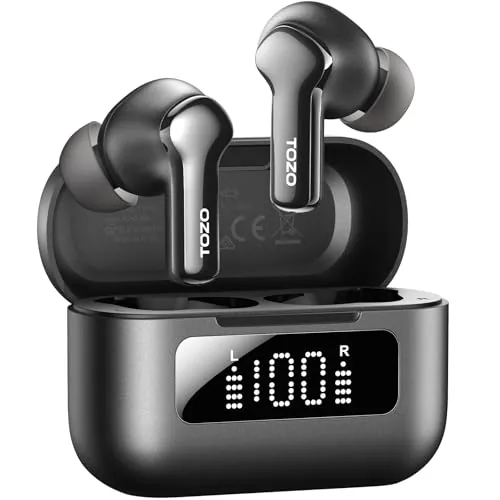
TOZO Hybrid Active Noise Cancelling Wireless Earbuds (NC3)
- Hybrid ANC up to -45dB for reducing steady low-frequency noise (e.g., subway/airplane/AC).
Comparison
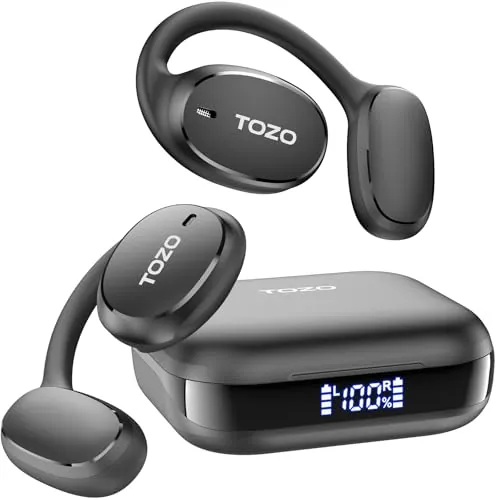
TOZO NC3 and TOZO OpenEgo target different priorities: NC3 focuses on hybrid active noise cancelling and in-ear isolation, while OpenEgo uses an open-ear, earhook design built for comfort and awareness. With a higher overall score (86 vs 79), OpenEgo is the better all-round pick for long wear and everyday usability, but NC3 is the stronger choice if you want real ANC for commuting and travel.
#1 Overall Winner
Contender
Choose TOZO OpenEgo if you want an open-ear fit for comfort and awareness (running, walking, workdays, long calls) and you prefer a higher-scoring all-rounder.
Choose TOZO NC3 if you want active noise cancelling, in-ear isolation, stronger water protection (IPX8), and a commute/travel-friendly listening experience.
Overall winner
Depends on your needs
| Metric | TOZO NC3 | TOZO OpenEgo | Winner | Explanation |
|---|---|---|---|---|
| Overall score | 79 | 86 | TOZO OpenEgo | Higher overall balance driven by usability/design/portability and customer satisfaction scores. |
| Noise control | Hybrid ANC up to -45dB + Transparency Mode | Open-ear awareness (no ANC listed) | TOZO NC3 | NC3 is purpose-built to reduce steady low-frequency noise; OpenEgo prioritizes hearing the environment. |
| Battery life | Up to 68h total (ANC off); up to 40h total (ANC on) | Up to 80h total (case); 15h average life listed | Tie | Both score very highly for battery; OpenEgo claims higher total hours, while NC3 provides ANC on/off breakdown. |
| Call system | 6-mic ENC | Dual-mic noise cancelling (for calls) | TOZO OpenEgo | Both support clearer calls; OpenEgo has stronger call-centric review highlights and higher connectivity/usability scores. |
| EQ/app customization | TOZO app with 32 EQ presets + custom sound | TOZO app with 32 EQ modes | Tie | Both offer app EQ flexibility; NC3’s feature score is slightly higher, but both deliver similar tuning access. |
| Fit & comfort trend | Mixed fit feedback (some falling out) | Often praised for long-wear comfort; some fall-off reports | TOZO OpenEgo | Open-ear/earhook design plus review themes point more strongly toward comfort, despite some fit disagreement. |
| Water resistance | IPX8 | IPX5 | TOZO NC3 | NC3’s listed rating is higher for wet conditions. |
| Driver size | 12mm dynamic driver | 16.2mm dynamic driver | TOZO OpenEgo | Larger driver can help output in open designs; both are dynamic drivers with brand tuning claims. |
| Bluetooth range (listed) | 20 meters | 10 meters | TOZO NC3 | NC3 lists longer range, though real-world stability depends on environment and device. |
| Value score | 92 | 90 | TOZO NC3 | NC3 scores slightly higher for value, helped by ANC, high battery score, and app EQ features. |
In real-world listening, the big performance split is isolation vs awareness. TOZO NC3 is designed to reduce steady background noise with hybrid ANC up to -45dB, which can make commuting, flights, and office use more manageable. TOZO OpenEgo is built to keep your ear canal open so you can hear your surroundings; that’s a performance advantage for outdoor exercise and safety, but it won’t provide the same quiet “bubble” as an in-ear ANC model.
On scoring, OpenEgo edges performance overall (84 vs 82), while NC3 holds a practical advantage if your “performance” metric is how well earbuds deal with loud environments through noise cancelling.
Neither product is a “speed” device in the traditional sense, but responsiveness factors include pairing, reconnection, and general day-to-day operation. By score, TOZO OpenEgo is ahead (80 vs 71), supported by reviews that describe quick connection and reliable reconnect behavior. TOZO NC3 includes auto pairing and one-key reset, but its lower score aligns with mixed connectivity feedback.
Reliability is mixed for both products, with TOZO OpenEgo slightly ahead by score (72 vs 68). NC3’s aggregated review summary includes reports of the right earbud stopping working, and some users mention disconnections. OpenEgo’s summary also notes occasional complete failure reports. If reliability is your top concern, consider buying from a seller/return policy you’re comfortable with and testing thoroughly during the return window.
TOZO OpenEgo leads on usability (88 vs 76). Reviews repeatedly describe comfort and “forgetting they’re on,” plus easy pairing and reliable reconnect behavior. The open-ear design can also reduce ear fatigue for users who dislike silicone tips.
TOZO NC3 remains straightforward—auto pairing and one-key reset are listed—but usability is held back by mixed fit feedback (some users report them falling out) and some connectivity/reliability complaints that can create day-to-day friction.
Design is where these diverge most. TOZO OpenEgo (design score 87) uses an open-ear earhook approach that prioritizes comfort and awareness for running, walking, and long workdays. TOZO NC3 (design score 75) is a more traditional in-ear design meant to seal, enabling ANC performance; it includes multiple ear tip sizes to help achieve that seal.
If you want your earbuds to “disappear” during long wear and keep you aware, OpenEgo’s design is the stronger fit. If you want isolation for focus, NC3’s design intent aligns better.
Both models land in the mid-to-good range on build quality scores, with TOZO OpenEgo slightly ahead (78 vs 74). OpenEgo’s materials list includes metal and plastic and a metal case, while NC3 lists ABS/PC enclosure materials and a plastic case. Reviews for both mention good value and generally positive hardware impressions, but reliability feedback is mixed across both products.
Durability scores are the same (76 vs 76). NC3 has a stronger stated water rating (IPX8), which helps for wet conditions, while OpenEgo is IPX5 sweat-resistant for workouts. Reviews for both include long-use anecdotes, but both also have some reliability complaints, so long-term outcomes may vary by usage, fit, and handling.
Both are portable, but TOZO OpenEgo scores higher (92 vs 88). The open-ear design is frequently described as comfortable enough to wear for long stretches, which is a form of “portability” for daily life. TOZO NC3 is still travel-friendly, especially because ANC can reduce fatigue in noisy environments, and it includes multiple tip sizes to dial in fit when you’re on the move.
TOZO NC3 is feature-heavy for the price: hybrid ANC, transparency mode, 6-mic ENC calls, SmartPow power management, quick charge, LED case display, and app EQ with 32 presets plus custom sound sharing (per listing). TOZO OpenEgo focuses its feature set on the open-ear sport experience: earhooks, included ear support pieces, app EQ with 32 modes, LED case display, and call noise reduction via a dual-mic system.
Feature scoring slightly favors NC3 (88 vs 85), mainly because ANC + transparency are major category features that open-ear models typically don’t include.
App experience is close, with TOZO OpenEgo slightly ahead (79 vs 78). Both support the TOZO app with 32 EQ options and sound customization. Reviews for OpenEgo mention using the app to adjust EQ and even solve low-volume content situations, while NC3’s listing highlights sharing EQ presets and getting in-app help.
TOZO NC3 lists app support with an “EQ Zone” and in-app help features including AI chat, while TOZO OpenEgo emphasizes app EQ switching and customization. Smart feature scoring favors OpenEgo (78 vs 70), suggesting a more complete day-to-day smart experience in the scoring model, although both are fundamentally earbuds with app EQ as the main “smart” layer.
TOZO OpenEgo scores higher for setup (88 vs 80), consistent with reviews that describe very easy pairing and reliable reconnecting. TOZO NC3 also aims for an easy first-use experience with auto pairing and a one-key reset, but some users report connection issues, which can make setup and re-pairing feel less seamless.
Compatibility is effectively a tie by score (both 82). TOZO NC3 explicitly lists compatibility with iOS/Android phones, tablets, laptops, desktops, gaming consoles, and other Bluetooth devices. TOZO OpenEgo lists “Bluetooth-enabled devices.” If you want the more explicitly stated multi-device compatibility list, NC3 provides more detail.
Both products score well for audio quality, with TOZO OpenEgo slightly ahead (86 vs 84). NC3 uses a 12mm dynamic driver with TOZO OrigX 2.0 tuning and “Bass Plus” positioning (per listing), and reviews praise strong volume, punchy bass, and a wide soundstage for the price. OpenEgo uses a larger 16.2mm dynamic driver with OrigX Acoustics, and reviews highlight crisp highs and enjoyable sound for an open-ear design.
In practice, NC3 is more likely to deliver perceived bass impact in noisy environments due to its in-ear seal and ANC. OpenEgo can sound excellent, but open-ear listening typically competes with ambient noise, and at least one review notes it’s “not as loud” (expected for the style).
Both use Bluetooth 5.3 and list low latency (45 ms). TOZO OpenEgo scores higher for connectivity (84 vs 73) and gets positive feedback for easy pairing and auto reconnect. TOZO NC3 lists a longer Bluetooth range (20 m vs 10 m), but its review summary includes some disconnection complaints, which is consistent with the lower connectivity score.
This is close: both score 90 for battery life. TOZO NC3 provides detailed runtimes: up to 13 hours per charge and 68 hours total with ANC off, or up to 9.5 hours per charge and 40 hours total with ANC on. TOZO OpenEgo claims up to 80 hours total playtime via the case and lists 15 hours average battery life.
If you need predictable ANC-on runtime, NC3’s breakdown is useful. If your priority is the biggest total-hours claim from the case, OpenEgo leads on paper.
Power efficiency is close, with TOZO NC3 slightly ahead (82 vs 80). NC3 lists SmartPow power management and provides clear ANC-on/off battery targets, which supports predictable endurance. OpenEgo also positions itself as efficient with long case playtime and fast charging, but the score suggests NC3 has a small edge in efficiency modeling.
Both products score exceptionally well for value, with TOZO NC3 slightly ahead (92 vs 90). NC3’s value case is strengthened by hybrid ANC, transparency mode, IPX8 rating, and strong battery performance at its price point—backed by many reviews praising sound, ANC, and battery life. OpenEgo offers excellent value if you want open-ear comfort and awareness without spending much, and its higher overall score and customer satisfaction score support that.
Both are from TOZO, but the scoring favors TOZO OpenEgo for brand trust (83 vs 76). Reviews for both include positive comments about TOZO’s customer service and replacements in some cases. That said, mixed reliability feedback exists for both products, so brand trust doesn’t eliminate the need to test fit and function early.
Customer satisfaction is stronger for TOZO OpenEgo by score (87 vs 84), and review themes focus on comfort, clear calls, and battery life. TOZO NC3 has far more total reviews and a similar star rating (both 4.3/5), with frequent praise for sound, ANC, and value—tempered by mixed fit, connection stability, and some earbud failure reports.
Warranty/support scoring favors TOZO NC3 (72 vs 55), indicating clearer or stronger support expectations in the provided data. Some reviews across TOZO products mention responsive replacements, but specific warranty terms are not provided here. If support is important, confirm return and replacement options before purchase.
TOZO OpenEgo is the best overall option in this matchup because it earns the higher overall score and aligns strongly with customer feedback around comfort, clear calls, easy pairing, and long wear. If your day is filled with meetings, outdoor activity, or you simply dislike in-ear pressure, it’s the safer general recommendation.
TOZO NC3 is still the smarter buy for a specific—and very common—need: real noise reduction. Its hybrid ANC, transparency mode, and higher water rating make it better suited to commuting, travel, and noisy gyms where open-ear earbuds can struggle. Both offer strong battery life and app EQ, so your decision mainly comes down to whether you want quiet (NC3) or awareness and comfort (OpenEgo).
Overall winner
Depends on your needs
Based on the provided scoring, TOZO OpenEgo ranks higher overall (86 vs 79). It scores especially well for usability, design, portability, and customer satisfaction—matching review themes about comfort and all-day wear. TOZO NC3 is still the better pick if you specifically want hybrid ANC for reducing steady background noise and an in-ear seal.
TOZO NC3 is the clear choice for noise reduction because it includes hybrid active noise cancelling rated up to -45dB (per listing) and also has a transparency mode when you need awareness. TOZO OpenEgo is an open-ear design intended to let outside sound in, and it does not list active noise cancelling.
Both score very strongly for battery life (both have a battery life score of 90). TOZO NC3 lists up to 68 hours total with ANC off (13 hours per charge) and up to 40 hours total with ANC on. TOZO OpenEgo lists up to 80 hours of playtime from the case and a 15-hour average battery life figure.
Both are positioned for calls. TOZO NC3 highlights 6-mic ENC to reduce background noise for clearer voice pickup. TOZO OpenEgo highlights dual-microphone noise cancelling (per listing) and multiple reviews specifically praise call clarity and reduced wind noise. If you’re often in noisy areas, NC3’s in-ear/ANC approach may help; for comfort during long meetings, OpenEgo’s open-ear design is a common win in reviews.
TOZO OpenEgo is more comfort-focused in both scoring (usability 88, design 87) and review themes. Customers frequently mention wearing them for hours, forgetting they’re on, and avoiding in-ear irritation. TOZO NC3 can be comfortable for many users, but aggregated feedback is more mixed on fit, including reports that they can fall out for some ear shapes.
It depends on what you value most during exercise. TOZO OpenEgo is built around an open-ear earhook design for sports and awareness, includes ear support pieces, and is rated IPX5 sweat-resistant. TOZO NC3 offers an IPX8 waterproof rating and in-ear isolation/ANC, which may be better for blocking gym noise—though fit stability is reported as mixed for some users.
Yes. Both products list TOZO app integration and provide 32 EQ options (NC3 lists 32 EQ presets; OpenEgo lists 32 EQ modes). Reviews also mention using the app to adjust sound. If EQ customization is a priority, either model fits, but the overall feature score is slightly higher for NC3.
By score, TOZO OpenEgo rates higher for connectivity (84 vs 73). Reviews for OpenEgo frequently mention easy pairing and reliable reconnect behavior. TOZO NC3 lists Bluetooth 5.3 and a longer stated range (20 m), but aggregated feedback includes some disconnection complaints—so real-world stability may vary by device and environment.
TOZO NC3 has the stronger water protection on paper with an IPX8 waterproof rating, designed to handle sweat, rain, and splashes. TOZO OpenEgo is listed as IPX5 sweat-resistant. For heavy sweat or wet conditions, NC3’s rating is the more reassuring of the two.
Check our rankings and expert guides to find the best electronics products for your goals.