#1 Overall Winner
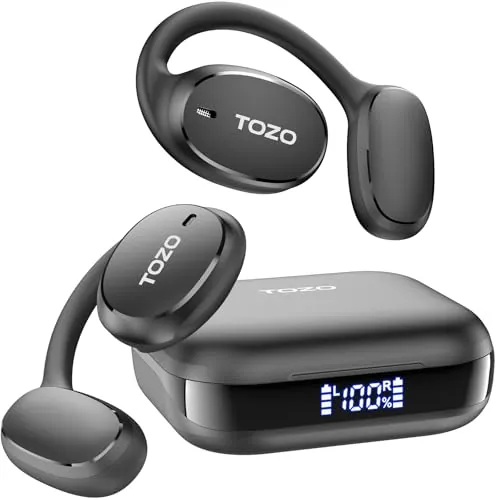
TOZO OpenEgo Open Ear Earbuds Bluetooth Headphones (Black)
- Open-ear style for awareness: Designed to keep you aware of outside sound for walking, cycling, and driving.
Comparison
TOZO OpenEgo and TOZO T18 are budget-focused Bluetooth 5.3 earbuds that both lean on the TOZO app for EQ presets and long total battery claims. OpenEgo is the better pick if you want open-ear awareness and long-wear comfort, while T18 makes more sense if you prefer an in-ear seal , higher waterproofing, and extra app features like translation.
#1 Overall Winner
Contender
Choose TOZO OpenEgo if you want an open-ear fit for awareness, long-wear comfort, and strong overall balance in the scores (especially portability, usability, and value).
Choose TOZO T18 if you want in-ear isolation, IPX8 waterproofing, wireless charging, and the extra TOZO app features like translation modes and shared EQ profiles.
Both have mixed reliability feedback, so it’s smart to test them thoroughly during your return window.
Overall winner
Depends on your needs
| Metric | TOZO OpenEgo | TOZO T18 | Winner | Explanation |
|---|---|---|---|---|
| Overall score | 86 | 82 | TOZO OpenEgo | Higher overall score driven by comfort/usability, audio, portability, battery life, and value. |
| Fit style | Open-ear with earhooks | In-ear with tips | Depends | Open-ear emphasizes awareness; in-ear emphasizes seal/isolation and compact fit. |
| Water resistance | IPX5 (sweat-resistant) | IPX8 (waterproof) | TOZO T18 | T18 is rated for stronger water exposure based on the provided rating. |
| Battery (per charge) | Up to 15 hours | Up to 9 hours (50% volume) | TOZO OpenEgo | OpenEgo lists longer single-charge runtime. |
| Total battery (with case) | Up to 80 hours | Up to 80 hours | Tie | Both advertise up to 80 hours total playback with the case (usage-dependent). |
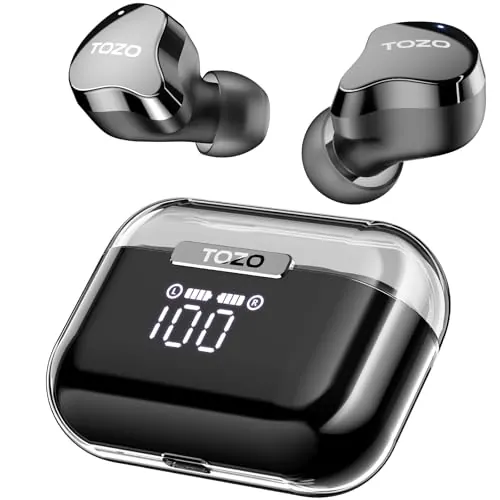
| Charging case display | LED power display (case status) | Digital display case (exact level; reviews note per-earbud indicators while docked) | TOZO T18 | T18’s display is described as highly informative; reviews highlight detailed battery indicators. |
| Call system | Dual-mic noise cancelling (calls) | 4 mics + AI noise reduction | TOZO T18 | T18 lists more microphones and AI noise reduction; OpenEgo reviews strongly praise call clarity, but the spec advantage goes to T18. |
| Audio tuning | 32 EQ modes via app | 32 EQ modes + custom EQ sharing via app | TOZO T18 | Both have 32 presets; T18 adds shared profiles/community sharing per listing. |
| Build quality | Score: 78 | Score: 61 | TOZO OpenEgo | T18 reviews mention a cheap-feeling, scratch-prone case; scores also favor OpenEgo. |
| Portability | Score: 92 | Score: 88 | TOZO OpenEgo | Both are portable, but OpenEgo’s portability score is higher. |
| Best use-case fit | Awareness + long wear comfort | Waterproof workouts + in-ear seal + translation features | Depends | Choose based on whether you want open-ear awareness or in-ear isolation and extra app features. |
For day-to-day performance, the biggest difference is how each design behaves in real environments. TOZO OpenEgo is tuned around open-ear listening, which helps you stay aware of surroundings but can limit how much outside noise is reduced. Review feedback supports this: users like the comfort and call clarity, while also noting open-ear designs may not get as loud as sealed earbuds.
TOZO T18 is an in-ear model with sound isolation and is positioned for stable, low-latency Bluetooth performance. In practice, an in-ear seal generally helps in louder places and workouts, and reviews frequently mention secure fit and clear sound. On scores alone, OpenEgo leads performance (84 vs 79), suggesting a slightly stronger overall experience for its intended use case.
Both use Bluetooth 5.3 and are positioned for stable, low-latency listening. The scores slightly favor TOZO OpenEgo for speed (80 vs 76), but neither listing provides enough hard data (beyond OpenEgo’s stated 45 ms audio latency) to make a deeper, category-specific speed call.
In practical terms, both are reviewed as easy to pair and responsive in everyday use, which is what most buyers feel as “speed” for wireless earbuds.
Reliability is a concern for both models. OpenEgo’s reliability score is higher (72 vs 68), but its aggregated reviews still note mixed reliability and occasional complete failure. TOZO T18 also gets mixed reliability feedback, including reports that one earbud can stop working.
If you’re choosing between them specifically for fewer reported issues, OpenEgo looks slightly safer by score. Regardless of which you choose, it’s worth doing an early stress test: pairing, charging cycles, single-bud use, and call tests—so any defects show up within your return period.
TOZO OpenEgo scores higher for usability (88 vs 84) and reviews frequently mention easy pairing and the ability to wear them for hours without discomfort—especially for people who can’t tolerate in-ear tips. It also includes app control and touch controls, though at least one review wishes for more control over touch behavior.
TOZO T18 also emphasizes simple setup (setup score 90) and easy everyday use, with reviews praising straightforward controls and a very clear battery display. One usability downside noted in reviews is that left/right buds and their charging positions are side-specific, reducing flexibility compared with earbuds that can be swapped freely.
The design choice is mostly about open-ear vs in-ear. TOZO OpenEgo uses earhooks and an open-ear approach to avoid ear canal pressure and keep awareness—something many reviewers find reduces irritation and “ear fatigue.” It also scores higher for design (87 vs 79).
TOZO T18 goes with a compact in-ear shape and a visually distinctive case (transparent lid noted in reviews). It’s better suited to people who prefer a discreet in-ear look and a sealed fit, but the case design is also where build-quality complaints show up.
Build quality favors TOZO OpenEgo by both score (78 vs 61) and sentiment. OpenEgo’s materials are listed as metal/plastic and customers commonly describe the case as sturdy.
TOZO T18 uses plastic/ABS materials, and multiple reviews call out the case as cheap-feeling and prone to scratches. If you care about how well the case holds up in pockets and day-to-day handling, OpenEgo is the safer bet based on the provided information.
Durability favors TOZO OpenEgo (76 vs 60). OpenEgo is described with metal/plastic materials and is reviewed as sturdy, while T18’s case is frequently described as scratch-prone and cheap-feeling. For gym bags, pockets, and daily carry, that case durability feedback matters.
On the other hand, TOZO T18 has a major durability advantage in water exposure thanks to its IPX8 waterproof rating. So “durability” depends on what you’re stressing: physical wear (OpenEgo) vs water resistance (T18).
Both are portable and intended for daily carry, but TOZO OpenEgo scores higher for portability (92 vs 88). That aligns with review feedback emphasizing all-day wear comfort and a practical case.
TOZO T18 remains very pocketable and reviewers like its compact case size, but case durability concerns (scratches/cheap feel) may matter if it lives in a pocket or bag without extra protection.
Both models cover the essentials—Bluetooth 5.3, touch controls, and the TOZO app with 32 EQ presets. TOZO T18 adds the most headline features: AI-powered real-time translation in multiple modes via the app, wireless charging support, and an IPX8 waterproof rating. It also mentions shared audio profiles for EQ.
TOZO OpenEgo focuses more on fit and lifestyle features: open-ear awareness, earhooks, included ear supports, and an LED power display case. If your “features” priority is app functionality and extra modes, T18 has the advantage; if your priority is an open-ear sport fit with long wear comfort, OpenEgo is the more purpose-built option.
Both use the TOZO app for EQ presets, and both have solid but not top-tier app scores (OpenEgo 79; T18 77). TOZO OpenEgo is centered on switching between 32 EQ modes and general personalization. TOZO T18 goes further by adding custom EQ sharing and translation modes.
In reviews, OpenEgo users like the app’s EQ flexibility, and T18 reviewers highlight EQ and general control features. If you want the most feature-rich app experience, T18’s app-enabled translation is the standout difference.
TOZO T18 is the stronger “smart features” pick because it includes AI-powered real-time translation modes via the TOZO app (Simultaneous, Face-to-Face, Meeting Notes, and AI Chat) across many languages. It also supports shared EQ profiles.
TOZO OpenEgo includes app EQ and calling-focused noise cancelling, but no translation features are listed. If you specifically want earbuds that double as a travel/meeting translation tool, T18 is the model that addresses that use case in the provided data.
Setup is easy for both, with high setup scores (OpenEgo 88; T18 90). Reviews for each mention quick pairing and straightforward first use. T18 gets extra practicality points for a very clear battery display right on the case, which can reduce guesswork during daily charging.
OpenEgo’s setup may include a short learning curve around the open-ear fit and using the included ear supports, especially for users new to this style.
Both earbuds are designed for Bluetooth use. TOZO OpenEgo lists compatibility with Bluetooth-enabled devices broadly, while TOZO T18 specifies iOS/Android mainstream phones. If you want the broadest stated compatibility across devices, OpenEgo’s listing is more general, while T18 is explicit about phone platforms.
Both models also depend on the TOZO app for the full EQ/feature experience. If app features are important to you (EQ presets, translation modes), confirm your phone supports the current TOZO app version before buying.
Both models market TOZO’s OrigX acoustic tuning and have strong audio scores, but their listening experience will differ because of fit style. TOZO OpenEgo has a specified 16.2mm dynamic driver and earns a higher audio score (86 vs 81). Reviews highlight crisp highs and enjoyable sound, while also acknowledging open-ear designs may be less loud and less isolating.
TOZO T18 is described as delivering rich lows and crisp highs, with app EQ options (and sharing). Reviews generally call the sound clear and balanced; at least one review notes it’s “not spectacular” or not for an immersive, theater-like experience. If audio for noisy environments matters, the in-ear seal of T18 may help; for comfort-first open listening, OpenEgo has the edge.
Connectivity is strong on both: each lists Bluetooth 5.3 and a 10-meter range. In the scores, TOZO T18 leads connectivity (86 vs 84) and is positioned for reliable, low-latency performance. Reviews also describe quick, easy pairing.
TOZO OpenEgo is also widely praised for connecting easily and re-connecting reliably to the last device. If you frequently switch between phone and laptop, OpenEgo’s “connect back” behavior can be convenient, but it may also require more manual device management depending on your workflow.
Battery life is a highlight for both models, with nearly identical battery-life scoring (OpenEgo 90; T18 91) and very similar marketing claims for total playback (up to 80 hours with the case). The practical difference is the stated single-charge runtime: OpenEgo lists up to 15 hours, while T18 lists up to 9 hours (at 50% volume).
Both have charging cases with digital-style battery indicators. If you want the most detailed at-a-glance status, T18’s case is positioned to show exact case level and (per reviews) earbud levels while docked. If you want fewer charging breaks during the day, OpenEgo’s per-charge claim is stronger.
Power efficiency is essentially even by score (80 vs 80). Both advertise long total playback and receive positive battery feedback. T18’s digital display can help you manage charging more precisely, while OpenEgo’s longer per-charge claim could mean fewer top-ups depending on your volume and usage.
Both models score very well for value (OpenEgo 90; T18 89) and have the same star rating (4.3/5) with similar review counts. TOZO OpenEgo offers strong value if you specifically want an open-ear design with comfort and long battery claims, and reviews often describe them as a satisfying replacement for in-ear buds.
TOZO T18 offers strong value if you want maximum water protection, wireless charging support, and additional app features (especially translation). The main value caution for T18 is that build-quality concerns and mixed reliability feedback may reduce long-term satisfaction for some buyers.
Both products are from TOZO and have large Amazon review counts with similar overall ratings. The scores slightly favor OpenEgo for brand trust (83 vs 73), which aligns with strong positive sentiment and repeat-buyer comments in its reviews.
T18 still has strong customer satisfaction, but its weaker build-quality scoring and reviews describing the case as cheap-feeling can reduce buyer confidence even if the feature list is attractive.
Customer satisfaction is close: both are rated 4.3/5 stars, and both have thousands of reviews (OpenEgo 3,336; T18 3,087). OpenEgo feedback strongly emphasizes comfort, sound quality, easy connection, and battery life, with disagreements around fit and some failure reports.
T18 feedback often highlights comfort, secure fit, clear sound, effective noise cancellation, and the battery display. The recurring negatives are reliability issues (one earbud stopping) and the case feeling scratch-prone/cheap.
Warranty/support information is not detailed in the provided product listings, and both models score low in warranty/support (OpenEgo 55; T18 52). Because support terms aren’t clearly specified here, treat warranty as a question mark and prioritize retailer return windows, easy exchange options, and early testing after purchase.
TOZO OpenEgo is the better overall choice in this matchup, with the higher overall score (86 vs 82) and consistent feedback around comfort, easy connection, strong battery life, and call clarity. It’s the most logical option if you specifically want open-ear awareness and you’re buying earbuds to wear for long workdays or active use without ear canal pressure.
TOZO T18 remains a strong alternative when your priorities are different: an in-ear seal, IPX8 waterproofing, wireless charging support, and TOZO app translation modes. Its main compromises are build quality (especially the case) and mixed reliability reports. Choose it when those extra features matter more than open-ear comfort and you’re comfortable managing the durability trade-offs.
Overall winner
Depends on your needs
Based on the provided scores, TOZO OpenEgo ranks higher overall (86 vs 82). Its strongest areas are comfort/usability, audio score, portability, battery life, and value. TOZO T18 is still competitive, especially for connectivity, battery life, and feature set (including translation modes), but it’s held back by weaker build quality/durability and mixed reliability feedback.
It depends on your workout conditions. TOZO OpenEgo is built around an open-ear, earhook design with included ear supports and IPX5 sweat resistance, which can work well for running where awareness matters. TOZO T18 adds a higher water rating (IPX8) and reviews often mention secure in-ear fit, making it a better fit when sweat/rain exposure is a bigger concern.
Both advertise up to 80 hours total with the charging case. For single-charge use, OpenEgo lists up to 15 hours, while T18 lists up to 9 hours (at 50% volume). In scoring, battery life is strong for both, with T18 slightly higher (91 vs 90), and both products receive positive review feedback about lasting through long days.
TOZO OpenEgo is positioned for “focused calling” with dual-microphone noise cancelling, and reviews specifically praise clear voice quality on calls (including reduced wind noise in one review). TOZO T18 uses a 4-mic system with AI noise reduction and is also reviewed positively for clarity, but reliability feedback is mixed for both models, so it’s worth factoring in return/support preferences.
Comfort can differ by ear shape and preferred style. TOZO OpenEgo receives strong feedback for all-day comfort, particularly for people who don’t tolerate in-ear tips well, and its usability/design scores are high. TOZO T18 also earns comfort praise and many mention a secure, lightweight fit, but it’s still an in-ear design, which some users may find less comfortable over very long sessions.
TOZO T18 has the higher stated rating at IPX8 waterproof, designed for heavy sweat/rain and water exposure. TOZO OpenEgo is listed as IPX5 sweat-resistant, which is typically aimed at workouts and outdoor use but isn’t positioned for the same level of water exposure as IPX8 in the provided product details.
Yes. Both TOZO OpenEgo and TOZO T18 list TOZO app support with 32 EQ modes. OpenEgo focuses on switching among EQ modes to personalize sound. T18 adds features around shared audio profiles and also includes app-based translation modes, so its app feature set is broader based on the provided listing.
TOZO OpenEgo is the clearer fit if you want situational awareness. It’s specifically described as an open-ear, in-ear-free design intended to keep you connected to outside sound while walking, cycling, or driving. TOZO T18 is an in-ear earbud with sound isolation, which generally prioritizes blocking outside noise rather than letting it in.
Neither model is described as perfect for reliability. OpenEgo’s reliability score is slightly higher (72 vs 68), but both have mixed review feedback that includes reports of failure. T18’s listing and reviews also mention issues like one earbud stopping. If reliability is your top priority, consider buying from a seller/return window you’re comfortable with and testing thoroughly early on.
Check our rankings and expert guides to find the best electronics products for your goals.