ElectronicsRanker
Menu

Review

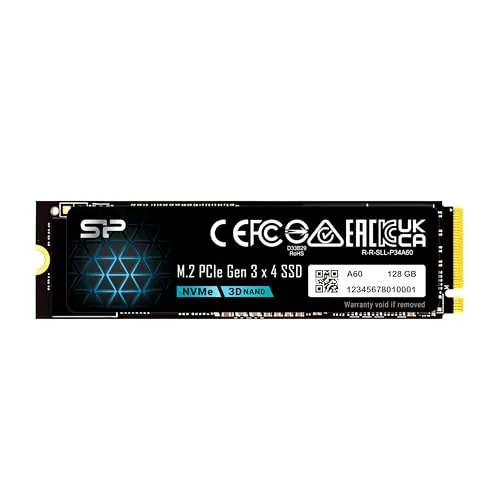
Silicon Power P34A60 256GB NVMe SSD Review

The Silicon Power P34A60 256GB is a budget-focused M.2 NVMe SSD aimed at laptop and PC upgrades where faster boot times and snappier app loading matter most. Its scoring profile is strongest in speed, value, portability, and customer satisfaction. The main trade-off is mixed compatibility feedback, with some reports of recognition problems, heat concerns, and Linux-related issues.
Expert reviewed
84
Overall score
Data-driven scoring Expert reviewed Updated analysis

Why we ranked it highly

The Silicon Power P34A60 256GB is an internal M.2 2280 NVMe solid state drive designed as an affordable storage upgrade for compatible laptops and PCs. It uses a PCIe Gen3 x4 interface and is rated for up to 2,200 MB/s read and 1,600 MB/s write speeds, positioning it well above older hard drives and SATA SSDs for everyday responsiveness. Based on the listing and review feedback, it is most clearly aimed at budget-conscious upgraders, first-time builders, and users trying to revive a slower system without spending heavily. Its strengths are speed, compact fit, and value, while the weaker areas are compatibility and consistency across different systems. Review feedback frequently points to faster boot times and quicker application loading, but there are also some reports of heat variation and device recognition issues. Overall, it looks like a practical mainstream NVMe option when the system is confirmed to support an M-key M.2 NVMe drive.
90-day review Expert reviewed User feedback Data scoring

Key specs

Features & Specs

Digital Storage Capacity
256 GB
Hard Disk Interface
Solid State
Connectivity Technology
PCIe Gen3.0
Additional Features
Portable
Hard Disk Form Factor
2280 Inches
Compatible Devices
Laptop
Specific Uses For Product
storage
Read Speed
2100 Megabytes Per Second
Media Speed
1600 megabits_per_second
Cache Memory Installed Size
256
Data Transfer Rate
2100 Megabits Per Second
Form Factor
M.2 2280 (80mm) form factor
Hardware Connectivity
PCI Express x4
Hardware Platform
PC, laptop

User guide

Installation Type
Internal Hard Drive

Additional details

Color
Black
Enclosure Material
Nand Flash Memory

Item details

Brand
SP Silicon Power
Model Number
P34A60
Hard Disk Description
Solid State Drive
Built-In Media
1 x SSD
Model Name
P34A60
Manufacturer
SP Silicon Power
Global Trade Identification Number
00886576048512
UPC
886576048512 886576049519
Mfr Part Number
FIN-SP256GBP34A60M28

Measurements

Hard-Drive Size
256 GB
Item Weight
8 Grams
Item Dimensions L x W x Thickness
3.15"L x 0.87"W x 0.16"Th
Number of Items
1
Customer Package Type
Standard Packaging

Scores breakdown

86 /100

Performance

72 /100

Features

81 /100

Usability

78 /100

Design

50 /100

App experience

50 /100

Display quality

50 /100

Audio quality

50 /100

Camera quality

Strengths

  • Strong value profile, supported by a high value score of 88 and frequent customer praise for price-to-performance.
  • Fast everyday storage performance with a speed score of 87 and rated read/write figures up to 2,200/1,600 MB/s.
  • Very high customer satisfaction, reflected in a 4.6/5 average from 12,841 reviews and a customer satisfaction score of 90.
  • Compact M.2 2280 format and very low 8 g weight make it easy to fit into laptops and space-conscious PC builds.
  • Easy upgrade path for many users, with reviews frequently mentioning straightforward installation and much faster boot times.
  • Includes data-integrity-oriented technologies in the product details, such as LDPC, end-to-end data protection, and a RAID engine.

Limitations

  • Compatibility is a notable weak point, with a compatibility score of 68 and mixed reports about some systems failing to recognize the drive.
  • Heat behavior appears inconsistent across users, with some customers reporting the drive runs very hot while others report no issue.
  • Linux-related stability concerns appear in review feedback, including reports of controller freezes and timeout errors under Ubuntu 24.04.
  • The feature set is relatively basic for the category, reflected in a feature score of 72 and no evidence of premium extras such as bundled software or heatsink hardware.
  • At 256GB, this version is best suited for boot drive duties or lighter storage needs rather than large game libraries or heavy media workflows.
  • Warranty coverage is tied to either the time limit or the 150 TBW endurance limit, so long-term heavy-write users should check expected usage carefully.

Ideal user profiles

  • Budget-focused laptop owners looking to replace a slow hard drive with a faster NVMe boot drive.
  • DIY PC builders who want an affordable PCIe Gen3 M.2 SSD for a mainstream system.
  • Users upgrading an older notebook or desktop that supports M-key M.2 NVMe drives.
  • Shoppers who prioritize value, fast boot times, and app responsiveness over premium extras.

Use cases

  • Upgrading an older laptop to improve boot speed and everyday responsiveness.
  • Using as a primary OS drive for Windows on a budget desktop or notebook.
  • Adding compact internal storage to a small form factor PC with an M.2 2280 slot.
  • General productivity workloads such as office apps, web use, and light file storage.
  • Entry-level PC builds where cost matters more than top-tier sequential speeds.
  • Secondary fast storage for applications and lighter game installs on compatible systems.

Fit and positioning

Who this works for

Category positioning

This model sits in the budget to lower mid-range part of the NVMe SSD market. It is not positioned as a premium performance drive, but it aims to deliver a clear speed upgrade over older storage while keeping cost under control. The score profile supports that role: value, speed, and portability are strong, while features, build quality, and compatibility are more average. For buyers who want a simple Gen3 NVMe upgrade rather than the fastest drive in the category, it fits a value-focused position.

Best for

This SSD is best for users who want a low-cost performance upgrade for a compatible laptop or desktop. Its 88 value score, 87 speed score, and strong customer feedback suggest it is especially well suited to replacing a hard drive or older SSD with something that improves boot times, app launch speed, and general system responsiveness. It also makes sense for compact systems thanks to its small M.2 2280 format and low weight.

Not best for

Buyers who need broad compatibility certainty, Linux-heavy deployment, or very high endurance for sustained write workloads should be more cautious. The compatibility score is only 68, and review feedback includes some reports of systems not recognizing the drive as well as Linux timeout and controller-freeze issues. The 256GB capacity is also limiting if you want a single drive for large media collections or a big modern game library.

Performance analysis

How it performs in practice

Each scoring dimension is separated into a compact card so the strengths and tradeoffs are easier to compare without reading one long block.

Performance analysis

The P34A60 performs well for a budget PCIe Gen3 NVMe SSD. Its performance score of 86 and speed score of 87 match the rated figures of up to 2,200 MB/s read and 1,600 MB/s write, and customer feedback consistently points to faster boot times, quicker Windows installation, and near-instant app launches compared with traditional hard drives. In practical terms, it appears strongest as an everyday OS and application drive rather than a high-end workstation SSD. The main caveat is consistency across platforms, as some users report compatibility or controller issues that may affect real-world performance in certain systems.

Feature analysis

The feature set is functional rather than extensive, which is consistent with its feature score of 72. The listing highlights NVMe support, Host Memory Buffer architecture, LDPC error correction, end-to-end data protection, and a RAID engine for data integrity. Those are useful core SSD features, but there is no evidence here of premium extras such as a bundled heatsink, dedicated software suite, or standout enthusiast-focused functionality. It covers the essentials for a mainstream upgrade without pushing beyond them.

Usability analysis

Daily usability is generally good, supported by an 81 usability score. The M.2 format keeps installation physically simple in compatible systems, and several reviews describe straightforward laptop or desktop upgrades with immediate gains in responsiveness. As with many internal SSDs, the main usability friction comes after installation, especially if the user needs to reinstall an operating system or migrate data. Compatibility uncertainty is the main factor that stops this from feeling fully hassle-free for every buyer.

Design

The design is practical and space-efficient, with a score of 78. Its M.2 2280 form factor and 8 g weight make it easy to fit into laptops, small desktops, and compact systems where cable-free installation is a benefit. There is little to discuss in terms of visual styling, because this is a component-first product, but the physical layout is appropriate for the intended role. The main design consideration is not appearance but making sure the host device has a compatible M-key M.2 slot.

How it compares

Within the NVMe SSD category, the P34A60 looks more competitive on value and day-to-day responsiveness than on premium features or universal compatibility. It offers the kind of performance that makes an older laptop or PC feel much quicker, and customer feedback suggests that many buyers see a clear improvement over hard drives. Compared with stronger all-round category options, its weaker points are the more basic feature set, only moderate durability and reliability scores, and a lower compatibility score. In other words, it compares well as a practical budget Gen3 drive, but less well as a no-compromise choice for every platform and workload.

Ranking summary

The Silicon Power P34A60 earns its place as a strong value-oriented NVMe SSD because it combines good mainstream performance with very high customer satisfaction at an accessible price point. Its 84 overall score is backed by strong sub-scores in speed, value, portability, setup, and customer satisfaction, making it especially attractive as a basic laptop or PC upgrade. It ranks lower in versatility than in pure value, however, because feature depth is modest and compatibility is a clear weak point. Reports of system recognition issues, mixed thermal feedback, and Linux-related concerns stop it from ranking among the safest all-scenario picks.

Buying advice

Consider this SSD if your main goal is to speed up a compatible laptop or desktop without overspending. It makes the most sense for Windows users, general productivity, and boot-drive upgrades where 256GB is enough for the operating system, applications, and some working files. Before buying, confirm that your device supports an M-key M.2 NVMe drive, not just any M.2 slot. If you use Linux, need larger capacity, expect sustained heavy writes, or want the fewest possible compatibility risks, it may be worth looking more carefully at alternatives or moving to a higher-capacity model.
84
Overall score

Final verdict

The Silicon Power P34A60 256GB is a strong budget NVMe SSD rather than a category leader in every area. Its main strength is clear: it delivers fast everyday performance and excellent value, backed by a high volume of positive user feedback. Its main limitation is compatibility inconsistency, with some reports of systems not recognizing it properly and some Linux-specific issues. If your device is confirmed to support an M-key NVMe drive and you want an affordable boot-drive upgrade, it is a sensible and well-rated choice. If you need broader platform confidence or more capacity, it is a more limited fit.
Back to review

Key topics

Silicon Power P34A60 review, Silicon Power 256GB NVMe SSD review, SP Silicon Power P34A60 SSD, best budget NVMe SSD, PCIe Gen3 x4 M.2 SSD review, 256GB M.2 NVMe SSD comparison, Silicon Power SSD ranking, budget laptop SSD upgrade

Frequently asked questions

Is the Silicon Power P34A60 256GB worth it?
For buyers focused on affordability and everyday speed, the data suggests it is a worthwhile option. It scores 84 overall, with particularly strong results for value, speed, and customer satisfaction. The main caution is compatibility, as some users report recognition issues or Linux-related problems, so it is best to confirm slot support before buying.
Is the Silicon Power P34A60 good for upgrading an older laptop?
It appears well suited to that role when the laptop supports an M-key M.2 NVMe drive. Review feedback repeatedly mentions faster boot times, quicker app launches, and easy installation in laptop upgrades. Its compact M.2 2280 format also helps, but checking compatibility is important because some systems may not recognize it properly.
What are the main limitations of the Silicon Power P34A60?
The main limitations are mixed compatibility feedback, some reports of heat under load, and at least one detailed report of Linux controller or firmware-related issues. This 256GB version is also relatively small by current standards, making it more suitable as a boot drive than a large all-in-one storage solution.
How fast is the Silicon Power P34A60 256GB SSD?
Based on the provided specifications, it is rated for up to 2,200 MB/s read and 1,600 MB/s write speeds. Its score profile also supports solid real-world responsiveness, with an 86 performance score and 87 speed score. Customer reviews frequently mention much faster boot times and near-instant app loading compared with hard drives.
Is the Silicon Power P34A60 easy to install?
For many buyers, installation appears fairly straightforward. The setup score of 82 aligns with reviews describing quick physical installation in laptops and desktops. The larger challenge can be software setup afterward, such as reinstalling Windows or cloning an existing drive, which depends more on the user’s system and migration process.
Does the Silicon Power P34A60 run hot?
Customer feedback is mixed. Some users report that it runs very hot, while others say temperatures are not a problem, even in compact systems. That inconsistency suggests heat behavior may vary by workload, enclosure airflow, and host device. If your system has limited cooling, it is sensible to pay attention to thermal conditions.
Is the Silicon Power P34A60 compatible with Linux?
Compatibility with Linux looks less certain than with standard Windows upgrade use. One detailed review reported controller freezes and timeout errors under Ubuntu 24.04, while other feedback is more positive in general PC use. If Linux stability is a priority, it would be wise to research current kernel and firmware compatibility before purchase.
What kind of M.2 slot does the Silicon Power P34A60 require?
According to the provided product details, the drive requires a system with an M.2 connector using only an M key. The listing specifically notes that the SSD does not have a B notch, so a mismatched slot can prevent installation. Checking your laptop or motherboard manual is important before buying.

Related Guides & Rankings