#1 Overall Winner
ADATA HD710 Pro 1TB
- IP68 water and dust protection with MIL-STD-810G 516.6 drop-test certification.
Comparison
The ADATA HD710 Pro and ADATA HD770G are 1TB rugged mechanical external hard drives built around IP68 protection and triple-layer shock resistance. The HD710 Pro is the better all-round choice for broad compatibility, travel-friendly cable management, and stronger durability scoring, while the HD770G suits gamers who value RGB styling, console-oriented use, and stronger reliability results.
#1 Overall Winner
Contender
Choose the ADATA HD710 Pro for a practical rugged drive with stated Linux, Mac, and PC support, cable management, and the stronger durability profile. Choose the ADATA HD770G if RGB lighting, gaming-console backup use, and its higher reliability score matter more than broad stated compatibility.
Overall winner
Depends on your needs
| Feature | ADATA HD710 Pro 1TB | ADATA HD770G 1TB | Winner |
|---|---|---|---|
Overall position |
Higher overall score |
Close overall score |
ADATA HD710 Pro 1TB |
Drive type |
5400 RPM mechanical HDD |
Tie |
Capacity |
1TB |
1TB |
Tie |
Rugged protection |
IP68; 1.5 m drop-test claim |
IP68; up to 1.22 m drop claim |
ADATA HD710 Pro 1TB |
Build quality |
Triple-layer construction |
Tie |
Transfer performance |
Higher supplied performance and speed scores |
Conventional mechanical-drive performance |
ADATA HD710 Pro 1TB |
Connectivity |
USB 3.1/USB 3.2 listed |
USB 3.2; USB Type-A listed |
ADATA HD770G 1TB |
Compatibility |
Linux, Mac, and PC stated |
PC and gaming-console use stated |
ADATA HD710 Pro 1TB |
Gaming focus |
Suitable for gamers |
Console backup use and RGB design |
ADATA HD770G 1TB |
Design |
Rugged design with cable management |
Chamfered case with RGB lighting |
ADATA HD770G 1TB |
Reliability feedback |
Mixed reliability and cable feedback |
Generally positive reliability feedback |
ADATA HD770G 1TB |
Portability |
0.6 lb; integrated cable storage |
9.5 oz; protective casing |
ADATA HD710 Pro 1TB |
Customer satisfaction |
4.6/5 from 29,610 reviews |
4.7/5 from 4,551 reviews |
Depends |
Value |
Strong rugged, cross-platform proposition |
Strong rugged, RGB gaming proposition |
Tie |
Neither product is an SSD: both are 5400 RPM mechanical external hard drives, so performance expectations should centre on routine backup, file transfer, and storage rather than high-speed solid-state workloads. The HD710 Pro has the higher supplied performance score and speed score, alongside a stated 90 MB/s read speed and 5 Gbps data-transfer figure. Reviews also report that transfer speed can vary significantly with the size and fragmentation of source files.
The HD770G has a lower performance assessment, although reviewers generally describe its speed as normal or adequate for transfers and PS4 game storage. For buyers prioritising the stronger supplied speed assessment, the HD710 Pro has the advantage.
The HD710 Pro is the stronger option for speed on the supplied scoring. It has a higher speed score, and its listed read speed and data-transfer figure are higher than the figures provided for the HD770G. That said, real transfers on a mechanical drive can depend on the files and source drive, as HD710 Pro review feedback illustrates.
The HD770G is adequate for everyday storage and game-related use according to reviews, but it remains a conventional mechanical HDD. Buyers needing consistently faster transfer performance should recognise that neither compared drive is an SSD.
The HD770G has a clear advantage in the supplied reliability score. Its review overview says customers generally find it works well without issues, and individual reviews report dependable PC, PS4, and Xbox operation. This does not establish long-term results for every unit, but the available feedback is more consistently positive.
The HD710 Pro has many positive reports, including long-term use without problems, but its review summary identifies mixed reliability feedback and reports of failures. Cable and connection complaints also appear in the aggregated feedback. For important files, either drive should be part of a separate backup strategy rather than the only copy.
Both drives are designed for simple USB storage, and reviews for both describe plug-in use and straightforward file transfers. The HD710 Pro has the higher setup score and receives positive feedback for easy formatting and partitioning. Its stored cable also reduces the chance of leaving the cable behind.
The HD770G has the higher usability score and earns positive comments for easy PC, PS4, and Xbox use. However, console use may require formatting, and one review notes that Apple-related use can involve downloading an app. The HD710 Pro's connector has also been described as difficult to insert by some users, so physical handling preferences may affect the decision.
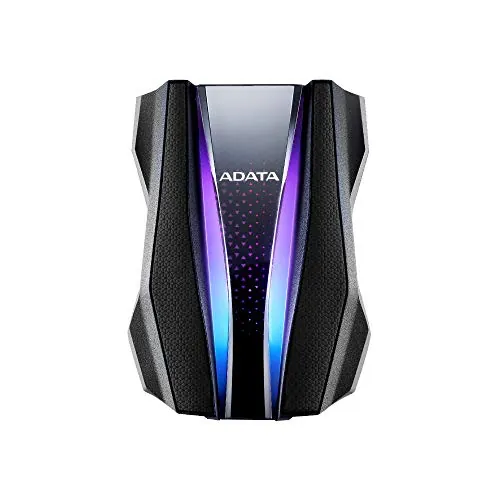
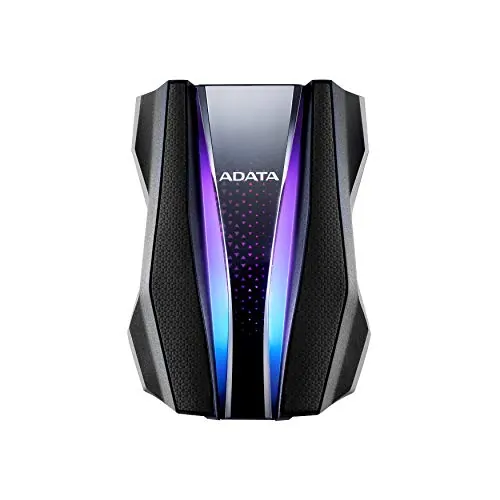
The HD770G wins on design. Its chamfered edges, two RGB light strips, and perforated centre pattern create a gaming-focused look that reviewers frequently describe as sleek or futuristic. The protective rubber surround is also noted positively in reviews.
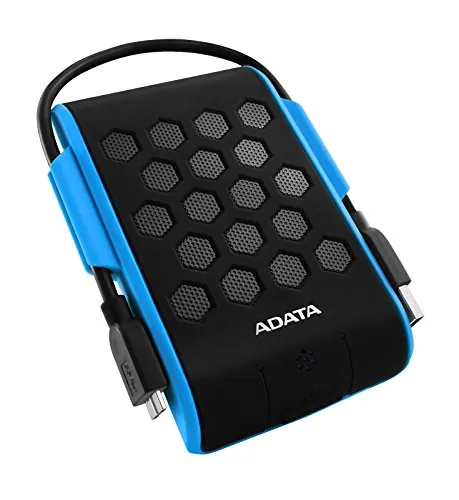
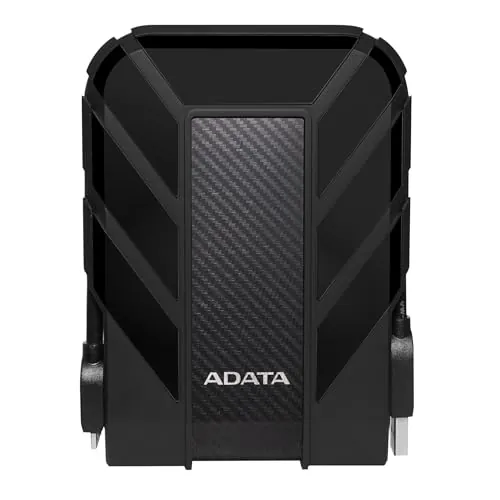
The HD710 Pro has a more functional appearance, prioritising a rugged enclosure and integrated cable routing. It is the more practical design for users who want an unobtrusive drive that travels neatly in a bag, while the HD770G is better suited to buyers who want storage hardware that visually matches an RGB gaming setup.
Build quality is a tie in the supplied scoring. The HD710 Pro uses a durable triple-layer build with an aluminium enclosure listed in its specifications. The HD770G uses a metal-and-plastic enclosure with a shock-absorbing silicone casing, buffer, and cushioned drive mounting. Both are designed to protect a mechanical drive during portable use.
The practical distinction is emphasis: the HD710 Pro is more understated and utility-led, while the HD770G combines its protective shell with a more decorative RGB exterior. Both have strong review feedback on their physical construction.
The HD710 Pro wins on durability. Both models are IP68-rated, dustproof, waterproof, and built with triple-layer shock protection, but the HD710 Pro has the higher durability score and a stated 1.5 m drop-test claim. The HD770G is stated to withstand falls up to 1.22 m.
Reviews for both drives support their rugged positioning. HD710 Pro owners praise its ability to handle rough transport, while HD770G reviewers report that its rubberised casing has handled spills and accidental impacts. The difference is small in practical concept, but the HD710 Pro has the stronger supplied durability case.
The HD710 Pro has the higher portability score. It weighs 0.6 lb and measures 5.2 by 3.8 by 0.8 inches, while its enclosure provides dedicated cable management for cleaner storage in a bag. This is useful for users who regularly transport a backup drive.
The HD770G weighs 9.5 oz and is also intended as portable storage, but its protective body is described by a reviewer as somewhat large because of the safety-focused design. It remains compact enough for typical portable use, yet the HD710 Pro is the more travel-oriented choice in the supplied assessment.
The HD710 Pro's feature set is practical: IP68 protection, triple-layer construction, broad listed platform compatibility, optional backup software, and a cable-storage arrangement. The HD770G offers similar core protection but adds RGB illumination, a perforated centre design, and explicit game-console backup positioning. Its higher feature score reflects those additional gaming-oriented elements.
Choose the HD710 Pro for transport-focused features and multi-platform use. Choose the HD770G if RGB lighting and a gaming-oriented presentation are meaningful parts of the purchase.
Neither drive is primarily an app-driven product. The HD710 Pro has an optional downloadable app for automated backup, according to a review, while the HD770G has review feedback suggesting an app may be needed for some Apple-product use. The available data does not provide enough detail to make a broader app-quality comparison.
The HD710 Pro has the setup advantage, supported by its higher setup score and review feedback that it is ready to use after connecting by USB. Customers also praise its ease of formatting and partitioning. The HD770G is similarly uncomplicated for standard computer use, with reviews describing simple plug-in transfers.
Where setup becomes more involved is device-specific use. HD770G console use can require formatting, and reviews mention additional steps for Apple products. The HD710 Pro may also need formatting for certain iOS-related workflows. Verify the required file system before moving important data.
The HD710 Pro is the better choice for stated compatibility. It is listed for Linux, Mac, and PC, making it the clearer selection for users who work across different computer platforms. A review also reports successful use after formatting for iOS-related needs.
The HD770G is listed for PC and gaming consoles, with its product details specifically identifying console backup storage. One review mentions using software for Apple products without disrupting broader compatibility. Buyers should confirm formatting requirements for their exact computer, console, or mobile-device workflow before purchasing either drive.
Both products connect over USB, but the HD770G has the higher connectivity score. Its supplied specifications identify USB 3.2 and USB 3.1 Type-A hardware connectivity. The HD710 Pro lists USB 3.1/USB 3.2 and USB 3.0 hardware connectivity, with a stated 5 Gbps data-transfer rate.
Neither product is listed with USB-C. The HD710 Pro's review feedback is mixed on the cable and connection, despite other reviewers finding its connector firm. The HD770G's Type-A connection is a limitation for USB-C-first devices, although one reviewer notes that an adapter can address that need.
The supplied power-efficiency scores are equal. Both products are portable USB-connected mechanical hard drives, and the provided data does not include measured power draw, standby behaviour, or thermal comparisons. Buyers choosing between them should therefore base the decision on durability, compatibility, reliability feedback, and design rather than an assumed efficiency difference.
Value is a tie in the supplied scoring. The HD710 Pro offers value through rugged protection, stronger durability, broad listed compatibility, portability, and a much larger body of customer feedback. It is the more sensible fit for general backup users who need to move among different systems.
The HD770G offers value through comparable IP68 protection, strong build feedback, RGB design, gaming-console positioning, and a stronger reliability score. It is not automatically the better value simply because of its feature styling; it is the better fit only if those gaming-oriented features and its reliability results are relevant to your use.
Both products come from ADATA, so this comparison does not involve a change of storage brand. The HD710 Pro has the higher brand-trust score in the supplied data and a much larger review base, which may give general-purpose buyers more confidence in the available feedback. The HD770G still has strong customer ratings, but its warranty-support score is lower. No detailed warranty terms were provided for either model.
Customer satisfaction is tied in the supplied scores. The HD770G has a slightly higher 4.7/5 rating from 4,551 reviews, with recurring praise for its RGB design, build, capacity, and simple operation. The HD710 Pro has a 4.6/5 rating from a much larger 29,610-review base, with repeated praise for durability, ease of use, capacity, and value.
The main difference is review consistency. HD770G feedback is generally more positive on reliability, while HD710 Pro feedback is mixed on reliability and cable connectivity despite many satisfied long-term users.
The ADATA HD710 Pro is the best overall option in this comparison because it has the higher overall score and a more balanced specification set for portable storage. Its IP68 protection, stronger durability result, stated 1.5 m drop-test claim, broad Linux/Mac/PC compatibility, cable management, and stronger setup and portability scores make it the safer general recommendation for students, professionals, and mobile backup users.
The ADATA HD770G should not be dismissed. It matches the HD710 Pro on core IP68 protection and build quality, adds RGB styling and console-oriented storage use, and has a notably stronger reliability score. It is the better fit for gaming-focused buyers who prefer its visual design and primarily use PC or console hardware. Neither drive is ideal for buyers seeking SSD-like speed, because both use 5400 RPM mechanical storage.
Overall winner
Depends on your needs
The ADATA HD710 Pro is the narrow overall winner based on the supplied overall scoring. It stands out for stronger durability, portability, compatibility, setup, and brand-trust scores. The HD770G remains a compelling alternative for buyers who want RGB styling, console-oriented storage use, and its stronger reliability score.
Both drives are designed for rugged mobile storage, with IP68 protection and triple-layer construction. The HD710 Pro has the edge for this role because its supplied durability score is higher and its drop-test claim is 1.5 m versus 1.22 m for the HD770G. It also includes cable management for travel convenience.
The HD770G is the more gaming-focused choice. Its RGB light strips and stated ability to connect to game consoles for backup storage of games not currently being played make its positioning clear. The HD710 Pro can also serve gamers, but its listed strengths are broader cross-platform storage and portability.
The HD710 Pro is the clearer choice for compatibility because it is explicitly listed as compatible with Linux, Mac, and PC. The HD770G is listed for PC and gaming consoles. One HD770G review mentions Apple use may require an app, while an HD710 Pro review notes formatting may be needed for iOS use.
Both are conventional 5400 RPM mechanical hard drives, so neither should be treated as an SSD replacement. The HD710 Pro has stronger supplied performance and speed scores, plus higher stated transfer and read figures in the product data. The HD770G is described by reviewers as adequate for normal transfers and game storage.
The HD770G has the higher reliability score, and its review overview generally reports dependable operation. The HD710 Pro has much stronger review volume and many positive long-term reports, but its aggregated feedback is mixed on reliability and cable connectivity. As with any external hard drive, keeping separate backups remains sensible.
Both are straightforward USB external drives, and reviewers for each describe simple plug-in use. The HD710 Pro has the higher setup score and receives positive feedback for easy formatting and partitioning. The HD770G also has positive plug-and-transfer feedback, but console and Apple use can involve formatting or additional software steps.
The supplied information presents the HD770G's RGB lighting primarily as a design feature. It gives the drive a distinctive gaming-oriented appearance through two light-beam-shaped strips and a perforated centre pattern. Buyers who prefer a more understated storage device may find the HD710 Pro's practical rugged design more suitable.
Check our rankings and expert guides to find the best electronics products for your goals.