#1 Overall Winner
beyerdynamic DT 990 PRO 80 Ohm (Open-Back, Wired)
- Highly rated audio quality for the category , with a strong audio_quality_score and frequent praise for clear, detailed sound.
Comparison
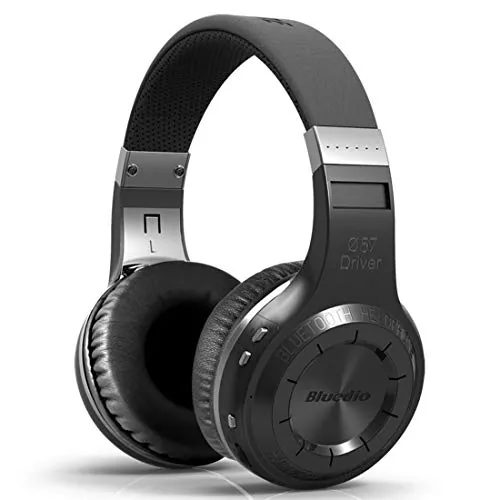
The beyerdynamic DT 990 PRO (80 Ohm) and Bluedio HT Turbine target very different buyers: one is an open-back wired studio-style headphone, while the other focuses on budget wireless convenience and long battery life. If you prioritize detail, soundstage, and competitive gaming imaging , the DT 990 PRO is the clearer pick on the provided scores. If you need Bluetooth freedom and long runtimes , the HT Turbine is the more practical option.
#1 Overall Winner
Contender
Pick the beyerdynamic DT 990 PRO if you want open-back detail for mixing/critical listening or competitive gaming cues and you’re happy with a wired setup.
Pick the Bluedio HT Turbine if you want an inexpensive Bluetooth over-ear with very long battery life and the option to plug in a cable when needed—while accepting more mixed durability and comfort feedback.
Overall winner
Depends on your needs
| Feature | beyerdynamic DT 990 PRO 80 Ohm (Open-Back, Wired) | Bluedio HT Turbine (Bluetooth 4.1, Wireless) | Winner |
|---|---|---|---|
| Overall score | 84 overall_score | 74 overall_score | beyerdynamic DT 990 PRO 80 Ohm (Open-Back, Wired) |
| Audio quality score | 92 audio_quality_score | 76 audio_quality_score | beyerdynamic DT 990 PRO 80 Ohm (Open-Back, Wired) |
| Battery life | N/A (wired, no battery) | 93 battery_life_score; up to 40h music (claimed) | Bluedio HT Turbine (Bluetooth 4.1, Wireless) |
| Connectivity type | Wired (3.5 mm) + 1/4" adapter | Bluetooth 4.1; optional wired use | Depends |
| Noise control / isolation approach | Open-back; Noise Control: None | Listed Active Noise Cancellation; closed-back style | Bluedio HT Turbine (Bluetooth 4.1, Wireless) |
| Build quality score | 82 build_quality_score | 54 build_quality_score | beyerdynamic DT 990 PRO 80 Ohm (Open-Back, Wired) |
| Durability score | 80 durability_score | 48 durability_score | beyerdynamic DT 990 PRO 80 Ohm (Open-Back, Wired) |
| Reliability score | 78 reliability_score | 56 reliability_score | beyerdynamic DT 990 PRO 80 Ohm (Open-Back, Wired) |
| Comfort feedback | Comfort praised; fit/clamp mixed | Comfort mixed; some report ear pain/clamp | Depends |
| Gaming positional accuracy | accuracy_score 84; reviews cite pinpoint cues | Latency mentioned; no accuracy score | beyerdynamic DT 990 PRO 80 Ohm (Open-Back, Wired) |
| Value score | 86 value_score | 88 value_score | Bluedio HT Turbine (Bluetooth 4.1, Wireless) |
| Customer satisfaction | 92 customer_satisfaction_score; 4.6/5 (3498) | 83 customer_satisfaction_score; 4.2/5 (5407) | beyerdynamic DT 990 PRO 80 Ohm (Open-Back, Wired) |
| Brand trust score | 90 brand_trust_score | 58 brand_trust_score | beyerdynamic DT 990 PRO 80 Ohm (Open-Back, Wired) |
| Portability score | 66 portability_score | 70 portability_score | Bluedio HT Turbine (Bluetooth 4.1, Wireless) |
| Setup score | 85 setup_score | 82 setup_score | beyerdynamic DT 990 PRO 80 Ohm (Open-Back, Wired) |
For real-world “performance,” these two models excel in different ways. The DT 990 PRO scores higher for performance and is repeatedly described in reviews as detailed, with strong separation that helps in both music analysis and competitive gaming. Its open-back design is specifically positioned for natural spatial imaging.
The HT Turbine performs best when “performance” means wireless usability over long periods: it has standout battery scoring and review comments about being loud and satisfying for the price. However, reviews also mention Bluetooth latency and a short delay when audio resumes after pausing, which can affect video and game responsiveness.
For “speed” in this category, the practical factor is responsiveness (pairing/connect behavior and playback delay). The DT 990 PRO avoids wireless delay entirely because it’s wired.
The HT Turbine has reviews mentioning minor Bluetooth latency and a short delay when audio resumes due to a power-saving behavior. If you frequently watch video or play games where timing matters, Product A’s wired connection is the more consistent option.
Reliability favors the DT 990 PRO based on its higher reliability score and generally stronger build/durability profile. While some buyers mention issues (and value/durability sentiment is mixed in the aggregate), the overall picture is more consistent than Product B.
The HT Turbine has lower reliability scoring and mixed review feedback, including reports of units stopping working. If you’re buying for daily use and want fewer long-term surprises, Product A is the safer bet from the provided data.
In day-to-day use, the DT 990 PRO is straightforward: plug into a 3.5 mm jack (or use the included 1/4" adapter). There’s no pairing step and no battery management, but the long, non-detachable cable can be inconvenient for casual movement around a room.
The HT Turbine is convenient for mobile use thanks to Bluetooth pairing and onboard controls. Reviews describe pairing as easy, but also mention wireless downsides like minor latency and a short “dead spot” when playback resumes due to a power-saving behavior. If you value simplicity at a desk, Product A is easier; if you value cable-free control, Product B is easier.
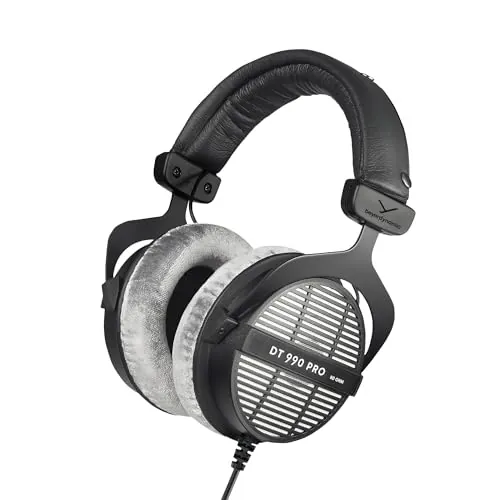
The designs reflect different priorities. The DT 990 PRO is an open-back, over-ear, circumaural design intended for extended listening in quieter spaces, with velour pads and a more studio-style aesthetic.
The HT Turbine emphasizes a modern “turbine” look and portable wireless use. Comfort is more variable in the review summary, with some users reporting clamp pressure or ear pain over time. If you want an open-back studio form factor, Product A fits; if you want a compact wireless lifestyle design, Product B is closer.
Build quality is a major separator in the provided scores. The DT 990 PRO scores much higher for build quality and durability, and it’s marketed as handcrafted with fully serviceable parts—an ownership advantage if you plan to keep a headphone for years.
The HT Turbine has mixed durability feedback, including recurring reports of the headband/telescoping mechanism breaking, and lower build/durability/reliability scores reflect that. Some reviews do praise the construction for the price, but the long-term consistency appears less predictable than with the DT 990 PRO.
The DT 990 PRO scores higher for durability and is explicitly described as serviceable with replaceable parts, which supports longer ownership.
The HT Turbine shows more durability risk in the review summary, particularly around the telescoping headband mechanism breaking. Some users are happy with build quality for the price, but the provided durability score is much lower than Product A’s.
The HT Turbine is generally more portable because it’s wireless and has a slightly higher portability score. It’s easier to move around without a cable and is designed for everyday mobile use.
The DT 990 PRO is less portable in practice because it’s wired with a long cable and is open-back (sound leakage), making it better suited to a fixed, quiet environment rather than travel or shared spaces.
The DT 990 PRO keeps features simple and studio-leaning: wired listening, included screw-on 1/4" adapter, a long 3 m cable, and a serviceable design with replaceable parts such as ear pads. Its feature score is mid-range, reflecting a focus on fundamentals rather than extras.
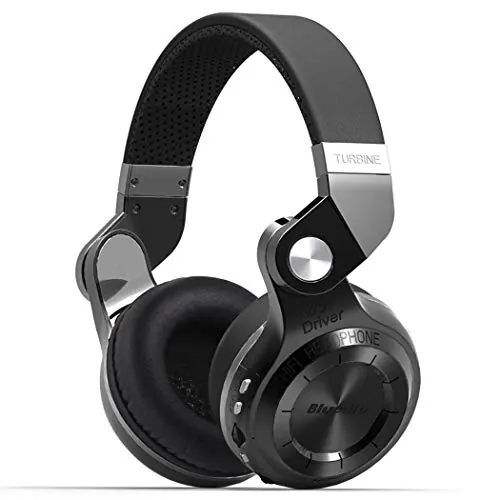
The HT Turbine offers more consumer-oriented features: Bluetooth 4.1, on-headphone controls, voice prompts, and claimed calling noise reduction/echo cancellation. It also supports wired listening and an audio-sharing function (per the product details). If you want “more functions on the headset,” Product B is the more feature-forward option.
Setup is simple on both, but in different ways. The DT 990 PRO is plug-and-play with a wired connection and includes an adapter for 1/4" jacks, which reduces friction for studio gear.
The HT Turbine requires Bluetooth pairing (which reviews describe as easy) and includes voice prompts and onboard controls that can help confirm connection state. If you don’t want any pairing steps, choose Product A; if you want wireless setup once and then auto-reconnect behavior, Product B is convenient.
The DT 990 PRO lists broad compatibility including gaming consoles, laptops, tablets, and music production equipment, using a standard 3.5 mm connection (plus included 1/4" adapter). It’s a strong fit for audio interfaces and studio outputs.
The HT Turbine focuses on smartphones, laptops, tablets, and smart speakers via Bluetooth. If your primary sources are phones and you want wireless, Product B is a better match; if you need easy integration with studio gear and standard headphone outputs, Product A is the more direct fit.
The DT 990 PRO leads clearly on the provided audio scoring and positioning: it’s described as wide and detailed with strong spatial imaging, and reviews highlight clarity, separation, and utility for both mixing and precise gaming audio. A key caveat is treble: multiple reviews mention the signature can be bright and may require EQ for sensitive listeners.
The HT Turbine is described as loud with strong bass emphasis (including 57 mm drivers in the listing) and “good sound for the price,” with many users satisfied for casual listening. However, its audio_quality_score is notably lower than the DT 990 PRO, and some of the listening experience trade-offs are tied to Bluetooth behaviors (latency/power-saving delay).
Connectivity is a “choose your preference” decision. The DT 990 PRO is strictly wired with a 3.5 mm plug and a threaded 1/4" adapter, making it easy to use with PCs, consoles, and audio gear that accept standard headphone outputs.
The HT Turbine is primarily wireless with Bluetooth 4.1 and an up-to-10 m stated range, plus the ability to use an audio cable for wired listening. If you need wireless mobility, Product B wins; if you want zero pairing and zero battery concerns, Product A wins.
The Bluedio HT Turbine is the clear winner for battery: it has a very high battery life score and listed runtimes of up to 40 hours of Bluetooth music and 45 hours talk time, with a 2-hour stated charge time. Reviews frequently praise how rarely it needs charging.
The DT 990 PRO is a wired headphone and does not use a battery, which is a different kind of advantage: you never have to charge it, and runtime is only limited by your playback device.
The HT Turbine is the only battery-powered model here, and it scores well for power efficiency alongside its strong battery performance. Reviews also mention a power-saving behavior that turns drivers off when there’s no audio signal.
The DT 990 PRO does not have battery/power-management characteristics to compare, since it’s passive wired hardware.
Both score well for value, but they deliver value differently. The DT 990 PRO provides value through stronger audio scores, higher brand trust, and a serviceable, studio-leaning design that many buyers use for gaming and production.
The HT Turbine earns value from a feature-rich, wireless package with very strong battery performance and many positive “for the price” reviews. The key value caveat is longevity: its durability and reliability scores are much lower, so the best value depends on how much you prioritize long-term robustness versus upfront features and battery life.
Brand trust favors beyerdynamic in the provided scoring, with a much higher brand_trust_score. The listing also emphasizes legacy and German manufacturing, and the overall customer satisfaction score is very strong.
Bluedio scores lower for brand trust and warranty/support, and the review summary includes more reports of breakage and failures, which can affect buyer confidence even when many users still consider the product a good deal.
Both products have substantial review volume, but the satisfaction signals differ. The DT 990 PRO has a higher star rating (4.6/5) and a higher customer satisfaction score, with frequent praise for clarity, comfort, and gaming performance—tempered by treble sensitivity and cable complaints.
The HT Turbine has more reviews (and a solid 4.2/5 rating), with many positive comments about battery life, easy Bluetooth, and value. Its weaker point is consistency: comfort, durability, and reliability are repeatedly described as mixed.
Warranty/support is difficult to compare in detail because explicit warranty terms are not provided in the product data. Based on the provided scoring, the DT 990 PRO rates higher on warranty/support than the HT Turbine, suggesting fewer support concerns or better buyer confidence in after-sales handling.
If warranty is important for your purchase, confirm the seller’s return policy and support channel before ordering—especially for Product B given the durability/reliability feedback.
The beyerdynamic DT 990 PRO is the best overall option in this matchup based on the provided overall score and its strong advantages in audio quality, performance, brand trust, and customer satisfaction. It’s the more sensible buy for buyers who care most about detail, imaging, and a studio-style wired experience—especially in a quiet room.
The Bluedio HT Turbine remains a good alternative when your priorities are wireless freedom, extremely strong battery life, and budget-friendly features. The trade-offs are the mixed comfort feedback, the higher risk of durability/reliability issues, and wireless behaviors like latency or short resume delays. Pick it when convenience and runtime matter more than long-term robustness.
Overall winner
Depends on your needs
On the provided scoring, the beyerdynamic DT 990 PRO leads overall (higher overall_score) and scores especially well for audio quality, performance, and customer satisfaction. The Bluedio HT Turbine is more compelling if your priority is wireless convenience and very long battery life, where it scores extremely strongly. The better choice depends on whether you want studio-style wired listening or battery-powered Bluetooth use.
The DT 990 PRO is the stronger pick for critical listening based on its higher audio_quality_score and its open-back design aimed at detailed spatial imaging. Reviews frequently highlight clarity, detail, and instrument separation. The HT Turbine is often described as loud with strong bass and good sound “for the price,” but it is not positioned as a studio/monitoring headphone in the provided data.
For competitive positional cues, the DT 990 PRO has a strong track record in the provided reviews: users call out pinpoint directionality and the ability to separate sounds like footsteps from other effects. The HT Turbine can work for gaming, but reviews mention wireless latency and a brief delay when audio resumes after pauses, which can be a drawback for timing-sensitive play.
The DT 990 PRO is open-back and lists Noise Control: None, so it will leak sound and won’t block outside noise well. The Bluedio HT Turbine is listed with Active Noise Cancellation and a closed-back style, which generally aligns better with isolation needs, though the provided review summary focuses more on battery and durability than on ANC performance.
If you want quick, cable-free listening, the HT Turbine is typically easier day-to-day thanks to Bluetooth pairing and on-headset controls (and reviewers describe pairing as easy). The DT 990 PRO is straightforward in a different way: plug in via 3.5 mm (or use the included 1/4" adapter). However, it’s less convenient for moving around due to the long, non-detachable cable.
Only the Bluedio HT Turbine is battery-powered, and it scores extremely high for battery life. Its listed specs include up to 40 hours music time and up to 45 hours talk time (plus long standby). The DT 990 PRO is a wired headphone with no battery, so runtime depends entirely on your source device.
Based on the provided scores and review summaries, the DT 990 PRO looks more dependable long-term, with higher build quality, durability, and reliability scores. The HT Turbine has mixed feedback around durability (notably the headband/telescoping parts) and some reports of units stopping working, reflected in its lower durability and reliability scores.
It can be for some listeners. The provided interpretation and several reviews mention a bright treble and potential ear strain, while other reviewers say it isn’t a problem for them and note that EQ can help. If you’re sensitive to treble, this is a key “fit” factor to research before buying the DT 990 PRO.
Yes. The product details state you can use the HT Turbine with an audio cable to listen without using battery power, and multiple reviews describe using the auxiliary connection to avoid Bluetooth latency or continue listening. Keep in mind the listing notes the audio cable as an accessory (and the details mention “buy separately”), so confirm what’s included with your specific purchase.
Check our rankings and expert guides to find the best electronics products for your goals.