#1 Overall Winner
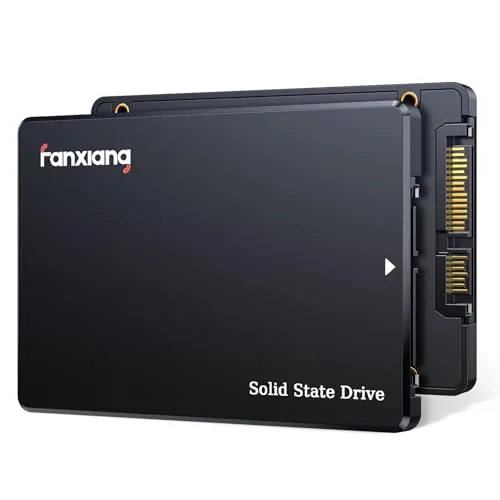
fanxiang S101Q 512GB SATA SSD
- Up to 560MB/s read and 490MB/s write specifications for substantially faster everyday storage performance than a mechanical hard drive.
Comparison
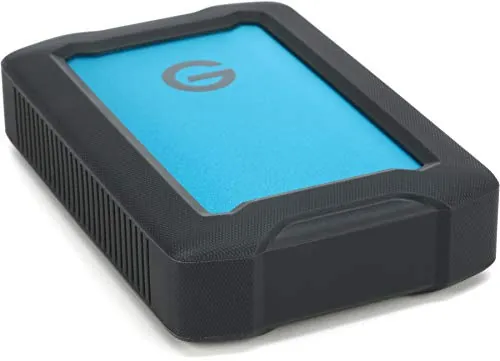
The fanxiang S101Q 512GB is an internal SATA SSD built for faster booting, application response, and everyday computer upgrades. The G-Technology ArmorATD 5TB is a rugged external mechanical hard drive built around large portable capacity and outdoor-oriented protection. The fanxiang wins for speed and internal-upgrade value, while the ArmorATD is the clear fit for 5TB of carryable storage.
#1 Overall Winner
Contender
Choose the fanxiang S101Q to replace a compatible internal SATA hard drive and prioritize speed, simple installation, and everyday system responsiveness. Choose the G-Technology ArmorATD if you need portable 5TB storage and purpose-built protection from travel-related dust, rain, shock, and crushing pressure. Do not select either as your only copy of essential data.
Overall winner
Depends on your needs
| Feature | fanxiang S101Q 512GB SATA SSD | G-Technology ArmorATD 5TB | Winner |
|---|---|---|---|
| Storage type | Internal 2.5-inch SATA SSD | Portable external mechanical hard drive | Depends |
| Capacity | 512GB | 5TB | G-Technology ArmorATD 5TB |
| Stated speed | Up to 560MB/s read; 490MB/s write | 130Mb/s data transfer rate | fanxiang S101Q 512GB SATA SSD |
| Installation | Internal SATA installation | External USB connection | Depends |
| Rugged protection | Shock resistant | IP54, shock resistant, 1,000-pound crush rating | G-Technology ArmorATD 5TB |
| Portability | 1.6 ounces; internal component | 0.35kg portable external drive | G-Technology ArmorATD 5TB |
| Compatibility | SATA III/II; Windows, Linux, Mac OS | USB-C ready; USB 3.0 and Thunderbolt 3 compatible; Mac and Windows ready | fanxiang S101Q 512GB SATA SSD |
| Setup | Strong easy-install feedback | Plug-in design; mixed formatting feedback | fanxiang S101Q 512GB SATA SSD |
| Reliability feedback | Some early-failure and capacity concerns | Reports of failures, recognition issues, and cable problems | fanxiang S101Q 512GB SATA SSD |
| Build and durability | Polycarbonate enclosure; shock resistant | Rugged multi-protection enclosure | G-Technology ArmorATD 5TB |
| Value | Strong performance-focused value feedback | Large-capacity rugged storage value feedback | fanxiang S101Q 512GB SATA SSD |
| Customer ratings | 4.5/5 from 5,646 reviews | 4.5/5 from 2,811 reviews | Tie |
The fanxiang S101Q has the decisive performance advantage for compatible internal storage. Its stated read speed reaches up to 560MB/s and its write speed up to 490MB/s, while reviews describe faster booting, application response, and renewed usefulness for older systems. The ArmorATD is a mechanical external hard drive with a listed 130Mb/s data-transfer rate; some customers consider it fast enough for storage and media use, but others find transfers slow. Choose the fanxiang for system responsiveness and routine transfers. Choose the ArmorATD when capacity and rugged portability outweigh speed.
The fanxiang is clearly better for speed. It is specified for up to 560MB/s reads and 490MB/s writes, and reviewers report fast performance, quicker Windows installation, and improved old-computer responsiveness. The ArmorATD is a mechanical hard drive with a much lower listed transfer figure, and its speed reviews are mixed. It may be sufficient for moving and storing large files, but it is not the better choice for an operating-system drive or users seeking SSD-like responsiveness.
Neither drive is free of reliability concerns. Fanxiang feedback is mostly positive but includes reports of early failure and capacity-related issues, reflected in a moderate reliability score. The ArmorATD has a lower reliability score, with multiple reports of spontaneous failure, failed recognition, and cable-related disconnection. The fanxiang has the relative advantage in the provided scoring, but neither result supports relying on a single drive for irreplaceable files. Use independent backups and test the drive after installation or formatting.
For a compatible internal replacement, the fanxiang earns the stronger usability result. Multiple reviews describe it as easy to install and effective at restoring older computers. The ArmorATD is convenient because it connects externally and does not require opening a computer, but its usability score is lower and review feedback includes formatting, drive-recognition, and cable complaints. For a user comfortable opening a laptop or desktop, the fanxiang is the smoother long-term everyday drive. For quick external storage, the ArmorATD remains convenient when it is recognized and properly formatted.
The two designs address different jobs. The fanxiang is a slim 7mm, 2.5-inch internal drive intended to disappear inside a compatible system; at 1.6 ounces, it is exceptionally light. The ArmorATD is a visible, portable external drive designed to be carried, with a more protective and substantial enclosure. The ArmorATD has the higher design score because its form factor aligns closely with travel and field storage, while the fanxiang is more practical where a compact internal SATA drive is required.
The ArmorATD wins build quality. Its enclosure is specifically designed for rugged use and is described as having triple-layer shock resistance, IP54 rain-and-dust resistance, and a stated 1,000-pound crush rating. Reviews commonly call it sturdy or built like a tank. The fanxiang is a lightweight internal SSD with a polycarbonate enclosure and shock-resistant design, which is appropriate inside a computer but not comparable to a sealed portable rugged drive. The supplied scores also favor the ArmorATD clearly in build quality.
The ArmorATD is the better durability choice because it is explicitly designed for rough handling and outdoor transport. Its claims include IP54 rain-and-dust resistance, shock resistance, and a 1,000-pound crush rating, and customer feedback often praises the thick protective case. The fanxiang is shock resistant and has no moving parts, which is beneficial within a computer, but its product data does not present equivalent weather or crush protection. The ArmorATD's higher durability score reflects this distinction.
The ArmorATD is the better portable-storage product because it is an external drive with a travel-oriented rugged enclosure and 5TB capacity. Its 0.35kg weight is reasonable for a protected mechanical drive, although it is far heavier than the 1.6-ounce fanxiang. The fanxiang is lighter and physically smaller, but it is intended for internal installation and needs an enclosure or adapter to function as a portable external drive. Select the ArmorATD for carrying files; select the fanxiang for internal storage.
The fanxiang's feature set focuses on SSD operation: 3D NAND, SLC cache, TRIM, S.M.A.R.T., ECC, RAID support, garbage collection, and wear leveling. The ArmorATD's features focus on external use and physical protection, including USB-C readiness, compatibility claims for USB 3.0 and Thunderbolt 3, IP54 rain-and-dust resistance, shock resistance, and a 1,000-pound crush rating. The fanxiang is more feature-rich for an internal performance upgrade; the ArmorATD is more specialized for high-capacity storage in tougher environments.
The fanxiang has the advantage in the supplied setup score and in reviews that describe a straightforward drop-in replacement process. It does require opening a compatible system, removing the existing drive if applicable, and installing an operating system or cloning data as needed. The ArmorATD is physically easier to connect because it is external, but buyers report mixed experiences with formatting and recognition. The ArmorATD also has cable-related complaints, so confirm a stable connection before transferring important files.
The fanxiang supports Windows, Linux, and Mac OS, plus SATA III and backward-compatible SATA II/SATA connections, but it requires a compatible 2.5-inch internal interface. The ArmorATD is ready for Mac and Windows according to its listing and connects by USB-C, with USB 3.0 and Thunderbolt 3 compatibility stated. The fanxiang has the higher compatibility score, yet the practical winner depends on your hardware: verify internal SATA space for the fanxiang or available USB connectivity and file formatting needs for the ArmorATD.
The fanxiang uses a SATA III 6Gb/s interface and is backward compatible with SATA II and SATA connections, making it appropriate for systems with a compatible internal bay. The ArmorATD uses USB 3.1 Type-C and is stated to be USB 3.0 and Thunderbolt 3 compatible, giving it an easier external connection path. Connectivity is not solely a win for either product: choose SATA for an internal upgrade and USB-C for external use. The fanxiang has the higher supplied connectivity score, while ArmorATD feedback includes some cable and recognition complaints.
The fanxiang has the better power-efficiency score and benefits from SSD architecture with no mechanical moving parts. The ArmorATD is a portable mechanical hard drive, and the supplied data does not provide detailed power-consumption figures for a direct numerical comparison. For a computer upgrade focused on efficient, responsive internal storage, the fanxiang is the more suitable option. The ArmorATD should be chosen for its capacity and rugged external format rather than an efficiency advantage.
The fanxiang has the stronger value score because it pairs strong stated SATA SSD performance, easy-install feedback, and a 512GB capacity with favorable customer value comments. The ArmorATD can still represent good value for users who specifically require 5TB of rugged external storage; its large capacity and protective enclosure are meaningful features that a basic internal SSD does not provide. Value therefore depends on the job: the fanxiang offers better performance-oriented value, while the ArmorATD earns consideration for capacity and travel protection.
The ArmorATD has the higher supplied brand-trust score, associated here with WD and G-Technology branding. However, brand confidence should not override the review record: both products have reported reliability concerns. The fanxiang provides stated three-year after-sales service and lifetime technical support, which is useful support information, while no comparable ArmorATD warranty detail is provided. Buyers should assess the retailer's current return terms and preserve a separate backup strategy regardless of brand.
Both drives hold a 4.5/5 average rating, but the fanxiang has more review volume at 5,646 reviews versus 2,811 for the ArmorATD and a slightly stronger customer-satisfaction score. Fanxiang praise centers on fast performance, easy installation, capacity, and value. ArmorATD praise focuses on rugged construction, portability, and spacious storage. Negative feedback for both warrants attention: fanxiang has some early-failure and capacity complaints, while ArmorATD has reports involving speed, compatibility, cables, recognition, and failures.
The fanxiang provides clearer stated support information: three years of after-sales service plus lifetime technical support. The ArmorATD's supplied information does not state specific warranty or replacement terms, and it has a lower warranty-support score. This does not establish the outcome of an individual claim, so buyers should check the seller's current return window and the applicable manufacturer terms before purchase, particularly because both products have some negative reliability feedback.
The fanxiang S101Q 512GB SATA SSD is the best overall option in this comparison for users with a compatible internal SATA bay. Its higher overall score is supported by stronger performance, speed, usability, setup, compatibility, value, and reliability results. It is the logical choice for breathing new life into an older laptop or desktop, provided 512GB meets your storage needs.
The G-Technology ArmorATD 5TB remains the better specialist choice for users who need far more capacity in an external drive and place high importance on a rugged, travel-ready enclosure. Its protection claims and portable 5TB format address a different problem than an internal SSD. Its lower speed and mixed reports on cables, recognition, and failures mean it should be used with care. In either case, maintain independent backups of essential files.

Overall winner
Depends on your needs
The fanxiang is the stronger overall choice in the supplied scoring, driven by better performance, speed, usability, setup, compatibility, value, and reliability results. However, it is not a direct replacement for the ArmorATD if you need 5TB of portable external storage and a rugged enclosure. Choose based first on internal speed versus portable capacity and protection.
The fanxiang S101Q is the faster option on the provided specifications. It lists read speeds up to 560MB/s and write speeds up to 490MB/s, while the ArmorATD is a mechanical external hard drive with a listed 130Mb/s data-transfer rate. ArmorATD reviews are mixed on speed, whereas fanxiang feedback repeatedly notes faster boots and responsive everyday use.
The G-Technology ArmorATD has much more stated capacity: 5TB compared with 512GB for the fanxiang S101Q. That makes the ArmorATD the more suitable option for large media libraries, footage, backups, and portable project files. The fanxiang's 512GB capacity is better suited to an internal system upgrade or a more limited collection of applications and files.
The fanxiang is specified as an internal 2.5-inch SATA SSD, so it is intended for installation in a compatible computer. One review describes using a SATA-to-USB cable for external use, but that requires a separate compatible enclosure or adapter. The ArmorATD is the purpose-built external choice because it has USB-C connectivity and a portable enclosure.
The ArmorATD is better for travel. Its external form factor, USB-C connection, 5TB capacity, IP54 rain-and-dust resistance, shock resistance, and stated 1,000-pound crush rating are all designed around carrying storage outside the home or office. The fanxiang is much lighter but is an internal SSD rather than a self-contained rugged portable drive.
The best choice depends on your goal. The ArmorATD avoids opening a computer because it is an external USB drive, but reviews mention occasional formatting, recognition, and cable concerns. The fanxiang requires internal installation, yet it has a stronger setup score and many buyers describe it as straightforward to install in compatible systems.
The fanxiang S101Q is the better fit for upgrading an older compatible computer that has a 2.5-inch SATA drive bay. Reviews specifically describe quicker Windows installation, faster boots, and giving older laptops new life. The ArmorATD adds external capacity but does not replace an internal drive, so it will not serve the same boot-drive upgrade role.
Neither should be treated as the only copy of important data. The supplied feedback for both products includes reports of failures: early failure or capacity-related concerns for the fanxiang, and spontaneous failures, recognition issues, and cable-related disconnections for the ArmorATD. Keep separate backups of important files regardless of which drive you choose.
Check our rankings and expert guides to find the best electronics products for your goals.