#1 Overall Winner
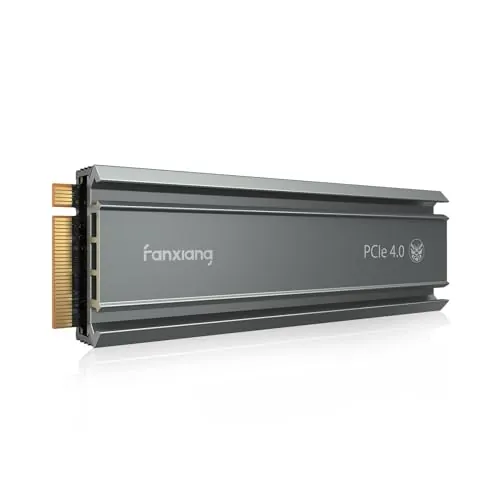
fanxiang S660 PCIe 4.0 2TB SSD with Heatsink
- 2TB capacity provides substantially more storage space for games and files than the 1TB INLAND drive.
Comparison
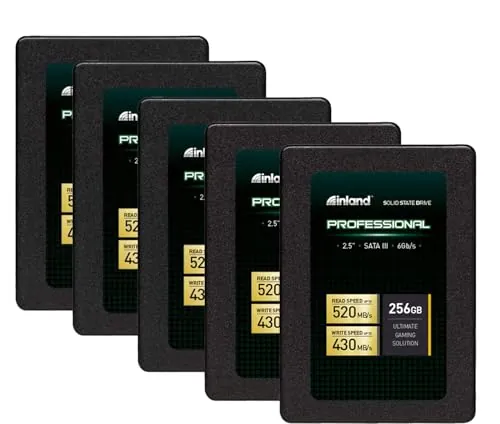
The fanxiang S660 and INLAND Professional 1TB SSD are internal drives for very different upgrade paths. The fanxiang is the stronger choice for compatible PS5 and PCIe 4.0 M.2 systems, while the INLAND is better aligned with compatible 2.5-inch SATA laptops and desktops. Both are well reviewed overall, but their interfaces, capacities, speeds, and long-term considerations differ significantly.
#1 Overall Winner
Contender
Choose the fanxiang S660 for PS5 expansion, 2TB capacity, and a compatible PCIe 4.0 M.2 PC upgrade. Choose the INLAND Professional for a compatible 2.5-inch SATA laptop or desktop used for everyday boot-drive and storage duties. Do not select between them on speed alone: their connection types support different systems.
Overall winner
Depends on your needs
| Feature | fanxiang S660 PCIe 4.0 2TB SSD with Heatsink | INLAND Professional 1TB SATA SSD | Winner |
|---|---|---|---|
| Drive type | M.2 PCIe 4.0 NVMe SSD |
2.5-inch SATA III SSD |
Depends |
| Capacity in this comparison | 2TB |
1TB |
fanxiang S660 PCIe 4.0 2TB SSD with Heatsink |
| Stated speed | Up to 5000MB/s |
Up to 500MB/s read; 470MB/s write |
fanxiang S660 PCIe 4.0 2TB SSD with Heatsink |
| PS5 suitability | Listed as PS5 compatible |
2.5-inch SATA interface |
fanxiang S660 PCIe 4.0 2TB SSD with Heatsink |
| PC and laptop upgrade | Compatible PC use stated |
Desktop and laptop use stated |
Depends |
| Cooling | Integrated heatsink |
No heatsink specified |
fanxiang S660 PCIe 4.0 2TB SSD with Heatsink |
| Setup | Setup score 88; frequent easy-install feedback |
Setup score 86; frequent easy-install feedback |
fanxiang S660 PCIe 4.0 2TB SSD with Heatsink |
| Reliability score | 64 |
68 |
INLAND Professional 1TB SATA SSD |
| Durability score | 61 |
73 |
INLAND Professional 1TB SATA SSD |
| Stated endurance | Not provided |
Up to 660TBW |
INLAND Professional 1TB SATA SSD |
| Warranty | Five-year quality assurance |
Three-year limited warranty |
fanxiang S660 PCIe 4.0 2TB SSD with Heatsink |
| Value score | 76 |
81 |
INLAND Professional 1TB SATA SSD |
| Customer satisfaction | 4.6/5 from 3,650 reviews; score 86 |
4.6/5 from 4,669 reviews; score 84 |
fanxiang S660 PCIe 4.0 2TB SSD with Heatsink |
The fanxiang S660 has the higher performance score and is the faster drive by specification, with PCIe 4.0 NVMe performance stated up to 5000MB/s. Reviews describe quick game transfers, smooth PS5 use, and no noticeable gameplay loading issues. The INLAND Professional is limited by its SATA III interface, with stated sequential read/write speeds up to 500/470MB/s. That remains a meaningful upgrade over a conventional hard drive for booting and everyday applications, but it is not in the same performance class as the fanxiang on compatible hardware.
The fanxiang has the speed advantage, scoring 84 versus 80 and listing up to 5000MB/s data transfer performance. The INLAND lists up to 500MB/s reads and 470MB/s writes, which is typical of its SATA III connection class. For moving large files, game transfers, and workloads able to use PCIe 4.0, the fanxiang has greater potential. For routine booting and office-style use on a SATA-only computer, INLAND's speeds can still feel substantially faster than a hard drive.
Reliability is a caution area for both drives. The INLAND has the higher reliability score, and some reviewers report long service, including deployments across multiple drives. However, its aggregated feedback also mentions failures within three months. Fanxiang reviews include many successful PS5 installations and continued use, but aggregated feedback notes multiple reports of failures after one week. The fanxiang also has a review disputing a flash-memory claim for a different capacity. Maintain backups with either drive.
Both drives have positive installation feedback and strong usability scores. Fanxiang reviewers frequently say the drive fits the PS5 expansion slot easily and is recognized promptly; the pre-installed heatsink reduces the need to source one separately. INLAND reviews describe simple connections and noticeable everyday responsiveness after installation. The key usability limitation is compatibility: an easy installation only follows once the drive matches the computer or console's supported interface.
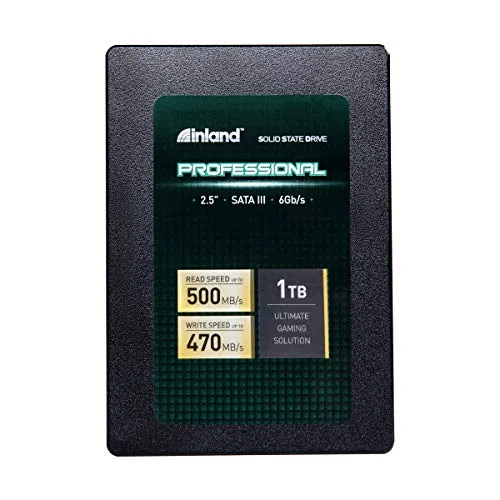
These drives use different physical designs. The fanxiang is a compact M.2 module with a heatsink, made for an M.2 slot such as the PS5 expansion bay or a compatible PC motherboard. The INLAND is a 7mm-thick 2.5-inch drive intended for standard SATA bays. The fanxiang is more space-efficient at 30 grams, while the INLAND's familiar 2.5-inch format is more useful for systems that lack M.2 storage support.
The fanxiang's build proposition centers on an included heatsink intended to keep temperatures lower during extended use. The INLAND lists 3D TLC NAND and resistance to shock, vibration, and movement, appropriate attributes for a solid-state replacement drive. INLAND has a modest lead in build-quality score, while fanxiang's feedback raises more concern about early failures. Neither listing provides enough comparable construction detail to make a broader materials-based judgment.
The INLAND leads on durability score and provides a stated endurance rating of up to 660TBW. It also lists shock and vibration resistance. The fanxiang's heatsink is intended to support low-temperature operation under prolonged use, but the available data does not provide a comparable TBW rating. Early-failure reports weigh on its durability assessment. For buyers comparing long-term evidence provided here, INLAND has the clearer endurance claim, though its own review feedback is not free of failures.
Neither is an external portable drive, but their physical formats differ. The fanxiang M.2 drive is smaller and lighter at 30 grams, whereas the INLAND is a larger 2.5-inch drive. The INLAND receives the higher portability score, likely reflecting its conventional, slim 7mm drive format, but portability is secondary to internal-slot compatibility for both products.
The fanxiang's defining features are its PS5-oriented M.2 PCIe 4.0 design, 2TB capacity, SLC cache claim, and integrated heatsink. The INLAND instead focuses on a conventional 2.5-inch SATA form factor, stated 3D TLC NAND, shock resistance, and up to 660TBW stated endurance. Fanxiang offers the more advanced feature set for a modern M.2 expansion slot, while INLAND offers the more relevant set for a legacy SATA bay.
The fanxiang narrowly leads on setup score. Its PS5-focused reviews repeatedly mention a straightforward fit, quick mounting, and immediate recognition, and the supplied heatsink simplifies a common PS5 expansion requirement. INLAND is also widely described as easy to connect and install as a laptop or desktop replacement drive. In either case, users should check the device manual, ensure the correct interface, and follow any formatting steps required by the operating system or console.
The fanxiang is the better compatibility choice for PS5 and a compatible PCIe M.2 desktop, while the INLAND fits compatible SATA desktops, laptops, PCs, and Macs. Neither is a direct replacement for the other because M.2 NVMe and 2.5-inch SATA use different connectors and mounting arrangements. INLAND's mixed feedback on Windows 10 recognition means PC buyers should verify system support and troubleshoot installation if detection fails.
Connectivity is the decisive difference. The fanxiang uses PCI Express x4/NVMe and is listed as compatible with PS5 and desktop use. The INLAND uses SATA 6Gb/s and is listed for desktops, laptops, PCs, and Macs. Fanxiang has the higher connectivity and compatibility scores, but that does not make it universally compatible: buyers must confirm an available M.2 PCIe slot. Conversely, the INLAND requires a compatible 2.5-inch SATA connection.
The INLAND has the higher power-efficiency score and is described as a no-noise solid-state drive with no overheating claim in its listing. The fanxiang's heatsink is designed for thermal management during intensive use. Neither listing provides directly comparable power-consumption figures, so the score difference is the available basis for a modest INLAND advantage rather than a quantified energy-use conclusion.
INLAND holds the higher value score because it combines mainstream SATA performance, stated TLC NAND, a stated 660TBW endurance figure, and a three-year limited warranty for compatible everyday PC upgrades. The fanxiang is not automatically poorer value: its 2TB capacity, PS5 support, heatsink, and far higher potential speed can justify it for a compatible gaming or PCIe 4.0 system. Value depends on whether the buyer needs an M.2 NVMe drive or a SATA replacement, not simply on the listed price.
Brand-trust scores are close, with INLAND holding a slight lead. Both products have high aggregate star ratings and substantial review counts, but both also have recurring reliability-related feedback that should temper buyer confidence. Fanxiang lists five-year quality assurance and professional after-sales support, while INLAND states a three-year limited parts and labor warranty. The provided data does not establish a wider support-history comparison beyond those listing claims and review patterns.
Both products are rated 4.6/5 on Amazon. Fanxiang has 3,650 reviews and a customer-satisfaction score of 86; users frequently praise PS5 compatibility, capacity, speed, value, and installation. INLAND has 4,669 reviews and a score of 84; users commonly value easier older-system upgrades, boot performance, and affordability. In both cases, positive feedback is offset by a smaller but meaningful set of early-failure complaints.
Fanxiang has the stronger stated coverage period, offering five-year quality assurance and after-sales support. INLAND provides a three-year limited parts and labor warranty. Buyers should confirm the current warranty terms, seller eligibility, return window, and local support process before ordering, particularly because review data for both drives includes reports of early failures.
The fanxiang S660 is the best overall choice when the system supports it. It matches the INLAND's overall score while offering a stronger performance profile, 2TB capacity, a PCIe 4.0 NVMe interface, PS5 compatibility, a heatsink, and longer stated coverage. It is therefore the more capable option for PS5 storage expansion and compatible modern PCs.
The INLAND Professional should not be dismissed as slower storage; it is the better option for a computer that requires a 2.5-inch SATA SSD. It has a higher value score, higher reliability and durability scores, stated 660TBW endurance, and positive feedback as an everyday replacement for older drives. However, it cannot upgrade PS5 storage and is not aimed at intensive write workloads. Both have some failure reports, so choose based on interface and use case, then protect data with regular backups.

Overall winner
Depends on your needs
They serve different hardware needs. The fanxiang S660 is the stronger option for compatible PS5 and PCIe 4.0 M.2 systems because it offers 2TB capacity, a heatsink, and much higher stated transfer speeds. The INLAND Professional is the more suitable choice for a compatible 2.5-inch SATA laptop or desktop upgrade, especially for mainstream everyday use.
No. The INLAND Professional is a 2.5-inch SATA drive, while the compared fanxiang S660 is an M.2 PCIe 4.0 NVMe model specifically listed as compatible with PlayStation 5 expansion. Buyers should verify their device's drive bay and interface before ordering either product.
The fanxiang S660 in this comparison has 2TB of capacity, while the INLAND Professional has 1TB. That makes the fanxiang the better fit for buyers who need more room for a PS5 game library or larger PC file collections. The INLAND may be sufficient for a basic operating-system and everyday application upgrade.
The fanxiang S660 is clearly faster on its stated specifications. It uses PCIe 4.0 NVMe connectivity and lists speeds up to 5000MB/s, whereas the INLAND uses SATA III and lists sequential read/write speeds up to 500/470MB/s. Actual performance will still depend on the compatible host system, configuration, and workload.
Both score well for setup, with the fanxiang slightly ahead. Fanxiang reviews often mention easy PS5 installation, instant recognition, and the included heatsink. INLAND buyers also commonly report simple installation in PCs and laptops. Ease ultimately depends on whether your device accepts an M.2 NVMe drive or a 2.5-inch SATA drive.
The INLAND Professional is generally the appropriate option for an older laptop that has a compatible 2.5-inch SATA bay. Its review feedback highlights improved boot times and everyday responsiveness when replacing older storage. The fanxiang S660 requires a compatible M.2 PCIe slot, so it cannot simply replace a SATA drive in every older laptop.
The fanxiang S660 lists a five-year quality assurance period, compared with the INLAND Professional's three-year limited parts and labor warranty. Warranty duration is only one consideration: both products have some reports of early failures in review feedback, so users should maintain backups and confirm current seller and return terms before purchase.
The supplied information positions the INLAND Professional as a mainstream consumer drive, and review feedback cautions against using it for frequent write-intensive tasks such as scratch-disk workloads. The fanxiang offers substantially higher stated speeds, but its review data raises reliability and specification-consistency concerns. Neither comparison listing provides enough detail to make a broad professional-workload recommendation.
Check our rankings and expert guides to find the best electronics products for your goals.