#1 Overall Winner
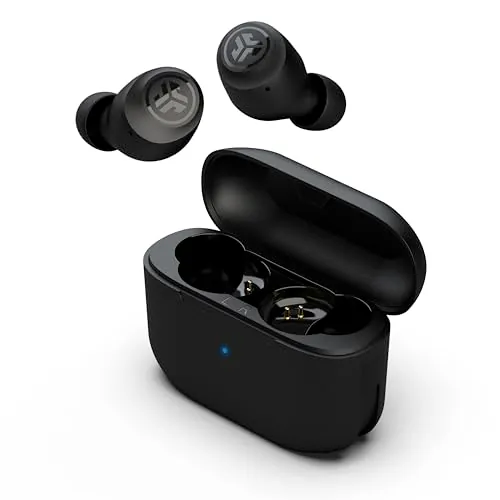
JLab Go Air Pop+ True Wireless Earbuds (Black)
- Long rated battery life: up to 35+ hours total playtime (9+ hours per earbud plus 26+ from case).
Comparison
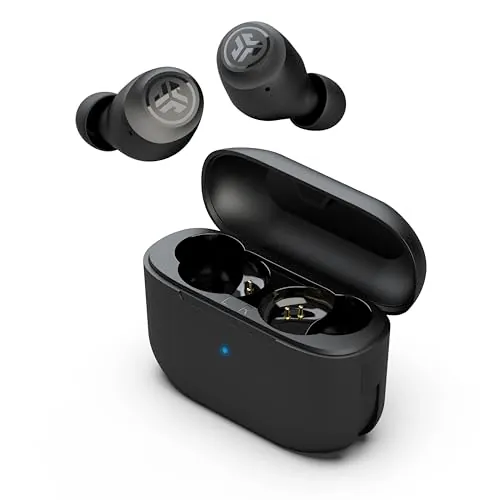
The JLab Go Air Pop+ and JLab Go Air Pop are two of JLab’s most popular budget true wireless earbuds, both built around compact cases, long battery life, and simple touch controls. Pop+ scores higher overall and adds newer Bluetooth plus app-based customization, while Go Air Pop has a far larger review history and a straightforward no-app EQ workflow. If you want the newer feature set and top battery rating, Pop+ is the safer pick; if you want the most “proven” model by sheer buyer volume, Go Air Pop remains a strong alternative.
#1 Overall Winner
Contender
Choose JLab Go Air Pop+ if you want the higher-rated all-rounder with newer Bluetooth (5.3), longer rated total battery life, and app-driven sound/control customization.
Choose JLab Go Air Pop if you want a simpler no-app EQ approach, IPX4 sweat resistance called out in the listing, and the reassurance of a massively reviewed model (57k+ reviews).
Overall winner
Depends on your needs
| Feature | JLab Go Air Pop+ True Wireless Earbuds (Black) | JLab Go Air Pop True Wireless Bluetooth Earbuds (Black) | Winner |
|---|---|---|---|
| Overall score (provided) | 86 overall | 82 overall | JLab Go Air Pop+ True Wireless Earbuds (Black) |
| Amazon rating | 4.5/5 | 4.4/5 | JLab Go Air Pop+ True Wireless Earbuds (Black) |
| Amazon review count | 6,151 reviews | 57,106 reviews | JLab Go Air Pop True Wireless Bluetooth Earbuds (Black) |
| Battery life (listed total) | 35+ hours (9+ buds + 26+ case) | 32+ hours (8+ buds + 24+ case) | JLab Go Air Pop+ True Wireless Earbuds (Black) |
| Bluetooth version | Bluetooth 5.3 | Bluetooth 5.1 | JLab Go Air Pop+ True Wireless Earbuds (Black) |
| EQ control approach | App EQ presets + control customization | 3 EQ settings via touch (no app needed) | Depends |
| Fast pairing support (listed) | Google Fast Pair (listed) | Not listed | JLab Go Air Pop+ True Wireless Earbuds (Black) |
| Touch controls | Touch controls (volume control listed) | Touch controls (volume/track/assistant listed) | Tie |
| Portability score (provided) | 95 | 88 | JLab Go Air Pop+ True Wireless Earbuds (Black) |
| Usability score (provided) | 88 | 78 | JLab Go Air Pop+ True Wireless Earbuds (Black) |
| Connectivity score (provided) | 74 | 68 | JLab Go Air Pop+ True Wireless Earbuds (Black) |
| Reliability score (provided) | 68 | 67 | Tie |
| Audio quality score (provided) | 83 | 79 | JLab Go Air Pop+ True Wireless Earbuds (Black) |
| Warranty/support score (provided) | 55 | 70 | JLab Go Air Pop True Wireless Bluetooth Earbuds (Black) |
| Value score (provided) | 93 | 92 | JLab Go Air Pop+ True Wireless Earbuds (Black) |
For everyday listening performance, both earbuds are positioned as sound-isolating in-ears with multiple EQ profiles to tailor the sound. In the provided scoring, Go Air Pop+ rates slightly higher for performance and audio quality, which aligns with reviews describing clear sound and strong value. Neither product is presented here as an “audiophile” option, and both rely primarily on fit/seal rather than stated active noise cancelling. If you want the higher-rated sound/performance package overall, Pop+ has the edge; if you mainly want basic, serviceable sound for podcasts, work, and the gym, either can fit the job.
“Speed” for true wireless earbuds mainly shows up as connection and reconnection behavior. Go Air Pop+ scores higher on speed and emphasizes auto-on/auto-connect, plus it uses Bluetooth 5.3. Go Air Pop can feel quick to connect for many users as well, but some reviews mention needing extra steps when switching devices. If you value faster, smoother reconnection and fewer steps, Pop+ has the advantage in the provided data.
Reliability is a mixed area for both products. The provided scores are close, and both aggregated review summaries mention cases of one earbud not working and intermittent connection problems, alongside many reviews reporting solid everyday performance. If reliability is your top concern, the best approach is to buy from a seller/return policy you trust, test them thoroughly in the first week (calls, single-ear mode, charging), and keep firmware/app settings consistent where applicable.
Go Air Pop+ rates higher for usability and setup. Its listing emphasizes auto-on/auto-connect behavior and app-based control tuning, and reviews frequently describe easy pairing and intuitive controls. Go Air Pop can also be easy for many users, but review themes include inconvenience when moving between devices (needing to disconnect from the first device) and physical handling friction (buds being hard to remove from the case). For the least day-to-day hassle, Pop+ is the safer bet in the provided scoring.
Both earbuds focus on a compact, pocketable design and in-ear fit with multiple tip sizes. Go Air Pop+ scores higher on design and portability in the provided scoring and is marketed as smaller/lighter than the prior Go Air line. Go Air Pop also emphasizes the “smaller than a credit card” case concept and a 15% smaller fit. In practice, design choice may come down to personal preferences on case handling—especially since Go Air Pop has multiple reviews noting the buds can be hard to pull out of the case.
Build quality scores are similar in the provided data. Customer feedback for both mentions decent durability for the price, but neither is positioned as premium hardware. Some Go Air Pop reviews describe the case and buds as sturdy, while some Pop+ feedback notes the case can feel light. Overall, this category looks like a tie: both appear acceptable for budget earbuds, with long-term outcomes varying by user and unit.
Durability scores are similar for both. Reviews for Pop+ include examples of surviving sweat and drops with routine cleaning, while Go Air Pop is explicitly marketed with IPX4 sweat resistance. Neither listing here provides detailed ruggedness certifications beyond water resistance statements, so the safest takeaway is that both should handle normal daily use, but long-term durability can vary by unit and handling.
Both models are built around a small, pocket-friendly case. In the scoring, Go Air Pop+ is the portability leader, and its listing emphasizes a very compact, lightweight design. Go Air Pop remains highly portable, but user experience can be affected by how easy you find it to remove the earbuds from the case—an issue that comes up repeatedly in reviews. For maximum pocketability plus handling convenience, Pop+ rates better overall.
Both models include Dual Connect and EQ modes, but they diverge in how features are delivered. Go Air Pop+ highlights JLab app support for tailoring touch controls, adjusting Be Aware settings, and choosing EQ presets, and it also lists Google Fast Pair for Android convenience. Go Air Pop emphasizes no-app EQ switching using touch controls and explicitly calls out IPX4 sweat resistance in the listing. If you want customization and Android fast pairing, Pop+ is the more feature-forward pick; if you want simple standalone control and an explicit sweat rating, Pop is attractive.
If you want an app-driven experience, Go Air Pop+ is the clearer pick: it explicitly promotes the JLab app for EQ, touch customization, and Be Aware adjustments, and it scores higher for app experience. Go Air Pop is designed to work well without an app for EQ changes, and its app experience score is lower in the provided data. Choose based on whether you want to “set and forget” without an app (Pop) or prefer deeper customization (Pop+).
Neither product is presented as a “smart” earbud platform in the way premium models are. That said, Go Air Pop+ includes Google Fast Pair (listed) and app-based control customization, while Go Air Pop focuses more on standalone EQ switching and touch controls (including smart assistant activation per listing). In the provided scores, Pop+ rates higher for smart features overall.
Go Air Pop+ scores notably higher for setup and highlights auto-on/auto-connect behavior plus Google Fast Pair for Android. Go Air Pop setup is often described as simple in reviews, but there are more mentions of needing extra steps when switching devices or troubleshooting pairing (for example, resets). If you want the most frictionless initial experience, Pop+ leads in the provided scoring.
Both models are positioned to work broadly with common devices (phones/tablets/laptops) and both support Bluetooth wireless use without a headphone jack. Go Air Pop reviews specifically mention pairing with multiple device types but also note you may need to disconnect from one device before connecting to another. Go Air Pop+ adds Google Fast Pair (listed) for Android convenience. If you are heavily multi-device, expect some manual Bluetooth management with either model, with Pop+ offering the clearer Android-first pairing feature.
Both products are regularly praised for “good sound for the price” and include EQ profiles to adjust tuning. In the scoring, Go Air Pop+ rates higher for audio quality, suggesting a small advantage if sound is your top priority within this budget tier. Go Air Pop remains well-liked for casual listening and has many reviews describing balanced sound and useful EQ modes, but it’s also frequently framed as not being an audiophile product. If you want the higher-rated sound package, Pop+ wins; for basic everyday audio, either can work.
Go Air Pop+ has the newer Bluetooth version (5.3) and a higher connectivity score than Go Air Pop (Bluetooth 5.1). It also lists Google Fast Pair for Android, which can reduce pairing friction. However, both models have mixed connectivity feedback in the aggregated review summaries (reports of disconnects or pairing issues alongside many users reporting stable connections). If connectivity is the deciding factor, Pop+ is the more modern spec and higher-scoring choice, but neither is immune to device-specific pairing quirks.
Battery life is a key reason to buy either model. Go Air Pop+ is listed at 35+ hours total (9+ in the earbuds plus 26+ in the case) and has a higher battery life score. Go Air Pop is listed at 32+ hours total (8+ plus 24+), which is still excellent for the price. Reviews for both frequently praise long-lasting batteries, though real-world results can vary based on volume, call use, and fit.
Both earbuds are rated as efficient enough to deliver very long total playtime for their size. The provided power efficiency score is slightly higher for Go Air Pop+, which aligns with its higher total battery rating. In practical terms, both are designed to reduce charging frequency versus many budget true wireless alternatives.
Both models score extremely well for value, combining long battery life, compact design, and practical everyday features at a budget price. Go Air Pop+ rates slightly higher for value in the provided scoring, helped by its higher overall score, longer rated battery life, and app-based customization. Go Air Pop remains excellent value as well, especially if you prioritize its no-app EQ workflow, IPX4 sweat resistance callout, and the confidence that comes from a very large and established review base.
Both products come from JLab and show strong customer adoption and value-focused positioning. Scores slightly favor Go Air Pop+ for brand trust, but the difference is modest. Go Air Pop’s listing explicitly mentions a two-year warranty, which can improve buyer confidence. Overall, brand trust is strong for both within the budget true wireless segment.
Customer satisfaction is high for both, with strong star ratings and value-focused praise. Go Air Pop+ has the higher satisfaction score and a slightly higher average rating, while Go Air Pop has vastly more reviews, giving you more data points on fit, durability, and day-to-day quirks. Both have similar recurring negatives: occasional connectivity issues and reports of one earbud failing.
Go Air Pop is stronger on warranty/support in the provided scoring and its listing explicitly includes a JLab two-year warranty. The Pop+ listing details provided here do not specify warranty terms, and its warranty/support score is lower. If warranty clarity is important, Go Air Pop has the advantage based on the information given.
Between these two budget-friendly JLab options, JLab Go Air Pop+ is the better overall pick on the provided scores. It leads on the areas that most often impact daily satisfaction—battery life, portability, setup/usability, connectivity rating, and audio quality—while keeping the same core true-wireless conveniences like Dual Connect and EQ modes.
JLab Go Air Pop still makes sense if you prefer its no-app EQ workflow, want the comfort of an extremely large review history, or prioritize clearer warranty inclusion (the listing states a two-year warranty and it scores higher on warranty/support). If you’re choosing mainly for a simple budget pair and don’t mind some device-switching quirks, Go Air Pop remains a solid alternative.
Overall winner
Depends on your needs
Based on the provided scoring, JLab Go Air Pop+ rates higher overall (86 vs 82). It leads particularly on battery life, portability, setup/usability, and value. JLab Go Air Pop is still a strong budget pick and stands out for its massive review history and simple EQ switching without relying on an app. The best choice depends on whether you want newer connectivity and app controls (Pop+) or the most “proven” model by review volume (Pop).
JLab Go Air Pop+ is rated higher for battery life and is listed at 35+ hours total (9+ in the buds plus 26+ in the case). JLab Go Air Pop is listed at 32+ hours total (8+ plus 24+). Real-world runtime can vary by volume, call use, and fit/seal, but on paper and in scoring, Pop+ has the edge.
From the provided data, both products list noise control as sound isolation, not active noise cancelling. That means they primarily reduce outside noise through the in-ear seal. Reviews also describe them as dampening background sound, but not as a premium ANC experience. If ANC is a must-have feature, neither listing here confirms that capability.
JLab Go Air Pop+ scores higher for usability and setup, and the listing highlights auto on & connect plus app-based control customization. Go Air Pop is also straightforward for many owners, but reviews mention occasional friction—like difficulty removing the buds from the case and needing to disconnect from one device before pairing to another. For the simplest daily experience, Pop+ has the scoring advantage.
Go Air Pop+ uses Bluetooth 5.3 and scores higher on connectivity than Go Air Pop, which uses Bluetooth 5.1. That said, both models have mixed connectivity feedback in aggregated review summaries, with some users reporting disconnects or pairing issues. If connection stability is critical, the newer Bluetooth version and slightly higher connectivity score favor Pop+, but results can still vary by device and environment.
Both offer multiple EQ profiles (Signature, Balanced, Bass Boost). The main difference is how you control them: Go Air Pop emphasizes switching EQ modes via touch controls without an app. Go Air Pop+ highlights using the JLab app to tailor sound and touch controls, in addition to preset EQ options. If you prefer app-based tweaking, Pop+ is the clearer match.
Both are marketed as small, lightweight earbuds that can work well for gym use, and reviews for both mention workouts/running. Go Air Pop explicitly lists IPX4 sweat resistance, which is a clear workout-friendly detail. Go Air Pop+ is described as sweatproof/water resistant and very compact, but the fit feedback is mixed for some users. For workouts, Pop is more explicit on the rating, while Pop+ scores higher on portability.
Go Air Pop+ has a higher star rating (4.5/5 vs 4.4/5) and a higher customer satisfaction score in the provided scoring. Go Air Pop has an enormous review count (57,106 vs 6,151), which can give buyers more confidence in the consistency of feedback. Both have generally positive sound/value comments, with recurring mixed notes around reliability and connectivity.
Both score very highly for value, but Go Air Pop+ is rated slightly higher on value in the provided scoring. The reasoning from the data points to a strong mix of long battery life, portability, usability, and sound quality for the money, plus app-based EQ/control options. Go Air Pop remains excellent value too, especially for shoppers who want a simple, no-app EQ workflow and a heavily reviewed budget model.
Check our rankings and expert guides to find the best electronics products for your goals.