#1 Overall Winner
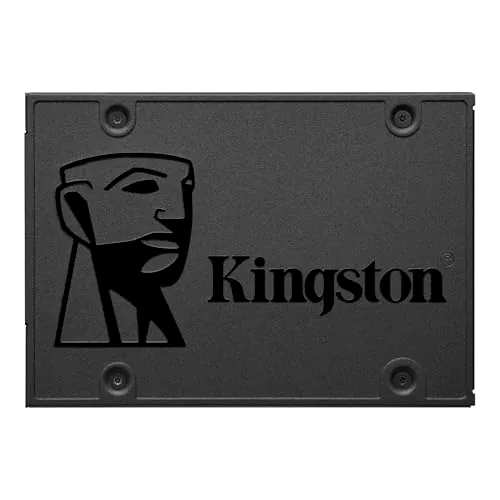
Kingston 240GB A400 SATA 3 2.5" Internal SSD SA400S37/240G
- Up to 500MB/s read and 450MB/s write speeds are specified.
Comparison
The Kingston A400 240GB and Kingston SSDNow V300 480GB are 2.5-inch SATA SSDs intended to make HDD-based computers feel more responsive. The A400 wins this comparison on overall scoring, stated speed, reliability, value, and customer feedback, while the V300 makes the stronger case for buyers who need twice the capacity and want explicitly listed three-year support.
#1 Overall Winner
Contender
Choose the Kingston A400 240GB for the higher-scoring, faster specified SATA SSD and stronger customer-feedback profile. Choose the Kingston SSDNow V300 480GB if you need more local storage, prefer its stated three-year warranty, and accept lower specified speeds.
Overall winner
Depends on your needs
| Feature | Kingston 240GB A400 SATA 3 2.5" Internal SSD SA400S37/240G | Kingston Digital 480GB SSDNow V300 SATA 3 2.5" SSD SV300S37A/480G | Winner |
|---|---|---|---|
Capacity |
240GB |
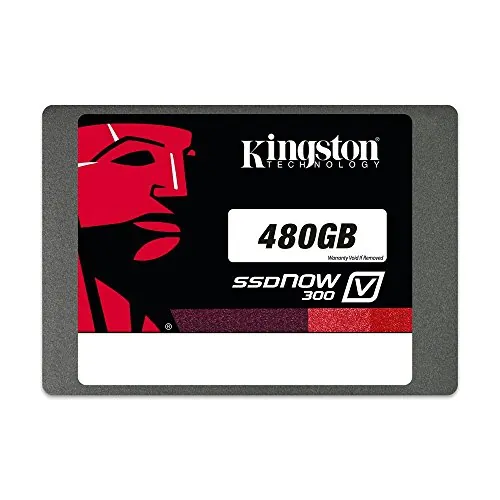
480GB |
Kingston Digital 480GB SSDNow V300 SATA 3 2.5" SSD SV300S37A/480G |
Specified read speed |
Up to 500MB/s |
450MB/s |
Kingston 240GB A400 SATA 3 2.5" Internal SSD SA400S37/240G |
Specified write speed |
Up to 450MB/s |
400MB/s |
Kingston 240GB A400 SATA 3 2.5" Internal SSD SA400S37/240G |
Overall score |
92 |
87 |
Kingston 240GB A400 SATA 3 2.5" Internal SSD SA400S37/240G |
Performance score |
91 |
82 |
Kingston 240GB A400 SATA 3 2.5" Internal SSD SA400S37/240G |
Reliability score |
89 |
75 |
Kingston 240GB A400 SATA 3 2.5" Internal SSD SA400S37/240G |
Compatibility score |
68 |
78 |
Kingston Digital 480GB SSDNow V300 SATA 3 2.5" SSD SV300S37A/480G |
Setup score |
90 |
86 |
Kingston 240GB A400 SATA 3 2.5" Internal SSD SA400S37/240G |
Power-efficiency score |
86 |
88 |
Kingston Digital 480GB SSDNow V300 SATA 3 2.5" SSD SV300S37A/480G |
Warranty support |
Terms not provided |
Three-year warranty and free technical support |
Kingston Digital 480GB SSDNow V300 SATA 3 2.5" SSD SV300S37A/480G |
Customer rating |
4.8/5 from 204,504 reviews |
4.6/5 from 12,453 reviews |
Kingston 240GB A400 SATA 3 2.5" Internal SSD SA400S37/240G |
Best fit |
Speed-focused 240GB HDD replacement |
Capacity-focused 480GB general upgrade |
Depends |
The A400 has the stronger performance case. It is specified for up to 500MB/s reads and 450MB/s writes, against 450MB/s and 400MB/s for the V300, and it leads 91 to 82 in the supplied performance score. Both drives receive consistent praise for making HDD-based systems boot and load applications more quickly. However, the V300's review set includes cautionary feedback about sustained write performance and large transfers, whereas the A400's supplied feedback is more consistently positive for everyday responsiveness.
The A400 is the faster option on the available specifications and scoring. Its stated ceiling is up to 500MB/s read and 450MB/s write, compared with 450MB/s read and 400MB/s write for the V300, while its speed score is 90 versus 80. In real use, either is expected to be a substantial step up from a mechanical disk for boot and application loading. The A400 is the better choice where every available SATA throughput advantage is preferred.
The A400 has the clear scoring lead for reliability, 89 compared with 75. Its aggregate review summary describes it as reliable, and included long-term feedback reports continued operation after years of use. The V300 also has plenty of positive reliability feedback, but the supplied reviews include a report of slowing write performance and errors after months of use. As with any storage device, keep separate backups of important data regardless of which model you choose.
Both products are generally simple upgrades according to their review summaries, with buyers reporting faster Windows installation and everyday operation. The A400 has the higher usability score, 88 versus 84, and setup score, 90 versus 86. Its drive-only packaging means users planning a migration need to arrange cloning tools separately. V300 reviews describe cloning and fresh installations successfully, and the listing includes an installation guide, but users should still plan the migration and confirm available mounting hardware.
Both are compact 2.5-inch internal SATA drives designed to fit compatible computer drive bays. The V300 has a slightly higher design score, 76 versus 72, and explicitly lists a 7mm height, which can matter in slim drive bays. The A400 is very light at 1.44 ounces and is listed for laptop and desktop use. The practical design decision is therefore physical fit: verify your device's drive-bay height, mounting method, and SATA connector before buying.
The V300 has a modest scoring advantage for build quality, 78 versus 74. Both are solid-state drives with no moving parts, an important advantage over HDDs for quiet operation and reduced mechanical-failure exposure. The A400 is described as resistant to shock and vibration and uses a stainless-steel enclosure according to the provided listing. The V300 is also listed as durable and shock resistant. Neither supplied dataset provides enough detail for a meaningful materials or internal-component comparison beyond those claims.
Both SSDs avoid the moving parts found in HDDs and are described as shock resistant or resistant to shock and vibration. The A400 has the higher durability score, 84 versus 77, and reviews include reports of long-term use. The V300 is also presented as durable and cool-running, but the provided feedback includes concerns about performance sustainability. The available data therefore favors the A400 for durability, while neither drive should be treated as a substitute for maintaining data backups.
Both drives are highly portable 2.5-inch internal SSDs with strong portability scores: 95 for the A400 and 92 for the V300. Their lack of moving parts also makes them better suited than HDDs to mobile computing and transportation. The A400 has the small scoring lead and a listed weight of 1.44 ounces. The V300's 7mm height can be useful where a slim drive is required. For most buyers, bay compatibility matters more than the small portability difference.
Both drives provide the core SATA SSD features: a 2.5-inch internal form factor, SATA Rev. 3.0 connectivity, backward compatibility to SATA Rev. 2.0, and storage without moving parts. The A400's relevant practical feature is its stated shock and vibration resistance, plus compatibility listings for desktops, laptops, Xbox One, and PlayStation 4. The V300 adds explicitly listed shock resistance, a 7mm height, and stated three-year warranty and free technical support. The V300 also offers the more useful 480GB capacity.
Installation should be familiar for either model: mount the 2.5-inch drive in a compatible bay, attach SATA connections, then install or migrate the operating system. The A400's 90 setup score is slightly higher than the V300's 86, and buyers often call it easy to install. Its listing explicitly says cloning software is not included, which is an important planning point. V300 reviews also report simple installs and successful cloning, while its included materials list an installation guide and warranty document.
The V300 has the higher compatibility score, 78 versus 68, and explicitly supports SATA Rev. 3.0 with backward compatibility to SATA Rev. 2.0. The A400 also states SATA Rev. 2.0 backward compatibility and lists desktops, laptops, Xbox One, and PlayStation 4 as compatible devices. However, its aggregate feedback notes mixed recognition experiences. The V300's listing names desktop compatibility, although supplied reviews also discuss laptop installations. Check the specific device's bay, connector, firmware, and storage limits rather than relying on a general compatibility label.
Both drives use SATA and state backward compatibility with SATA Rev. 2.0. The A400 is specified with SATA 3.0Gb/s hardware connectivity in the supplied details, while its description also references SATA 3 and SATA Rev. 2.0 compatibility; the V300 explicitly lists SATA Rev. 3.0 at 6Gb/s. The A400 leads in connectivity score, 78 to 72, but it also has mixed compatibility feedback, including reports of systems not recognizing the drive immediately. Confirm your host device supports a 2.5-inch SATA drive and check its interface settings.
The V300 narrowly leads in power-efficiency scoring, 88 to 86. Both products avoid mechanical drive components and are described as cool and quiet, which can be beneficial in compatible portable systems. V300 reviews specifically mention low power use and minimal warmth, while A400's description also emphasizes cooler operation than an HDD. Neither listing supplies directly comparable power-consumption figures, so the score difference should be treated as a small advantage rather than a precise runtime prediction.
Both products score well for value, but the A400 leads 93 to 90 because it combines stronger stated speed, reliability, review sentiment, and overall scoring. It is the better value when 240GB covers the operating system and intended applications. The V300 costs more in the provided data, but it also doubles the capacity and includes clearly stated support coverage. It can therefore be the more suitable value for buyers who would otherwise need an additional drive or would outgrow 240GB quickly.
This is a close comparison because both drives are Kingston products. The A400 holds a small brand-trust score lead, 84 versus 82, and has a far larger base of customer feedback. The V300 has an advantage in support clarity because its listing explicitly states a three-year warranty and free technical support. The supplied information does not support broader claims about differences in Kingston's brand reputation between these two models.
The A400 has the stronger customer-satisfaction result: 96 versus 92, a 4.8/5 average versus 4.6/5, and 204,504 reviews versus 12,453. Its feedback repeatedly highlights quick booting, easy installation, value, and a major improvement over HDD performance. V300 sentiment is also largely favorable for system upgrades and application loading. Its lower result reflects some supplied complaints about sustained write behavior and long-term performance consistency.
The V300 is the better documented choice for support. Its listing explicitly includes a three-year warranty and free technical support, and it receives a 74 warranty-support score compared with 55 for the A400. The provided A400 information does not state warranty duration, return terms, or support provisions. That absence does not establish that no coverage exists, but it means buyers should verify current coverage and seller terms before purchase.
The Kingston A400 240GB is the best overall choice in this comparison. It leads on overall score, performance, speed, reliability, value, setup, and customer satisfaction. Its up-to-500MB/s read and 450MB/s write specifications, combined with extensive positive feedback on boot and loading improvements, make it the stronger option for an affordable 240GB SATA system upgrade.
The Kingston SSDNow V300 480GB is still compelling for a different buyer. It doubles the capacity, has a 7mm 2.5-inch form factor, and explicitly includes a three-year warranty with free technical support. That makes it a more practical option when 240GB would be too restrictive or when documented coverage is especially important. Both can markedly improve a compatible HDD-based computer, but the A400 is preferable when capacity is sufficient and the priority is the stronger performance-and-reliability profile.

Overall winner
Depends on your needs
The Kingston A400 240GB is the overall winner in the supplied scoring, with stronger performance, speed, reliability, value, and customer-satisfaction results. It also has a higher 4.8/5 rating from a much larger review base. The V300 remains the more practical choice when 480GB capacity and its explicitly stated three-year warranty matter more than the A400's speed advantage.
The A400 is specified for up to 500MB/s read and 450MB/s write, compared with 450MB/s read and 400MB/s write for the SSDNow V300. Its supplied performance score of 91 and speed score of 90 also exceed the V300's 82 and 80. Both should still deliver a clear responsiveness improvement over a mechanical hard drive.
It can be. The V300 offers twice the stated capacity, which gives more room for an operating system, programs, games, photos, and other files. Choose it if 240GB would force you to manage storage too closely. If 240GB is sufficient for your intended boot-drive or basic-computing use, the A400 offers the stronger performance-focused result.
Either drive is designed for this role. Reviews for both report significantly faster booting and application launches after replacing a mechanical drive. The A400 is the better fit when speed, value, and broader customer feedback are the priority. The V300 is a sensible alternative for users who need its larger 480GB capacity or prefer its stated support coverage.
The comparison is close. Both are internal 2.5-inch SATA drives, and reviews for each commonly describe installation as straightforward. The A400 has the higher setup score, 90 versus 86, but it is supplied as a drive only and does not include cloning software. Check your computer's SATA connection, physical drive bay, and migration plan before ordering either model.
The A400 has the higher reliability score, 89 versus 75, and its reviews frequently praise dependable operation. The V300 also receives many positive reliability comments, but supplied reviews include some reports of write-speed decline and errors after use. Neither result removes the need to maintain backups of important files.
The V300 has the stronger warranty-support score, 74 versus 55, and its listing explicitly states a three-year warranty with free technical support. The provided A400 information does not give equivalent warranty terms. Buyers for whom documented support coverage is a deciding factor should favor the V300 and verify current coverage details at purchase.
Both listings state backward compatibility with SATA Rev. 2.0, so they can be considered for compatible older SATA systems. Actual speed will be constrained by the host system and interface. The A400 has mixed compatibility feedback, including reports that some systems did not recognize it immediately, so confirm the system's drive format and connection before purchase.
Check our rankings and expert guides to find the best electronics products for your goals.