#1 Overall Winner
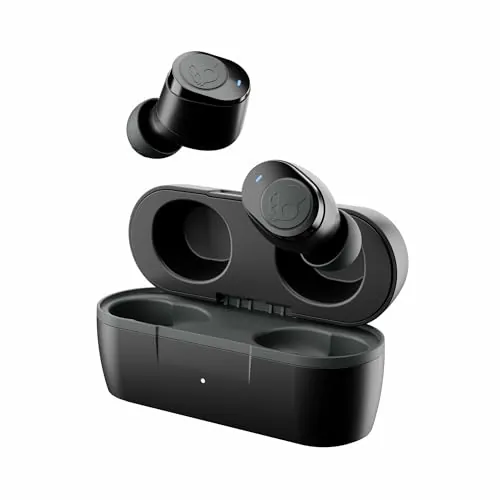
Skullcandy Jib True 2 Wireless Earbuds (True Black)
- Long rated battery life with up to 33 hours total (9 hours earbuds + 24 hours case).
Comparison
Skullcandy Jib True 2 and Skullcandy Jib Wired target budget buyers, but they solve different problems: cable-free convenience with a charging case versus plug-and-play simplicity. Based on the provided scoring, Jib Wired is the stronger overall pick for ease of use, audio-for-the-money, and satisfaction, while Jib True 2 makes more sense if you specifically want wireless and long rated battery life.
#1 Overall Winner
Contender
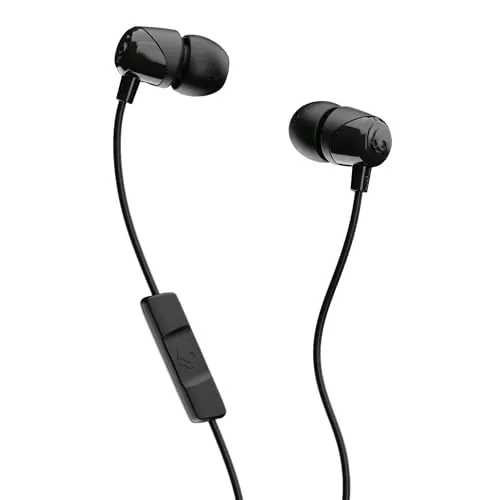
Pick Skullcandy Jib Wired if you want the simplest experience (plug-and-play), strong audio-for-the-price, and you regularly use devices with a 3.5mm jack.
Pick Skullcandy Jib True 2 if you want to go cable-free, need a charging case with long rated runtime, and prefer workout-friendly IPX4 resistance—accepting that some users report fit or charging quirks.
Overall winner
Depends on your needs
| Metric | Skullcandy Jib True 2 (Wireless) | Skullcandy Jib Wired (3.5mm) | Winner | Explanation |
|---|---|---|---|---|
| Overall score | 69 | 82 | Jib Wired | Higher overall score driven by usability, setup, audio, value, and satisfaction. |
| Usability & convenience | Wireless convenience, but some reported quirks | Plug-and-play simplicity | Jib Wired | No pairing/charging and very high usability/setup scores. |
| Battery / power needs | Up to 33 hours total (9+24) | No battery required | Depends | Wireless runtime favors Jib True 2; wired eliminates charging entirely. |
| Connectivity approach | Bluetooth 5.0, 10 m range stated | 3.5mm AUX wired connection | Depends | Wireless freedom vs direct wired stability and compatibility with AUX devices. |
| Audio quality (score) | 65 | 80 | Jib Wired | Higher audio-quality score and many reviews praising clear sound for the price. |
| Features | Tile finding, charging case, on-bud controls | Inline mic/remote, basic controls | Jib True 2 | More feature set beyond basic listening and calling. |
| Workout readiness | IPX4 sweat/water resistant | Mixed: cable can be problematic with sweat (per review) | Jib True 2 | Rated IPX4 and no cable to manage, though fit is mixed. |
| Portability | Charging case carry | Cable earbud carry | Jib Wired | Higher portability score and no need to carry a charged case (though cables can tangle). |
| Customer satisfaction (Amazon) | 4.3/5 from 6,441 reviews | 4.4/5 from 20,126 reviews | Jib Wired | Slightly higher rating and much larger review count; higher satisfaction score. |
| Durability feedback | Mixed (some report breakage/charging issues) | Mixed (some report one side failing/breaking) | Neither | Both show mixed durability/reliability in the provided review summaries. |
For everyday listening, Jib Wired rates higher on performance and audio-quality scoring, and many reviews describe clear, loud sound for the price. Jib True 2 is generally considered “decent” sonically with a sound-isolating in-ear seal, but some reviewers describe the tuning as bland or lacking treble detail.
In real-world use, performance also includes consistency: Jib True 2 can be very stable for some users, yet the broader review summary still shows mixed connectivity and charging reliability. Jib Wired avoids wireless pairing altogether, so the performance experience is often more predictable as long as the cable and jack connection remain in good condition.
In this comparison, “speed” mostly comes down to time-to-audio. Jib Wired is immediate: plug in and play, reflected by its very high setup score. Jib True 2 requires Bluetooth pairing and depends on the case/buds powering on properly; many users find it easy, but it’s not as instant as a wired connection.
Both products show mixed reliability in the provided scoring and review summaries. Jib True 2 has reported issues that can include charging/case behavior and occasional connectivity problems, though many users also describe stable pairing.
Jib Wired avoids wireless and charging failure modes, but reviews still include reports of one side stopping working or early breakage. Net: neither is a guaranteed “set-and-forget” option based solely on the provided data.
Jib Wired is the easiest option to live with: plug in and it works, reflected by its very strong usability and setup scores and frequent “easy to use” review language. There’s no pairing step, no battery to monitor, and no case behavior to learn.
Jib True 2 is still designed to be straightforward (good setup score), and many users report easy pairing and convenient button controls. However, the provided review summary includes mixed feedback on connectivity, charging, and reliability, which can affect day-to-day usability—especially if you depend on them for calls or all-day use.
Jib True 2 prioritizes a cable-free design with a pocketable charging case, which many buyers prefer for commuting and general portability. Its in-ear fit can be polarizing (some find it snug, others report it falls out).
Jib Wired uses a traditional in-ear design with ear gels and an inline module on the cable. Many reviews mention comfort and fit, but the cable can be a downside for sports and travel convenience compared with true wireless.
Both products have similar build-quality scoring and both show mixed durability feedback in the aggregated review summaries. With Jib True 2, complaints tend to center on charging/case issues and some reports of breakage within months. With Jib Wired, complaints often involve one side failing or the cable wearing out over time.
In other words: neither stands out as a durability champion in the provided data, so buying expectations should match the budget category.
Durability feedback is mixed for both models. Jib True 2 has some reports of breaking within months and durability concerns tied to charging/case issues. Jib Wired also has mixed reports, including early failures and cable wear leading to one side cutting out.
If durability is your top concern, the provided data suggests setting expectations realistically for either budget model and relying on the included 1-year limited warranty where applicable.
Both are portable, but in different ways. Jib True 2 stores in a charging case and has strong portability scoring, making it easy to toss in a pocket without tangles. Jib Wired scores even higher for portability and has no need for a charged case, though the cable can be less convenient to manage in a pocket or bag.
Jib True 2 clearly offers more features: a charging case for extended runtime, IPX4 sweat/water resistance, Tile finding technology, and on-earbud controls that include call handling, track control, and volume. Jib Wired is intentionally minimal: it provides an inline microphone and basic call/track controls over a 3.5mm connection.
If you want extras beyond basic listening—like the ability to locate earbuds or leave your phone in a pocket while controlling playback—Jib True 2 has the advantage. If you value fewer moving parts and fewer things to configure, Jib Wired’s simplicity is the “feature.”
Jib True 2 is the only product in this pair with an app-related component via Tile. Review feedback indicates Tile functionality may be inconsistent for some users. Jib Wired does not rely on an app, which can be an advantage if you prefer zero software setup.
Jib True 2 has the only notable smart-style feature listed here: Tile finding technology (through the Tile app). Jib Wired does not include smart features beyond the inline remote/mic.
Jib Wired wins setup: plug in via 3.5mm and you’re ready, reflected in its very high setup score. Jib True 2 requires Bluetooth pairing; many users report it’s easy, but it’s still an extra step and can be affected by device Bluetooth congestion or pairing quirks.
Jib True 2 is listed as compatible with cellphones and tablets over Bluetooth, which can be convenient for modern devices that lack headphone jacks. Jib Wired is compatible with phones, laptops, and tablets where a 3.5mm jack is available.
If you mainly use newer phones without AUX, the wireless model is the safer match. If you frequently use computers, travel devices, or any gear with a 3.5mm port, the wired model remains broadly compatible without pairing.
On the provided scoring, Jib Wired leads for audio quality. Reviews frequently describe it as clear, crisp, and loud for the price, and some users prefer wired listening to avoid Bluetooth-related compromises.
Jib True 2 is often described as “good for the price” with a noise-isolating seal, but multiple reviews also frame the sound as fine/inoffensive rather than detailed—some noting limited treble. If sound quality is your main priority within this comparison, the scoring and review trend favor the wired model.
Jib True 2 uses Bluetooth 5.0 with a stated 10-meter range and supports pairing to phones/tablets. Reviews are mixed overall: many report easy pairing and stable connection, while others mention phone connectivity issues.
Jib Wired connects via a 3.5mm AUX plug, which avoids wireless dropouts and pairing friction entirely, but it depends on your device having a headphone jack (or using an adapter). If you want cable-free use, Jib True 2 wins; if you want the simplest, most direct connection, Jib Wired wins.
Jib True 2 is rated up to 33 hours total (9 hours in the earbuds plus 24 from the charging case) and scores strongly for battery life. Still, customer feedback is mixed, with some reporting outstanding runtime and others reporting charging issues.
Jib Wired has no battery at all, which can be a major practical advantage if you don’t want to manage charging—especially for backup use, travel, or long days.
Jib Wired leads on power efficiency by design (no battery) and also has a very high power-efficiency score. Jib True 2 scores well for power efficiency for a wireless product, but it still requires charging and can be affected by battery health and case charging behavior over time.
Both products are positioned as budget buys, but Jib Wired comes out ahead on the provided value scoring and customer satisfaction. It delivers straightforward audio and calling with minimal friction, which many buyers consider “value” because it reduces setup and failure points.
Jib True 2 is still a strong value choice if you want wireless convenience, an included charging case, and added features like Tile finding. The tradeoff is that reviews and scores show more potential variability around fit, mic/app behavior, and charging reliability.
Both products are from Skullcandy and both include a 1-year USA limited warranty in the listing, so brand and warranty baseline are similar. In the provided scoring, Jib Wired has a modest edge in brand trust. Practically, buyer confidence here is more influenced by the simpler wired design versus the additional complexity of batteries, charging case behavior, and Bluetooth pairing on the true-wireless model.
Jib Wired has higher Amazon star rating (4.4/5) and a much larger review count (20,126), and it also scores higher on customer satisfaction. Review summaries emphasize comfort, clear sound, and strong value, with mixed durability/reliability.
Jib True 2 is also well-rated (4.3/5 from 6,441 reviews) and is frequently praised for value, battery life, and convenient use, but its review summary shows more mixed feedback on fit, connectivity, charging, and durability.
Both listings state a Skullcandy 1-year USA limited warranty. No additional warranty terms or support details are provided, so there isn’t enough information to differentiate support quality beyond that shared coverage.
Skullcandy Jib Wired is the best overall option in this matchup based on the provided scores: it leads on overall rating, usability, setup, audio-quality scoring, value, and customer satisfaction. If you want inexpensive earbuds that “just work,” it’s the more dependable concept—assuming you have a 3.5mm jack available.
Skullcandy Jib True 2 is still a sensible buy when wireless matters more than absolute simplicity. The rated 33-hour total battery, IPX4 resistance, and Tile finding support address real everyday needs (commuting, workouts, and not losing earbuds). The tradeoff is more complexity and more mixed feedback on fit, mic/app behavior, and charging/durability consistency.
Overall winner
Depends on your needs
Based on the provided scores, Skullcandy Jib Wired rates higher overall (82) than Jib True 2 (69). The wired model scores especially well for usability, setup, value, and customer satisfaction. That said, Jib True 2 is the better pick if you specifically want true wireless convenience, an included charging case, and a long rated battery life.
Skullcandy Jib Wired is simpler in daily use because it’s plug-and-play: no pairing and no charging. This is reflected in its very high usability and setup scores. Jib True 2 is still straightforward for many users (with good setup/portability scores), but reviews mention occasional pairing/charging quirks and mixed reliability, which can add friction.
Skullcandy Jib True 2 is the battery-focused option, rated up to 33 hours total (9 hours in the earbuds + 24 hours from the case). Skullcandy Jib Wired doesn’t use a battery at all, so there’s no charging—though it also doesn’t offer wireless freedom. If “battery life” means wireless runtime, Jib True 2 is the relevant choice.
Jib True 2 is designed for active use with an IPX4 sweat and water resistance rating and no cable to manage. However, fit feedback is mixed, with some users reporting the buds can fall out during more vigorous activity. Jib Wired can work for the gym too, but a review notes sweat traveling down the cable can affect the inline module during high-intensity sports.
Neither product is listed as having active noise cancelling. Both are described with sound isolation / a noise isolating fit, which typically depends on how well the ear gels seal your ear. Reviews are mixed on how effective this feels in practice, especially for the wired Jib where some users praise isolation and others say it’s not noise canceling.
Both include microphones, but Jib True 2 gets mixed call feedback: some reviewers mention clear voice calls, while others report mic limitations or call issues. Jib Wired includes an inline microphone and is often chosen for straightforward calling, but the provided review data focuses more on general sound/comfort than consistent mic superiority. If call quality is critical, expect variability.
On scores, both products show mixed reliability (Jib True 2 reliability 57; Jib Wired reliability 56). The difference is what can go wrong: Jib True 2 reviews mention charging/case quirks and occasional connectivity complaints, while Jib Wired reviews mention issues like one side failing or early breakage. If you want to avoid wireless pairing entirely, the wired model is inherently simpler.
It can be. Jib True 2 includes Tile finding technology, which can help locate misplaced earbuds when registered in the Tile app. However, review feedback indicates it may not work perfectly for everyone (one user reported trouble getting both buds to connect properly in the app). Consider it a useful extra, but not the only reason to buy.
Both target budget buyers, but Skullcandy Jib Wired scores higher for value and overall (value score 94; overall 82) and has a very large review base with strong satisfaction. Jib True 2 also rates well for value (84) and adds wireless convenience plus a long rated battery life. Choose wired for maximum simplicity-per-dollar; choose Jib True 2 if wireless and the charging case matter.
Check our rankings and expert guides to find the best electronics products for your goals.