#1 Overall Winner
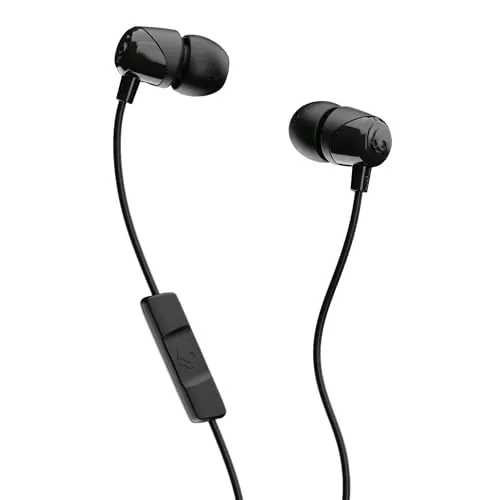
Skullcandy Jib Wired Earbuds with 3.5mm AUX Plug, Noise Isolating Fit, In-Line Microphone Call and Track Control, Convenient for Travel - Black
- Simple plug-and-play 3.5mm connection with no charging or pairing required.
Comparison
The Skullcandy Jib Wired and Skullcandy Mod Wireless sit at very different ends of the convenience spectrum: simple 3.5mm plug-and-play versus feature-rich true wireless. Jib scores higher overall thanks to its easy setup, strong value, and solid audio for the price, while Mod is the better option if you want app customization, multipoint pairing, and IP55 sweat/water resistance.
#1 Overall Winner
Contender
Choose Skullcandy Jib Wired if you want the easiest, cheapest way to get reliable plug-in listening and calls with a 3.5mm device—no charging and minimal hassle.
Choose Skullcandy Mod Wireless if you want true wireless for commuting or workouts, plus app customization, multipoint pairing, and IP55 sweat/water resistance—while accepting that battery/case and connectivity feedback is more mixed.
Overall winner
Depends on your needs
| Metric | Skullcandy Jib Wired (3.5mm) | Skullcandy Mod Wireless | Winner | Explanation |
|---|---|---|---|---|
| Overall score | 82 | 74 | Jib Wired | Higher overall scoring, especially in usability, setup, portability, and value. |
| Connection | Wired (3.5mm jack) | Bluetooth 5.0 (wireless) | Depends | Wired is simplest and consistent; wireless offers freedom and modern convenience. |
| Setup friction | Plug-and-play | Pairing + charging; optional app/Tile | Jib Wired | No pairing or charging makes Jib faster to start and easier to troubleshoot. |
| Feature set | In-line mic + call/track control | App EQ, custom buttons, Stay-Aware, multipoint, Tile | Mod Wireless | Mod includes multiple modern features that Jib does not offer. |
| Battery needs | No battery required | Up to 7h buds + 27h case (stated); Rapid Charge | Depends | Jib avoids battery management entirely; Mod provides long runtime but has mixed battery feedback. |
| Workout readiness | Mixed for sweat-heavy use (review concerns) | IP55 sweat/water resistant | Mod Wireless | Mod is explicitly rated for sweat/water; Jib has user-reported sweat-related issues via the cable. |
| Audio quality score | 80 | 78 | Jib Wired | Scores slightly higher for audio; both are generally reviewed as good for their price tiers. |
| Connectivity score | 78 | 70 | Jib Wired | Direct AUX avoids wireless dropouts; Mod has mixed reports on disconnections. |
| Customer satisfaction | 4.4/5 from 20,126 reviews | 4.2/5 from 4,573 reviews | Jib Wired | Higher rating and much larger review volume; Mod feedback is also positive but more mixed on battery/connectivity/fit. |
| Durability feedback | Mixed (some early failures reported) | Mixed (case hinge complaints; some battery issues) | Depends | Jib risks cable/earbud failures; Mod risks case/hinge and battery variability over time. |
For everyday listening, both earbuds are positioned as solid performers for their price tiers, but they deliver performance differently. The Jib Wired leans on a direct 3.5mm connection, which typically avoids wireless dropouts and contributes to its stronger connectivity and usability scoring. The Mod Wireless performs well for many users, but review summaries note mixed experiences with battery consistency and occasional disconnections.
On category-specific performance, Mod’s advantage is workout performance and daily wireless convenience (especially with IP55 resistance), while Jib’s advantage is “always ready” operation—no charging and minimal points of failure during setup.
Both models show mixed reliability, but for different reasons. Jib Wired has a large review base with recurring mentions of occasional early failures (for example, one side stopping) and mixed durability impressions overall. Mod Wireless also has mixed reliability feedback, including complaints about battery defects and connectivity stability for some users, alongside many positive long-term experiences.
If you want the least complex system, Jib’s wired design avoids battery/case failure points. If you want features, Mod offers more—but with more variables (battery, case, Bluetooth).
Jib Wired is the easier earbud to live with if you prioritize simplicity. You plug into a 3.5mm jack and you’re ready—no battery anxiety, no pairing steps, and fewer settings to manage. This is reflected in its strong usability and setup scoring, and reviews that emphasize “just plug them in.”
Mod Wireless can be very convenient once set up (wire-free listening, pocketable case), but usability depends more on fit and stable Bluetooth behavior. Review summaries show mixed opinions on fit, battery/case behavior, and disconnections, which can affect day-to-day ease.
Jib Wired is a classic in-ear design with a round earpiece shape and silicone ear gels, prioritizing a snug seal and straightforward wear. The wired cable can be a benefit for simple plug-in use, but it can also be a drawback for workouts and pocket carry.
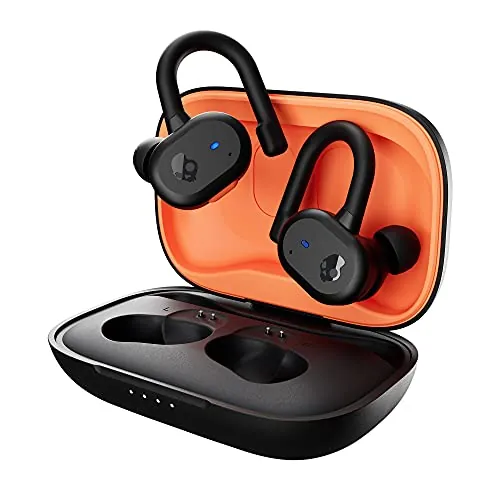
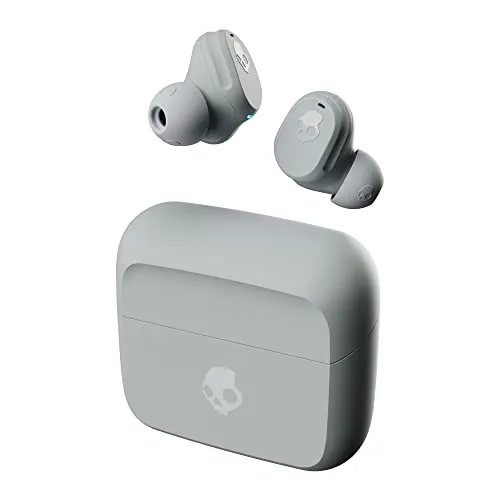
Mod Wireless is a true wireless design with a compact case for storage and charging. It’s purpose-built for cable-free use, and it adds practical design elements for active use like IP55 resistance. Fit is subjective on Mod (secure for some, loose for others), so ear-tip choice and ear shape matter more.
Both models receive mixed durability feedback, but the likely weak points differ. With Jib Wired, reviews and scoring point to mixed reliability, including reports of one side failing and concerns about the cable and long-term wear.
With Mod Wireless, feedback highlights charging case durability (notably hinge/lid concerns) and variable long-term battery/case behavior for some users. If you’re rough on charging cases or tend to drop them, Mod’s case feedback is something to weigh carefully.
Durability outcomes depend heavily on how you use and store each product. Jib Wired durability concerns tend to revolve around typical wired-earbud wear points (cable strain and one-side failures reported by some users). Mod Wireless durability is often tied to the charging case; reviews mention hinge/lid fragility, and there are mixed reports of earbuds breaking within months for some buyers while others report longer use.
For workouts and exposure to sweat/water, Mod has the clearer advantage due to its IP55 rating.
Both are portable, but in different ways. Jib Wired is lightweight and simple, but the cable can tangle and adds pocket clutter. Mod Wireless eliminates the cable and stores in a compact case, making it easy to carry daily. Jib scores very strongly for portability, and Mod also scores well—your preference comes down to whether you’d rather manage a cable (Jib) or a case/battery (Mod).
The feature gap is the biggest difference between these two. Skullcandy Jib Wired keeps things basic: noise-isolating fit, two ear gel sizes, and an in-line microphone with call and track controls.
Skullcandy Mod Wireless adds a full wireless feature set: Bluetooth 5.0, a charging case, Rapid Charge, multipoint pairing, Stay-Aware Mode, app-based EQ and custom button settings, and Tile finding technology (with registration). If you care about customization and switching between devices, Mod is clearly ahead.
Jib Wired has no companion app component in the provided data. Mod Wireless integrates with the Skullcandy app for EQ profiles, custom EQ, adjustable Stay-Aware Mode, and custom button settings. It can also use Tile finding via the Tile app after registration. If you prefer zero app dependence, Jib is simpler; if you want personalization, Mod benefits from app support.
Jib Wired doesn’t emphasize smart features beyond basic in-line controls. Mod Wireless includes several smart/connected extras: Skullcandy app personalization (EQ, custom button settings, adjustable Stay-Aware Mode) and Tile finding technology when registered in the Tile app. If you want features beyond basic playback control, Mod is the clear winner here.
Jib Wired wins for setup: plug into a 3.5mm jack and you’re ready, which aligns with its very high setup score. Mod Wireless requires charging and Bluetooth pairing, and you’ll get the most out of it if you also install the Skullcandy app (and optionally Tile). If you’re buying for a child, travel backup, or a low-maintenance kit, Jib’s setup is hard to beat.
Jib Wired is compatible with phones, laptops, and tablets, but it requires a 3.5mm headphone jack. If your phone lacks a headphone port, you may need an adapter (not provided in the data).
Mod Wireless is Bluetooth-based and is marketed for iPhone and Android use, with device compatibility listed for laptops as well. It also supports multipoint pairing for two connected devices at once, which can be helpful if you switch between a phone and a computer.
On scoring, Jib Wired slightly leads on audio quality (80 vs 78), and customer sentiment for Jib frequently mentions clear, crisp sound for the price. Mod is also commonly described as sounding good with balanced treble and bass, and it offers an advantage Jib can’t match: EQ customization in the Skullcandy app for tuning the sound to preference.
In practice, Jib is the safer choice for people who want consistent plug-in audio without wireless variability, while Mod is the better choice for listeners who want to adjust EQ and controls and prefer a wireless daily carry.
Jib Wired connects through a 3.5mm headphone jack, which is as direct as it gets and aligns with its stronger connectivity score. It’s a good match for devices with an AUX port and for users who don’t want to deal with pairing or dropouts.
Mod Wireless uses Bluetooth 5.0 with a stated 10-meter range and adds multipoint pairing to stay connected to two devices at once. However, customer feedback is mixed on connection stability, with some reporting frequent disconnections. If you need multi-device switching, Mod has the edge; if you need maximum predictability, Jib is simpler.
This comparison is straightforward: Jib Wired has no battery—your device powers the audio—so there’s nothing to recharge. Mod Wireless is designed around battery convenience, listing up to 7 hours in the earbuds plus 27 hours in the case, and Rapid Charge (10 minutes for 2 hours).
Real-world impressions for Mod are mixed. Some reviewers report excellent battery life, while others mention the case not holding charge well. If battery consistency is critical, weigh the convenience of wireless against the simplicity of a wired connection.
Jib Wired scores extremely well for power efficiency because it doesn’t rely on an internal battery or a charging case—there’s no standby drain and no need for recharging. Mod Wireless is still designed for efficient portable use, but it inherently depends on battery health and charging habits, and customer feedback includes mixed impressions about case charge retention.
Skullcandy Jib Wired rates as the stronger value choice in the provided scoring, largely because it delivers core essentials—comfort, noise isolation, clear sound, and an in-line mic/remote—without the added cost and complexity of wireless. The large review count and higher average rating also support its value-for-money reputation.
Skullcandy Mod Wireless can be better value for buyers who will use its extras: IP55 resistance, app EQ/custom controls, multipoint pairing, Stay-Aware Mode, and Tile finding. If those features matter to you, Mod’s mid-level price can be justified even with more mixed feedback around case durability and battery consistency.
Both products come from Skullcandy and both list a 1-year USA limited warranty. In scoring, Jib rates slightly higher for brand trust, and it also benefits from a very large volume of customer reviews—useful if you want a well-established baseline of buyer experiences. Mod is still well-reviewed overall but shows more variability in reported battery/case and connectivity experiences.
Jib Wired has a higher average rating (4.4/5) and a much larger review count (20,126), with common praise around sound quality, comfort, and value. The recurring negatives are mixed durability and mixed perceptions of “noise cancellation” (as passive isolation).
Mod Wireless holds a 4.2/5 rating from 4,573 reviews. Customers often praise sound, comfort, and features for the price, but feedback is more mixed on battery/case consistency, disconnections, and fit (some secure, some falling out).
Both earbuds list a Skullcandy 1-year USA limited warranty. Beyond that, no additional warranty terms or support policies are provided in the data, so the comparison is essentially even on paper. If warranty support is a deciding factor, verify the current warranty details and return window from the seller before purchasing.
If you want the most dependable, low-effort option with strong value and simple daily use, Skullcandy Jib Wired is the better overall pick in this matchup, supported by the higher overall score and stronger customer satisfaction metrics. It’s a practical choice when you prioritize plug-and-play reliability over extra features.
Skullcandy Mod Wireless is still the better buy when your priority is wireless convenience and modern functionality—especially for gym use thanks to IP55 resistance, plus multipoint and app customization. However, the more mixed feedback around battery/case behavior, fit, and connectivity means it’s best for buyers who want features and can tolerate a bit more variability in day-to-day experience.
Overall winner
Depends on your needs
Based on the provided scoring, Skullcandy Jib Wired ranks higher overall (82 vs 74). It scores especially well for usability, setup simplicity, portability, and value thanks to its plug-and-play 3.5mm design. Skullcandy Mod Wireless is the better pick if you specifically want wireless features like multipoint pairing, app EQ/custom controls, and IP55 sweat/water resistance.
Skullcandy Jib Wired is typically easier because it’s a direct 3.5mm connection with no charging or Bluetooth pairing. The Mod Wireless adds convenience once set up, but it also introduces battery management, pairing steps, and optional app/Tile registration. If you want the lowest-friction option, Jib is the simpler daily driver.
Skullcandy Mod Wireless is the only option with battery life ratings because it’s wireless. The listing states up to 7 hours in the earbuds plus 27 hours in the case (and Rapid Charge), but customer feedback is mixed—some report great longevity while others mention the case not holding charge well. The Jib Wired has no battery requirement at all.
Both products are described as having a noise-isolating fit, which is passive isolation from the in-ear seal rather than active noise cancelling. For the Jib Wired, customer opinions on “noise cancellation” are mixed, and some explicitly say it’s not noise cancelling. For the Mod Wireless, reviews mention good isolation and some positive “noise cancelling” impressions, but the provided specs emphasize isolation.
Skullcandy Mod Wireless is the stronger gym choice on paper because it’s IP55 sweat and water resistant and fully wireless (no cable to snag). The Jib Wired is listed for workouts too, but reviews warn that heavy sweating can travel down the wire and affect the in-line module, causing volume issues until it dries.
The Mod Wireless is positioned for calls with a Clear Voice Smart Mic in each bud designed to reduce background noise. The Jib Wired includes an in-line microphone and is straightforward for calls, but no advanced noise-reduction mic features are listed. Real-world results vary, but Mod has the more call-focused mic feature set.
Neither is a clear runaway winner on reliability based on the provided data. The Jib Wired has mixed durability/reliability feedback (including reports of one side failing). The Mod Wireless also has mixed durability feedback, plus recurring concerns about case/hinge durability and inconsistent battery or disconnects for some users. If reliability is your top priority, consider how you’ll handle cable wear (Jib) versus battery/case wear (Mod).
Skullcandy Jib Wired is broadly compatible with phones, laptops, and tablets that have a 3.5mm headphone jack. Skullcandy Mod Wireless uses Bluetooth 5.0 and lists compatibility with laptops, and it also targets iPhone/Android use in the product details. Your device’s port situation (3.5mm vs Bluetooth) is the key deciding factor.
In the scoring provided, Jib Wired rates higher for value, helped by its very simple design (no battery, no pairing, minimal points of setup friction). Mod Wireless can still be strong value if you’ll actually use its extras—multipoint pairing, app EQ/custom buttons, Stay-Aware Mode, and IP55 resistance. Value depends on whether you want simplicity (Jib) or features (Mod).
Check our rankings and expert guides to find the best electronics products for your goals.