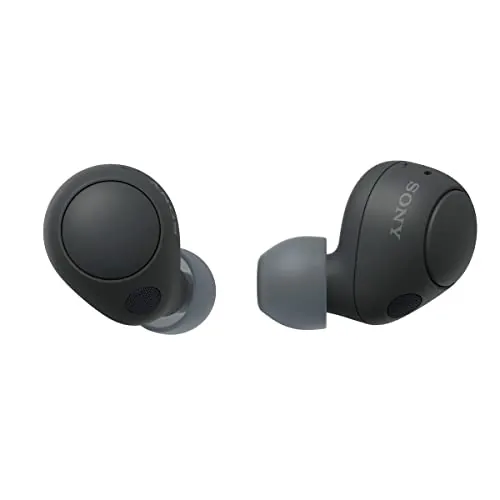
#1 Overall Winner
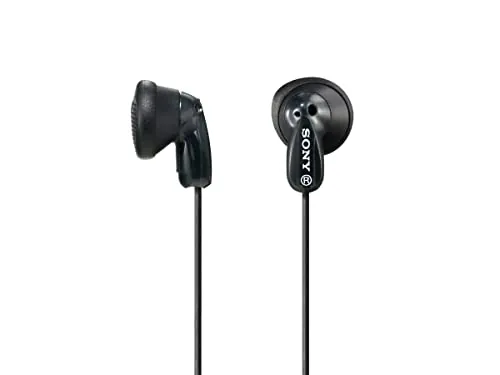
Sony MDRE9LP/BLK Ear Buds,Black
- Excellent portability: very light (6 g) and easy to carry for daily use.
Comparison
The Sony MDR-E9LP and Sony WF-C500 target budget-friendly listening but take very different approaches: simple wired playback vs true wireless convenience. WF-C500 leads overall on the provided scores thanks to stronger audio and feature support, while MDR-E9LP stands out for plug-and-play simplicity, extreme lightness, and standout value if you still use a 3.5 mm jack.
#1 Overall Winner
Contender
Choose the Sony WF-C500 if you want true wireless convenience, long battery life, EQ/app tuning (DSEE + presets), and hands-free calling.
Choose the Sony MDR-E9LP if you want an inexpensive, very lightweight wired earbud with a 3.5 mm plug and minimal setup—especially as a backup or “beater” pair.
If you’re sensitive to reliability issues, note that both have mixed feedback, but WF-C500 reviews more commonly mention earbud/charging problems and connectivity frustrations.
Overall winner
Depends on your needs
| Metric | Sony MDR-E9LP (MDRE9LP/BLK) | Sony WF-C500 | Winner | Explanation |
|---|---|---|---|---|
| Overall score | 72 | 75 | WF-C500 | Higher overall score driven by stronger audio/features/battery-related convenience. |
| Connection type | Wired (3.5 mm) | Wireless (Bluetooth 5.0) | Depends | Wired is simplest and latency-free; wireless is more convenient for modern devices without jacks. |
| Audio tuning features | No app features listed | DSEE + EQ/presets via Headphones Connect app | WF-C500 | App-based EQ and DSEE add flexibility for different music and preferences. |
| Battery / charging | No battery required | 10 hours average life; charging case; 2.5h charge time | WF-C500 | For wireless use, WF-C500 provides defined battery specs; MDR-E9LP avoids charging entirely. |
| Portability | 6 g; very light | 0.09 kg; compact case | MDR-E9LP | MDR-E9LP is extremely lightweight; WF-C500 is still portable but includes the case and battery. |
| Compatibility (typical devices) | Compatible devices listed: portable media players; needs 3.5 mm port | Compatible devices listed: phones, laptops, tablets, TVs, car audio, etc. | WF-C500 | WF-C500 lists broader device compatibility through Bluetooth. |
| Customer satisfaction signals | 4.2/5 from 10,858 reviews; comfort/reliability praised; sound/durability mixed | 4.2/5 from 15,071 reviews; sound/battery praised; reliability/connectivity mixed | Draw | Both are well-rated with large review counts, but each has recurring negatives (sound/fit vs reliability/connectivity). |
| Value positioning | Very strong value score (92) | Strong value score (82) | MDR-E9LP | Scores suggest MDR-E9LP is the stronger value pick for basic listening needs. |
| Setup | Plug-and-play | Bluetooth pairing + app optional | MDR-E9LP | Wired setup is inherently faster and simpler; WF-C500 adds steps but offers more features. |
| Reliability score | 58 | 52 | MDR-E9LP | Scores and review summaries indicate more reliability concerns on WF-C500, especially earbud failure/charging issues. |
For overall listening performance, the WF-C500 comes out ahead in the provided scores, reflecting stronger audio performance and a more modern wireless experience. Review sentiment also leans positive on its bass/volume and overall sound for the price.
The MDR-E9LP can still perform well for casual music and spoken audio, and some users describe it as comfortable for long sessions. However, its performance is more variable in feedback: some listeners report a tinny presentation or weak bass, and fit differences can change the perceived sound.
Neither product is free from complaints, but the pattern differs. The MDR-E9LP has mixed feedback on durability (some report breakage, others long life), with generally straightforward operation reducing points of failure.
The WF-C500 has more frequent review mentions of right-earbud failure, charging/contact issues, and connectivity quirks. Its reliability score is lower in the provided data, and multiple reviews describe early failures within a year or within months.
MDR-E9LP is typically the easiest for basic use: plug into a 3.5 mm port and you’re ready. No pairing, no charging, and no case charging habits to maintain. Scores also reflect very strong setup and portability.
WF-C500 is more convenient once paired (no cable), but usability feedback is mixed: some users report quick pairing and smooth daily use, while others mention frustrating device switching, occasional buzzing/static when idle, and needing to ensure charging contacts connect properly in the case.
The MDR-E9LP design is minimal and very light, with a rounded tip and a simple wired form factor. It can be a good match for people who dislike bulkier earbuds or want a low-profile wired option.
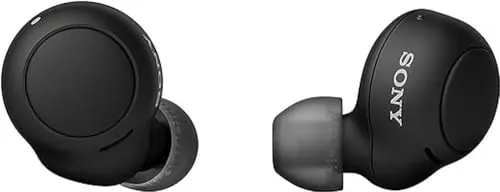
The WF-C500 uses a compact, ergonomic in-ear design intended to fit securely, with physical button controls and a small case for pocket carry. Fit comfort varies by user: some find them secure, while others mention discomfort or a tendency for the buds to tilt outward over time.
On scoring, the WF-C500 rates higher for build quality than MDR-E9LP. Reviews often describe the case and buds as decent for the price, though still primarily plastic.
The MDR-E9LP is designed to be lightweight and inexpensive, and the review summary shows mixed durability: some users report long life (even surviving mishaps), while others mention breakage after a short period. If you’re hard on earbuds, either can work as a replaceable option, but WF-C500’s reported early failures are worth factoring in.
Durability feedback is mixed for both. The MDR-E9LP is light and inexpensive, with some users reporting it lasts a long time and others reporting quick breakage or that the buds fall out and get damaged.
The WF-C500 also sees mixed long-term feedback, including reports of failure within a year. It is listed as water resistant, which can help for everyday exposure, but review anecdotes still include damage incidents and premature failures.
Both are portable, but in different ways. The MDR-E9LP is exceptionally light (6 g) and easy to pocket, though the cable can snag or tangle.
The WF-C500 remains highly portable with a compact case meant for pockets and bags. You carry an extra item (the case) but gain cable-free convenience and on-the-go recharging.
The WF-C500 is clearly more feature-rich: Bluetooth listening, a charging case, voice assistant support, and the Sony Headphones Connect app for EQ presets and DSEE. Those features directly support customization and day-to-day convenience (calls, controls, and on-the-go charging).
The MDR-E9LP focuses on the essentials: a wired connection, lightweight build, silicone earbud pieces for fit, and basic media control as listed. If you don’t want app features or wireless complexity, the MDR-E9LP’s “less to manage” approach can be a feature in itself.
Only the WF-C500 includes a companion app experience (Sony Headphones Connect) for presets, EQ customization, and DSEE. Reviews are generally positive about customization, but some note software/connectivity quirks.
The MDR-E9LP has no app—there’s nothing to install or maintain, but also no tuning features.
Smart features favor the WF-C500, which supports voice assistant access and uses app control through Sony Headphones Connect. Those features also enable EQ customization and DSEE processing.
The MDR-E9LP is positioned as a basic wired earbud without smart features or app integration.
The MDR-E9LP is the simplest: plug in via 3.5 mm and it works. This is reflected in its very strong setup score.
The WF-C500 requires Bluetooth pairing and (optionally) installing/using the Sony app for sound tuning. Many users find pairing quick, but the review summary also flags device switching and occasional pairing issues for some phones.
The WF-C500 lists broader compatibility across smartphones, laptops, tablets, smart speakers, televisions, telephones, and car audio systems via Bluetooth—useful if you move between device types.
The MDR-E9LP lists compatible devices as portable media players and uses a 3.5 mm plug, so compatibility depends on having a headphone jack (or using an adapter). If your primary device lacks a jack, WF-C500 is usually the more straightforward option.
Audio quality is the biggest separator. The WF-C500 scores higher for audio quality and adds DSEE plus in-app EQ, letting you tailor bass/treble and presets to your preferences.
The MDR-E9LP can sound “good for the price” for many listeners, but feedback is less consistent. Multiple reviews mention a tinny character and limited bass at higher volumes. If you want a more controllable sound signature without changing hardware, WF-C500’s app tuning is a practical advantage.
Connectivity depends on what you value. The MDR-E9LP uses a 3.5 mm wired connection—reliable and instant, but it requires a headphone jack (or an adapter) and comes with cable management.
The WF-C500 uses Bluetooth 5.0 with a stated 10 m range and broader listed device compatibility. However, review summaries note mixed connectivity, including pairing issues (especially mentioned with iPhone by some users) and intermittent cutouts for some setups.
The WF-C500 wins by default for battery features: it lists 10 hours average life and includes a charging case for recharging on the go (with a listed 2.5-hour charge time). Many reviewers praise the long battery life, though some disagree and say it doesn’t last as long for heavy use.
The MDR-E9LP has no battery—so there’s nothing to charge and no battery wear over time. If your priority is avoiding battery management entirely, wired can be the simpler long-term approach.
The MDR-E9LP is effectively “efficient” in practice because it draws power from the connected device and has no battery to maintain or degrade.
The WF-C500 is a battery-powered design with strong battery-related scoring, but real-world efficiency varies by usage patterns. Some reviews praise long life, while others report battery/charging frustrations.
On the provided scoring, MDR-E9LP leads strongly on value, reflecting how well it meets basic needs (comfort, portability, simple connectivity) at a low commitment for buyers who can use a 3.5 mm plug.
WF-C500 can still be strong value for buyers who want wireless convenience, app tuning, and a charging case without moving into premium price tiers. The main value caveat is reliability/connectivity risk mentioned in reviews—if you get a problematic unit, the “value” equation changes.
Both products benefit from the Sony brand and strong review volume. The provided brand-trust score is higher for the MDR-E9LP, likely reflecting its long-running, simple design and fewer software-dependent variables.
The WF-C500 still scores well for brand trust, but reviews include more frequent concerns about early failure and charging reliability, which can reduce confidence despite the brand name.
Both earbuds hold a 4.2/5 star rating with very large review counts (MDR-E9LP: 10,858; WF-C500: 15,071). That indicates broad satisfaction for budget-focused buyers.
Patterns differ: MDR-E9LP reviews commonly praise comfort and “old school” simplicity but disagree on sound quality and durability. WF-C500 reviews frequently praise sound and battery, but bring up connectivity issues, charging-contact annoyance, and reports of one earbud failing within months to a year.
Warranty/support details are not provided for either product in the supplied data. The provided warranty-support scores are low for both, so it’s worth checking the seller’s return window, whether the unit is sold by an authorized retailer, and how replacements are handled before buying—especially for the WF-C500 given the reliability complaints in reviews.
If you want a modern everyday earbud with wireless convenience and sound customization, the Sony WF-C500 is the better overall pick on the provided scores. It rates higher for performance, audio quality, features, and battery, and many reviewers praise its sound and long runtime for the price.
The Sony MDR-E9LP remains a smart choice when simplicity and cost matter more than features. Its wired design avoids pairing and battery management, it’s extremely light, and its value score is notably strong. The trade-offs are mixed feedback on sound balance and durability, plus the need for a 3.5 mm port. For many buyers, the decision comes down to whether you prefer wireless convenience (WF-C500) or plug-and-play reliability (MDR-E9LP).

Overall winner
Depends on your needs
Based on the provided scoring, the Sony WF-C500 ranks higher overall (75 vs 72). It scores better for audio quality, features, and battery-related convenience thanks to Bluetooth and the charging case. The Sony MDR-E9LP is still a strong pick if you want a very simple, ultra-light wired earbud with a 3.5 mm plug and no charging.
The Sony MDR-E9LP (MDRE9LP/BLK) is a wired earbud with a 3.5 mm headphone jack and a 3.94 ft cord. That makes it straightforward for devices that still have a headphone port (or for use with an adapter). The Sony WF-C500 is true wireless over Bluetooth and does not use a headphone jack.
The Sony WF-C500 rates higher for audio quality in the provided scores and also adds sound customization through the Sony Headphones Connect app (EQ and DSEE). The Sony MDR-E9LP gets mixed sound feedback in reviews—some users like the sound for the price, while others describe it as tinny or lacking bass—so results may depend on fit and expectations.
No. Both products list noise control: none. Some reviewers mention varying levels of outside-noise reduction, but that’s more likely due to passive isolation and fit rather than true ANC. If noise blocking is a top priority, these two models are not positioned as ANC earbuds based on the provided specifications.
If you want the least friction, the MDR-E9LP can be simpler: plug into a 3.5 mm port and play—no pairing and no charging. The WF-C500 is more convenient once set up (no cable, pocketable case, app features), but reviews also mention occasional pairing/device-switching frustration and the need to ensure the earbuds seat properly in the case to charge.
The Sony WF-C500 is the only one here with a battery: it lists 10 hours average life and includes a charging case for top-ups on the go. The Sony MDR-E9LP doesn’t have a battery at all because it’s wired, so runtime depends on the device you plug it into rather than the earbuds themselves.
For many newer phones without a headphone jack, the WF-C500 is typically the more direct fit because it uses Bluetooth and lists compatibility with smartphones and other devices. The MDR-E9LP requires a 3.5 mm port (or an adapter), which can be an extra step depending on your phone.
The WF-C500 is the clearer choice for calling features because it explicitly includes a built-in microphone for hands-free calling and supports voice assistant access. The MDR-E9LP is positioned more as a basic wired listening earbud; the provided data does not emphasize call performance in the same way as the WF-C500.
Yes, but they show up differently. The MDR-E9LP has mixed durability feedback, including reports of breakage after a short time (alongside long-term owners who repeatedly buy them). The WF-C500 has repeated reliability and charging complaints in reviews, including reports of one earbud failing and intermittent charging/contact issues, plus mixed connectivity experiences.
Check our rankings and expert guides to find the best electronics products for your goals.