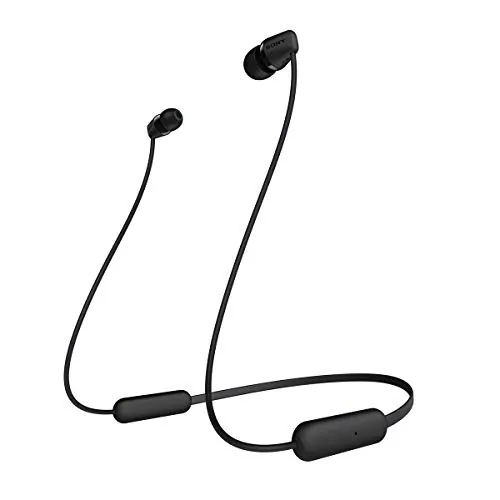
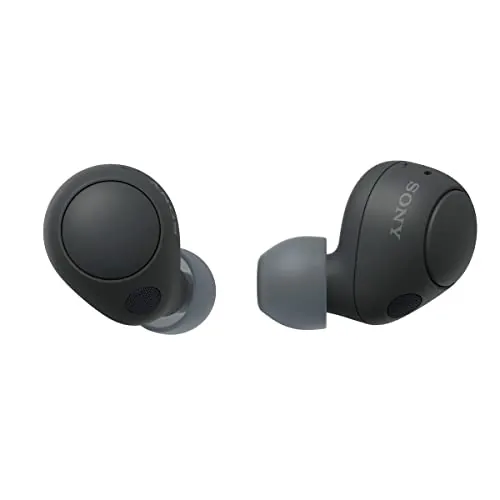
#1 Overall Winner
Sony WF-C700N Truly Wireless Noise Canceling in-Ear Bluetooth Earbud Headphones with Mic and IPX4 Water Resistance, Black
- Active noise cancelling + Ambient Sound mode using Noise Sensor Technology and feedforward mics.
Comparison
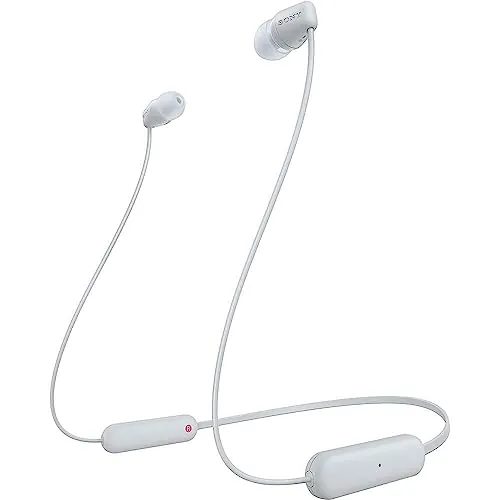
The Sony WF-C700N and Sony WI-C100 target different buyers: the WF-C700N is a true wireless set with ANC, ambient mode, and multipoint , while the WI-C100 is a neckband-style option focused on long battery life . With a higher overall score, the WF-C700N is the better all-rounder for noise control and portability, but the WI-C100 is hard to ignore for all-day runtime and budget-friendly simplicity.
#1 Overall Winner
Contender
Choose the Sony WF-C700N if you want ANC + ambient mode, multipoint, and a compact true wireless setup for commuting and daily carry.
Choose the Sony WI-C100 if you want maximum battery life, a neckband that’s easy to keep track of, and strong value for everyday listening without noise cancelling.
Overall winner
Depends on your needs
| Metric | Sony WF-C700N | Sony WI-C100 | Winner | Explanation |
|---|---|---|---|---|
| Type | True wireless earbuds + charging case | Wireless in-ear with neckband | Depends | Choose true wireless for pocket carry and no cable; choose neckband to keep earbuds tethered and easy to hang around the neck. |
| Noise cancelling | Active Noise Cancellation + Ambient Sound mode | None | WF-C700N | WF-C700N is designed for blocking noise and switching to awareness modes; WI-C100 relies on passive isolation only. |
| Battery rating | Up to 15 hours; quick charge (10 min → up to 1 hour) | Up to 25 hours | WI-C100 | WI-C100 is the longer-running option based on listed battery life and higher battery score. |
| Bluetooth version | 5.2 | 5.0 | WF-C700N | WF-C700N has the newer Bluetooth version per specs. |
| Multipoint | Yes (listed) | Not listed; review notes lack of multipoint | WF-C700N | Better for users who swap between phone and laptop/tablet during the day. |
| Water resistance | IPX4 | IPX4 | Tie | Both are rated for sweat/splashes. |
| App & audio enhancements | Headphones Connect app + DSEE | Headphones Connect app + DSEE | Tie | Both support Sony’s app-based EQ/sound tuning and DSEE per listings and reviews. |
| Portability | Pocket-sized cylindrical case; very high portability score | Neckband is easy to keep on you but not pocket-case style | WF-C700N | WF-C700N is purpose-built for pocket carry; WI-C100 is convenient for quick on/off but involves a neckband. |
| Customer feedback themes | Good sound/value; mixed ANC, connectivity, reliability, and fit | Great battery/value; mixed fit, mic/reliability, and Bluetooth reports | Depends | Both have similar star ratings and mixed reliability/fit notes; WI-C100 stands out more for battery, WF-C700N for ANC and portability. |
For real-world listening, the biggest performance gap is noise control. The WF-C700N is built for louder environments thanks to Active Noise Cancellation plus an Ambient Sound mode when you need awareness. The WI-C100 has no ANC, so performance in noisy commutes depends mostly on how well you can achieve a snug seal with the ear tips.
For sound, both are described positively in aggregated reviews, and both support DSEE and app EQ. The WF-C700N scores higher for audio quality (84 vs 79), while the WI-C100 remains competitive as a budget option that many reviewers still describe as “great sound for the price.”
Both products show mixed reliability sentiment in the aggregated customer review summaries. For the WF-C700N, complaints include charging issues and connection problems, and its reliability score is modest. For the WI-C100, there are also reports of Bluetooth problems and microphone issues after a period of use, with a slightly higher reliability score than WF-C700N but still not a standout.
In practice, reliability may come down to your device compatibility, how you store/charge them, and whether you can easily exchange within the return window.
Both are designed for everyday use, but they feel different in practice. The WF-C700N leans into true wireless convenience with a pocketable case and strong portability/usability scores, and its mode switching (ANC/ambient) is a practical day-to-day advantage.
The WI-C100 is simple and consistent for long sessions—many buyers like the neckband for quick on/off and not having to manage a charging case. However, because it’s tethered, it can be more prone to snags depending on your routine (as noted in reviews), while true wireless avoids that tradeoff.
Design is primarily a form-factor choice. The WF-C700N is a compact true wireless design with a pocketable cylindrical case and an ergonomic shape intended for all-day comfort. It scores slightly higher for design (86 vs 80) and much higher for portability.
The WI-C100 uses a flexible neckband for stability and convenience. If you dislike managing a case or worry about losing a single earbud, the neckband design can be a practical win—at the cost of having a band/cable around your neck.
Neither product scores as a standout for build quality in the provided scoring, but the WF-C700N rates higher (74 vs 68). Both use plastics/silicone-plastic materials based on the listings, and both have mixed reliability sentiment in aggregated reviews.
If you’re rough on headphones, the safer approach is to focus on fit, daily handling, and return/support policies at purchase—especially since both products have reports of issues over time (charging/reliability for WF-C700N; mic/connectivity complaints for WI-C100).
Durability scoring favors the WF-C700N (68 vs 62), but neither is positioned as a ruggedized product based on the provided data. Both are IPX4-rated for sweat/splashes, which helps for exercise use.
Because customer feedback includes some longevity issues on both products, durability-minded buyers should prioritize proper fit (to avoid drops), careful charging habits, and purchasing with a support/return policy you trust.
The WF-C700N is the more portable option in the classic “earbuds in a pocket” sense, thanks to its compact earbuds and pocket-sized charging case, plus a higher portability score.
The WI-C100 is lightweight and easy to keep on you because it can hang around your neck, and some buyers prefer it because it reduces the chance of losing a single earbud. If you want pocket minimalism, WF-C700N wins; if you want “always there” convenience, WI-C100’s neckband can be better.
The Sony WF-C700N has the more complete feature set: ANC, Ambient Sound, multipoint connection, a charging case, and quick charging. It’s also designed to let you switch listening modes easily.
The Sony WI-C100 focuses on essentials: very long battery life, app-based tuning (EQ/DSEE), IPX4 resistance, and pairing convenience like Fast Pair (as listed). It lacks ANC and is described as missing multipoint in reviews, so it’s best viewed as a straightforward, long-running wireless headset rather than a feature-rich one.
Both products use Sony’s companion app experience for tuning and settings, and both include DSEE. Reviews for each mention EQ customization as a major benefit. Scoring gives the edge to the WF-C700N for app experience.
If you mainly want simple EQ presets and basic control, either can work. If you also want mode switching (ANC/ambient) integrated into daily use, the WF-C700N’s overall software + feature package is more complete.
Both are designed to be easy to start using, with setup scores that are close (WF-C700N slightly lower than WI-C100 in the provided setup score). The WI-C100 lists Fast Pair, which can reduce friction on compatible devices.
The WF-C700N may take a little longer initially if you plan to configure ANC/ambient preferences, button mappings, and multipoint behavior in the app—but it also gives you more to customize once it’s set.
Both models list broad compatibility with common devices like phones, tablets, and laptops. The WF-C700N explicitly lists cellphones/laptops/tablets, and the WI-C100 lists cellphones/tablets/laptops/smart speakers.
The more meaningful compatibility difference is workflow: the WF-C700N supports multipoint for two-device use, which can feel like a compatibility upgrade if you bounce between a phone and computer.
The WF-C700N leads on audio scoring (84 vs 79) and is repeatedly described in reviews as offering clear, detailed sound with effective tuning via Sony’s app and features like DSEE. It’s also positioned as an “immersive” option thanks to ANC.
The WI-C100 is still widely praised for sound quality for its price, and it also benefits from app EQ and DSEE. If you want a more feature-rich listening experience (especially in noisy places), the WF-C700N is the better bet; if you want solid sound with minimal fuss and long runtime, the WI-C100 is compelling.
The WF-C700N has the advantage on paper with Bluetooth 5.2 and multipoint support for two devices. However, connectivity feedback is mixed in aggregated reviews, so real-world stability may vary by device and environment.
The WI-C100 uses Bluetooth 5.0 and lists a 10-meter range. Reviews are mixed on connectivity, and at least one review notes the lack of multipoint. If device switching is part of your day, WF-C700N is more purpose-built; if you mostly use one device at a time, WI-C100 can be sufficient.
The Sony WI-C100 is the clear battery winner: it’s rated up to 25 hours and has a much higher battery life score (90). Reviews also frequently highlight how long it lasts between charges.
The Sony WF-C700N is rated at 15 hours total battery life and includes quick charging (10 minutes for up to 1 hour). That can be convenient day-to-day, but if your main goal is minimizing charging frequency, WI-C100 is the stronger fit.
Value depends on what you need. The WI-C100 scores higher for value and is strongly positioned as a low-cost way to get long battery life plus Sony app tuning and DSEE. If you don’t need ANC, it’s an efficient spend for everyday audio.
The WF-C700N costs more but includes ANC, ambient mode, multipoint, and a true wireless charging-case experience. If those features matter to your routine, paying more can be justified even if the WI-C100 is the cheaper option.
This is effectively a tie: both are Sony products and both score equally high on brand trust in the provided data. If brand consistency and app ecosystem matter, either model fits. The more important differentiator is which design (true wireless vs neckband) matches your usage and handling habits.
Customer satisfaction is similar: both have a 4.2/5 star rating and the same customer satisfaction score. The big difference is review volume—WI-C100 has far more reviews, which suggests a very widely purchased model.
The themes are also similar: both get praise for sound and value, but both show mixed feedback on fit and reliability/connectivity. If you’re sensitive to fit, plan on trying different tip sizes and prioritizing a good seal.
The Sony WF-C700N is the better overall choice on the provided scores, mainly because it delivers the modern true wireless feature set many shoppers expect: ANC, ambient sound, multipoint, and very strong portability. If you want a compact pair of earbuds for commuting and daily carry, it’s the more complete package.
The Sony WI-C100 remains an excellent alternative when your priorities are simpler: maximum battery life, lower cost, and the security of a tethered neckband. If you mainly listen in quieter places (or are satisfied with passive isolation from a good seal), it can be the more practical buy—just keep in mind there’s no ANC and reliability feedback is mixed for both models.
Overall winner
Depends on your needs
Based on the provided scoring, the Sony WF-C700N scores higher overall (82 vs 79), largely driven by its true wireless design, ANC/ambient modes, and strong usability/portability scores. The Sony WI-C100 is still a strong pick if your priority is long battery life and value, and you don’t need active noise cancelling.
No. The Sony WF-C700N lists Active Noise Cancellation and also includes an Ambient Sound mode. The Sony WI-C100 lists Noise Control: None, so it does not provide active noise cancelling. If ANC is a must-have for commuting or noisy spaces, the WF-C700N is the clear fit.
The Sony WI-C100 is rated for up to 25 hours of battery life, which is higher than the Sony WF-C700N rating of 15 hours (with a quick-charge option listed). If you want the longest time between charges, the WI-C100 has the advantage based on the provided specs and battery score.
If you want something that fits in a pocket, the Sony WF-C700N emphasizes portability with its pocket-sized cylindrical charging case and a higher portability score. The Sony WI-C100 is light and convenient in a different way: the neckband keeps both earbuds tethered, which some users prefer for quick on/off during the day.
The Sony WF-C700N is the better match for frequent device switching because it lists multipoint connection, letting you switch between two devices. A review for the Sony WI-C100 specifically calls out that it lacks multipoint, so you may need to manually switch Bluetooth connections depending on your devices.
Both models support the Sony Headphones Connect app for sound tuning and include DSEE to improve compressed audio. Reviews for the WF-C700N frequently mention using the app EQ (including Clear Bass), and WI-C100 reviews also highlight app profiles and EQ as a major benefit. If you want ANC plus tuning, WF-C700N leads; for low-cost tuning, WI-C100 delivers.
Both the Sony WF-C700N and Sony WI-C100 list an IPX4 water resistance rating, which helps for sweat and splashes. Fit is the bigger workout variable: both products have mixed feedback in aggregated reviews about earbuds staying in place, so choosing the right ear tip size and getting a snug seal matters.
Neither is a clear reliability “winner” from the provided review summaries. The WF-C700N has mixed reports mentioning charging issues and connection problems. The WI-C100 also has mixed reports, including mentions of microphone issues after a month and Bluetooth problems. If reliability is critical, consider buying from a seller with a return window you’re comfortable with.
Both include a built-in microphone for hands-free calling. The WF-C700N listing highlights easy hands-free calling, and some reviews mention clear voice transmission, but overall call performance can be influenced by fit and connection stability (which is mixed in the aggregated feedback). The WI-C100 is also described as offering easier, clearer hands-free calling, but has some reports of mic issues over time.
Check our rankings and expert guides to find the best electronics products for your goals.