#1 Overall Winner
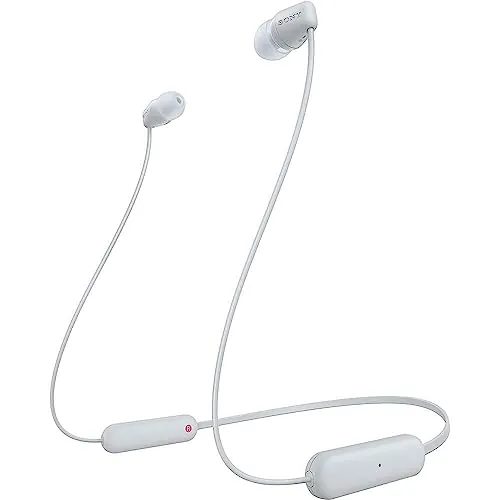
Sony WI-C100 Wireless in-Ear Bluetooth Headphones with Built-in Microphone, White
- Long rated battery life (up to 25 hours listed), with strong battery-related scoring.
Comparison
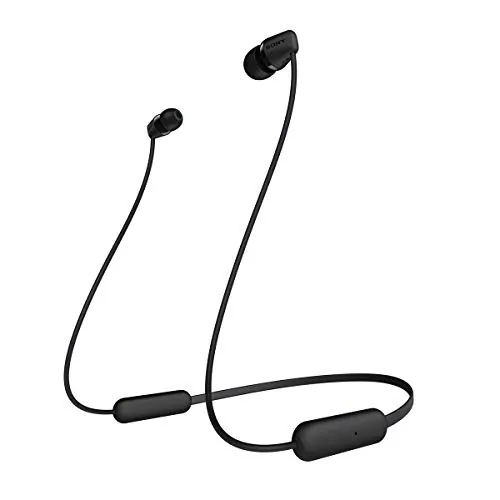
The Sony WI-C100 and Sony WI-C200 are both neckband-style Bluetooth in-ear headphones aimed at budget, everyday listening. Based on the provided scores and review data, the WI-C100 is the clearer all-around choice thanks to stronger battery life, better overall satisfaction, and modern conveniences like app-based sound tuning. The WI-C200 can still appeal to simple, tethered listening, but its feedback is far more mixed on durability and Bluetooth stability.
#1 Overall Winner
Contender
Choose the Sony WI-C100 if you want a more dependable budget neckband headset with longer rated battery life, IPX4 splash resistance, and Sony Headphones Connect app EQ/DSEE.
Choose the Sony WI-C200 only if you’re comfortable with more mixed feedback on durability and Bluetooth stability and your priority is a straightforward, tethered in-ear headset for casual listening.
Overall winner
Depends on your needs
| Metric | Sony WI-C100 | Sony WI-C200 | Winner | Explanation |
|---|---|---|---|---|
| Overall experience | Higher overall score; 4.2/5 from 13,910 reviews | Lower overall score; 3.6/5 from 7,445 reviews | WI-C100 | Stronger scoring and higher customer satisfaction signals. |
| Battery life | Up to 25 hours listed; strong battery scoring | Mixed feedback; battery is a relative strength but inconsistent | WI-C100 | Clearer battery claim plus stronger battery score and reviews. |
| Water/sweat resistance | IPX4 splash/sweat proof listed | Not listed in provided data | WI-C100 | Better documented for exercise and wet-weather use. |
| Sound tuning | DSEE + Sony Headphones Connect EQ (listed) | Not listed in provided data | WI-C100 | More tools to adjust sound to preference. |
| Connectivity stability | Higher connectivity score; mixed but generally positive feedback | Lower connectivity score; more disconnect complaints | WI-C100 | WI-C200 has more frequent reports of unstable Bluetooth behavior. |
| Build quality & durability | Mixed, but higher build/durability scoring | Frequent reports of wires coming loose/breaking | WI-C100 | Both can wear over time, but WI-C200 feedback is more negative. |
| Comfort & fit | Comfort often praised; some “falls out” complaints | Fit is inconsistent; some say secure, others say stiff/loose | WI-C100 | More consistently positive comfort sentiment overall. |
| App experience | App supported; mid-high app score | Not highlighted; lower app score | WI-C100 | Companion app is a practical differentiator for EQ and guidance. |
| Best use case | All-day listening, commuting, light workouts | Casual listening where a neckband tether is preferred | WI-C100 | Better-rounded profile across performance, battery, and features. |
For real-world performance in budget neckband earbuds, the big factors are sound consistency, call performance, and stable wireless playback. The WI-C100 scores higher for performance and audio quality, and aggregated feedback frequently describes its sound as “great” for the price. It also includes DSEE and app EQ, which can help tailor sound to preference.
The WI-C200 is more variable: some reviewers are happy with sound for music and podcasts, while others strongly criticize sound quality and overall unit quality. If you want the safer bet for consistent day-to-day listening based on the provided dataset, WI-C100 is the better performer.
Reliability is mixed for both, but the WI-C100 rates higher and has stronger customer satisfaction overall. The aggregated WI-C100 summary mentions some reports of microphone issues after a month and some Bluetooth problems, suggesting occasional defects or wear issues.
The WI-C200 has more frequent and more severe reliability themes in the provided reviews: earbuds failing within months, repeated complaints of disconnects, and wire issues. If you’re trying to minimize the odds of an early failure, WI-C100 is the better pick in this comparison.
The WI-C100 scores notably higher for usability and setup, and its product details emphasize easy button controls and app support that can guide settings and fit. Reviews also describe straightforward swapping between devices for some users, though it is not described as multipoint.
The WI-C200 can be easy to pair for many users, but usability complaints show up more often, including reports of audio/video lag and a report that it powers on at full volume. If you want fewer day-to-day annoyances, WI-C100 is the safer pick.
Both are neckband-style in-ear designs intended to rest around the neck and keep the earbuds tethered. The WI-C100 listing highlights a “well-balanced shape” and a flexible neckband designed to stay stable, and it earns a higher design score.
The WI-C200 design feedback is mixed: some users like the secure fit for movement, while others report stiffness that makes the earbuds want to fall out, and some mention weak magnets on the earpieces. Overall, WI-C100 looks more consistently refined for comfort and stability based on the provided information.
Neither model is positioned as premium, but the provided scoring and reviews paint a clearer gap. The WI-C100 has higher build quality and durability scores and fewer severe, repeated failure themes in the summary (though there are still mixed reliability reports).
The WI-C200 has frequent complaints about wire quality and wires coming loose from the earbuds, plus reports of earbuds failing within a few months for some buyers. If long-term physical reliability is important, WI-C100 is the stronger choice in this dataset.
The WI-C100 has higher durability scoring and fewer repeated durability-specific complaints in the provided summary, though there are still reports of parts coming loose for some heavy users.
The WI-C200 durability feedback is a major weak point, with multiple mentions of the headset breaking over time and wires coming loose. If you expect daily use over many months, WI-C100 is the more confidence-inspiring choice from the provided data.
Both are lightweight neckband designs that are easy to keep around your neck between listening sessions. The WI-C100 is slightly heavier on paper (0.7 oz vs 0.67 oz listed for WI-C200) but still very light, and it scores higher for portability overall.
In practice, portability comes down to how often the neckband shifts, snags, or falls off during movement. Reviews for both mention occasional fit or shifting issues, but WI-C100’s higher overall usability/portability scoring suggests fewer compromises.
The WI-C100 has the clearer feature set in the provided listing: DSEE, Sony Headphones Connect sound tuning, Fast Pair, and IPX4 splash resistance, plus onboard buttons for playback and volume.
The WI-C200 is positioned more as a basic neckband Bluetooth headset in the provided data, without the same feature callouts. Reviews mention practical basics (pairing, controls, calls), but also highlight inconsistent behavior (for example, lag during video for one user, and other quirks).
The WI-C100 is the clear winner for app experience because it supports the Sony Headphones Connect app for EQ and sound tuning, and reviews mention helpful guidance and presets.
For the WI-C200, the provided data does not highlight a companion app experience, and its app experience score is lower.
Neither headset is described as a smart assistant device, but WI-C100 has more “smart” touches in the provided information via app integration (Headphones Connect) and DSEE sound processing, which pushes it ahead on smart-features scoring.
The WI-C200 does not list comparable software features in the provided data, so it’s more of a basic Bluetooth headset experience.
Both are generally straightforward Bluetooth headsets, but the WI-C100 scores higher for setup and includes Fast Pair for easier initial connection. Several reviews also describe stable pairing and easy device switching (though not multipoint).
The WI-C200 is often described as easy to pair as well, but its higher frequency of connectivity complaints can make setup and ongoing reconnection more frustrating for some buyers.
The WI-C100 explicitly lists compatibility with cellphones, tablets, laptops, and smart speakers, and reviewers mention using it successfully with Android phones and PCs. It scores higher for compatibility overall.
The WI-C200 is commonly used with smartphones in reviews (for example, Samsung), but the provided listing details are sparse beyond general product info. On balance, WI-C100 has the clearer compatibility story in the provided data.
The WI-C100 has stronger audio-related signals overall: higher audio quality score, frequent review praise for sound quality, and built-in tools like DSEE plus EQ in the Sony Headphones Connect app for tailoring the sound signature.
The WI-C200 is more polarizing. Some reviewers describe the sound as great or “well worth the price,” while others call it poor, and the aggregated summary explicitly states mixed sound quality feedback. If you want the more predictable choice for audio, WI-C100 is the better bet.
The WI-C100 supports Bluetooth (version 5.0 listed) with a listed range of 10 meters and includes Fast Pair. Review sentiment on connectivity is mixed overall, but many users report stable pairing and good day-to-day use, with some complaints about Bluetooth issues.
The WI-C200 has a lower connectivity score and more frequent reports of disconnecting “without reason,” inconsistent range, and general Bluetooth problems. If connection stability is a priority, WI-C100 is the safer choice based on the provided dataset.
Battery is one of the most meaningful differences here. The WI-C100 is explicitly listed at up to 25 hours and earns a very high battery life score, with reviewers commonly confirming long runtime in real use.
The WI-C200 can deliver good battery for some users, but the review summary is mixed and includes complaints about poor battery life on certain units. If you want fewer worries about charging frequency, WI-C100 is the stronger option.
With much stronger battery performance in the provided scoring and a long rated runtime, the WI-C100 comes across as the more power-efficient option for day-to-day use.
The WI-C200 is more variable—some users get excellent runtime, but others report battery problems—so its real-world efficiency appears less consistent across buyers.
Value depends on getting a consistent experience for the money, not just a low price. In the provided scoring, the WI-C100 rates much higher for value and is backed by stronger customer satisfaction and review sentiment around sound, comfort, and battery.
The WI-C200 can feel like a good deal when you get a solid unit (several reviewers report good sound and range), but the volume of complaints around durability, wire failures, and Bluetooth disconnects makes its value proposition less dependable overall.
Both products benefit from Sony brand recognition, and several reviewers explicitly reference trust in Sony audio quality. That said, the provided scoring gives the WI-C100 a higher brand trust score, which aligns with its stronger overall performance and higher customer satisfaction in this dataset.
WI-C200’s more mixed customer experiences—especially claims of downgraded quality from past versions—can reduce buyer confidence even within the same brand.
Customer satisfaction strongly favors the WI-C100. It has a higher rating (4.2/5) across a larger review base (13,910), and the aggregated summary highlights repeated praise for sound quality, comfort, quick charging, and value, with some caveats about fit and mixed reliability.
The WI-C200 sits at 3.6/5 with 7,445 reviews and the aggregated summary includes frequent complaints about disconnects, poor wire quality, durability problems, and inconsistent fit/sound. If reviews are a key deciding factor, WI-C100 wins clearly.
Between these two Sony neckband earbuds, the Sony WI-C100 is the better overall option based on the provided data. It scores substantially higher across key categories, has a stronger Amazon rating with a larger review base, and adds practical benefits like IPX4 splash resistance, Fast Pair, and app-based sound tuning (plus DSEE). It’s also the clearer choice if battery life is a top priority.
The Sony WI-C200 can still satisfy buyers who get a good unit and mainly listen to podcasts or casual music, but it carries more risk: reviews highlight inconsistent sound quality, Bluetooth disconnects, and durability issues such as wires coming loose. If you want the safer purchase with fewer compromises, WI-C100 is the recommendation; choose WI-C200 only if you’re comfortable with its mixed long-term feedback.
Overall winner
Depends on your needs
Based on the provided scoring and review data, the Sony WI-C100 is the stronger overall pick. It has a higher overall score (79 vs 54), a much higher Amazon star rating (4.2/5 vs 3.6/5), and more reviews. The WI-C200 can still work for basic listening, but its feedback is more mixed on durability, Bluetooth stability, and consistency.
The Sony WI-C100 leads on battery. Its listing calls out up to 25 hours of battery life and it scores higher for battery life in the provided scoring. WI-C200 reviews are mixed—some users report it lasts a full work shift, while others complain about battery quality on newer units—so it’s less consistent.
Both models have some negative long-term reports, but the WI-C100 comes across as more dependable overall in the provided data. WI-C200 reviews repeatedly mention wires coming loose, breakage over time, and disconnecting. WI-C100 also has mixed reliability feedback (including some mic/Bluetooth complaints), but it scores higher for reliability and durability.
WI-C100 is the safer choice for sound based on the combined signals: it scores higher for audio quality and customer sentiment frequently mentions “great sound quality,” plus it supports DSEE and app EQ tuning. WI-C200 sound feedback is inconsistent—some reviewers like it, while others describe it as poor—so results appear more unit- or expectation-dependent.
The WI-C100 listing specifies no noise control, so you shouldn’t buy it expecting active noise cancelling. WI-C200 reviews include a mention of “noise cancellation,” but the provided product data does not list active noise cancelling as a feature. For both, isolation will primarily depend on in-ear fit and tip seal.
The WI-C100 scores higher for usability and setup in the provided scoring and includes clear button controls plus app-based guidance and tuning. WI-C200 usability feedback is mixed, with some reporting easy pairing, but also complaints such as lag during video and a report that it starts at full volume on power-up.
The WI-C100 is the clearer pick for workouts because it lists an IPX4 splash- and sweat-resistant rating. For WI-C200, the provided data doesn’t list an IP rating, and durability feedback is more mixed. For either model, fit matters—some users report earbuds can fall out during movement.
WI-C100 rates higher for connectivity and includes Fast Pair for simpler pairing. While many WI-C100 users report stable everyday use, there are still some Bluetooth complaints. WI-C200 connectivity is a bigger concern in the reviews, with multiple reports of random disconnects and inconsistent range/behavior between units.
Using the provided scoring and review summaries, the WI-C100 offers better value overall. It scores much higher for value and customer satisfaction, and reviewers frequently call out strong sound and battery for the price. WI-C200 can be inexpensive, but its mixed durability, connectivity, and sound feedback make its value feel less consistent.
Check our rankings and expert guides to find the best electronics products for your goals.