#1 Overall Winner
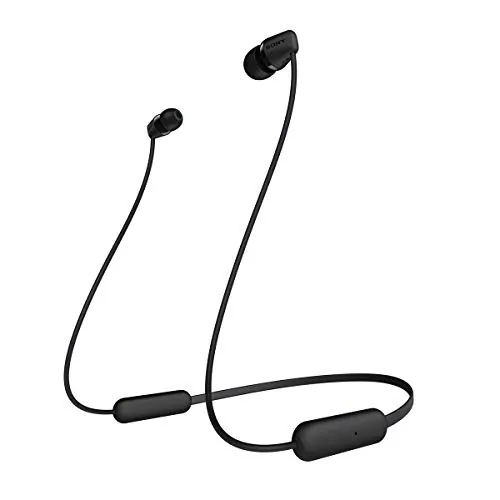
SONY WI-C200 Wireless Bluetooth Headphones - Black
- Neckband-style cord helps reduce the chance of losing an earbud if it falls out.
Comparison
The Sony WI-C200 and Soundcore by Anker A20i target budget buyers who want wireless in-ear audio, but they take different approaches: neckband-style corded earbuds vs true wireless with a charging case and app support. Based on the provided scores and Amazon review averages, the Soundcore A20i is the stronger all-around option, while the WI-C200 is mainly appealing if you prefer a tethered design to reduce loss risk.
#1 Overall Winner
Contender
Choose Soundcore A20i if you want true wireless convenience, a compact case, strong battery scores, and app EQ/control customization.
Choose Sony WI-C200 if you specifically prefer a neckband/corded design to reduce loss risk and you’re comfortable with more mixed long-term durability and connectivity feedback.
Overall winner
Depends on your needs
| Metric | SONY WI-C200 | Soundcore A20i | Winner | Explanation |
|---|---|---|---|---|
| Overall score (provided) | 54 | 84 | Soundcore A20i | A20i scores higher across most categories in the provided dataset. |
| Amazon rating | 3.6/5 | 4.4/5 | Soundcore A20i | Higher average rating suggests stronger buyer satisfaction. |
| Review volume | 7,445 | 15,150 | Soundcore A20i | Both are widely reviewed; A20i has a larger sample size. |
| Form factor | Neckband / corded between earbuds | True wireless + charging case | Depends | Neckband can reduce loss risk; true wireless maximizes portability. |
| Battery approach | Neckband battery (reviews mention long shifts) | 9h earbuds / 28h with case (stated) + fast charge | Soundcore A20i | A20i combines high battery score with stated case-based total runtime. |
| Audio & EQ control | Mixed sound feedback; no app controls indicated | App EQ presets + custom EQ (stated); strong audio score | Soundcore A20i | A20i’s app-based EQ and higher audio score better support tuning. |
| Call features | Microphone (basic) | 2 mics + AI clear calls (stated) | Soundcore A20i | A20i has clearer call-focused claims and supportive review sentiment. |
| Connectivity stability | Reports of disconnects and lag | Mixed but stronger connectivity score overall | Soundcore A20i | Both have some complaints, but scoring and ratings favor A20i. |
| Durability feedback | Frequent concerns (wires/earbuds failing) | Mixed; some long-term positive reports | Soundcore A20i | WI-C200 has more repeated durability complaints in the provided overview. |
| Portability | Neckband is easy to grab, less pocketable | Compact case + lanyard (stated); high portability score | Soundcore A20i | A20i is designed for pocket/carry convenience with a case. |
For real-world listening, the Soundcore A20i has the clearer performance edge in the provided data. It scores much higher overall and particularly well in audio quality and usability, with reviewers frequently describing the sound as impressive for the price and highlighting the ability to tune it via the app.
The Sony WI-C200 can perform well for basic listening—especially podcasts and casual music—and some users report effective isolation in noisy environments. However, its aggregated feedback is more mixed on sound quality, and its lower reliability/durability signals can affect long-term performance consistency.
“Speed” here mainly shows up as responsiveness and lag. The provided feedback includes reports of video lip-sync lag on some Sony WI-C200 units, which can make watching shows frustrating. The Soundcore A20i has fewer such complaints in the provided text and scores higher for overall performance/usability, suggesting a smoother day-to-day experience for typical listening and device switching.
Reliability is mixed for both, but the Soundcore A20i has stronger reliability scoring and better overall customer satisfaction signals in the provided data. Reviews include both long-term positive ownership and some reports of issues within a year.
The Sony WI-C200 shows more frequent negative themes tied to reliability—earbuds stopping working, wires coming loose, and Bluetooth disconnects—pulling down its reliability and customer satisfaction picture.
Both are designed to be simple, but the Soundcore A20i scores higher for usability and setup in the provided dataset. Reviews describe quick pairing out of the box, and many users like being able to remap touch gestures in the app.
The Sony WI-C200 is also commonly described as easy to connect, and the neckband can be convenient if you frequently remove one earbud (it stays attached). However, reports of Bluetooth disconnects, lag in video, and quirks like very loud startup volume can make day-to-day use less predictable depending on the unit and user.
The Sony WI-C200 uses a neckband/corded design that some buyers prefer because it reduces the chance of losing a bud and can be easy to hang around the neck between uses. This design can be practical for work and yard tasks where you frequently pause listening.
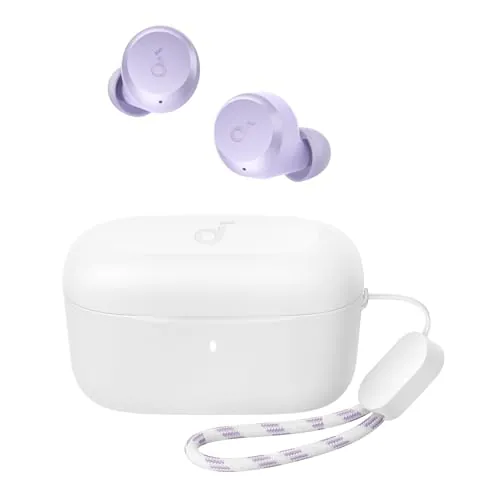
The Soundcore A20i is designed for true wireless portability, with a compact case and lanyard. If you prioritize pocketability and freedom from cables, the A20i’s design is the better match. Fit can vary for both, so ear-tip choice and ear shape remain important.
Based on the provided scores and review themes, the Soundcore A20i has the stronger build-quality picture overall, though it isn’t premium: at least one reviewer calls the case plastic and cheap-feeling. Still, the product’s build-quality/durability scores are notably higher than the Sony’s.
The Sony WI-C200 has more prominent long-term concerns in the provided feedback, including reports of the wires coming loose and earbuds failing after months for some users. If you plan to use them daily, this difference matters as much as sound or battery.
The Soundcore A20i scores better for durability in the provided dataset, and some reviews describe it holding up well over months to more than a year. That said, durability feedback still isn’t universally positive.
The Sony WI-C200 has more pointed durability warnings in the provided overview and reviews, including earbuds failing after a few months for some buyers and recurring complaints about cable/wire quality. If durability is your top concern, the A20i is the safer pick from the provided data.
The Soundcore A20i wins for pocket portability: it’s a true wireless set with a compact case and an included lanyard, and it scores very highly for portability in the provided dataset.
The Sony WI-C200 is still portable in the sense that it’s easy to hang around your neck between uses, but it’s generally less pocket-friendly than a small case. If you commute with minimal bulk, the A20i is the better match.
The Soundcore A20i is the more feature-rich option based on the provided listing. It includes a soundcore app with multiple EQ presets and custom EQ, plus customizable tap controls and a stated feature for AI-enhanced clear calls using two microphones. It also supports single-earbud mode and comes with a charging case and lanyard for portability.
The Sony WI-C200 focuses on core functions—Bluetooth listening and an in-line mic—with the practical feature of a tethered neckband design. That design can be a “feature” for people who frequently take earbuds in and out or worry about losing a bud, but it doesn’t match the A20i’s app-based customization set.
This is a clear difference: the Soundcore A20i includes the soundcore app with EQ presets and customization options, and multiple reviewers call the app useful for tailoring sound and gestures.
No comparable companion-app experience is indicated in the provided information for the Sony WI-C200, so buyers who want to tweak EQ and controls should lean toward the A20i.
The Soundcore A20i offers more “smart” functionality in practice through its app ecosystem: EQ presets, custom sound tuning, and customizable tap controls are all stated features. It also highlights AI-enhanced call clarity.
The Sony WI-C200 is simpler and more traditional in feature set, focusing on core playback and calling without the same level of app-driven smart controls in the provided data.
Both can be easy to start using, but the provided setup score favors the Soundcore A20i. Reviews describe a straightforward first connection: remove from the case and pair from the phone’s Bluetooth list. The app can then be used for EQ and tap-control customization.
The Sony WI-C200 is also often described as pairing easily, but its overall setup experience is somewhat undermined by later reports of disconnects or behavior quirks on some units.
Both are intended for broad everyday compatibility with phones and other Bluetooth devices. The Soundcore A20i explicitly lists compatibility with cellphones, desktops, laptops, and tablets. The Sony WI-C200 is commonly used with smartphones in reviews and scores reasonably for compatibility in the provided dataset.
If you care about customization features, note that A20i’s EQ and control remapping depend on using the soundcore app. The WI-C200 doesn’t list a similar app-based ecosystem in the provided information.
Audio is one of the biggest separators in this matchup. In the provided scoring data, the Soundcore A20i scores significantly higher for audio quality, and reviews repeatedly highlight strong sound for the price plus the usefulness of in-app EQ options.
The Sony WI-C200 has more polarized sound feedback—some users are happy, while others describe it as poor. If you mainly listen to podcasts, that inconsistency may be less frustrating; if you care about music tuning and consistent output, the A20i is the safer bet based on the provided sentiment and scores.
The Soundcore A20i has the advantage in the provided connectivity score and many reviews mention easy pairing and stable everyday use. It also specifies Bluetooth 5.3 and a 10-meter range in the listing details.
The Sony WI-C200 has more frequent connectivity complaints in the provided overview, including random disconnects and reports of lag during video watching (lip-sync issues). While some users experience solid range and pairing, the overall signal from the provided data is that connectivity is less consistent than the A20i.
Both products are positioned around long listening, but the Soundcore A20i is stronger in the provided data. It states 9 hours per charge and 28 hours total with the case, plus fast charging (10 minutes for 2 hours). Its battery-life score is also higher.
The Sony WI-C200 still has a respectable battery-life score and multiple reviewers mention it lasting through a workday. The difference is convenience: the A20i’s case-based charging supports easier top-ups between uses, while the WI-C200 relies on the neckband battery and has more mixed battery feedback across reviews.
Both products score reasonably for power efficiency in the provided dataset, but the Soundcore A20i comes out ahead overall due to its higher battery/power-related scoring and its case-based charging approach. The WI-C200 has positive battery-life feedback from some users, but its more mixed reliability and battery sentiment makes the efficiency experience less predictable across buyers.
Based on the provided value score and customer satisfaction signals, the Soundcore A20i offers stronger value for most shoppers. It combines a higher overall score with app customization, strong battery performance, and better average Amazon rating.
The Sony WI-C200 can still be good value for buyers who specifically want the neckband tether and are satisfied with “good enough” audio for podcasts. However, the provided durability and connectivity complaints increase the risk that it won’t feel like a bargain over the long term.
In the provided scoring, Sony rates higher on brand trust, which can matter for buyers who prioritize established audio brands. However, brand trust doesn’t fully offset the WI-C200’s lower reliability/durability signals in the provided data.
Soundcore (Anker) still scores strongly for brand trust and pairs that with higher customer satisfaction and overall performance for the A20i in this matchup.
Customer satisfaction clearly favors the Soundcore A20i in the provided data: it has a higher Amazon star rating (4.4/5) and a higher customer satisfaction score. Reviews frequently praise sound, comfort, and battery life for the price, while acknowledging occasional fit or connection issues.
The Sony WI-C200 has a lower average rating (3.6/5) and more repeated negative themes (durability problems, disconnects, inconsistent sound), which likely drives its lower satisfaction result despite some strong positive reviews.
Warranty/support details are not clearly provided for either product in the supplied data. The provided scoring shows a lower warranty/support score for the Soundcore A20i than the WI-C200, but without concrete policy text it’s best to verify the warranty terms and return window on the specific Amazon listing and seller before buying—especially for budget earbuds where early failures can happen.
For most buyers, the Soundcore by Anker A20i is the better overall choice. In the provided dataset it scores substantially higher across audio quality, usability, battery life, portability, and value, and it also holds a stronger Amazon rating with a very large review sample. The app-based EQ and customizable controls add real everyday benefits at this price level.
The Sony WI-C200 is best viewed as a niche alternative for people who prefer a tethered neckband setup and like the security of a cord between buds. However, the provided feedback highlights durability and connectivity inconsistency risks that make it harder to recommend as the default pick unless that form factor is your top priority.
Overall winner
Depends on your needs
Based on the provided scoring data and Amazon rating, the Soundcore A20i is the stronger overall pick. It has a higher overall score (84 vs 54) and a higher star rating (4.4/5 vs 3.6/5). The WI-C200 can still make sense if you specifically want a neckband/corded design to reduce the chance of losing an earbud.
The Soundcore A20i leads on stated specs and scoring: it lists 9 hours per charge and 28 hours with the case, plus fast charging. The WI-C200 also scores well for battery life and several reviews mention lasting through long shifts, but the A20i’s battery-life score and stated total runtime are higher in the provided data.
The Soundcore A20i is more call-focused on paper because it lists 2 microphones and AI-enhanced clear calls, and call clarity is repeatedly praised in reviews. The Sony WI-C200 includes a microphone and some users are satisfied, but the provided feedback highlights more mixed connectivity and quality concerns that can affect call consistency.
Both can be straightforward, but the Soundcore A20i rates higher in the provided setup scoring (90 vs 67). Reviews describe taking the A20i out of the case and seeing it appear quickly in Bluetooth devices. The WI-C200 is also often described as easy to pair, though its aggregated feedback includes more reports of disconnects.
Neither product is presented with clear, consistent active noise cancelling details in the provided listing data. The A20i is described as sound isolation, and reviewers mention isolation due to fit. The WI-C200 feedback includes a reviewer calling its “noise cancellation” effective, but the overall provided data centers on in-ear isolation rather than a detailed ANC feature set.
Comfort and fit are mixed for both. The A20i has strong comfort feedback overall (many reviewers mention no ear pain and a snug fit), but some still report they don’t stay in. The WI-C200 can feel secure for some users and has the added benefit of a cord if one bud slips, but other reviewers describe stiffness and buds falling out.
Neither is perfect, but the provided data suggests fewer severe recurring failures for the Soundcore A20i overall (higher reliability/durability scores and stronger customer satisfaction). The Sony WI-C200 has more prominent durability complaints such as earbuds failing after months and wires coming loose, alongside Bluetooth disconnect reports.
Using the provided scoring data and customer sentiment, the Soundcore A20i comes out ahead on value (higher value score and stronger overall satisfaction). The WI-C200 can still be a reasonable buy if you specifically want the neckband style and prioritize long listening sessions with minimal worry about losing a bud, but it has more mixed reliability feedback.
Check our rankings and expert guides to find the best electronics products for your goals.