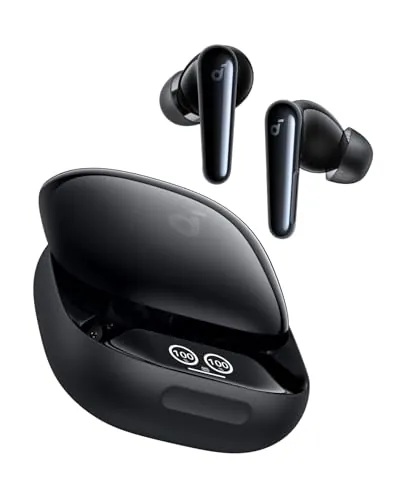
#1 Overall Winner
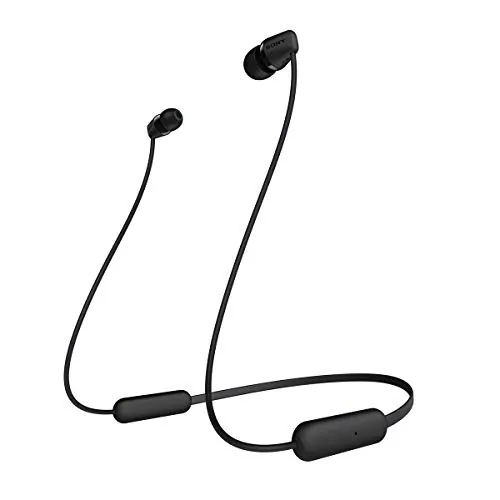
SONY WI-C200 Wireless Bluetooth Headphones - Black
- Strong battery score for a neckband-style wireless option (battery life score: 68).
Comparison
The Sony WI-C200 and Soundcore Liberty 4 NC target very different buyers: Sony is a budget neckband-style Bluetooth headset, while Soundcore is a feature-heavy true wireless pair with active noise cancelling. Based on the provided scores and Amazon review averages, Liberty 4 NC is the more capable all-rounder, but WI-C200 can still make sense if you prefer a tethered design to reduce the chance of losing earbuds.
#1 Overall Winner
Contender
Pick the Soundcore Liberty 4 NC if you want active noise cancelling, stronger sound performance, longer total battery with a case, and a deeper feature set (app EQ/HearID, multipoint, wireless charging).
Pick the Sony WI-C200 if you prefer a simple, budget-friendly neckband headset and like the security of earbuds connected by a cable—especially for podcasts and casual listening.
Overall winner
Depends on your needs
| Metric | SONY WI-C200 | Soundcore Liberty 4 NC | Winner | Explanation |
|---|---|---|---|---|
| Overall score | 54 | 84 | Liberty 4 NC | Higher overall scoring driven by performance, features, battery, and satisfaction. |
| Amazon rating & volume | 3.6/5 (7,445 reviews) | 4.3/5 (25,627 reviews) | Liberty 4 NC | Higher average rating with a much larger review base. |
| Noise control | Not clearly specified as ANC in provided data | Active Noise Cancelling + Adaptive ANC 2.0 | Liberty 4 NC | Explicit ANC features and strong review sentiment for noise cancellation. |
| Audio performance (score) | 57 | 88 | Liberty 4 NC | Liberty 4 NC is scored as a stronger audio performer; WI-C200 has mixed sound feedback. |
| Battery approach | Single-device battery (no hour spec provided here) | Up to 10h per charge; up to 50h with case | Liberty 4 NC | Clearer and higher runtime claims plus a higher battery score. |
| Connectivity | Connectivity score 49; reports of disconnects/lag | Bluetooth 5.3, multipoint; connectivity score 78 | Liberty 4 NC | More modern Bluetooth features and stronger connectivity scoring. |
| Build & durability | Build 45; durability 39; wire/earbud failures reported | Build 74; durability 73; mixed but generally better | Liberty 4 NC | WI-C200’s aggregated reviews repeatedly raise durability concerns. |
| Controls & features | Basic headset controls implied; fewer advanced features listed | Touch controls, app EQ/HearID, wear detect, wireless charging | Liberty 4 NC | More extensive feature set for customization and convenience. |
| Portability | Neckband is harder to pocket but harder to lose | Small buds + case; portability score 85 | Liberty 4 NC | True wireless design is typically more pocket-friendly; WI-C200 can be more “secure” day to day. |
| Best fit for | Budget neckband/podcast listeners | ANC-focused commuters and feature seekers | Depends | Choose based on whether you want a tethered neckband or premium true wireless ANC features. |
For real-world earbud performance, the Liberty 4 NC is clearly ahead. Its performance score (87) and audio score (88) align with review feedback that highlights strong noise cancelling and satisfying sound, with additional tuning available in the app. The strong battery performance also supports longer sessions without interruption.
The WI-C200 is more variable in day-to-day use: reviewers are split on sound quality, and the connectivity score (49) matches reports of random disconnects and lag. If your “performance” priority is simply staying connected and working reliably for calls and podcasts, the WI-C200 can work for some users—but the data shows more inconsistency compared to Liberty 4 NC.
“Speed” for earbuds mostly shows up as responsiveness and day-to-day performance consistency. The Liberty 4 NC scores higher on speed (73 vs 50) and includes modern connectivity (Bluetooth 5.3) plus fast charging (10-minute charge time is listed).
For the WI-C200, some users report lag (including lip-sync issues on video), which can make the experience feel less responsive in certain scenarios.
Reliability trends favor the Liberty 4 NC (reliability score 69) over the WI-C200 (42). Liberty 4 NC still has mixed feedback, including reports that one earbud can stop working, but the overall satisfaction is higher and the scoring suggests fewer widespread failures.
WI-C200 reviews and the aggregated summary more consistently mention failures over time (earbuds quitting, wires coming loose) and unstable Bluetooth behavior, which can feel like “reliability” problems in daily use.
Both products can be easy to start using, but in different ways. The WI-C200 earns positive comments for simple pairing and has a solid setup score (67); the neckband also makes it easy to take earbuds in and out without putting them back into a case.
The Liberty 4 NC scores higher for usability (80) and setup (81) and adds convenience features like wear detection and multipoint. However, usability can hinge on fit: if you can’t get a stable seal, you may end up readjusting them more often, which several users mention.
The design difference is mostly about lifestyle fit. The Sony WI-C200 uses a neckband/tethered layout, which some buyers prefer because it’s harder to lose and can feel secure when doing chores or moving around.
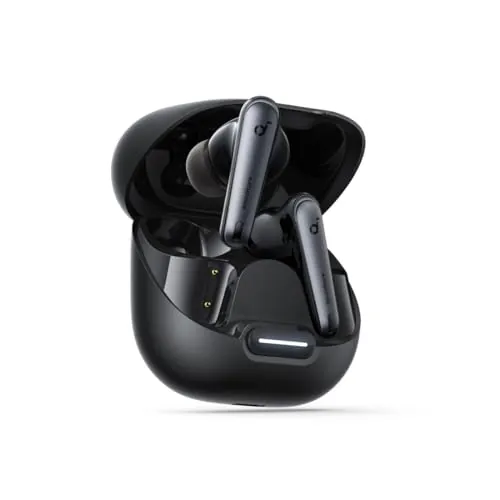
The Liberty 4 NC is a compact true wireless design with an included charging case, designed for pocketability and modern controls (touch). If you prioritize minimal cables and case-based recharging, Liberty 4 NC is the more contemporary approach; if you dislike keeping track of tiny earbuds, the WI-C200’s tether can be an advantage.
The build-quality gap is significant in the scoring. Liberty 4 NC leads with a build quality score of 74 and durability score of 73, and longer-term feedback includes drops without damage (though reliability complaints still exist for some users).
WI-C200 is the riskier choice for longevity. Its build quality (45), reliability (42), and durability (39) reflect frequent buyer concerns: wires coming loose, earbuds failing after a few months, and general quality inconsistency across units.
Durability is one of the biggest reasons to separate these two. The Liberty 4 NC has a durability score of 73, and longer-term owners report surviving drops without major damage (while acknowledging not everything is perfect).
The WI-C200 scores low for durability (39), and the aggregated feedback includes repeated concerns about breakage, wire issues, and earbuds failing after months. If you need something to hold up daily, this is a key risk area.
If you prioritize pocketability, the Liberty 4 NC wins: it’s true wireless with a compact charging case and a higher portability score (85 vs 63).
If your portability concern is keeping track of your earbuds while moving around, the WI-C200 neckband/tether can be more practical for some users because you can let the earbuds hang and reduce the chance of losing a single bud.
The Liberty 4 NC offers a much deeper feature set: Adaptive ANC 2.0, Hi-Res wireless audio with LDAC, HearID 2.0, a fully adjustable EQ with presets, multipoint pairing, wear detection (auto play/pause), wireless charging, fast charging, and IPX4 water resistance.
The WI-C200 is positioned as a simpler neckband headset. The provided data and reviews focus on basic listening/calls, noise isolation, and ease of pairing rather than advanced ANC modes, app customization, or charging-case convenience.
Liberty 4 NC is the only product here with a clearly described companion app experience (HearID 2.0, EQ adjustment, presets), reflected in a stronger app experience score (76).
For the WI-C200, no companion app experience is described in the provided information, so there’s little to compare beyond basic Bluetooth pairing and onboard controls.
The Liberty 4 NC provides more “smart” functionality via its app features (HearID 2.0 personalization and EQ presets) and convenience features like wear detection and multipoint. This matches its higher smart-features score (72 vs 50).
No comparable smart feature set is provided for the WI-C200 in the data here, which aligns with its more basic product positioning.
Both can be easy to get going, but Liberty 4 NC has the edge in the scoring (setup 81 vs 67) and explicitly mentions quick pairing, including Android-friendly pairing.
The WI-C200 still performs reasonably for setup, and reviewers do mention easy connection. If you want the most seamless modern pairing plus features like multipoint, Liberty 4 NC is better aligned with that goal.
Both are broadly compatible with typical listening devices, but the Liberty 4 NC is explicit about compatibility with cellphones, desktops, laptops, and tablets and includes modern connection features (multipoint). It also has a higher compatibility score (79 vs 62).
The WI-C200 is used successfully with phones (review mentions pairing with a Samsung phone), but the lower compatibility score and reported connection issues suggest it may be more sensitive to device/environment differences.
Audio quality favors the Liberty 4 NC. It has an audio score of 88 and includes 11mm drivers, Hi-Res wireless audio, and LDAC, plus app EQ/HearID for tuning. Reviews commonly praise clear sound and strong overall listening experience for the price.
The WI-C200 has a more mixed audio story: the aggregated review summary explicitly says sound quality is inconsistent, and the audio score (57) reflects that variability. Some users are happy with music and podcasts, but others describe poor sound quality—so expectations should be set accordingly.
Liberty 4 NC is the stronger connectivity pick on paper and by score. It specifies Bluetooth 5.3, supports multipoint, lists a 10-meter Bluetooth range, and has a higher connectivity score (78).
WI-C200 is more frequently criticized for connection behavior. The aggregated summary calls out disconnects “without reason,” and the connectivity score (49) suggests more instability. If you watch a lot of video, note that at least one WI-C200 review mentions lip-sync lag.
The Liberty 4 NC leads for battery: up to 10 hours per charge (normal mode) and up to 50 hours with the case are listed, and the battery score is 90. It also supports fast charging and wireless charging, which can make top-ups more convenient.
The WI-C200 can still be a solid battery performer for a basic neckband headset (battery score 68), with some reviewers reporting it lasts through a long work shift. However, battery feedback is mixed overall, and the product listing here doesn’t provide a clear runtime claim.
Power efficiency trends toward the Liberty 4 NC given its high battery score (90) and strong power efficiency score (78). It also supports fast charging, which improves practical uptime.
The WI-C200 has decent power efficiency (61) and is often praised for lasting a long time in some reviews, but battery feedback is not consistently positive across users.
Based on the scoring and review context, the Liberty 4 NC offers stronger overall value (value score 89 vs 58) because it combines higher performance, modern features (ANC, app EQ/HearID, wireless charging, multipoint), and higher customer satisfaction at scale.
The WI-C200 is cheaper in the provided pricing, but value is undercut by repeated complaints about durability, reliability, and connectivity. If you only need basic wireless listening and accept the risks, it can still be a budget option—but it’s not the safer “best value” pick from this data.
Brand trust slightly favors Liberty 4 NC in the scoring (84 vs 72), although Sony still shows a strong brand trust score and is a widely recognized audio brand.
In practical terms, the trust decision here may come down to product consistency: the WI-C200’s aggregated review summary mentions quality variability and failures, while Liberty 4 NC is more consistently well-reviewed (with some recurring issues still present).
Customer satisfaction strongly favors the Liberty 4 NC. It has a customer satisfaction score of 87 and an Amazon rating of 4.3/5 across 25,627 reviews, with frequent praise for ANC, sound, battery, and value.
The WI-C200 sits at 3.6/5 across 7,445 reviews with a customer satisfaction score of 52. The most common negatives in the aggregated summary are durability problems, Bluetooth disconnects, and inconsistent fit/sound.
Warranty/support details are limited in the provided data, but a Liberty 4 NC reviewer explicitly mentions an 18-month warranty. The scoring also favors Liberty 4 NC for warranty/support (72 vs 50).
No clear warranty terms are provided here for the WI-C200, so comparisons beyond the score aren’t possible from the supplied information.
The Soundcore Liberty 4 NC is the better overall choice in this comparison. It scores far higher overall and in the areas most people care about for earbuds—audio performance, active noise cancelling, battery life, features, and customer satisfaction—while also offering modern extras like multipoint and wireless charging.
The Sony WI-C200 still has a niche: if you prefer a neckband/tethered headset because you frequently take earbuds in and out or you’re worried about losing true wireless buds, it can be a practical budget solution. However, the provided data shows meaningful trade-offs in durability, reliability, and Bluetooth stability.
If you can spend more and want a quieter commute and a more full-featured experience, Liberty 4 NC is the safer pick. If cost and tethered convenience come first, WI-C200 may fit—just set expectations.

Overall winner
Depends on your needs
Based on the provided scoring and review data, the Soundcore Liberty 4 NC is the stronger overall pick (overall score 84 vs 54). It leads in performance, audio quality, battery life, and value, and it also has a higher Amazon rating (4.3/5 vs 3.6/5). The WI-C200 can still appeal if you specifically want a neckband-style design.
The Liberty 4 NC is the clear choice for noise reduction because it explicitly offers active noise cancelling (Adaptive ANC 2.0) and is heavily praised for ANC in the aggregated reviews. For the WI-C200, the provided data focuses on isolation and mixed “noise blocking” experiences, but it does not provide the same explicit ANC feature set.
The Liberty 4 NC has the stronger battery profile: up to 10 hours per charge and up to 50 hours with the case are listed, and it has a battery life score of 90. The Sony WI-C200 also scores well for battery (68) and some reviewers mention lasting a long work shift, but the listing here doesn’t provide a specific hour figure.
Neither is flawless, but the Liberty 4 NC rates higher for reliability and durability (reliability 69; durability 73) than the WI-C200 (reliability 42; durability 39). WI-C200 reviews and the aggregated summary repeatedly mention breakage over time and wire/earbud failures, while Liberty 4 NC feedback is more mixed with some reports of a single earbud stopping.
On paper and in many reviews, the Liberty 4 NC is positioned more strongly for calls thanks to its 6-mic AI clear call feature, and some users praise voice isolation in noisy environments. That said, at least one detailed review describes the mic as only “mediocre.” The WI-C200 is usable for calls, but review data highlights broader build and connectivity issues that can affect call consistency.
Both can be straightforward, but the data favors different strengths. The Sony WI-C200 gets positive comments for easy pairing and has a solid setup score (67). The Liberty 4 NC also emphasizes quick pairing (including Android-friendly pairing) and scores even higher for setup (81), plus it supports modern connectivity features like Bluetooth 5.3 and multipoint.
If you often misplace small earbuds, the Sony WI-C200 neckband format can be easier to manage because the earbuds are connected by a cable/neckband. A reviewer specifically liked that if one side falls out, the cord helps prevent it from getting lost. The Liberty 4 NC is true wireless, which is more portable but easier to misplace if dropped.
Yes—fit feedback is mixed for both. WI-C200 reviews include both “they stay in” and “they fall out” experiences, and the aggregated summary calls fit inconsistent. Liberty 4 NC reviews also split: some say the earbuds are comfortable and secure, while others report they don’t stay in or struggle to get a good seal, which can also affect ANC performance.
Using the provided scoring context, the Liberty 4 NC has a notably higher value score (89 vs 58) alongside stronger performance and customer satisfaction. The WI-C200 costs less in the provided prices, but its mixed durability, reliability, and connectivity feedback are common concerns. For many buyers, the Liberty 4 NC’s feature set and higher satisfaction may justify the higher price.
Check our rankings and expert guides to find the best electronics products for your goals.