#1 Overall Winner
Soundcore by Anker P20i True Wireless Earbuds
- Strong value for money supported by high value scoring and large review volume.
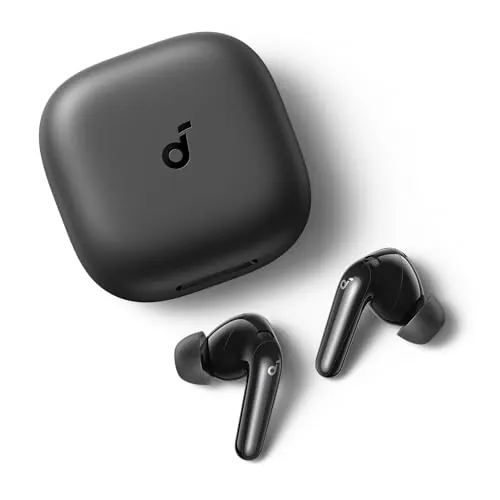
Comparison
Soundcore P20i and Soundcore P31i are both budget-friendly true wireless earbuds from Soundcore (Anker), but they target different priorities. P20i focuses on simple, bass-forward listening, portability, and low cost, while P31i adds adaptive ANC, Hi-Res/LDAC audio, and smart features like translation. If you want the most features and stronger audio/ANC, P31i is the better pick; if you want the simplest bargain, P20i generally makes more sense.
#1 Overall Winner
Contender
Choose Soundcore P20i if you want a low-cost, easy-to-carry pair with punchy bass, long battery life (30 hours with case), and simple setup.
Choose Soundcore P31i if you want adaptive ANC, Hi-Res/LDAC audio, longer total battery (50 hours with case), and stronger call hardware—assuming you’re okay using the app/firmware setup and dialing in fit.
Overall winner
Depends on your needs
| Metric | Soundcore P20i | Soundcore P31i | Winner | Explanation |
|---|---|---|---|---|
| Overall score | 88 | 86 | P20i | P20i leads slightly overall, driven by value, portability, and easy everyday use. |
| Noise control | Sound isolation | Real-time adaptive ANC (up to 52 dB stated) | P31i | P31i is purpose-built for reducing noise; P20i relies on passive isolation. |
| Audio tuning approach | 10mm drivers + 22 EQ presets | Hi-Res + LDAC + spatial audio (listed) | P31i | P31i offers higher-end codec/support and features; P20i focuses on bass and simple EQ presets. |
| Battery (with case) | Up to 30 hours | Up to 50 hours (40 with ANC on) | P31i | P31i provides substantially more total case runtime and includes ANC-on estimates. |
| Fast charge | 10 min = 2 hours | 10 min = 3.5 hours | P31i | Both fast-charge, but P31i’s stated quick-charge gain is higher. |
| Call microphone setup | 2 mics + AI calls | 6 mics + AI noise reduction + wind reduction | P31i | P31i’s hardware and call-focused features are more advanced. |
| Setup & ease | Instant pairing + strong setup score | More app/firmware emphasis + lower setup score | P20i | P20i is more plug-and-play; P31i may require initial app setup to optimize. |
| Portability | Compact case with lanyard | Larger case dimensions provided; heavier overall | P20i | P20i is designed to clip/carry easily; P31i is still portable but less optimized for minimal carry. |
| Water resistance clarity | Water-resistant (no IP listed) | IP55 | P31i | P31i provides a specific IP rating, which is easier to evaluate for dust/splash protection. |
| Unique extras | Find My Earbuds sound | AI translation (100+ languages) | Depends | P20i helps with locating buds; P31i adds translation features for communication needs. |
In everyday performance, the two models separate primarily on noise handling and audio headroom. P31i scores higher for performance and is built around adaptive ANC that reacts to your environment, which can make a meaningful difference in noisy places like commutes, offices, or driving. P20i relies on passive isolation, so the experience depends more on getting a good ear-tip seal.
For sound, both are positioned as strong value, but P31i has the edge in the provided audio scoring and adds LDAC/Hi-Res support. P20i leans into boosted bass and easy EQ presets, which can be preferable if you want an energetic, low-end-heavy tuning without worrying about codecs.
For earbuds, “speed” is mostly about pairing/reconnect behavior and how quickly you can get back to listening. P20i emphasizes instant pairing on first use and automatic reconnection thereafter, and it scores higher for setup.
P31i can feel fast and seamless once configured (reviews describe auto-disconnect in the case and quick re-activation), but it may take more time initially because app integration and a firmware update are commonly recommended. In short: P20i is faster to get going; P31i can be fast after initial setup.
Both products have some reliability caveats in the provided data. P20i has mixed reliability feedback, including reports of one earbud stopping working, and some connectivity complaints.
P31i scores higher for reliability and durability, and several reviews are strongly positive after proper setup. Still, connectivity issues and fit problems are mentioned, and some features (like translation) may be inconsistent depending on user setup and expectations. If reliability is your top concern, P31i has the edge on scoring, but neither is free of reported issues.
P20i scores higher for usability and setup, and its pairing flow is explicitly designed to be simple (open case for first pairing; auto-reconnect afterward). Reviews also commonly describe it as easy to connect.
P31i can be very smooth once configured, but multiple reviews emphasize that you should use the app and update firmware early for the best results. Fit and connectivity feedback is mixed, and one review notes touch-control behavior can be less helpful on PC. If you want minimal friction, P20i is generally the safer usability pick.
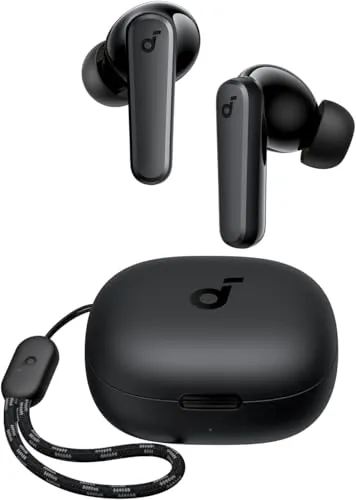
P20i is designed for portability: a compact case and a built-in lanyard make it easier to pocket or clip to a bag. It’s a straightforward in-ear design aimed at everyday use.
P31i is also an in-ear design but is more feature-dense (ANC and additional mic hardware). Fit feedback is mixed—some users find it comfortable with the included tip sizes (including XS), while others report it doesn’t stay in well. If you’re sensitive to in-ear comfort or stability, P31i may require more experimentation with tips.
Both products have mid-range build-quality scoring, and neither is positioned as a premium metal-and-leather type of earbud. P20i uses PC+ABS materials for the buds and case, but at least one review reports the earbuds can separate into pieces when dropped, suggesting impact durability may be a concern for some units.
P31i is described in reviews as durable (including one report of surviving a drop in water), and it carries a specific IP55 rating. However, there are also concerns about the slick plastic case and whether the lid would hold up to a hard hit. Overall, P31i looks stronger on water/dust protection clarity, while both have some real-world durability caveats.
P31i has the advantage of a clear IP55 rating and at least one review describing it surviving a water incident. However, one user expressed concern about case slipperiness and lid survivability after a hard impact.
P20i is listed as water-resistant, but without an IP rating. A durability concern appears in reviews where the earbuds separated when dropped. If you expect tougher outdoor use and want a defined water/dust rating, P31i is the better durability-oriented choice.
P20i is designed for portability with a compact, lightweight case and a built-in lanyard that makes it easy to clip to bags or keys. It also has a higher portability score.
P31i remains travel-friendly, but it’s physically heavier (item and case weights are listed) and doesn’t emphasize the same clip-and-go design. If pocketability and grab-and-go carry are priorities, P20i is the better fit.
P20i keeps the feature set practical: 22 EQ presets, customizable controls through the Soundcore app, and a “Find My Earbuds” sound to help locate a misplaced bud. It also highlights instant pairing and a compact lanyard case for daily carry.
P31i is notably more feature-heavy. It adds real-time adaptive ANC, Hi-Res audio with LDAC, spatial audio, and AI translation (100+ languages). It also increases mic count to six and includes wind-noise reduction for calls. If you want “more modes and more tech,” P31i clearly offers the broader toolkit.
P20i has a clearly defined app experience: control customization, 22 EQ presets, and Find My Earbuds. That’s a straightforward set of tools aimed at quick personalization.
P31i also relies heavily on the Soundcore app for key experiences (ANC settings, sound options), and reviews specifically recommend updating firmware early. The app can unlock more capability, but it also adds a dependency—especially for getting the best connectivity and using translation features.
P31i is the clear leader in smart features: adaptive ANC modes, spatial audio, and an AI translation feature set intended for real-time communication in 100+ languages (with reviews noting it may require registration and can be tricky).
P20i keeps smart features simpler, focusing on customization (EQ/control changes) and a practical “Find My Earbuds” sound. If you want advanced modes beyond basic listening, P31i is better; if you want fewer moving parts, P20i is simpler.
P20i is the easier setup choice: open the case on first use to enter pairing mode, and it reconnects automatically to the last paired device afterward. It also scores higher for setup.
P31i may take more initial effort. Multiple reviews suggest that setup improves substantially once you download the app, integrate it, and run a firmware update. If you want minimal initial steps, P20i wins; if you don’t mind a short configuration process, P31i can reward the effort with more features.
Both earbuds are listed as compatible with common devices like cellphones, laptops, and tablets (P20i also lists desktops). Neither includes a headphone jack connection, so you’ll need Bluetooth on the source device.
P31i may offer more upside on compatible phones thanks to LDAC and Hi-Res features. P20i is more straightforward and may suit mixed-device households where you just want simple Bluetooth audio and app EQ without worrying about codec settings.
P31i leads on audio quality scoring and supports Hi-Res Audio with LDAC, which can improve quality on compatible devices and settings. Reviews frequently describe the sound as clear and immersive for the price, with good bass and strong overall value.
P20i delivers a bass-boosted presentation via 10mm drivers, and the Soundcore app’s EQ presets give you quick ways to reduce bass or adjust to taste. If you prefer a more “fun” bass-forward tuning, P20i may suit you; if you want the more advanced audio feature set and higher audio score, P31i is the better bet.
On paper, P31i lists a newer Bluetooth version (6.1 vs 5.3 on P20i), but real-world results still depend on devices, environment, and firmware. Both products have mixed connectivity feedback in review summaries, with some users reporting connection issues on each.
P20i has a stated Bluetooth range of 10 meters and emphasizes easy pairing and reconnecting to the last device. P31i reviews often recommend completing app setup and firmware updates to improve stability. If you want the simplest Bluetooth experience, P20i’s pairing workflow and higher setup score give it an edge; if you’re comfortable managing firmware, P31i can be excellent once dialed in.
Both are strong battery performers, but P31i is the battery-life leader. It’s rated up to 10 hours per charge and 50 hours with the case, and it even provides ANC-on figures (8 hours per charge; 40 hours total). Its fast-charge claim is also higher (10 minutes for 3.5 hours).
P20i is still excellent for the price: up to 10 hours per charge and 30 hours with the case, with a fast-charge claim of 10 minutes for 2 hours. If maximum total runtime is your priority, P31i is the clear pick.
Both models score well for power efficiency, with P31i slightly ahead on scoring and offering very long total playback with the case. P31i also provides separate ANC-on battery claims, which suggests it’s designed to remain efficient even when noise cancelling is enabled.
P20i is still efficient for its size and cost, delivering up to 30 hours total and a useful fast-charge boost. If you will use ANC frequently, P31i’s battery system is more accommodating; if you want efficiency without extra power-hungry modes, P20i keeps things simple.
Both earbuds are positioned as high value and score extremely well for value. P20i is the better “pure budget” value because it delivers long battery life, bass-forward sound, and app EQ at a much lower purchase cost, backed by a very large review base and strong satisfaction scoring.
P31i can be the better value when you specifically want features that P20i doesn’t have—especially adaptive ANC, LDAC/Hi-Res, spatial audio, and translation. In other words, P20i maximizes value by minimizing cost; P31i maximizes value by adding capability per dollar.
Both products come from Soundcore (Anker) and have identical brand trust scoring in the provided data. Review sentiment across both suggests buyers generally expect strong “bang for buck” from the brand, and both products are commonly compared favorably to more expensive alternatives.
If brand confidence is a deciding factor, there isn’t a meaningful separation here based on the provided information—your choice should come down more to features (ANC/LDAC/translation) versus simplicity and price.
Both earbuds have strong customer satisfaction signals: high star ratings and positive review summaries focused on sound, battery, and value. P20i stands out for sheer review volume (well over 100k reviews), which can increase confidence that the pros/cons are well understood across many buyers.
P31i has fewer reviews but slightly higher star rating and a very strong satisfaction score, with repeated praise for ANC, sound, and battery. Both have recurring negatives around fit and/or connectivity depending on the user.
Soundcore P20i is the best overall pick by the provided scoring (88 vs 86) if you want a dependable, low-cost set that nails the essentials: bass-forward sound, strong battery life, easy setup, and excellent portability. It’s the more straightforward choice for most casual listeners and budget buyers.
Soundcore P31i is still the better buy for many people—especially commuters, travelers, and anyone who values adaptive ANC and higher-spec audio features like LDAC/Hi-Res. It also brings stronger call hardware and longer total battery life. If you’re willing to spend more and you’ll use those extra features (and you’re okay with some app/setup involvement), P31i is the more capable earbud.
Overall winner
Depends on your needs
Based on the provided scores, Soundcore P20i has the higher overall score (88 vs 86), driven by standout value, portability, and easy everyday usability. Soundcore P31i is the stronger pick if you specifically want adaptive ANC, Hi-Res/LDAC audio, and more advanced smart features like translation. Your best choice depends on whether you prioritize price simplicity (P20i) or features/performance (P31i).
Soundcore P31i is the clear choice for noise reduction because it includes real-time adaptive noise cancelling (stated up to 52 dB). The P20i is listed with sound isolation rather than active noise cancelling, so it relies on passive seal from the ear tips. If ANC is a key buying factor for commuting or travel, P31i is the better match.
On the provided scoring, P31i leads in audio quality (90 vs 84). It also lists Hi-Res Audio with LDAC and a 20 Hz–40 kHz frequency range, which can matter for compatible phones and streaming settings. P20i emphasizes a bass-forward sound using 10mm drivers and offers 22 EQ presets in the Soundcore app, which is useful if you want easy tuning.
Soundcore P31i is better positioned for calls: it uses 6 AI-enhanced microphones plus wind-noise reduction, and review feedback frequently praises call performance. P20i also supports AI-enhanced clear calls, but it has 2 microphones and is more of a simple everyday earbud. For frequent work calls or outdoor calling, P31i is the safer pick.
Soundcore P31i wins on total runtime: up to 10 hours per charge and 50 hours with the case (or 8 hours per charge/40 hours total with ANC on). Soundcore P20i is rated up to 10 hours per charge and 30 hours with the case. Both include fast charging, but P31i’s case total is notably higher.
Soundcore P20i scores higher for setup and usability, and it includes an instant pairing flow: open the case on first use to enter pairing, then it reconnects to the last device afterward. Soundcore P31i can take a bit more effort upfront—reviews mention that using the app and updating firmware early improves the experience—so it may feel more “feature-rich” but less plug-and-play.
P20i explicitly supports the Soundcore app with 22 EQ presets and control customization, plus a Find My Earbuds sound feature. P31i is repeatedly described in reviews as using the Soundcore app for ANC modes and sound options, and some users recommend updating firmware via the app during initial setup. If you want straightforward EQ presets, P20i makes that especially clear.
For noisy commutes, Soundcore P31i is typically the better fit because it offers real-time adaptive ANC and strong battery life even with ANC enabled. Soundcore P20i can still work well for travel thanks to its compact, lanyard-friendly case and long battery life, but it relies on passive isolation rather than active cancellation.
Both score extremely well for value, but Soundcore P20i edges it on the provided value scoring and review volume, largely because it delivers strong battery life, good sound, and app EQ at a very low cost. Soundcore P31i can also be excellent value if you will actually use its added features—adaptive ANC, LDAC/Hi-Res, spatial audio, and translation—since those features can justify paying more than the P20i.
Check our rankings and expert guides to find the best electronics products for your goals.