#1 Overall Winner
Soundcore Space A40
- Strong ANC with adaptive adjustment designed to tailor noise cancelling to your environment.
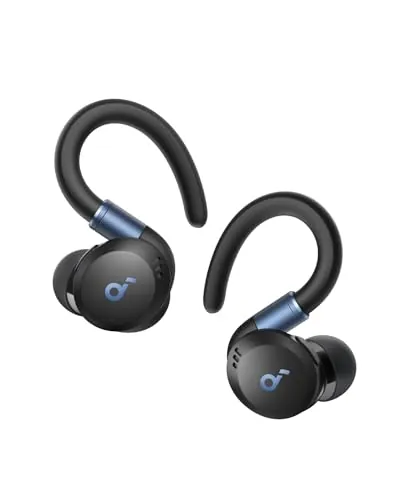
Comparison
Soundcore Space A40 and Soundcore Sport X20 are both ANC true-wireless earbuds, but they’re built for different priorities. Space A40 leans toward portable everyday listening with LDAC support and a very strong battery/value profile, while Sport X20 is the more workout-ready choice with adjustable ear hooks and IP68 protection. Overall scores slightly favor Sport X20, but the “winner” depends heavily on whether you need a secure gym fit.
#1 Overall Winner
Contender
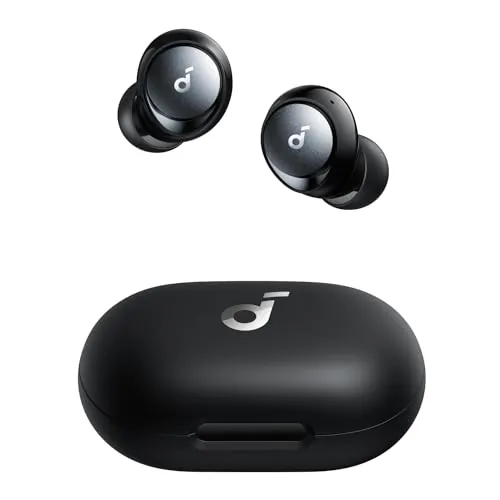
Pick Soundcore Space A40 if you want a compact everyday earbud with LDAC, strong ANC, top-tier battery/value scoring, and wireless charging.
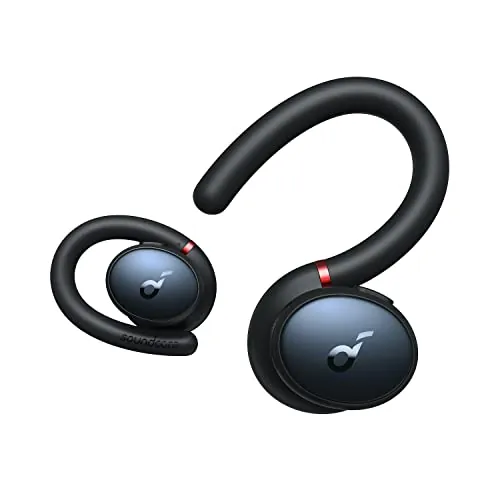
Pick Soundcore Sport X20 if you want a locked-in workout fit (adjustable hooks) plus IP68 durability for sweat, water, and dust.
Both are well-rated overall, but both have some reliability/charging-related complaints—test early within your return window.
Overall winner
Depends on your needs
| Metric | Soundcore Space A40 | Soundcore Sport X20 | Winner | Explanation |
|---|---|---|---|---|
| Overall score | 84 | 86 | Sport X20 | Sport X20 leads slightly overall in the provided scoring. |
| Best use case focus | Everyday + travel ANC earbuds | Workout / gym earbuds | Depends | Space A40 emphasizes portability and long listening; Sport X20 emphasizes stability and protection for sport. |
| Fit/security | In-ear; fit feedback is mixed | Adjustable ear hooks; secure fit praised | Sport X20 | Hooks plus strong review sentiment for staying in place make X20 better for movement-heavy use. |
| Noise cancelling approach | Adaptive ANC that auto-selects level | Manual + adaptive ANC for gym focus | Tie | Both are positioned as strong ANC earbuds; fit/seal will influence results. |
| Audio features | Double-layer diaphragm drivers; LDAC mode | 11mm dynamic drivers; BassUp | Space A40 | LDAC is explicitly listed on A40; X20 emphasizes bass enhancement but codec support isn’t stated. |
| Battery (rated) | Up to 10h / up to 50h total; fast charge | 12h average life; 48h total stated | Space A40 | A40 scores higher for battery life and includes a specific fast-charge claim. |
| Water/dust protection | “Waterproof” (no IP rating provided) | IP68 waterproof/sweatproof/dustproof | Sport X20 | X20 provides an explicit IP rating and sport-focused protection design details. |
| Bluetooth | 5.2; 15 m range listed | 5.3; 10 m range listed | Depends | X20 lists a newer Bluetooth version; A40 lists a longer range in the provided specs. |
| Portability | Very light; high portability score | Heavier with hooks; still portable | Space A40 | A40 is positioned as smaller/lighter and scores slightly higher for portability. |
| Durability score | 68 | 86 | Sport X20 | Sport X20 is the more rugged option per scoring and IP68 positioning. |
| Value score | 90 | 89 | Space A40 | Both score well for value; A40 is slightly higher in the provided scoring. |
In day-to-day performance, both earbuds score equally on performance (88 vs 88) and both are positioned as strong ANC options. The practical difference is that Sport X20’s hook fit tends to keep performance more consistent during movement: a stable seal helps maintain bass and noise cancelling while running or lifting.
Space A40 is more oriented to commuting and long listening, pairing its adaptive ANC with a lightweight design and LDAC mode for compatible devices. Sport X20 emphasizes focus in noisy gyms with its ANC and bass-forward tuning tools. If your earbuds often loosen during activity, Sport X20’s fit advantage can translate into better real-world consistency.
Speed scores are close (Space A40: 78; Sport X20: 75). In practical terms, both are described as easy to pair and quick to use. A Space A40 comparison review mentions touch response can be slightly slower than another model, while Sport X20 reviews highlight instant connection after initial pairing.
Neither product provides detailed latency specs in the supplied data, but one Space A40 review reports good movie-watching sync on a flight. If “speed” to you means quick controls and avoiding accidental inputs while adjusting fit, Sport X20’s physical button can feel more consistent during movement.
Sport X20 scores higher for reliability (68 vs 62), but both models have mixed reliability sentiment in the provided review summaries. Space A40’s aggregated feedback includes reports of earbuds stopping working, and the lower reliability score reflects that risk.
Sport X20 reviews mention charging issues for some users and occasional connectivity/static complaints. If you’re choosing primarily on reliability, Sport X20 looks slightly safer in the scoring, but it’s still worth thoroughly testing charging, ANC modes, and connection stability early for either model.
Usability scores are the same (81 vs 81), but they differ in day-to-day feel. Space A40 reviews highlight app-based customization, fit testing, and configurable touch controls. That’s helpful if you like tweaking, but it also means spending a bit more time in the app to get the best result.
Sport X20 gets praise for being easy to use during workouts thanks to a physical button (less accidental activation when adjusting fit). On the other hand, reviewers also mention wanting clearer charge/status visibility. If you value simple, tactile control while moving, Sport X20 has an edge; if you value personalization tools, Space A40 does.
Sport X20 clearly wins design for its intended purpose (design score 90 vs 79). The adjustable ear hooks (extendable and rotatable) are the defining design feature and are repeatedly praised for stability and comfort during training.
Space A40 focuses on being smaller and lighter, with an ergonomic shape intended for long sessions. The tradeoff is that some users report fit issues and potential falling out. If you want minimal, pocketable earbuds, Space A40’s design may suit you; if you want “set-and-forget” stability, Sport X20’s design is more purpose-driven.
Sport X20 leads on build quality score (80 vs 74) and is explicitly designed to handle sweat, water, and dust with IP68 protection and a sealed cavity/SweatGuard approach. Reviews also mention it holding up in dirty work environments.
Space A40 uses a lightweight, compact approach that prioritizes comfort and portability. While it’s listed as “waterproof,” the provided data does not include an IP rating. If your earbuds will see heavy sweat, dust, or rougher handling, Sport X20 is the more confidence-inspiring build based on the provided information.
Sport X20 is the durability winner by a wide margin in the provided scoring (86 vs 68). It also has an explicit IP68 waterproof/sweatproof/dustproof rating and a design intended to protect internals from sweat and debris.
Space A40 is listed as “waterproof,” but without an IP rating in the provided data, and its durability score is lower. For heavy sweat, outdoor training, dusty job sites, or frequent exposure to water, Sport X20 is the more appropriate choice based on the supplied information.
Space A40 wins portability (91 vs 89) and is explicitly positioned as smaller and very lightweight. If you want pocket-friendly earbuds for commuting, travel, and long wear, that design focus matters.
Sport X20 is still portable but has a sport-first form factor with ear hooks and a heavier listed weight. It’s easier to keep secure during movement, but it may be less “minimal” for slipping into a pocket and forgetting it’s there.
Space A40 stands out for features tied to everyday convenience and audio: LDAC, multipoint (listed), wireless charging, fast charging, and deep app customization (EQ profiles and a hearing test are referenced in reviews). It also highlights adaptive ANC that automatically selects an appropriate level.
Sport X20 is more specialized: adjustable hooks (rotation and extension), IP68 protection with SweatGuard, and BassUp for bass emphasis. It also notes manual adjustment plus adaptive ANC. If you want “gym-first” features, X20 is more purpose-built; if you want “daily-driver” features (like LDAC and multipoint), A40 is better specified in the provided data.
Space A40 has a slightly higher app experience score (83 vs 80) and reviews go into detail about app strengths: customizable EQ presets, multiple profiles, a hearing test that generates a personalized sound curve, and a fit test to improve sealing for ANC.
Sport X20 also receives positive app feedback (EQ customization and firmware status noted), but fewer specifics are provided in the supplied data. If you’re the type of user who wants to fine-tune sound and controls, Space A40 has the clearer advantage.
Smart features scores are the same (72 vs 72). Both rely on the Soundcore ecosystem for customization and updates, and both support ANC modes. Space A40 emphasizes adaptive ANC and personalization (including hearing-test tuning referenced in reviews). Sport X20 emphasizes sport-friendly modes (including wind noise cancellation referenced in a review) and gym-focused ANC adjustments.
Both models are described as easy to set up, with Space A40 scoring slightly higher for setup (88 vs 86). Space A40 reviews mention a straightforward pairing process (with a small first-use step of removing stickers on charging contacts) and quick app onboarding for personalization.
Sport X20 reviews describe first pairing as easy and then quick auto-connection when removed from the case. If you want the most guided tuning experience after setup (fit test + hearing test), Space A40 offers more depth; if you want “pair once and go,” Sport X20 reviews suggest it behaves as expected.
Both earbuds are broadly compatible with common Bluetooth devices, but they differ in what’s explicitly stated. Space A40 lists compatibility with devices supporting Bluetooth 5.2 and a USB-C port (for charging). Sport X20 lists compatibility with cellphones, desktops, laptops, and tablets.
Space A40 also calls out LDAC in the details, which matters most to Android users with LDAC-capable devices. If you specifically want LDAC, Space A40 is the only one in this pair that explicitly supports it in the provided data.
Audio quality is strong on both: Space A40 scores slightly higher for audio (89 vs 88) and includes details like double-layer diaphragm drivers and LDAC for Hi-Res wireless audio. Reviews describe strong bass, clear mids, and bright treble, plus extensive EQ personalization through the app.
Sport X20 is tuned for motivation and impact, featuring 11mm dynamic drivers and BassUp. Reviews frequently call out great sound and strong bass, and also praise ANC performance in noisy environments. If you want the most clearly specified “audiophile-ish” feature (LDAC), Space A40 is the better match; if you want workout punch and a secure seal, Sport X20 often delivers that experience.
Space A40 lists Bluetooth 5.2 with a 15 m range and also lists multipoint connection as a feature, which can be valuable for switching between a phone and laptop. Reviews generally describe easy pairing and stable everyday use, but reliability is mixed in longer-term sentiment.
Sport X20 lists Bluetooth 5.3 with a 10 m range. Some reviews report connection/static issues, while others describe fast, instant reconnection after first pairing. If multipoint is important, Space A40 is the safer choice based on the provided feature list.
Space A40 is the stronger battery pick on the provided scores (87 vs 84) and claims 10 hours per charge and 50 hours total with the case, plus a clear fast-charge claim (about 4 hours from 10 minutes). Many reviews praise battery life and quick recharging.
Sport X20 claims 48 hours total playtime and lists 12 hours average life, but review feedback is more mixed. One review specifically notes reduced runtime when using ANC/transparency. If you regularly use ANC and want more predictable long-session performance, Space A40 has the advantage in the provided data.
Power efficiency is close (Sport X20: 78; Space A40: 77). With the data provided, the most practical takeaway is that both aim for long battery coverage, but real-world battery can vary by mode—Sport X20 has at least one review calling out shorter runtime with ANC/transparency. Space A40’s fast-charge claim is clearly stated, which can reduce downtime even if you run low.
Both are positioned as strong values, with very high value scores (Space A40: 90; Sport X20: 89) and many reviews for each describing them as worth the money. Space A40’s value proposition is strongest if you’ll use its LDAC, compact design, wireless charging, and long battery claims.
Sport X20’s value is strongest if you’ll take advantage of its IP68 durability and secure hook fit, which can prevent the common workout problem of earbuds loosening or falling out. In other words: Space A40 is value through features per dollar; Sport X20 is value through sport-specific practicality.
Both products come from Soundcore (Anker) and have similar brand trust scores (Space A40: 82; Sport X20: 84). Review content for Space A40 includes examples of responsive support and replacements/refunds in at least one customer story, which can build confidence.
That said, support experiences can vary by region and logistics (also mentioned in a Space A40 long-term review). With the data provided, neither product has a decisive brand-trust gap, but Sport X20 scores slightly higher.
Customer satisfaction is very close: Space A40 has a score of 84 with 23,600 reviews and Sport X20 has a score of 85 with 13,299 reviews; both average 4.2/5 stars. Space A40 customers frequently praise sound, ANC, battery life, comfort, and value, while commonly noting mixed fit and some reliability issues.
Sport X20 customers frequently praise secure fit, comfort, ANC, and sound, while mentioning mixed battery/reliability and some charging/connection concerns. Overall, satisfaction is comparable; the deciding factor is whether you need the sport-specific fit and protection.
Warranty/support scores favor Space A40 (71 vs 55) based on the provided scoring. The supplied review content for Space A40 includes at least one detailed example of support proactively helping with a replacement/refund process. For Sport X20, the provided data doesn’t include specific warranty terms, and reviews focus more on product use than on support outcomes.
If you want one recommendation that fits the widest range of fitness-first needs, Soundcore Sport X20 is the best overall pick here by score (86 vs 84) and by real-world practicality: the adjustable hooks and IP68 durability reduce the two biggest workout earbud headaches—fit slipping and sweat/dust exposure.
That said, Soundcore Space A40 remains the smarter choice for many everyday listeners. It’s more travel-friendly, scores higher for audio quality and battery life, and it’s the only model in this comparison that explicitly offers LDAC plus listed multipoint. If you don’t need hooks and prioritize small size, customization, and long listening sessions, Space A40 can be the better match.
Overall winner
Depends on your needs
Based on the provided scores, Soundcore Sport X20 edges overall (86 vs 84). The gap is small, and the better choice depends on your use case: Space A40 scores especially well for audio quality, battery life, portability, and value, while Sport X20 stands out more for design, build quality, and durability (including its sport-focused fit).
Soundcore Sport X20 is the safer pick for workouts thanks to its rotatable and extendable ear hooks, which reviewers frequently praise for staying in place. It also has an IP68 sweat/water/dustproof focus and a sealed design intended to protect internal components during intense training—advantages that matter more in the gym than small differences in codec support.
Both models emphasize ANC, and both receive strong performance scores. Space A40 highlights an adaptive noise cancelling system that automatically adjusts for your surroundings, while Sport X20 is positioned for loud gyms with manual adjustment and adaptive ANC. Reviews for both mention effective ANC, but your seal/fit will strongly influence results.
It’s close: Space A40 has a slightly higher audio quality score (89 vs 88) and includes double-layer diaphragm drivers plus LDAC for Hi-Res wireless on compatible devices. Sport X20 leans into a punchier presentation with 11mm dynamic drivers and BassUp. If you want LDAC and tuning flexibility, Space A40 is the clearer fit.
Space A40 rates higher for battery life in the score data and lists up to 10 hours per charge and up to 50 hours with the case, plus fast charging (about 4 hours from 10 minutes). Sport X20 lists 48 hours total playtime and 12 hours average life, but reviews mention that runtime can drop when ANC/transparency is enabled.
Space A40 is positioned as a smaller, lightweight earbud designed for comfort, and many reviewers mention wearing them for long periods. Sport X20 also gets positive comfort feedback, especially for a hook-style design, with reviewers noting the hooks are soft and stable. If you dislike hooks, Space A40 is the simpler everyday wear.
Neither is a clear winner for everyone. Space A40’s reliability score is lower, and the aggregated review summary mentions some reports of earbuds stopping working. Sport X20 scores higher for reliability, but reviews still note mixed reliability and some charging/connection complaints. If reliability is your top priority, reviewing return/warranty terms and testing early is especially important for either model.
Soundcore Space A40 is generally the better travel pick thanks to its high portability score, compact/lightweight positioning, long rated battery life, and wireless charging. Sport X20 can still work for commuting (it has ANC and long playtime claims), but its hook design is more specialized for exercise and may be less convenient for pocketable everyday carry.
Yes. Both product pages and reviews reference the Soundcore app as an important part of the experience, including EQ customization and settings adjustments. Space A40 reviews specifically mention features like a hearing test and multiple EQ profiles, while Sport X20 reviews mention EQ settings and firmware status through the app. Exact app feature parity isn’t fully detailed in the provided data.
Check our rankings and expert guides to find the best electronics products for your goals.