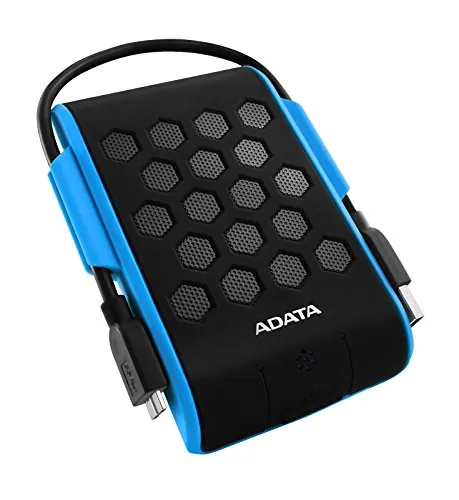
#1 Overall Winner
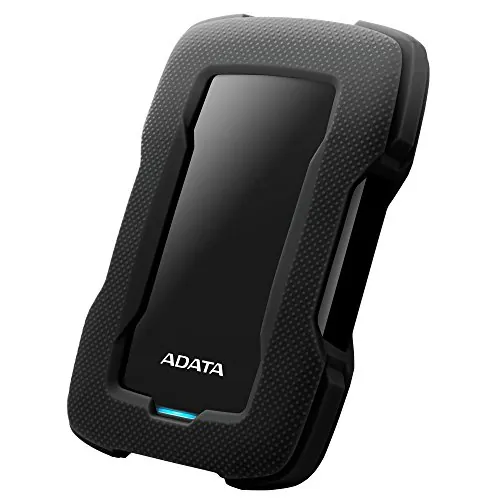
ADATA HD330 4TB USB 3.1 Shock-Resistant Extra Slim External Hard Drive
- 4TB portable storage capacity in a slim 2.5-inch form factor.
Comparison
The ADATA HD330 and HD710 Pro are both 4TB portable mechanical hard drives built for backup and file transport. The HD710 Pro is the stronger all-round choice for demanding travel because of its IP68-rated rugged protection, while the HD330 suits buyers who want a slimmer drive with AES 256-bit encryption software.
#1 Overall Winner
Contender
Choose the HD710 Pro for frequent travel, tougher environments, cable organization, and broader stated operating-system compatibility. Choose the HD330 for a slimmer 4TB drive with AES 256-bit encryption software and a stronger reliability score. Neither is intended to deliver SSD-level transfer performance.
Overall winner
Depends on your needs
| Feature | ADATA HD330 4TB USB 3.1 Shock-Resistant Extra Slim External Hard Drive | ADATA HD710 Pro 4TB External Hard Drive | Winner |
|---|---|---|---|
Overall comparison |
Higher performance-oriented balance |
Higher overall score |
ADATA HD710 Pro 4TB External Hard Drive |
Storage capacity |
4TB |
4TB |
Tie |
Read speed |
90MB/s listed |
90MB/s listed |
Tie |
Physical protection |
Silicone casing and shock sensors |
IP68, dustproof, and drop-test certified |
ADATA HD710 Pro 4TB External Hard Drive |
Encryption |
HDDtoGO with AES 256-bit encryption |
Not specified |
ADATA HD330 4TB USB 3.1 Shock-Resistant Extra Slim External Hard Drive |
Compatibility |
PC-focused listing |
Mac, PC, and Linux listed |
ADATA HD710 Pro 4TB External Hard Drive |
Setup |
Simple plug-in feedback |
Higher setup score; easy format feedback |
ADATA HD710 Pro 4TB External Hard Drive |
Portability |
Slim design |
Cable management and higher portability score |
ADATA HD710 Pro 4TB External Hard Drive |
Design |
Higher design score |
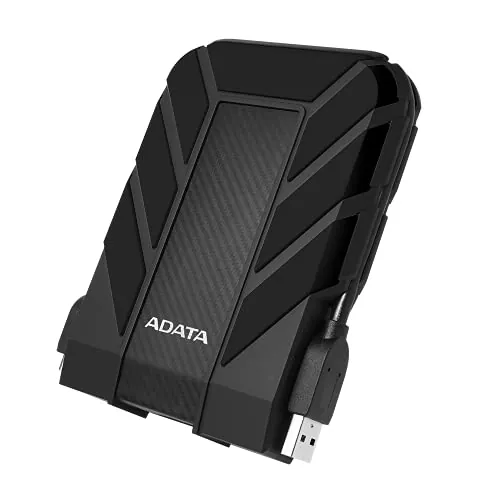
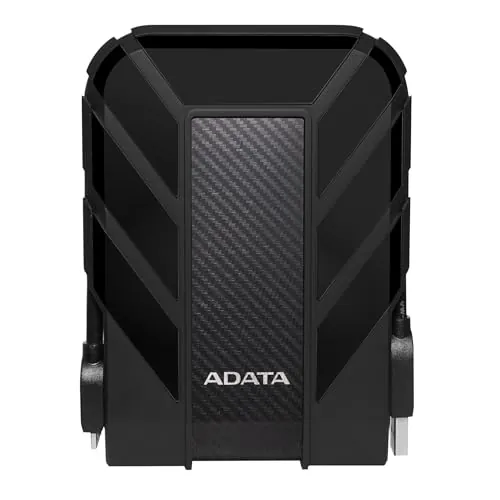
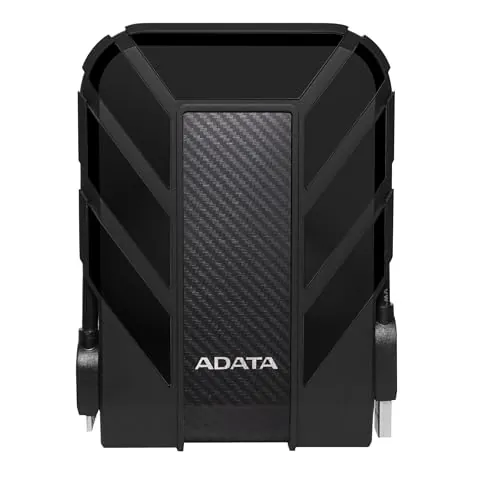
Rugged cable-wrap design |
ADATA HD330 4TB USB 3.1 Shock-Resistant Extra Slim External Hard Drive |
Reliability feedback |
Higher reliability score |
Mixed failure and connection feedback |
ADATA HD330 4TB USB 3.1 Shock-Resistant Extra Slim External Hard Drive |
Customer satisfaction |
4.7/5 from 4,270 reviews |
4.6/5 from 29,610 reviews |
Depends |
Warranty information |
Not provided |
Three-year limited warranty |
ADATA HD710 Pro 4TB External Hard Drive |
Both drives are mechanical external HDDs with a listed 90MB/s read speed, making them suitable for backup, archiving, and ordinary file transport rather than SSD-like high-speed workloads. The HD330 has the higher performance score, while the HD710 Pro’s user feedback is more variable: some users report good USB 3.0 transfer performance, but others note slow results when moving large or frequently changing collections of files. File size, fragmentation, and the source drive can influence transfer results.
On the supplied figures, both drives list 90MB/s read speed. The HD330 has a slightly higher speed score, giving it a narrow advantage in the scoring data. The HD710 Pro can perform well over USB 3.0 according to some reviews, but performance is not consistently described: large contiguous files may transfer more efficiently than many older, fragmented small files. Neither drive is the best fit for users who frequently move very large files and expect SSD-class responsiveness.
The HD330 has the higher reliability score and generally positive feedback about working well, though its review sample includes an Apple access problem. The HD710 Pro has many reports of dependable use, including long-term backup use, but aggregated feedback is mixed because some customers report failed drives or weak and faulty connections. For important files, the practical conclusion is the same for both: maintain redundant copies rather than relying on one external HDD.
Both drives are intended for simple external storage use, and reviews for each mention plug-in convenience. The HD710 Pro has the higher usability score and adds a cable-management design that can reduce clutter and the chance of misplacing the cable. However, some reviews mention connector concerns. The HD330 is also described as easy to install, but its compatibility score is lower and an Apple access complaint suggests that some users may need to address permissions or formatting.
The HD330 has the higher design score and is aimed at a slim, simple portable profile. Its 4TB version is listed at 24mm thick, while lower-capacity versions are thinner. The HD710 Pro takes a more utilitarian rugged approach: its design incorporates a protective shell and cable management for transport. Choose the HD330 for a slimmer-looking drive or the HD710 Pro for a more protective travel-oriented layout.
The HD710 Pro wins on build quality. Its triple-layer rugged construction, IP68 protection claims, and higher build-quality score support its role as the tougher drive. The HD330 is still well equipped for normal portable use with a rubber-plastic enclosure, silicone casing, and shock sensors, but it does not have the same stated resistance to water and dust.
The HD710 Pro is the clear durability leader. It is specified as waterproof and dustproof to IP68 and as meeting or exceeding MIL-STD-810G 516.6 1.5-meter drop-test specifications. The HD330 offers useful shock protection through its silicone casing and sensors, and it has a solid durability score, but it is not presented as an all-weather rugged drive. Choose the HD710 Pro when water, dust, and accidental drops are realistic risks.
The HD710 Pro leads on portability scoring, helped by its integrated cable management and rugged protection for carrying in bags. The HD330 remains a portable option with a slim design emphasis and a listed 315.6g weight, but its 4TB configuration is thicker than its lower-capacity variants. Choose based on how the drive will travel: HD710 Pro for protection and cable organization, HD330 for a less rugged, slim-oriented form factor.
The HD330’s feature advantage is centered on security and shock protection: it includes HDDtoGO software with AES 256-bit encryption, a silicone casing, and proprietary shock sensors. The HD710 Pro focuses more on external resilience, offering IP68 water and dust protection, stated military-grade drop resistance, triple-layer construction, integrated cable storage, and a stated three-year limited warranty. Select the HD330 for encryption software; select the HD710 Pro for more complete environmental protection.
The HD330 has the more clearly defined software proposition because HDDtoGO with AES 256-bit encryption is included in the supplied description. The HD710 Pro’s review material references an optional downloadable app for automated backup processing, but its app experience is not a central strength in the score data. Buyers who specifically need encryption software have a clearer reason to consider the HD330; users who do not need companion software may find either drive adequate for basic file storage.
Setup should be straightforward for both drives, with plug-in installation and positive ease-of-use feedback. The HD710 Pro has the higher setup score, and reviews describe it as easy to format and partition. Still, formatting may be needed to suit a particular Mac, iOS, or cross-platform workflow. The HD330 is also reported as easy to install, but its Apple-related access complaint means PC and macOS users should verify the drive’s initial format and permissions.
The HD710 Pro has the stronger compatibility position because its supplied details explicitly list Mac, PC, and Linux. The HD330 is described as compatible with most laptop and desktop PCs, and its compatibility score is substantially lower. Formatting remains important regardless of the model: one HD710 Pro review notes that FAT32 formatting was needed for iOS use, while an HD330 review reports an Apple access issue. Check the file system and host-device support before purchase.
Both models use USB connectivity and reference USB 3.1, with USB 3.0 hardware connectivity also listed. The HD710 Pro has broader stated platform support for Mac, PC, and Linux, while the HD330 is primarily described as compatible with laptop and desktop PCs. Connectivity is a caution point for both: the HD330 has a lower connectivity score, and HD710 Pro reviews are mixed on the cable and connector. Confirm the port and file-system requirements of the intended host device.
Both products are portable mechanical hard drives, and the supplied data does not provide detailed power-consumption or standby measurements. The HD330 has a modestly higher power-efficiency score, but this is not enough to establish a meaningful real-world difference without workload-specific testing. Buyers concerned about host-device battery drain should consider that both are USB-powered hard drives and assess their own laptop or tablet connection needs.
The HD710 Pro has the higher value score because its package combines 4TB capacity with extensive stated environmental protection, cable management, broad listed compatibility, a three-year limited warranty, and strong customer satisfaction. The HD330 still offers compelling value for buyers who want encryption software, shock protection, and a slimmer design. Value should not be decided by price alone: the relevant question is whether the HD710 Pro’s rugged protection or the HD330’s encryption-focused feature set better matches the intended use.
Both products come from ADATA, so this comparison does not involve a brand-versus-brand decision. The HD710 Pro has the higher brand-trust score and a much larger review base, as well as a stated three-year limited warranty. The HD330 also has strong customer feedback and a slightly higher star rating. Confidence should ultimately be based on the specific model’s compatibility, protection requirements, and the need to keep redundant backups.
Both drives have strong customer response. The HD330 is rated 4.7/5 from 4,270 reviews and receives positive comments about solid hardware, advertised capacity, and plug-in installation. The HD710 Pro is rated 4.6/5 from 29,610 reviews and has the higher customer-satisfaction score; repeated positives include durability, capacity, value, and easy use. The HD710 Pro’s larger review base also contains clearer recurring concerns about cable connections and occasional failures.
The HD710 Pro has the clearer support information because it is explicitly backed by a three-year limited warranty. Its review material also includes a report that ADATA responded to critical feedback with warranty replacement offers, although that is a reviewer’s account rather than a universal guarantee. No equivalent warranty term is supplied for the HD330, so buyers should check the current listing and regional terms before ordering.
The ADATA HD710 Pro is the better overall 4TB external hard drive in this comparison. It earns the higher overall score and is notably stronger for durability, build quality, portability, setup, value, and customer satisfaction. Its IP68 water and dust protection, drop-test certification, and cable-management design make it the more suitable choice for users who carry backups between school, work, home, and travel locations.
The ADATA HD330 is still the better choice for a narrower buyer profile. It has higher feature, design, performance, speed, and reliability scores, and its HDDtoGO AES 256-bit encryption gives it a practical advantage for security-conscious PC users. Pick the HD330 for a slimmer, encryption-focused backup drive; pick the HD710 Pro for substantially more robust physical protection. In either case, expect mechanical-HDD rather than SSD-class transfer speeds and keep duplicate copies of important files.

Overall winner
Depends on your needs
The HD710 Pro is the overall higher-scoring option, mainly because it is stronger for durability, portability, usability, value, and customer satisfaction. Its IP68 water and dust protection and stated drop-test certification make it the more protective travel drive. The HD330 remains a sensible alternative for buyers who prefer its slimmer approach, encryption software, and slightly stronger performance-related scores.
The HD710 Pro is the better choice for durability. It is specified with IP68 waterproof and dustproof protection, triple-layer construction, and MIL-STD-810G 516.6 drop-test certification. The HD330 also targets protection through a silicone casing and shock sensors, but it does not provide the same stated water- and dust-resistance credentials.
Both are portable 2.5-inch external drives, but the better answer depends on the type of portability needed. The HD330 emphasizes a slim design, although the 4TB version is listed at 24mm thick. The HD710 Pro scores higher for portability and adds cable management, which can make it more convenient to pack for regular travel.
Both supplied listings state a 90MB/s read speed, so neither should be treated as an SSD replacement for demanding transfer workloads. The HD330 has a marginally higher speed score. For the HD710 Pro, reviews note that transfer results can vary with file size, file fragmentation, and the source drive, while some users describe it as slow for frequent large transfers.
The HD710 Pro is the clearer starting point because its listing explicitly includes Mac compatibility alongside PC and Linux. However, formatting still matters: one review says iOS use required formatting the drive as FAT32 through Windows. The HD330’s supplied data focuses on PC compatibility, and one reviewer reported Apple access problems. Confirm the required file system before transferring important files.
The HD330 has the clearer stated security feature because it includes HDDtoGO software with AES 256-bit encryption. The supplied HD710 Pro information focuses instead on physical protection from water, dust, and drops. Buyers who need encryption should verify software and operating-system compatibility before purchase, particularly when using a Mac or a device outside the listed PC focus.
Both can handle backup storage, and both have positive feedback for basic file storage and easy setup. Choose the HD710 Pro if the backup drive will travel, be carried in a bag, or face dirt, moisture, or accidental drops. Choose the HD330 if a slimmer drive and its encryption software better fit a routine PC backup workflow. Neither drive should be the only copy of important data.
The HD330 has the higher reliability score, although its review sample includes an Apple access complaint. The HD710 Pro has many positive reports of long-term use and durable construction, but its aggregated feedback is mixed on reliability and cable connections, with some reported failures. As with any mechanical hard drive, maintaining separate backups remains important.
Check our rankings and expert guides to find the best electronics products for your goals.