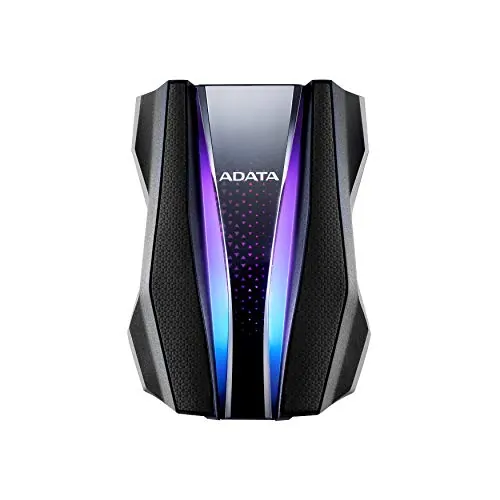
#1 Overall Winner
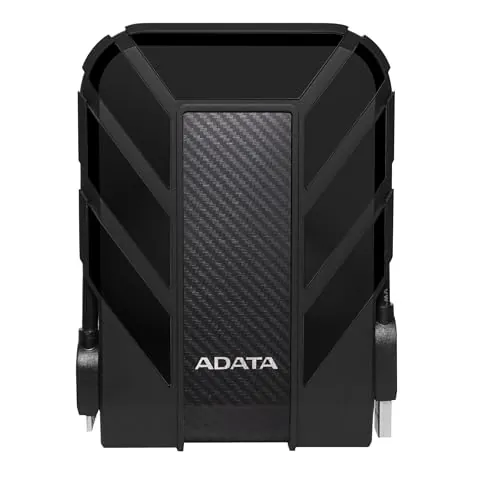
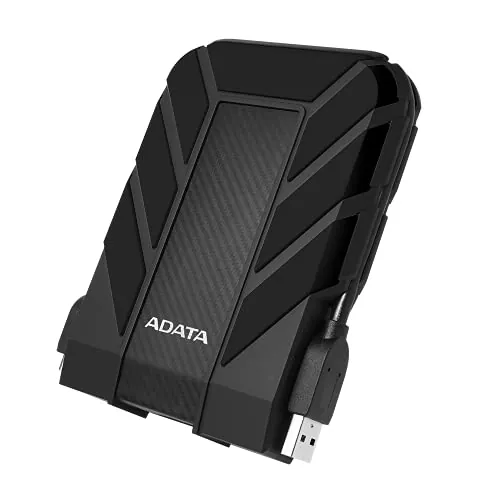
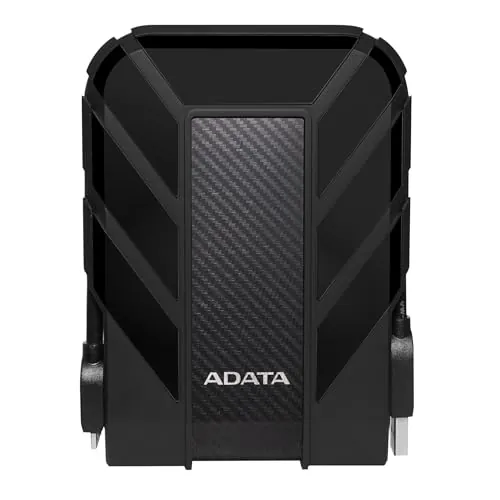
ADATA HD710 Pro 2TB
- IP68-rated waterproof and dustproof protection.
Comparison
The ADATA HD710 Pro and ADATA HD720 are 2TB rugged external hard drives designed for portable backup and file transport. Their overall scores are tied, but the HD710 Pro leads on durability and value, while the HD720 scores better for features, connectivity, compatibility and reliability.
#1 Overall Winner
Contender
Choose the ADATA HD710 Pro for the higher durability and value scores, IP68 protection, cable management and stated warranty. Choose the ADATA HD720 if you prefer the stronger usability, connectivity and compatibility scores, a slimmer listed case, and its stated 2 m water and 1.8 m drop protection figures.
Overall winner
Depends on your needs
| Feature | ADATA HD710 Pro 2TB | ADATA HD720 2TB | Winner |
|---|---|---|---|
| Overall assessment | Overall score: 84 | Overall score: 84 | Tie |
| Capacity | 2TB | 2TB | Tie |
| Drive type | Mechanical HDD, 5,400 RPM listed | Portable external hard drive | Depends |
| Performance | Performance score: 74 | Performance score: 76 | ADATA HD720 2TB |
| Speed | Speed score: 72; 90 MB/s read listed | Speed score: 72; 60 MB/s media speed listed | Tie |
| Water and dust protection | IP68 | IPX8; IP6X | Depends |
| Drop protection | 1.5 m MIL-STD-810G 516.6 | 1.8 m MIL-STD-810G 516.6 | ADATA HD720 2TB |
| Durability | Durability score: 95 | Durability score: 89 | ADATA HD710 Pro 2TB |
| Connectivity | Connectivity score: 66; USB 3.0/3.1 stated | Connectivity score: 82; USB 3.0 and USB 2.0 stated | ADATA HD720 2TB |
| Compatibility | Compatibility score: 82; Mac, PC, Linux | Compatibility score: 87; Windows, Mac, Linux | ADATA HD720 2TB |
| Portability | 270 g; 5.2 x 3.8 x 1.01 in | 8 oz; 5.1 x 3.85 x 0.8 in | Depends |
| Reliability | Reliability score: 67 | Reliability score: 82 | ADATA HD720 2TB |
| Value | Value score: 86 | Value score: 82 | ADATA HD710 Pro 2TB |
| Warranty | 3-year limited warranty stated | Not provided | ADATA HD710 Pro 2TB |
The HD720 has a slightly higher performance score, while both products share the same speed score. The HD710 Pro lists a 90 MB/s read speed and the HD720 lists 60 MB/s media speed, but these listing figures are not directly equivalent enough to establish a definitive real-world transfer winner. Both are mechanical hard drives, so large-file copies, many small files and the source drive can affect results. Neither is positioned as an SSD alternative for maximum throughput.
The drives are tied on speed score. The HD710 Pro lists 90 MB/s read and media speeds, while the HD720 lists a 60 MB/s media speed; differences in terminology prevent a precise like-for-like conclusion. A HD710 Pro review also notes that transfer speed can vary widely with file size and file fragmentation. In practical terms, both are mechanical HDDs suited to routine backup and storage rather than the responsiveness expected from a portable SSD.
The HD720 has the stronger reliability score, but the evidence is not entirely one-sided. Its supplied reviews include long-term positive feedback but also one serious report of clicking, bad sectors, slow retrieval and possible data corruption. The HD710 Pro has mixed reliability feedback too, including reports of failures and weak or faulty connections, alongside a review describing nearly two years of trouble-free use. Maintain redundant backups with either drive.
The HD720 has the higher usability score, supported by reviews describing seamless transfer and easy use. The HD710 Pro also performs strongly here: users report simple plug-in setup, straightforward formatting and partitioning, and convenient cable storage. However, some HD710 Pro feedback says its connector can be hard to insert, particularly for users with limited hand dexterity. Both are practical for basic backup without a demanding learning curve.
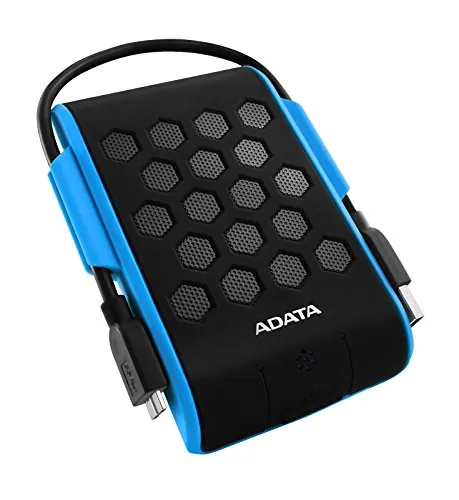
The HD720 has the higher design score and a sporty, silicone-covered design with a carbon-fiber-like pattern. It is also listed as thinner and lighter. The HD710 Pro has a more utilitarian rugged design, with the practical advantage of integrated cable management. Buyers who prefer a slimmer, lighter profile may favour the HD720; buyers who prioritise securing the cable during travel may prefer the HD710 Pro.
Both drives have high build-quality scores, with a slight lead for the HD720. The HD710 Pro uses a stated triple-layered rugged construction and is designed around IP68 protection. The HD720 uses a high-end silicone case with a carbon-fiber-like pattern and also claims water, dust and shock resistance. The HD720's score advantage supports its hardware presentation, while the HD710 Pro's higher durability score better reflects its resilience-focused positioning.
The HD710 Pro wins on durability score, with IP68 protection, triple-layer construction and stated 1.5 m MIL-STD-810G 516.6 drop-test compliance. The HD720 remains highly rugged on paper, with IPX8 and IP6X protection plus a stated 1.8 m drop test. The HD720's individual water-depth and drop-distance claims may appeal to certain outdoor users, but the supplied scoring gives the HD710 Pro the stronger overall durability assessment.
The HD710 Pro has the higher portability score and its cable-management design reduces the chance of misplacing the cable. The HD720 is physically slimmer and listed as lighter, which can make it easier to pack. The HD710 Pro measures 5.2 by 3.8 by 1.01 inches and weighs 270 g; the HD720 measures 5.1 by 3.85 by 0.8 inches and weighs 8 ounces. The best choice depends on whether cable organisation or a thinner body matters more.
The HD720 leads on feature score. Its listing specifically details IPX8 water protection to 2 m for 120 minutes, IP6X dust protection, a 1.8 m drop test, a silicone case and USB 2.0 compatibility. The HD710 Pro counters with an IP68 rating, triple-layer construction, cable management and a stated 3-year limited warranty. The HD720 has the broader protection detail, while the HD710 Pro has a more complete ownership detail in the supplied data.
The HD710 Pro has optional downloadable backup software mentioned in a review, but the reviewer notes it is not required for ordinary file copying. No comparable companion-app information is provided for the HD720. Neither drive is presented as a smart or app-dependent storage device, so standard operating-system file management is the relevant experience for most users.
Setup scores are very close, with a slight lead for the HD710 Pro. Reviews describe the HD710 Pro as plug-in ready and easy to format or partition; the HD720 is similarly described as easy to use and seamless for transfers. For either drive, confirm the file system if you plan to use it across multiple operating systems or with devices outside the stated computer compatibility list.
The HD720 has the higher compatibility score and explicitly lists Windows XP through 8.1, Mac OS X 10.6 or later, and Linux Kernel 2.6 or later. The HD710 Pro also lists Mac, PC and Linux support, giving it broad platform coverage. One HD710 Pro review notes that formatting may be needed for use with iOS devices; iOS support is not otherwise specified in the product data. Check your device and file-system requirements before buying.
The HD720 has a clear connectivity-score advantage and explicitly supports USB 3.0 and USB 2.0. The HD710 Pro is described as USB 3.1/USB 3.0, but its review summary includes mixed cable and connection feedback. Both use USB for data transfer, and both have a stated 5 Gbps interface rate in the supplied data. For older USB 2.0 compatibility and the stronger connectivity score, the HD720 is the safer choice.
The HD720 has the higher power-efficiency score. Neither listing provides detailed power-consumption or standby measurements, so this comparison should not be treated as a battery-runtime claim. Both are USB-connected portable hard drives, and their mechanical-drive design means power use and transfer behaviour can depend on the host device and workload.
The HD710 Pro has the higher value score, supported by its high durability and customer-satisfaction scores, cable-management design and stated 3-year limited warranty. The HD720 is also a compelling value candidate because it has stronger feature, usability, connectivity and compatibility scores, as well as detailed water and shock claims. A lower listed price alone should not decide the choice; select the protection and support details that suit your intended storage role.
Both products are made by ADATA and have identical brand-trust scores, so the supplied data does not show a brand-confidence advantage. Both also have many positive reviews describing durable construction and straightforward backup use. The HD710 Pro provides a stated 3-year limited warranty, while warranty information is not supplied for the HD720. That difference may matter when evaluating ownership confidence.
The HD710 Pro has a slightly higher customer-satisfaction score and substantially more supplied review volume: 29,610 reviews at 4.6/5 versus the HD720's 2,912 reviews at 4.7/5. HD710 Pro reviewers commonly praise durability, capacity, transfer performance and ease of use, though mixed reliability and cable feedback appears. HD720 reviews praise its case, ease of use and long-term operation, but one supplied review reports a serious drive failure.
The HD710 Pro is the only product with stated warranty coverage in the supplied data: a 3-year limited warranty. One review also describes the company responding to critical feedback with warranty replacement offers, although individual support outcomes can vary. No warranty, return or support-policy details are supplied for the HD720, so buyers should verify current coverage with the seller before purchase.
The ADATA HD710 Pro is the best overall choice for buyers who treat ruggedness, portable organisation, value and warranty coverage as the main priorities. It ties the HD720 on overall score but earns a substantial durability advantage, and its stated 3-year limited warranty gives it a practical ownership benefit. Its IP68 protection and cable-management design reinforce its role as a travel-friendly backup drive.
The ADATA HD720 remains an equally credible alternative and may be the better match for some users. It has higher scores for features, usability, build quality, connectivity, compatibility and reliability, is listed as thinner and lighter, and provides more detailed water and drop-protection figures. Both remain mechanical drives with moderate speed expectations, and both have some reliability-related review caution. For important archives, choose the model that best fits your connection and protection needs, then keep a separate backup elsewhere.

Overall winner
Depends on your needs
Both products have the same overall score, so there is no single winner for every buyer. The HD710 Pro is the stronger choice for its higher durability, portability, value and customer-satisfaction scores, plus its stated 3-year limited warranty. The HD720 leads in features, usability, connectivity, compatibility and reliability scores.
The HD710 Pro has the higher durability score and carries IP68 water and dust protection with a stated 1.5 m drop-test standard. The HD720 specifies IPX8 water protection for up to 2 m for 120 minutes, IP6X dust protection and a stated 1.8 m drop test. Choose based on the protection detail most relevant to your use.
The HD710 Pro has the higher portability score and includes cable management built into its casing. However, the HD720 is listed as thinner at 0.8 inches versus 1.01 inches and lighter at 8 ounces versus 270 g. The HD720 may suit buyers focused on physical slimness, while the HD710 Pro has the stronger portability assessment overall.
The two drives have the same speed score, so the supplied scoring does not establish a clear speed winner. The HD710 Pro lists 90 MB/s read and media speed, while the HD720 lists 60 MB/s media speed. Both are mechanical hard drives, and transfer results can vary with file size, source-drive condition and the connected USB port.
Yes, both listings state compatibility beyond Windows. The HD710 Pro lists PC, Mac and Linux support. The HD720 explicitly lists Mac OS X 10.6 or later and Linux Kernel 2.6 or later, alongside several Windows versions. Formatting can matter: one HD710 Pro review notes formatting the drive on Windows to FAT32 before use with iOS.
The HD720 is the slightly stronger beginner option based on its higher usability score and similarly high setup score. Reviews describe seamless transfer and straightforward use. The HD710 Pro is also easy to set up, with one review describing plug-in use, and it has a marginally higher setup score. Either can work well for basic backup tasks.
The HD720 has the higher reliability score, but neither product is free from cautionary feedback. The HD710 Pro has mixed reports involving failures and cable connections. The HD720 has a supplied report of clicking, bad sectors, slow access and possible data corruption. Important files should be kept in more than one location regardless of the drive chosen.
The HD710 Pro has the higher value score. Its rugged rating, cable-management design, broad stated compatibility and 3-year limited warranty support that result. The HD720 remains competitive because it has stronger feature and connectivity scores, a slimmer listed design and detailed water-protection claims. Value depends on whether warranty and durability or the HD720's feature balance matters more.
Check our rankings and expert guides to find the best electronics products for your goals.