#1 Overall Winner
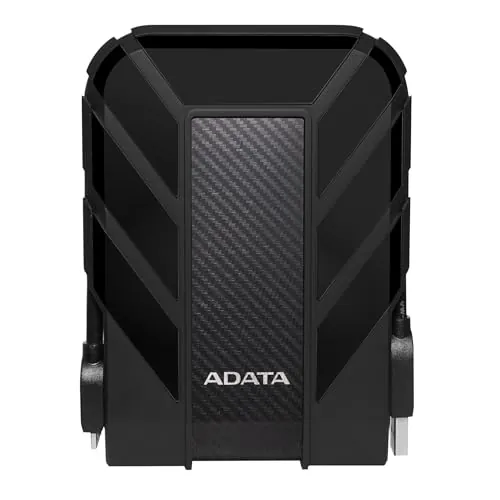
ADATA HD710 Pro 1TB
- IP68-rated waterproof and dustproof construction.
Comparison
The ADATA HD710 Pro 1TB and ADATA HD720 2TB are rugged portable mechanical hard drives built for backup and transport away from a desk. The HD710 Pro is the stronger pick for its higher listed read speed, IP68 rating, and higher durability score, while the HD720 suits buyers who need 2TB, a lighter listed design, and stronger usability and feature scores.
#1 Overall Winner
Contender
Choose the ADATA HD710 Pro 1TB for IP68 protection, a higher listed read speed, and the stronger durability score. Choose the ADATA HD720 2TB if you need double the storage and prefer its stronger usability, build, connectivity, and portability results. Both are practical rugged HDDs, but neither should be the only copy of critical data.
Overall winner
Depends on your needs
| Feature | ADATA HD710 Pro 1TB | ADATA HD720 2TB | Winner |
|---|---|---|---|
| Overall score | 84 overall score | 84 overall score | Tie |
| Capacity | 1TB | 2TB | ADATA HD720 2TB |
| Listed transfer performance | 90 MB/s read speed | 60 MB/s media speed | ADATA HD710 Pro 1TB |
| Water and dust protection | IP68 | IPX8 water; IP6X dust | Depends |
| Stated drop test | 1.5 m, MIL-STD-810G 516.6 | 1.8 m, MIL-STD-810G 516.6 | ADATA HD720 2TB |
| Interface | USB 3.1 | USB 3.0 and USB 2.0 | Depends |
| Build quality score | 88 | 90 | ADATA HD720 2TB |
| Durability score | 93 | 89 | ADATA HD710 Pro 1TB |
| Usability score | 82 | 87 | ADATA HD720 2TB |
| Reliability score | 66 | 82 | ADATA HD720 2TB |
| Portability score | 86; 0.6 lb | 88; 8 oz | ADATA HD720 2TB |
| Customer feedback | 4.6/5 from 29,610 reviews | 4.7/5 from 2,912 reviews | Depends |
For basic file storage and transfer, both products are portable mechanical hard drives with a stated 5 Gbps USB data-transfer rate. The HD710 Pro has the better supplied performance and speed scores, along with a listed 90 MB/s read speed. The HD720 lists a 60 MB/s media speed. Actual copy times can vary with the computer, USB connection, and whether files are few and large or numerous and small, as noted in the HD710 Pro review data.
The HD710 Pro is the stronger choice on the supplied speed measures. It scores 74 versus 72 for the HD720 and lists a 90 MB/s read speed compared with the HD720's 60 MB/s media speed. Both remain mechanical external drives, so neither should be evaluated as an SSD replacement for consistently high-speed transfers. File composition and the source drive can materially affect real-world copy speeds.
The HD720 receives the higher reliability score, 82 versus 66 for the HD710 Pro. Its positive reviews include reports of long-term use and smooth operation, but the evidence also includes a report of clicking, bad sectors, slow retrieval, and possible data loss. The HD710 Pro's review summary similarly reports mixed reliability, with some failures and connection concerns alongside many positive reports. For either drive, use redundant backups and check transferred files.
The HD720 has the higher usability score and supplied reviews describe seamless transfers, easy use, and effective cable attachment. The HD710 Pro is also frequently described as easy to use and plug-and-play, with easy formatting and partitioning in the review summary. However, some HD710 Pro feedback identifies a difficult connector, a possibly short cable, and a loose port-cover flap. Both are straightforward external drives, but the HD720 has the edge for everyday handling in the provided scoring.
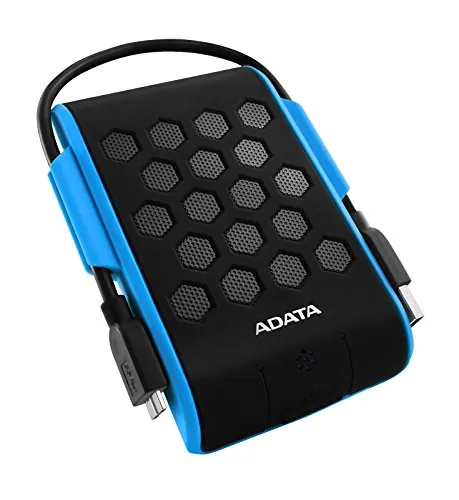
The HD720 has the higher design score and is described as having a sporty look, a smooth silicone case, and a carbon-fiber-like pattern. It is also slightly lighter on the supplied measurements. The HD710 Pro is designed around rugged practicality, using a protective layered casing and integrated cable storage. Choose the HD720 for the more design-led silicone exterior; choose the HD710 Pro if the cable-management approach and IP68-focused construction are more useful to you.
Both drives are built for physical protection, but they use different enclosure approaches. The HD710 Pro lists an aluminium enclosure with triple-layer construction, while the HD720 lists plastic and silicone rubber with a carbon-fiber-like pattern. The HD720 has the slightly higher build-quality score, and reviews praise its case construction, lightness, and feel. The HD710 Pro remains highly credible for rugged use, with its stronger durability result and IP68 specification.
The HD710 Pro wins the supplied durability scoring, 93 versus 89. Its IP68 rating, triple-layer construction, and stated 1.5 m MIL-STD-810G 516.6 drop-test compliance make it the more confidence-inspiring option for broad water, dust, and shock protection. The HD720 remains highly rugged, with IP6X dust protection, stated water submersion to 2 m for 120 minutes, and a stated 1.8 m drop test. The better option depends on which protection specification matters most.
Both drives are slim 0.8-inch portable units intended for travel and storage in a bag. The HD720 has a small edge: it weighs 8 oz, compared with the HD710 Pro's 0.6 lb, and it has the higher portability score. The HD710 Pro counters with cable management that keeps the cord attached to the enclosure for transport. The HD720 is preferable for lower listed weight; the HD710 Pro is convenient if avoiding loose-cable clutter matters more.
The HD710 Pro emphasises IP68 protection, triple-layer construction, USB 3.1, and cable management. The HD720 adds 2TB capacity in this comparison, a silicone case with carbon-fiber-like pattern, stated 2 m/120-minute water protection, a 1.8 m drop-test claim, and USB 2.0 backward compatibility. The HD720's higher feature score reflects this broader practical package, while the HD710 Pro's combined IP68 rating remains a meaningful advantage for buyers focused on ingress protection.
Setup is a strength for both drives, with scores of 90 for the HD710 Pro and 91 for the HD720. The HD710 Pro is described in reviews as plug-and-play and easy to format or partition, while the HD720 receives positive comments for straightforward backup and transfer use. Neither drive requires a complex smart-device setup based on the supplied data. Format the drive appropriately if you need cross-platform or iOS-related use.
Both models list support for Mac, Windows or PC, and Linux, making either suitable for mixed-device households or work setups. The HD710 Pro has a marginally higher compatibility score and explicitly names Mac, PC, and Linux. The HD720 provides more specific operating-system minimums, including Mac OS X 10.6 or later and Linux Kernel 2.6 or later. A supplied HD710 Pro review notes that formatting may be necessary for iOS use, so confirm file-system requirements for non-computer devices.
The HD710 Pro lists USB 3.1 and a 5 Gbps data-transfer rate, whereas the HD720 lists USB 3.0 and USB 2.0 compatibility with the same stated 5 Gbps transfer-rate figure. The HD720 has the higher connectivity score, likely helped by its explicit USB 2.0 support. In review feedback, HD710 Pro connectivity is mixed: some praise the firm cable arrangement, while others report weak or faulty connections. Check your computer's available USB ports and cable condition before purchase.
Both products are portable mechanical external hard drives and receive similar power-efficiency scores, with the HD710 Pro slightly ahead at 80 versus 78. The supplied data does not provide measured power consumption, standby drain, or heat figures, so there is not enough evidence to make a stronger efficiency distinction. Buyers should base the choice on capacity, rugged protection, speed, and handling rather than a presumed major power-use difference.
The HD710 Pro has the slightly higher value score, supported by its IP68 rating, higher listed read speed, integrated cable management, strong durability result, and large review base. The HD720 remains a compelling value proposition for users who will use its 2TB capacity, stronger usability results, and stated 2 m water protection. Its listed price is higher in the supplied data, but the capacity is also double. Value therefore depends on whether 1TB is sufficient and which protection or handling advantages you will actually use.
Both products are from ADATA, so this is not a comparison between different brand-support ecosystems. The HD710 Pro has a slightly higher supplied brand-trust score, while both have strong customer feedback. Review evidence for both models includes long-term positive experiences but also some mechanical-drive or connectivity concerns. Evaluate the individual model specifications and retailer return terms rather than assuming either model eliminates the normal risks of portable hard-disk storage.
The HD710 Pro has a 4.6/5 average from 29,610 reviews, while the HD720 has a 4.7/5 average from 2,912 reviews. The HD720's rating is marginally higher, but the HD710 Pro has a much larger supplied review count. Both have very strong customer-satisfaction scores. Praise focuses on durability, easy use, capacity, and transfers; the recurring caution is that a minority of users report reliability or connection issues.
The HD710 Pro has a supplied warranty-support score of 78, while no comparable support detail is provided for the HD720. One HD710 Pro review states that ADATA responded to complaints and offered replacement under warranty, but this is individual review feedback rather than a complete policy description. Verify the current warranty terms, seller, return window, and regional coverage before buying either drive.
There is no single outright winner because the ADATA HD710 Pro 1TB and ADATA HD720 2TB both receive an overall score of 84. The HD710 Pro is the better all-round choice for buyers who value a combined IP68 rating, the higher supplied durability score, integrated cable management, and its higher listed read speed. It is the more focused rugged-storage option when 1TB is sufficient.
The HD720 is the better alternative for capacity-first buyers. Its 2TB capacity, higher usability and build-quality scores, lighter listed weight, USB 2.0 support, and stated 2 m water/1.8 m drop protection create a more versatile package for many backup users. However, its lower listed media speed and isolated report of bad sectors should be considered. Whichever model you choose, treat it as one part of a multi-copy backup plan rather than the sole home for essential files.

Overall winner
Depends on your needs
They are tied on the supplied overall score. The HD710 Pro has the stronger durability score and higher listed read speed, while the HD720 scores higher for features, usability, build quality, connectivity, portability, and reliability. The better choice therefore depends mainly on whether 1TB with IP68 protection or 2TB with the HD720's stated 2 m water rating better fits your needs.
The ADATA HD720 in this comparison has 2TB of capacity, compared with 1TB for the ADATA HD710 Pro. That gives the HD720 twice the listed space for backups, media, game files, or archives. Capacity alone does not determine overall suitability, however, because the HD710 Pro has a higher listed read speed and an IP68 rating.
Both models are designed for rugged use. The HD710 Pro has IP68 waterproof and dustproof protection plus a stated 1.5 m drop-test certification, giving it the higher durability score. The HD720 specifies IPX8 water resistance to 2 m for 120 minutes, IP6X dust protection, and a stated 1.8 m drop test. Choose based on the protection detail most relevant to your use.
The HD710 Pro has the advantage in the supplied speed data, with a listed read speed of 90 MB/s versus the HD720's listed 60 MB/s media speed. Both are mechanical drives with stated 5 Gbps USB transfer capability, so actual copying can also depend on the connected computer, USB port, source files, and file sizes.
Both are external USB hard drives intended for straightforward portable storage. The HD720 has a marginally higher supplied setup score, while the HD710 Pro also scores strongly and is repeatedly described as easy to use in reviews. One HD710 Pro review notes that formatting may be needed before use with iOS. Check the file system needed by your devices before transferring files.
Both drives list compatibility with Mac, Windows or PC, and Linux environments. The HD710 Pro has a slightly higher compatibility score and explicitly lists Mac, PC, and Linux. The HD720 lists Windows XP or later, Mac OS X 10.6 or later, and Linux Kernel 2.6 or later. Formatting requirements can still vary by device and intended read/write use.
Both have strong supplied customer-satisfaction scores. The HD710 Pro has a 4.6/5 rating from 29,610 reviews, providing a much larger review base, while the HD720 has a 4.7/5 rating from 2,912 reviews. Reliability feedback is not perfect for either: HD710 Pro reviews mention occasional cable or failure concerns, and one HD720 review reports bad sectors and clicking.
Either drive can be used for portable backup, and reviews describe backup use cases for both. However, the supplied feedback includes some reports of drive or connection issues. Important data should not rely on a single external mechanical drive. Maintain additional copies of essential files and verify that backups can be read before depending on them.
Check our rankings and expert guides to find the best electronics products for your goals.