#1 Overall Winner
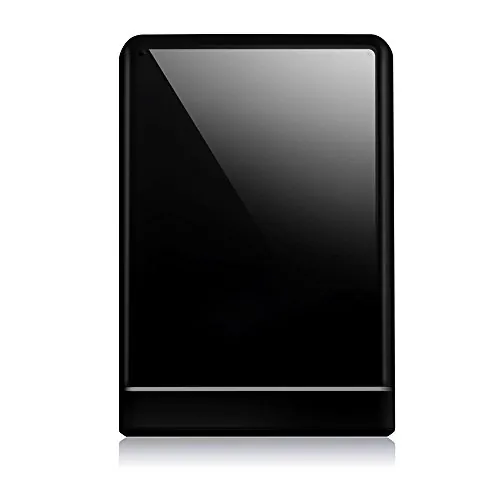
ADATA HV620S 2TB External Hard Drive
- 2TB capacity provides substantially more space for files, media and game storage.
Comparison
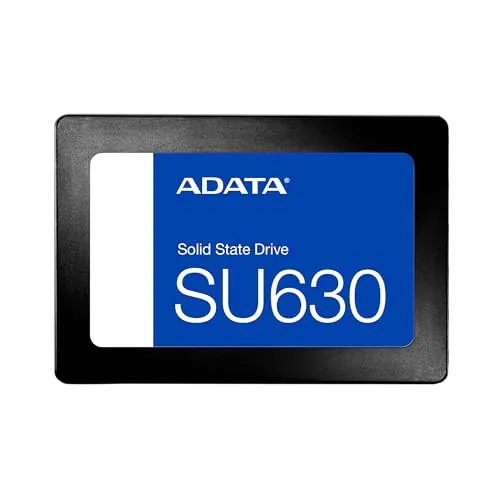
The ADATA HV620S is a slim 2TB external mechanical hard drive for portable USB storage, while the ADATA SU630 is a 240GB internal SATA SSD focused on faster everyday PC performance. The SU630 narrowly leads overall on the supplied scores, but the HV620S is the clear choice when capacity, USB convenience and listed console support matter more than speed.
#1 Overall Winner
Contender
Choose the ADATA SU630 if you have a compatible SATA bay and want a faster internal drive for an older desktop or laptop. Choose the ADATA HV620S if you need far more capacity in a slim USB drive for files, media or listed console use.
Overall winner
Depends on your needs
| Feature | ADATA HV620S 2TB External Hard Drive | ADATA SU630 240GB SATA SSD | Winner |
|---|---|---|---|
| Drive type | External mechanical HDD | Internal solid-state drive | Depends |
| Capacity | 2TB | 240GB | ADATA HV620S 2TB External Hard Drive |
| Listed read speed | 90MB/s | Up to 520MB/s | ADATA SU630 240GB SATA SSD |
| Connection | USB 3.1; USB 2.0 backward compatible | SATA 6Gb/s | Depends |
| Installation | External, plug-in use | Internal drive installation | ADATA HV620S 2TB External Hard Drive |
| Portable use | Slim external 2.5-inch drive | Internal 2.5-inch drive | ADATA HV620S 2TB External Hard Drive |
| PC upgrade suitability | External data storage | Internal OS and storage upgrade | ADATA SU630 240GB SATA SSD |
| Console support listed | PS5, Xbox Series S and Xbox Series X | PC and notebook listed | ADATA HV620S 2TB External Hard Drive |
| Customer rating | 4.8/5 from 5,815 reviews | 4.7/5 from 9,944 reviews | Tie |
| Overall assessment | 83 overall score | 84 overall score | ADATA SU630 240GB SATA SSD |
| Reliability assessment | 76 reliability score | 82 reliability score | ADATA SU630 240GB SATA SSD |
| Value assessment | 81 value score | 89 value score | ADATA SU630 240GB SATA SSD |
For everyday computer performance, the SU630 has the decisive advantage. Its listed read speed of up to 520MB/s is far above the HV620S's listed 90MB/s, and reviewers describe faster startup and general responsiveness after replacing older mechanical drives. The HV620S uses a 5400RPM mechanical disk, so it is better suited to bulk storage and transfers than to making a computer feel faster. For external capacity, however, the HV620S offers 2TB rather than 240GB.
The SU630 wins on speed. It lists up to 520MB/s read performance, compared with 90MB/s for the HV620S, and its score data also gives it the stronger speed assessment. Reviews report a meaningful improvement over traditional hard drives for normal laptop and desktop tasks. The HV620S can still be suitable for storing large amounts of data, but its 5400RPM mechanical design is not built around fast system responsiveness.
The SU630 receives the higher reliability assessment in the supplied scoring, and the review overview describes it as reliable. Its solid-state construction also has a specified 1500G shock-resistance figure. The HV620S has generally positive user feedback, including comments that it seems durable, but its reliability score is lower. One HV620S review also raises a software compatibility and customer-service concern, although this does not establish a hardware-wide issue.
Both products score well for usability, but they are convenient in different ways. The HV620S is the easier option for users who want external storage with no internal installation; reviews describe it as plug-in and straightforward. The SU630 has the higher usability and setup assessments, and reviews commonly describe smooth installation, but it requires a compatible internal SATA slot. Beginners who do not want to open a computer will usually find the HV620S simpler.
The HV620S is designed to be seen, carried and connected externally, with a slim 11.5mm profile, black finish and LED indicator. Its portability assessment is much stronger. The SU630 is a low-profile 2.5-inch internal component, so visual design is secondary to fitting in a compatible PC or notebook. Choose the HV620S for a self-contained portable drive; choose the SU630 for an unobtrusive internal installation.
The HV620S uses a metal-and-plastic enclosure with a mirror-like surface and raised peripheral lip to reduce surface scratching. The SU630 is a compact internal SSD, and its supplied information emphasizes solid-state shock resistance rather than exterior finish. The HV620S offers more physical protection for handling as an external device, while the SU630 avoids the moving parts of a mechanical drive. The provided build-quality assessment is slightly higher for the HV620S.
The HV620S has a raised lip intended to protect its external surface, which is useful for a drive handled outside a computer. The SU630 has no moving mechanical parts and lists 1500G shock resistance, but its supplied durability score is lower. These are different forms of durability: the HV620S is designed for external handling, while the SU630 is a protected internal component. Avoid treating either supplied score as a guarantee of long-term service life.
The HV620S is the clear portability winner. It is a slim external 2.5-inch drive designed for carrying and USB connection, and the supplied portability assessment strongly favours it. The SU630 is small, but it is intended to remain inside a desktop or notebook. It can be made external only with an additional compatible enclosure, which is not included in the supplied product information.
The HV620S focuses on external-drive practicality: USB 3.1 with USB 2.0 backward compatibility, a bright LED, a scratch-protecting raised lip and listed PS5/Xbox Series compatibility. The SU630 focuses on internal upgrade fundamentals, including SATA 6Gb/s connectivity, 3D QLC NAND, specified shock resistance and operating-temperature information. The HV620S has more externally visible convenience features, while the SU630 has the more relevant feature set for an internal system-drive replacement.
The SU630 has no supplied companion-app information, so there is no app experience to compare. The HV620S has a weaker supplied app-experience assessment, and one review says the available software was confusing enough that the user chose a generic alternative. Another review reports a Mac software compatibility problem. For both drives, buyers should plan around their operating system's standard storage tools unless verified software support is important.
The SU630 has the higher setup assessment, with multiple reviews describing simple internal installation and immediate operation once connected. However, it still requires opening a compatible computer and having the necessary SATA connection; one review notes that no screws or mounting hardware were included. The HV620S is simpler for external use because it connects by USB, with a review describing immediate plug-in operation. The best setup choice depends on whether internal installation is acceptable.
The HV620S is listed for laptops, gaming consoles, PS5, Xbox Series S and Xbox Series X, with USB 2.0 backward compatibility. The SU630 is listed for PCs and notebooks using a SATA connection; reviews include reports of use with older laptops and older BIOS environments. The SU630 has the stronger supplied compatibility assessment for its intended internal role, but the HV620S has broader plug-in convenience and explicit console listings. Check ports, bays and formatting requirements before buying.
The HV620S uses USB 3.1 and is backward compatible with USB 2.0, giving it broad external connection convenience. The SU630 uses SATA 6Gb/s, which is the appropriate interface for compatible internal desktop and notebook bays. Neither interface is universally better: USB is more flexible for external use, whereas SATA enables the SU630's internal SSD role and higher listed transfer performance.
The SU630 has the stronger supplied power-efficiency assessment, consistent with its solid-state design. The HV620S also scores reasonably in this area and is USB-powered according to a review, which can be convenient for external use. No direct power-consumption figures are supplied, so the comparison should remain limited to the provided assessments rather than treating either drive as quantified lower-power hardware.
The SU630 has the higher supplied value assessment because it combines SSD speed, easy installation feedback, strong customer satisfaction and broad internal PC/notebook compatibility for its intended budget-upgrade role. The HV620S remains good value for a different reason: it supplies 2TB of portable external storage and listed console support. Do not choose solely by the listed price, since the products differ sharply in capacity, interface and purpose.
Both products are made by ADATA, so this is not primarily a comparison between different brand reputations. The supplied scoring gives the SU630 stronger brand-trust context. Its reviews are consistently positive about reliability and installation, while the HV620S feedback includes a serious complaint concerning Mac software compatibility and customer service. This is limited review evidence, but buyers who rely on support should verify current compatibility and return terms before ordering either product.
Both drives have strong customer feedback: the HV620S is rated 4.8/5 from 5,815 reviews, and the SU630 is rated 4.7/5 from 9,944 reviews. The SU630 has the slightly higher supplied customer-satisfaction assessment, with repeated praise for reliability, value and simple installation. HV620S reviews praise slimness, easy use and successful PS5 storage use, but the provided set includes complaints about software compatibility and support.
Warranty terms, return policies and formal support details are not provided for either drive, so a full warranty comparison is not possible. The supplied assessment gives the SU630 a higher support score. For the HV620S, one review describes slow customer service and a Mac compatibility dispute. Buyers should confirm current seller return conditions, regional warranty coverage and device compatibility before purchase.
The ADATA SU630 240GB SATA SSD is the best overall option in this comparison by a narrow margin, reflecting stronger supplied scores for speed, setup, reliability, compatibility, power efficiency and value. It is the clear practical choice for someone replacing an older internal mechanical drive in a compatible PC or notebook, where faster everyday operation matters most.
The ADATA HV620S should not be dismissed as an inferior substitute, because it solves a different problem. It offers over eight times the capacity in a portable external USB format and has listed support for PS5 and Xbox Series consoles. Choose it when bulk storage, portability and simple external connection outweigh speed. Before deciding, confirm whether you need an internal SATA drive or an external USB drive, then make sure 240GB or 2TB matches your real storage needs.

Overall winner
Depends on your needs
The better choice depends on the job. The ADATA SU630 is the stronger option for an internal PC or notebook upgrade where speed, easy installation and everyday responsiveness matter most. The ADATA HV620S is the better fit when 2TB of portable USB storage is the priority. They are different types of drive, so capacity and installation requirements are decisive.
The ADATA SU630 is clearly faster on the supplied specifications. It lists read speeds up to 520MB/s, compared with 90MB/s for the ADATA HV620S. Review feedback for the SU630 also frequently notes a noticeable improvement over mechanical hard drives. The HV620S is better understood as convenient high-capacity external storage than as a speed-focused system drive.
Yes. The ADATA HV620S has 2TB, or 2000GB, of capacity, while this ADATA SU630 version has 240GB. That makes the HV620S the more practical choice for larger media libraries, backups and broad file storage. The SU630's smaller capacity is more appropriate for a basic operating-system drive or a focused internal upgrade.
The ADATA HV620S is generally the simpler physical option because it is an external USB drive; one review says it was plugged in and immediately worked. The SU630 also receives very positive installation feedback, but it must be fitted into a compatible internal SATA slot. Choose the HV620S for minimal hardware work, and the SU630 if you can install an internal drive.
The supplied HV620S details list compatibility with PS5, Xbox Series S and Xbox Series X, and one review reports successful use with a PS5 for storing PS4 games. The ADATA SU630 is an internal SATA drive specified for PC and notebook hardware, not as a listed console USB-storage solution. Confirm your console's current storage rules before purchase.
The supplied information positions the SU630's QLC design as an affordable choice for general laptop or desktop use rather than heavy write-intensive workloads. Reviews mention lower endurance than some alternatives and caution against server use or frequent full-drive rewrites. It is better matched to everyday computing, documents, browsing, operating-system use and general games within its available capacity.
The ADATA HV620S is the more portable choice. It is a slim external 2.5-inch drive with USB connectivity, and its portability score is substantially higher in the provided data. The SU630 is physically compact, but it is intended to be installed internally in a desktop or notebook. It becomes portable only when paired with a separate compatible enclosure.
Both products have strong Amazon ratings and large review counts. The SU630 has a slightly higher customer-satisfaction score and more reviews, with repeated praise for easy installation, reliability and value. The HV620S also has very positive feedback for compactness and simple use, although the provided reviews include a complaint about Mac software compatibility and customer service.
Check our rankings and expert guides to find the best electronics products for your goals.