#1 Overall Winner
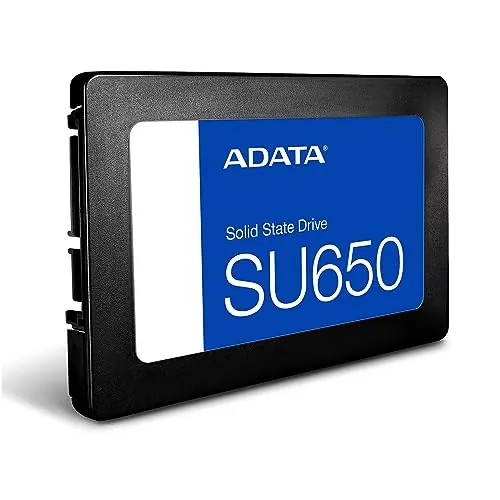
ADATA Ultimate SU650 1TB SSD
- 1TB solid-state storage in a compact 2.5-inch SATA form factor.
Comparison
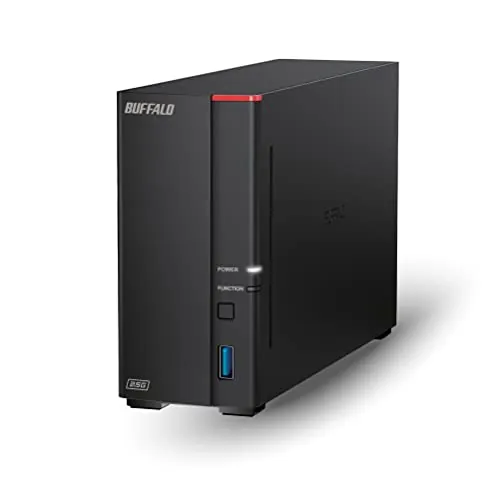
The ADATA Ultimate SU650 1TB is a local internal SATA SSD focused on faster desktop storage, while the BUFFALO LinkStation 710 2TB is a network-attached hard-drive system for shared files and backups. The ADATA is the stronger overall choice for a compatible PC upgrade; choose the BUFFALO when centralized network storage and personal-cloud features are the priority.
#1 Overall Winner
Contender
Choose the ADATA SU650 for a compatible desktop that needs a simple, compact local SSD upgrade. Choose the BUFFALO LinkStation 710 only if your priority is shared network storage and backup features, and maintain a separate backup for critical files.
Overall winner
Depends on your needs
| Feature | ADATA Ultimate SU650 1TB SSD | BUFFALO LinkStation 710 2TB NAS | Winner |
|---|---|---|---|
Product type |
1TB internal 2.5-inch SATA SSD |
2TB one-bay Ethernet NAS with HDD included |
Depends |
Capacity |
1TB |
2TB |
BUFFALO LinkStation 710 2TB NAS |
Local transfer specification |
Up to 520/450MB/s read/write |
No equivalent rate stated |
ADATA Ultimate SU650 1TB SSD |
Network sharing |
Not provided as a standalone drive feature |
Shared router-connected storage |
BUFFALO LinkStation 710 2TB NAS |
Backup functions |
Migration and file-management software |
PC backup software and automated backup support |
BUFFALO LinkStation 710 2TB NAS |
Setup |
High setup score; easy-install feedback |
Mixed setup and software feedback |
ADATA Ultimate SU650 1TB SSD |
Portability |
30g internal drive |
1.66kg desktop NAS |
ADATA Ultimate SU650 1TB SSD |
Reliability feedback |
Generally positive, with one overheating report |
Mixed reports, including failures and connection issues |
ADATA Ultimate SU650 1TB SSD |
Remote and cloud functions |
Not stated |
Personal cloud and Dropbox, Azure and OneDrive sync |
BUFFALO LinkStation 710 2TB NAS |
Overall assessment |
Higher overall score |
Lower overall score |
ADATA Ultimate SU650 1TB SSD |
For direct storage performance, the ADATA has the clearer advantage. It states up to 520MB/s reads and 450MB/s writes, and review feedback commonly highlights quicker boots and transfers than a traditional hard drive. The BUFFALO is constrained by its network-based purpose and HDD storage; feedback ranges from fast access to slow copying. It is better judged by its ability to centralize and share files than by the local-drive responsiveness expected from the ADATA.
The ADATA is the more predictable speed choice for a directly connected compatible PC, with up to 520/450MB/s specified read/write performance and consistently favorable comments on boot and transfer improvements. The BUFFALO’s speed score is lower, and user reports are mixed. Network conditions, client devices and the hard-drive-based NAS design are relevant to its real-world transfer experience.
The ADATA has the stronger reliability result and an aggregated review summary that describes dependable operation. Still, one review reported overheating, so monitoring and maintaining backups remain sensible. The BUFFALO has notably more inconsistent feedback, including reports of connection problems and drive failure. Its single-bay design also means a drive failure can disrupt access to all data held on the unit.
The ADATA is the easier everyday option once installed. Its setup and usability results are strong, and reviewers regularly say it is easy to install, format and recognize. The BUFFALO’s physical connection may be straightforward, but software configuration, permissions and network discovery can add friction. Some users found its interface simple, while others reported difficult navigation and limited guidance.
The designs reflect different uses. The ADATA is a slim internal component intended to disappear inside a desktop, whereas the BUFFALO is a compact black desktop NAS that remains connected to a router. The ADATA is more space-efficient and easier to relocate, while the BUFFALO is more practical for a fixed shared-storage location.
The ADATA is an extremely light 30g 2.5-inch drive with a plastic-style enclosure noted in reviews, while its supplied information emphasizes vibration resistance. The BUFFALO is a larger mains-powered NAS appliance containing an HDD. Neither product has enough supplied materials detail for a definitive construction winner, but the ADATA’s low weight aids installation and the BUFFALO’s enclosure is designed to sit beside network equipment.
Neither product should be the only repository for important data. The ADATA’s SSD design avoids moving parts and its information cites vibration resistance, but no endurance figure is supplied. The BUFFALO contains an HDD and has a single bay, with review feedback that includes early-failure concerns. Its stated two-year warranty is useful, but warranty coverage is not the same as data recovery or redundancy.
The ADATA is much more portable at 30g and is small enough to install unobtrusively in a desktop. The BUFFALO weighs 1.66kg and is intended to remain connected to power and a router. The NAS is compact for fixed home or office use, but it is not designed for carrying between systems as conveniently as the SSD.
The BUFFALO has the broader feature set: shared network folders, automated PC backup, personal-cloud access, user permissions, SSL-encrypted transfers and synchronization with Dropbox, Azure and OneDrive. The ADATA is simpler, offering internal SSD storage, LDPC error correction and downloadable migration/file-management software. Choose the BUFFALO for connected storage functions and the ADATA for uncomplicated local capacity and SSD operation.
ADATA provides downloadable SSD file-management and migration software, which supports a focused upgrade workflow. BUFFALO includes NAS Navigator and PC backup software, but its software experience receives mixed feedback: some reviews describe successful setup, while others report discovery, permissions and navigation issues. The ADATA is the lower-complexity software choice; the BUFFALO offers more tools but potentially more configuration work.
The BUFFALO is the only product here with meaningful connected features: personal-cloud access, cloud synchronization, folder permissions and remote-oriented file management. The ADATA has no smart-storage platform; its supplied software is focused on drive management and migration. The BUFFALO is therefore the better choice when connected services matter, subject to its mixed app and usability feedback.
The ADATA is the clearer setup winner for a compatible desktop. Reviewers mention straightforward installation, quick system recognition, formatting and migration. The BUFFALO requires router connection, software discovery and configuration; some users also needed firmware updates or permission changes. Buyers comfortable with home networking may find it manageable, but it has a steeper setup path.
The ADATA is specified for desktop use through SATA and requires a compatible internal bay and connection. The BUFFALO is stated as compatible with Windows and MacOS 26 and is intended for desktop and laptop access across a network. However, its aggregated reviews also mention reported Windows, Mac M1 and network compatibility issues. Check the exact operating system, router setup and desired backup workflow before choosing the NAS.
The BUFFALO wins on connectivity scope because it is built around Ethernet network storage and supports access from compatible desktop and laptop devices. It also includes an Ethernet cable. The ADATA uses SATA 6Gb/s for a direct internal drive connection, which is preferable for local storage speed but does not deliver network sharing. Verify available SATA connections for the ADATA and router/network suitability for the BUFFALO.
The ADATA’s SSD design is specified as low power and low noise, which suits an always-used internal desktop drive. The BUFFALO’s supplied scoring suggests reasonable power efficiency for its category, but it is a powered network appliance with an included HDD and no direct energy-use specification supplied. The ADATA is the more efficient choice for simple local storage.
The ADATA offers stronger value for a local storage upgrade because it pairs 1TB SSD capacity, stated transfer performance, simple installation and high customer satisfaction with strong value feedback. The BUFFALO’s value is more conditional: it includes 2TB and useful NAS capabilities such as backups and cloud integration, but mixed reliability, speed and software experiences reduce its appeal if those network functions are not essential. More capacity alone does not make it better value for every buyer.
ADATA’s supplied feedback is more consistent for this product, with high customer satisfaction and repeated reports of reliable, value-oriented SSD performance. BUFFALO states that the LinkStation is made in Japan and includes US-based support, but user experiences with reliability and support are mixed. Based on the provided product-specific evidence, ADATA inspires greater confidence for a straightforward drive purchase.
The ADATA has a 4.8/5 rating from 5,647 reviews and a substantially higher customer-satisfaction score. Review themes include easy installation, fast boots, solid operation, capacity and value. The BUFFALO has a 3.9/5 rating from 3,254 reviews. Positive reports mention convenient sharing and backups, but these are balanced by recurring concerns about reliability, speed, compatibility, connectivity and software usability.
BUFFALO provides the clearer stated support package, with 24/7 US-based support and a two-year warranty that includes hard drives. ADATA’s warranty and support terms are not supplied, so a direct coverage comparison is not possible. Buyers considering the BUFFALO should still review warranty terms carefully, particularly because a warranty replacement does not necessarily address data recovery.
The ADATA Ultimate SU650 is the best overall option in this comparison, reflected by its stronger overall results, high review rating and clear suitability for a local desktop storage upgrade. Its SATA SSD design, stated read/write performance and favorable installation feedback make it the safer recommendation for buyers replacing a conventional internal drive or adding everyday PC storage.
The BUFFALO LinkStation 710 remains the better functional choice for a narrower audience: people who need storage shared over a home network, centralized backups, user access controls and subscription-free personal-cloud features. However, its lower satisfaction results, mixed reports on reliability and speed, compatibility concerns and lack of drive redundancy require more caution. Pick the ADATA for straightforward local storage; select the BUFFALO only when NAS functionality is essential and an additional backup is in place.

Overall winner
Depends on your needs
They serve different roles. The ADATA is the stronger overall product in the supplied scoring and is better for a direct internal PC storage upgrade, faster booting and local transfers. The BUFFALO is the appropriate choice only when network sharing, centralized backups, personal-cloud access and its included 2TB capacity are more important than local SSD speed.
The ADATA lists read/write performance up to 520/450MB/s through its SATA connection, and reviews commonly praise faster boots and transfers. The BUFFALO is network storage, so its results also depend on the network environment; its review feedback on speed is mixed. They are not directly comparable connection types, but the ADATA is the clearer local-speed choice.
The BUFFALO LinkStation 710 is designed for this task. It connects to a router, supports shared network storage and includes PC backup software for automated backups. However, its one-bay layout has no built-in redundancy, and reliability feedback is inconsistent. Important files should not rely on it as the only backup destination.
The ADATA SU650 is the more straightforward option for a compatible desktop with an available 2.5-inch SATA connection. Its reviews regularly mention easy installation and quick recognition. The BUFFALO can be simple to connect physically, but its setup may also involve firmware updates, software, permissions and network troubleshooting.
No. The LinkStation is an Ethernet NAS intended for shared storage, network backups and remote access rather than an internal boot or application drive. The ADATA SU650 installs inside a compatible desktop via SATA and is the suitable option for replacing a local hard drive or adding internal PC storage.
For local desktop storage, the ADATA has the stronger value case in the provided data. It combines 1TB capacity, specified SATA SSD performance, migration software, high customer satisfaction and repeated praise for value. The BUFFALO adds useful network features and more capacity, but its value depends on whether those NAS functions are genuinely needed.
It should not be treated as the sole copy of irreplaceable data. The device offers backup tools, encryption and centralized storage, but it has only one drive bay, so it lacks built-in redundancy. Supplied reviews also describe mixed reliability. Maintain another independent backup, particularly for important files.
Check our rankings and expert guides to find the best electronics products for your goals.