#1 Overall Winner
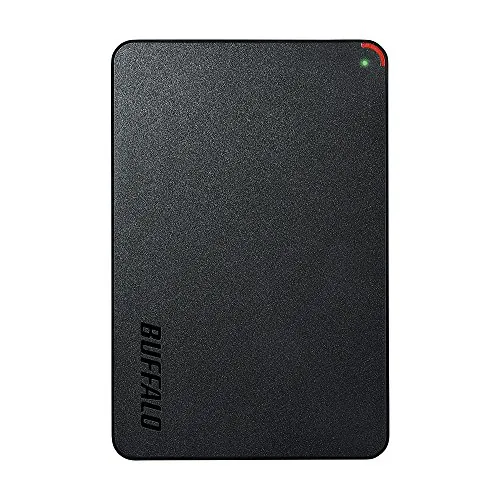
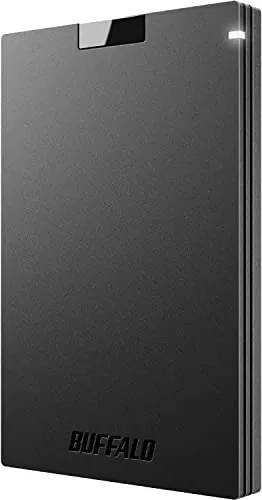
Buffalo USB 3.1 (Gen 1)/USB 3.0 External hard drive HDD HD – adu3 Series
- High usability, with reviews repeatedly noting simple connection and setup.
Comparison
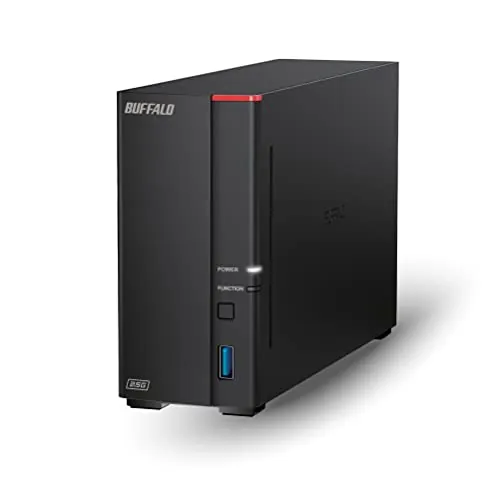
The Buffalo adu3 Series is a simple USB external hard drive, while the BUFFALO LinkStation 710 is a one-bay network-attached storage device for shared storage and backups. The adu3 Series is the stronger choice for easy, compact, direct-attached storage; choose the LinkStation when its network, backup, cloud, and sharing functions are essential.
#1 Overall Winner
Contender
Choose the Buffalo adu3 Series for uncomplicated USB storage, TV recording, and strong day-to-day value. Choose the LinkStation 710 only if you specifically need a network-accessible central backup and file-sharing device and are comfortable checking network and platform compatibility.
Overall winner
Depends on your needs
| Feature | Buffalo USB 3.1 (Gen 1)/USB 3.0 External hard drive HDD HD – adu3 Series | BUFFALO LinkStation 710 2TB 1-Bay NAS Network Attached Storage with HDD Included | Winner |
|---|---|---|---|
Storage type |
USB external hard drive |
1-bay Ethernet NAS with included HDD |
Depends |
Overall assessment |
Stronger overall result |
Lower overall result |
Buffalo USB 3.1 (Gen 1)/USB 3.0 External hard drive HDD HD – adu3 Series |
Everyday usability |
Very straightforward |
Mixed software experience |
Buffalo USB 3.1 (Gen 1)/USB 3.0 External hard drive HDD HD – adu3 Series |
Setup |
Quick direct connection |
Router, software, and permissions may be required |
Buffalo USB 3.1 (Gen 1)/USB 3.0 External hard drive HDD HD – adu3 Series |
Shared multi-device access |
Not listed |
Network sharing and folder permissions |
BUFFALO LinkStation 710 2TB 1-Bay NAS Network Attached Storage with HDD Included |
Backup features |
Local backup destination |
Automated backup tools and centralized backup use |
BUFFALO LinkStation 710 2TB 1-Bay NAS Network Attached Storage with HDD Included |
Cloud functionality |
Not listed |
Personal cloud and selected cloud sync |
BUFFALO LinkStation 710 2TB 1-Bay NAS Network Attached Storage with HDD Included |
Transfer-speed feedback |
Mixed; some reports of slower transfers |
Mixed; network speed can be slow |
Tie |
Reliability feedback |
More favorable, but long-term durability uncertain |
Mixed, with reported failures |
Buffalo USB 3.1 (Gen 1)/USB 3.0 External hard drive HDD HD – adu3 Series |
Portability |
Compact external-drive form |
Compact NAS, but requires router placement |
Buffalo USB 3.1 (Gen 1)/USB 3.0 External hard drive HDD HD – adu3 Series |
Value |
Strong value feedback |
Good feature value, but lower assessment |
Buffalo USB 3.1 (Gen 1)/USB 3.0 External hard drive HDD HD – adu3 Series |
Warranty and support |
Limited support detail provided |
Stated two-year warranty and 24/7 US-based support |
BUFFALO LinkStation 710 2TB 1-Bay NAS Network Attached Storage with HDD Included |
For basic local storage, the adu3 Series delivers the more consistent experience in the supplied data. It is reported as working quickly for TV recording and is considered relatively fast by one reviewer, although another finds its transfer speed behind competing drives. The LinkStation 710 adds network-wide access and backup capability, but its performance depends on network conditions and configuration. Some owners report responsive, fast access, while others describe transfers as slow. The adu3 Series is therefore preferable for simple direct storage; the LinkStation is preferable only where network functionality matters more.
Speed is not a clear win for either product based on the available data. One adu3 Series review calls it relatively fast, while another says transfers seem slower than competing products. LinkStation feedback is similarly divided: some report fast access, but others describe transfers as slow, including a review citing approximately 17 MB/s from one computer and 24 MB/s combined from two. NAS transfer rates can also be affected by the network and connected devices.
The adu3 Series has the better reliability position in the supplied assessment, though it is not free of uncertainty: one buyer specifically questions long-term durability. The LinkStation 710 has more significant mixed feedback, including reports of failure, connection problems, and firmware-related feature issues. A single-bay NAS also cannot provide internal redundancy. Regardless of selection, important files should be maintained in more than one independent location.
The adu3 Series is easier to use. Its direct connection model avoids router setup, drive mapping, account permissions, and NAS management software, and multiple reviews describe rapid, uncomplicated use. LinkStation setup is straightforward for some owners, but others report difficulty finding the unit on a network, creating shares, adjusting permissions, and understanding the software or documentation. The LinkStation can work well after configuration, but it has a steeper learning curve.
The adu3 Series is designed for simple placement near a TV or directly connected device; reviews highlight its compact size and quiet presence behind a television. The LinkStation 710 is also relatively compact, with listed dimensions of 8.07 by 1.77 by 5.02 inches, but it is designed to remain near a router as a network appliance. Choose the adu3 Series for minimal physical and configuration overhead, or the LinkStation for a fixed central-storage location.
Both products receive a similar supplied build-quality assessment, but the available feedback differs. The adu3 Series is praised for a compact, unobtrusive physical design. LinkStation reviews describe it as small and well packaged, while reliability feedback includes drive-failure reports. The provided information does not support a definitive materials or construction advantage for either product, so long-term ownership confidence favors the adu3 Series mainly because of its stronger reliability feedback.
Neither product has enough supplied long-term evidence to make a strong durability claim. The adu3 Series has an uncertain durability assessment, despite otherwise positive reviews. The LinkStation is described as well packaged and compact, but its lower durability and reliability results are reinforced by reports of failed units. For either drive, a separate backup strategy is more important than assuming the drive will be a permanent single copy.
Both products are described as compact, but they are portable in different ways. The adu3 Series is the better option for moving between compatible devices or placing behind a TV, since it connects directly by USB. The LinkStation is compact enough for a desk or router area, yet it is intended as a fixed network device and requires Ethernet and power. The adu3 Series is the more flexible physical-storage option.
The LinkStation 710 has a substantially broader feature set. It supports shared network storage, automated computer backup, folder-level access restrictions, SSL-encrypted transfers, subscription-free personal-cloud access, and synchronization with Dropbox, Azure, and OneDrive. The adu3 Series focuses on direct USB storage and is better suited to a simple plug-in storage role. Buyers should not treat these as feature-equivalent products: the NAS provides more data-management options, but the external drive requires much less administration.
No companion-app experience is provided for the adu3 Series. The LinkStation uses NAS Navigator and related backup or management software, but the software experience is mixed. Some reviewers find the interface manageable after setup, while others report difficult navigation, weak guidance, device-discovery issues, and permissions that need adjustment. Buyers who prefer minimal software involvement should favor the adu3 Series.
The LinkStation 710 is the only product here with meaningful connected features. It offers personal-cloud access, selected cloud synchronization, user access controls, encrypted transfer support, and management utilities. The adu3 Series has no listed smart or cloud functions because it is a conventional directly connected external drive. The LinkStation is the better choice for connected data management, provided those features justify the added complexity.
The adu3 Series is the clear setup winner. Reviews say it can be connected and used rapidly for TV recording, with little visible setup friction. LinkStation setup ranges from a few minutes for some users to a much longer process involving firmware updates, network troubleshooting, share setup, credentials, and software downloads for others. The NAS may be manageable for experienced users, but it is not as consistently plug-and-play.
The adu3 Series has the stronger compatibility assessment for ordinary direct-attached use. The LinkStation 710 lists compatibility with desktop and laptop devices and states Windows and MacOS 26 support, but review feedback is inconsistent, with reports of Windows and Mac M1 issues. NAS compatibility also depends on network configuration and backup software. Confirm the LinkStation's support for your exact operating system and intended backup workflow before purchase.
The products use different connectivity models. The adu3 Series uses USB 3.1 Gen 1/USB 3.0 for a direct connection. The LinkStation 710 connects to a router over Ethernet and includes a Cat 6A cable; this enables shared access but also introduces dependence on network discovery, configuration, and stability. The LinkStation adds cloud integrations, but review feedback includes reported network-connection problems. Direct USB is simpler, while Ethernet NAS connectivity is more flexible for multiple devices.
The available data does not provide measured power consumption for either product. Both require external power in the supplied information. The LinkStation is designed to remain available as central network storage, which can be useful for always-on access but is a different operating model from a USB drive used only when connected. Buyers with energy-use concerns should check current power specifications before buying.
The adu3 Series has the stronger value position because it pairs strong usability, straightforward setup, positive customer feedback, compact design, and quiet operation with a higher value assessment. The LinkStation can still represent good value for buyers who will use its centralized backup, network sharing, cloud-sync, and security features. However, those benefits are offset by more inconsistent reviews for reliability, speed, compatibility, and software usability. Its value is feature-dependent rather than universal.
Both products come from BUFFALO, so this is not primarily a brand-versus-brand decision. The LinkStation listing provides more explicit support information, including 24/7 US-based support and a two-year warranty, but actual support experiences in reviews vary. The adu3 Series has stronger buyer satisfaction and brand-trust assessments in the supplied data. Product fit and the quality of the specific ownership experience matter more here than the shared brand name.
The adu3 Series has the stronger customer-satisfaction profile, with a 4.3/5 rating across 33,929 reviews and repeated praise for easy setup, compact size, quiet running, and value. The LinkStation 710 has a 3.9/5 rating across 3,254 reviews. Its reviewers appreciate its network features and, in some cases, easy setup, but recurring concerns involve reliability, software, speed, connectivity, and compatibility. The larger and more favorable review base favors the adu3 Series.
Support and warranty details are clearer for the LinkStation 710: the listing states a two-year warranty, including hard drives, plus 24/7 US-based support. Reviews are mixed, however; some users describe responsive help while others report difficulty reaching or receiving assistance. The supplied data gives limited warranty information for the adu3 Series. The LinkStation has the clearer stated coverage, but buyers should read current terms carefully, especially regarding data recovery and what the warranty does not cover.
The Buffalo adu3 Series is the best overall option for most buyers in this comparison. Its stronger overall assessment is supported by better results for usability, setup, value, reliability, and customer satisfaction. It is a practical choice for direct-connected storage, especially where a quiet, compact drive for a TV or computer is needed.
The BUFFALO LinkStation 710 remains the better specialized option for households or small setups that need a central network drive rather than a USB peripheral. Its automated backup, sharing permissions, personal-cloud access, and cloud-sync functions add genuine utility. However, mixed reports on software, networking, compatibility, speed, and reliability mean it is best for users willing to configure and monitor it. Since it is a one-bay NAS, it should always be paired with another independent backup for important files.

Overall winner
Depends on your needs
For straightforward direct-attached storage, the Buffalo adu3 Series is the stronger overall choice in the supplied scoring, particularly for setup, usability, value, reliability, and customer satisfaction. The LinkStation 710 is the better fit only when network sharing, centralized backups, access permissions, or cloud-sync functions are more important than simplicity.
Not for every buyer. The LinkStation 710 is intended to sit on a network and share storage across devices, while the adu3 Series is a USB drive for direct connection. Choose the NAS for central access and backup features; choose the external drive when a simple local storage device is sufficient.
The Buffalo adu3 Series has the clearer advantage. Reviews mention that it can be connected and used quickly for TV recording, and its setup score is notably higher. LinkStation setup can be easy for some users, but firmware updates, network discovery, permissions, and software configuration create more potential friction.
The LinkStation 710 is better suited to this role because it is network storage with automated backup software, shared access, and support for centralized data management. However, its single-bay design does not provide built-in redundancy. Important files should remain protected by an additional independent backup.
Neither product has uniformly strong speed feedback in the supplied reviews. The adu3 Series is described as relatively fast by one buyer, but another considers it slower than competing products. LinkStation feedback ranges from fast access reports to complaints about slow network transfers, so real-world results may depend on the network and configuration.
A supplied review reports successful Time Machine use with the LinkStation 710, and the product details state MacOS 26 compatibility. However, compatibility feedback across reviews is mixed, including a reported Mac M1 issue. Confirm compatibility with your particular Mac, operating system, and network before relying on it for backups.
The adu3 Series has the stronger reliability assessment and much stronger customer-satisfaction result. Its available reviews are generally positive, although long-term durability remains uncertain. The LinkStation 710 has mixed reliability feedback, including reports of unit failure, so it should not be used as the sole repository for irreplaceable files.
The LinkStation 710 does. Its listed features include subscription-free personal-cloud access and synchronization with Dropbox, Azure, and OneDrive. The supplied data for the adu3 Series describes a direct USB external hard drive and does not list cloud access, network sharing, or companion-app features.
Check our rankings and expert guides to find the best electronics products for your goals.