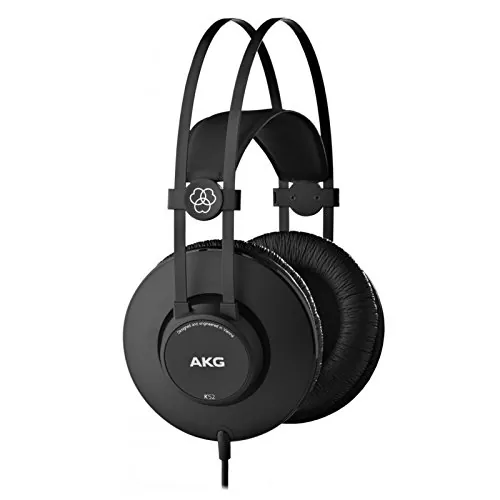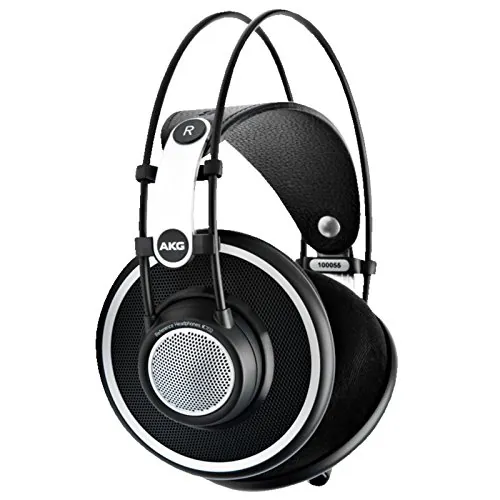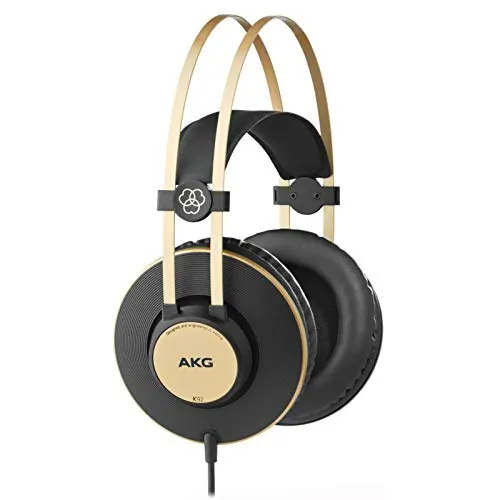
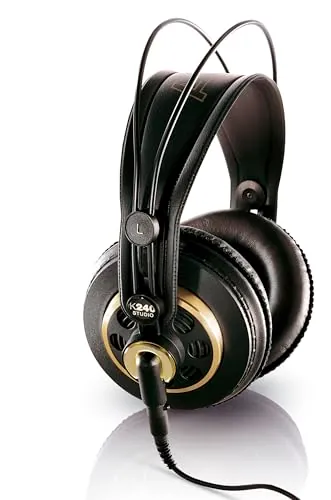
#1 Overall Winner
AKG K240STUDIO Semi-Open Studio Headphones
- High audio quality for monitoring: Strong audio quality and accuracy scores, aligned with review sentiment around detailed, clear sound.
Comparison
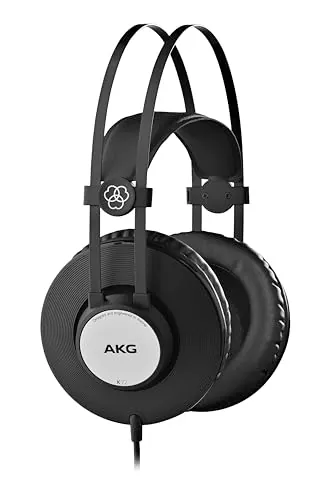
The AKG K240STUDIO and AKG K72 are both wired, over-ear studio headphones aimed at monitoring and long sessions, but they take different approaches: the K240STUDIO is semi-open while the K72 is closed-back . Based on the provided scores, the K240STUDIO is the stronger overall pick for accuracy and monitoring sound, while the K72 is the more natural choice when you prioritize a closed-back design for isolation during tracking.
#1 Overall Winner
Contender
Pick the AKG K240STUDIO if your priority is mixing/monitoring accuracy, detailed sound, and a semi-open presentation—and you don’t need isolation.
Pick the AKG K72 if you prefer a closed-back design for tracking and a lightweight fit for long sessions, and you’re okay with mixed real-world reports on isolation and durability.
Overall winner
Depends on your needs
| Feature | AKG K240STUDIO Semi-Open Studio Headphones | AKG Pro Audio K72 Over-Ear, Closed-Back, Studio Headphone | Winner |
|---|---|---|---|
| Overall score | 84 overall | 79 overall | AKG K240STUDIO Semi-Open Studio Headphones |
| Audio quality | 88 audio quality score | 81 audio quality score | AKG K240STUDIO Semi-Open Studio Headphones |
| Accuracy (monitoring/translation) | 85 accuracy score | 72 accuracy score | AKG K240STUDIO Semi-Open Studio Headphones |
| Design type | Semi-open, over-ear (circumaural) | Closed-back, over-ear | Depends |
| Noise isolation / leakage expectations | Limited isolation (semi-open) | Closed-back isolation intent; reviews mixed | AKG Pro Audio K72 Over-Ear, Closed-Back, Studio Headphone |
| Comfort / usability score | 84 usability score | 84 usability score | Tie |
| Build quality score | 68 build quality score | 62 build quality score | AKG K240STUDIO Semi-Open Studio Headphones |
| Reliability score | 67 reliability score | 66 reliability score | Tie |
| Durability score | 64 durability score | 60 durability score | AKG K240STUDIO Semi-Open Studio Headphones |
| Impedance | 55 ohms | 32 ohms | AKG Pro Audio K72 Over-Ear, Closed-Back, Studio Headphone |
| Sensitivity (listed) | 104 dB | 112 dB | AKG Pro Audio K72 Over-Ear, Closed-Back, Studio Headphone |
| Cable design | Detachable cable (mini XLR); 3 m cable | Not listed as detachable; cable concerns in reviews | AKG K240STUDIO Semi-Open Studio Headphones |
| Connectivity / adapter included | 3.5 mm + screw-on 6.3 mm adapter | 3.5 mm + screw-on 6.3 mm adapter | Tie |
| Customer satisfaction (reviews + score) | 4.5/5 from 12,317 reviews; satisfaction score 90 | 4.4/5 from 4,512 reviews; satisfaction score 88 | AKG K240STUDIO Semi-Open Studio Headphones |
| Value score | 88 value score | 85 value score | AKG K240STUDIO Semi-Open Studio Headphones |
For real-world studio performance, the provided scoring favors the AKG K240STUDIO (performance score 86 vs 78). That advantage matches the positioning and review themes: K240STUDIO is frequently described as more neutral/detailed for monitoring decisions, while K72 is often described as clear and comfortable for tracking and practice but sometimes dependent on a better source to “open up.”
In practice, the performance question often becomes: do you need isolation and reduced bleed (K72’s intended strength) or do you need monitoring accuracy and an open presentation (K240STUDIO’s strength)?
Reliability is close (67 for K240STUDIO vs 66 for K72), and customer sentiment for both includes mixed durability experiences. For the K240STUDIO, reviews and the aggregated summary mention both “well-constructed” impressions and reports of quick breakage. For the K72, reviewers often like the lightweight build but some mention wires/cable issues and questionable long-term durability.
If reliability is your top concern, the data suggests neither is a clear lock; the K240STUDIO’s detachable cable is a practical plus if cable failure is a worry.
Usability is effectively a tie in the provided scoring (84 vs 84). Both models emphasize a self-adjusting headband and over-ear comfort, and review sentiment for each includes plenty of long-session comfort feedback.
Where usability diverges is day-to-day practicality. The K240STUDIO’s semi-open design can be less usable in shared or noisy environments due to sound leakage and limited isolation. The K72 is designed to be more private thanks to its closed-back approach, though reviewers disagree on how fully it achieves that in real use.
Design is one of the closer areas, with a slight scoring edge to the K72 (design 82 vs 79). The K72’s design emphasis is on a lightweight closed-back build and a self-adjusting headband. The K240STUDIO leans on its classic semi-open studio style and lightweight comfort, plus practical studio touches like a detachable cable.
From a functional standpoint, the “best design” depends less on looks and more on whether you want the semi-open experience (K240STUDIO) or the closed-back concept (K72).
Both headphones receive mixed build and durability feedback in reviews, which aligns with their moderate build/reliability scores. In the provided scoring, the K240STUDIO leads on build quality (68 vs 62) and durability (64 vs 60), but it still has notable complaints about feeling cheaply made or breaking quickly.
The K72 is explicitly described as having an all-plastic enclosure in the specs, and multiple reviewers call out plastic feel and cable-related concerns—even when they still consider it sturdy for the price.
Durability scores are modest for both models and slightly favor the K240STUDIO (64 vs 60). Both products have reviews describing them as durable enough for daily use, alongside reports of breakage or cable issues.
One practical difference is maintenance: the K240STUDIO’s detachable cable may reduce the impact of cable wear over time, while the K72 has multiple reviews that specifically call out the connecting cable as a weak point.
Portability is slightly better on the scoring for the K72 (76 vs 72). Its positioning also explicitly mentions portable devices, and the 32-ohm impedance can be more forgiving with everyday sources. The K240STUDIO can be used portably (3.5 mm support), but its semi-open design offers limited isolation in public or noisy settings.
In short: for travel or shared spaces, the K72’s closed-back intent is usually the more practical direction, while the K240STUDIO is best treated as an at-home/studio tool.
Neither headphone is feature-heavy in the modern sense (no wireless, no ANC, no app). The most practical feature difference is the K240STUDIO’s detachable cable (mini XLR), which is useful for replacement and long-term maintenance. Both include a 3.5 mm connection and a screw-on 6.3 mm adapter for studio gear.
Design is also a functional “feature” here: semi-open (K240STUDIO) versus closed-back (K72). If you record near microphones, the closed-back concept is usually the deciding factor; if you mostly mix/edit, semi-open can be preferable if you’re in a quiet space.
Setup is easy for both (90 for K240STUDIO vs 88 for K72): plug into 3.5 mm, and use the included 6.3 mm adapter when connecting to studio gear. Neither requires apps, charging, or firmware updates.
The K240STUDIO adds a small convenience advantage with its detachable cable system for quick swaps. The K72 remains straightforward, but some reviewers highlight that using a better amp/interface can materially improve the listening experience.
Compatibility is similar (80 for K240STUDIO vs 78 for K72). Both are wired 3.5 mm headphones and include a 6.3 mm adapter, so they can work with common consumer outputs as well as audio interfaces and mixers.
The larger compatibility question is environmental: the K240STUDIO’s semi-open design is best suited to quieter spaces, while the K72 is intended for more isolated use. Also note that some K72 reviews suggest it benefits from stronger amplification, which may influence “compatibility” with low-power sources in practice.
Audio quality is the clearest differentiator in the scoring: AKG K240STUDIO leads (88 vs 81). Reviews for the K240STUDIO frequently describe a detailed, clear, neutral monitoring sound that helps with EQ and panning decisions, while also noting it’s not tuned for heavy bass emphasis.
The AKG K72 also gets a lot of “clear, detailed” feedback for the price, especially for tracking and basic monitoring, but multiple reviews mention it can sound flat or muffled on weaker sources and improves with a better amp/interface. If you want the more consistently “monitoring-first” sound based on the provided data, the K240STUDIO is the safer pick.
Both models are straightforward wired headphones built around a 3.5 mm jack and an included screw-on 6.3 mm adapter. The K240STUDIO has an advantage in cable system flexibility thanks to its detachable cable and mini XLR connector, which can simplify replacement.
Compatibility-wise, both are aimed at computers and studio gear; K240STUDIO’s listing explicitly calls out compatibility with laptops/desktops/tablets/cellphones and music production equipment, while K72 emphasizes devices with a 3.5 mm jack (or adapter).
Power efficiency slightly favors the K72 (82 vs 78), which fits its lower impedance (32 ohms vs 55 ohms). Still, real-world comments matter: K72 reviewers sometimes say it “needs a headphone amp to sound its best,” while K240STUDIO reviewers also note that preferred bass impact may require stronger gear.
Neither is battery powered, so the key question is how well each pairs with your source (phone/laptop vs audio interface/headphone amp).
Both headphones score well for value, but the AKG K240STUDIO leads (88 vs 85) and has a stronger overall mix of audio quality, accuracy, and customer satisfaction. Many reviews describe it as an affordable entry into studio monitoring with a neutral, detailed presentation.
The AKG K72 is also widely described as a good value, especially for comfort and everyday monitoring. Its value proposition is strongest if you specifically want a closed-back design and you can pair it with a source that brings out its best performance.
Brand trust is close (82 for K240STUDIO vs 80 for K72). Both are AKG products with studio-oriented positioning and strong review volumes. The K240 lineage is described in the listing as a long-running studio standard, which can add buyer confidence for monitoring use. At the same time, both models have mixed durability feedback, so brand alone shouldn’t replace checking return policies and handling/cable care.
Customer satisfaction is strong for both, with the K240STUDIO slightly ahead in the provided scoring (90 vs 88) and Amazon rating (4.5/5 vs 4.4/5). The K240STUDIO also has a much larger review count (12,317 vs 4,512), and common praise themes include detailed sound, comfort, and value.
For the K72, reviewers frequently praise comfort and price-to-performance for monitoring/practice, while recurring concerns include durability (wires/cable) and inconsistent isolation/leakage reports.
Warranty/support scores are the same in the provided data (55 vs 55). The K72 listing mentions that a manufacturer’s limited warranty applies only when purchased from authorized North American dealers, which is an important buying check if warranty coverage matters to you. No additional warranty details are provided here for either model beyond the scores and that note.
If you’re picking one based on the provided data, the AKG K240STUDIO is the best overall option: it scores higher overall and leads in the categories that usually matter most for studio monitoring—audio quality and accuracy—while also earning strong value and satisfaction marks. It’s a particularly good fit for mixing and detail work where you want a more neutral, analytical presentation.
The AKG K72 still makes sense when your workflow benefits from a closed-back design, especially for tracking, practice, or situations where you want less interaction with outside sound. Just keep expectations realistic: reviews are mixed on isolation and durability, and several users report it performs best when driven by a stronger source. Your environment and recording needs should decide the final call.
Overall winner
Depends on your needs
Based on the provided scoring, the AKG K240STUDIO ranks higher overall (84 vs 79). It also leads in key monitoring-focused areas like audio quality and accuracy. That said, the AKG K72 can be the better pick when you specifically want a closed-back design for a more isolated workspace, especially for tracking.
The AKG K240STUDIO is the stronger choice for mixing-oriented, critical listening based on its higher audio quality and accuracy scores and review sentiment emphasizing detailed, neutral monitoring sound. Its semi-open design is commonly associated (in user feedback) with clarity and a more open presentation, but it also means less isolation.
The AKG K72 is the model designed as closed-back and is described as eliminating leakage for tracking so the mic won’t pick up click tracks. However, real-world feedback is mixed, with some reviewers still reporting leakage. The K240STUDIO is semi-open and is repeatedly described as having limited isolation, making it less suitable when bleed is a concern.
Both are wired and support 3.5 mm connections, but expectations matter. The AKG K72 is explicitly positioned as “also great for portable devices” and has a lower impedance (32 ohms). With the K240STUDIO (55 ohms), reviews suggest it can sound best with dedicated gear for certain preferences (especially if you want more bass), and the semi-open design won’t block outside noise.
Comfort is close: both have self-adjusting headbands and are regularly described as comfortable in reviews. In the provided scoring, usability is tied (84 vs 84). Customer feedback highlights the K72 as very lightweight and comfortable for 4+ hour sessions, while the K240STUDIO is also frequently praised for fit and comfort during long studio work. Fit can still vary by person.
Yes—AKG K240STUDIO lists a detachable cable (mini XLR connection), which can be useful if the cable gets damaged. For the AKG K72, a detachable cable is not listed in the provided specs, and some reviews mention concerns about cable vulnerability or wires breaking, so cable handling may matter more for long-term ownership.
Both rate well for value, but the AKG K240STUDIO scores higher on value and audio quality, and many reviews frame it as a strong entry point into studio monitoring. The AKG K72 also earns “good for the price” feedback, especially for comfort and everyday monitoring. The better value depends on whether you need isolation (K72) or openness/detail for mixing (K240STUDIO).
They can work, but they’re tuned and marketed around monitoring. Some K240STUDIO reviews say spoken-word and video content sound very balanced due to the neutral signature, while other reviewers strongly frame it as “work” headphones rather than entertainment. The K72 has reviewers who enjoy it for everyday listening, though others describe it as tinny compared to other headphones. Your source and preferences matter.
Check our rankings and expert guides to find the best electronics products for your goals.