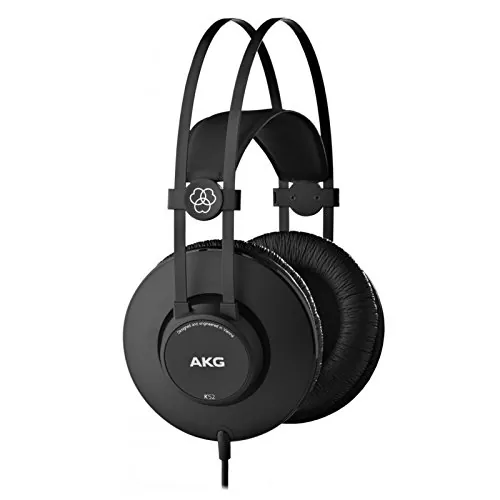
#1 Overall Winner
AKG K52 Headphones
- Strong overall value for a wired, closed-back studio-style headphone (value score leads in this matchup).
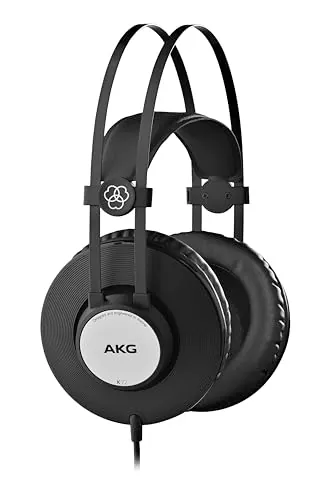
Comparison
The AKG K52 and AKG K72 are wired, over-ear, closed-back headphones aimed at affordable monitoring, tracking, and everyday listening. Based on the provided scores, the K52 is the stronger all-around pick for performance, build, and value , while the K72 is especially compelling if you prioritize lightweight comfort and usability . Your choice largely comes down to whether you want the sturdier, higher-scoring all-rounder (K52) or the comfort-first alternative (K72).
#1 Overall Winner
Contender
Choose the AKG K52 if you want the better-scoring all-rounder for monitoring and everyday listening, with stronger value, sturdier ratings, and replaceable ear pads.
Choose the AKG K72 if long-session comfort is your #1 goal and you’re okay with more mixed durability/leakage feedback—especially if you might pair it with a better headphone output (DAC/amp) for best results.
Overall winner
Depends on your needs
| Feature | AKG K52 Headphones | AKG Pro Audio K72 Over-Ear, Closed-Back, High-Sensitivity, High Output 40mm drivers, Studio Professional Headphone. Also Great for Portable Devices. Black. | Winner |
|---|---|---|---|
| Overall score | Higher overall score (82) | Lower overall score (79) | AKG K52 Headphones |
| Amazon rating | 4.4/5 | 4.4/5 | Tie |
| Review count | 8,087 reviews | 4,512 reviews | AKG K52 Headphones |
| Type / design | Over-ear, closed-back, wired | Over-ear, closed-back, wired | Tie |
| Driver size | 40mm dynamic | 40mm dynamic | Tie |
| Impedance | 32 ohms | 32 ohms | Tie |
| Frequency range (listed) | 18Hz–20kHz | 16Hz–20kHz | AKG Pro Audio K72 Over-Ear, Closed-Back, High-Sensitivity, High Output 40mm drivers, Studio Professional Headphone. Also Great for Portable Devices. Black. |
| Comfort / usability | Good comfort; mixed fit reports (usability 79) | Frequently praised comfort (usability 84) | AKG Pro Audio K72 Over-Ear, Closed-Back, High-Sensitivity, High Output 40mm drivers, Studio Professional Headphone. Also Great for Portable Devices. Black. |
| Audio performance (score) | Slightly higher audio quality score (83) | Slightly lower audio quality score (81) | AKG K52 Headphones |
| Connectivity (score) | Higher connectivity score (78) | Lower connectivity score (67) | AKG K52 Headphones |
| Build quality (score) | Higher build score (74) | Lower build score (62) | AKG K52 Headphones |
| Durability (score) | Higher durability score (73) | Lower durability score (60) | AKG K52 Headphones |
| Replaceable ear pads | Yes (listed) | Not stated in provided data | AKG K52 Headphones |
| Setup / ease of start | Very easy (setup 92) | Very easy (setup 88) | AKG K52 Headphones |
| Value (score) | Higher value score (90) | Lower value score (85) | AKG K52 Headphones |
For real-world performance in this category—how well the headphones work for monitoring, tracking, and general listening—the AKG K52 comes out ahead on the provided scoring (performance 84 vs 78). Both aim for a balanced response appropriate for studio-style use, but K52’s higher performance rating and value-oriented interpretation suggest it delivers a more consistently satisfying “plug in and go” experience across common devices.
The AKG K72 can still perform very well, especially for tracking and practice, and many reviews praise the sound once paired with a stronger headphone output. If you already use a USB DAC or headphone amp, that can reduce the practical gap for K72.
Reliability leans toward the AKG K52 (71 vs 66). K52 reviews include some complaints about static or cable/jack sensitivity, but K72 has more frequent mixed feedback around durability (including wire problems) and isolation consistency.
For both models, reliability in day-to-day use will depend heavily on cable handling and jack fit. If you expect frequent plugging/unplugging or travel use, the higher build/durability scoring on K52 is a meaningful advantage.
The AKG K72 has the edge for usability (84 vs 79). Reviews repeatedly describe it as lightweight and comfortable over long sessions, and that can translate into fewer interruptions during practice, editing, or tracking.
The K52 is also easy to live with—high setup score and a single-sided long cable are convenient—but fit is more mixed in review sentiment (some users find it snug or tiring over time). With either model, the most important usability factor is getting a good seal and stable fit for your head shape.
Design scoring goes to the AKG K72 (82 vs 77). In practical terms, that aligns with the way many buyers talk about it: very light on the head, comfortable ear coverage, and a fit that can work well even for long sessions.
The AKG K52 still offers a comfort-first design (self-adjusting headband, lightweight build, over-ear pads), but the feedback is more split—some users love the fit, while others mention discomfort after extended use.
Build quality favors the AKG K52 (74 vs 62). K52’s product description emphasizes durability testing and includes replaceable ear pads, while K72 reviews more often call out plastic-y construction and mixed durability, including reports of wire issues.
Neither model is described as premium-material hardware, but if you’re prioritizing fewer build-related worries (especially around cables and long-term wear parts), the scoring and review summaries point to K52 as the safer bet.
Durability is a clearer win for the AKG K52 (73 vs 60). The K52 description emphasizes stress testing and includes replaceable ear pads, while K72 customer feedback is more divided, with some users reporting wires breaking easily.
If your use involves tossing headphones in a bag, frequent commuting, or heavy studio sessions where the cable gets moved a lot, the provided data suggests K52 is the safer durability choice between these two.
Portability favors the AKG K72 on the provided scoring (76 vs 67). Both are wired, over-ear headphones (not compact earbuds), but K72’s usability/design feedback focuses heavily on how light it feels, which can make it easier to carry and wear on the go.
The K52 is not foldable per the provided specs, which can make packing less convenient. If you plan to travel with either, consider how you’ll store the cable and protect the ear cups from being crushed.
Feature-wise, these two are closely matched: both are wired, use a 3.5mm jack, include a 6.3mm adapter, and are designed as closed-back, over-ear studio headphones with a self-adjusting headband concept mentioned in their descriptions. Neither offers modern extras like Bluetooth, ANC, app EQ, or multipoint.
The clearest feature advantage from the provided data is on the K52, which explicitly lists replaceable ear pads. That’s a practical, ownership-focused feature that can matter more than “smart” features in a studio budget model.
Setup is easy on both because they’re wired: plug into 3.5mm, use the included 6.3mm adapter if needed, and start listening. The scores reflect that simplicity, with K52 slightly higher for setup (92 vs 88).
If you’re connecting to an interface, mixer, or DAC, the main “setup” step is just choosing the right jack size and ensuring a secure connection to avoid crackle or intermittent sound.
Both are compatible with devices that have a 3.5mm audio jack (or compatible adapters), and both include a 6.3mm adapter for pro gear. The scoring favors the AKG K52 for compatibility (86 vs 78), which lines up with its low-impedance “broad range of playback devices” positioning.
Before buying either, confirm whether your phone/tablet/laptop still has a 3.5mm port, or plan for a USB-C/Lightning-to-3.5mm adapter as needed.
Both headphones target a studio-style, balanced presentation for monitoring, and both are praised for sound quality relative to cost. On the provided scoring, AKG K52 edges AKG K72 for audio quality (83 vs 81), and reviews highlight solid bass response and clear highs.
K72 reviews also praise clarity for recording monitoring, but they more frequently mention that the sound can improve with a better source (DAC/headphone amp). If you will drive them from a laptop/phone jack, K52’s “easy to drive” positioning and slightly higher audio/performance scoring may make it the more consistent choice.
Connectivity is simple on both: they’re wired headphones using a 3.5mm jack and include a 6.3mm adapter for studio gear. The scoring, however, favors the AKG K52 for connectivity (78 vs 67) and compatibility (86 vs 78), suggesting a smoother experience across a wider range of playback sources.
Neither offers Bluetooth, multipoint, or app-based features, so your main “connectivity” consideration is whether your devices have a 3.5mm output (or you’ll need an adapter) and whether your source provides clean power without crackle.
Both models are positioned as affordable studio-style headphones with strong buyer satisfaction, but the provided scoring gives the AKG K52 the value win (90 vs 85). That’s driven by its higher overall score and stronger ratings in build/durability and compatibility—areas that can matter as much as sound at this price.
The AKG K72 can still be excellent value if its fit is perfect for you and you prioritize comfort. However, mixed durability and leakage/isolation feedback can reduce value for some buyers, depending on use case.
Both come from AKG, a brand associated with pro audio products. The provided brand trust scores are close, with a small edge to the K52 (84 vs 80). In practice, the decision here is less about brand and more about which model better matches your priorities: K52 for overall balance and longevity signals, K72 for comfort-first listening.
Customer satisfaction is strong for both: each has a 4.4/5 rating, and both have thousands of reviews. The provided customer satisfaction scores are also equal (88 vs 88), suggesting broadly similar buyer happiness.
The difference shows up in the themes: K52 reviews frequently highlight sound and value with some cable/static complaints, while K72 reviews heavily emphasize comfort but include more mixed durability and leakage/isolation experiences.
Warranty/support scoring is the same for both in the provided data. The K72 listing mentions a manufacturer’s limited warranty applying only when purchased from AKG Authorized North American Dealers, which is an important buyer check if warranty coverage matters to you.
Because specific warranty lengths and policies are not provided for both products, the safest approach is to confirm seller authorization and keep purchase documentation for whichever model you choose.
The AKG K52 is the better overall choice on the provided data. It has the higher overall score and stronger ratings where budget studio headphones often succeed or fail: consistent performance, durability, compatibility, and value. If you want a dependable closed-back wired headphone for monitoring, tracking, and everyday listening without overthinking the chain, K52 is the more confident pick.
The AKG K72 is still worth choosing when comfort is your top priority. Its usability score is higher and many owners praise how light it feels for multi-hour sessions. The trade-off is more mixed feedback on durability and isolation/leakage. If you can get a good fit and you’re pairing it with a decent headphone output, K72 can be a very comfortable monitoring companion.
Overall winner
Depends on your needs
Based on the provided scoring, the AKG K52 ranks higher overall (82 vs 79). The K52 also scores higher for performance, audio quality (slightly), connectivity, and value. The AKG K72 still makes sense if your priority is long-session comfort and usability, where it scores better and many reviews highlight how light it feels.
Both are positioned as closed-back, over-ear headphones for monitoring and tracking, with 40mm drivers and 32-ohm impedance. On scoring, the K52 is ahead on performance and audio quality, while the K72 is often praised in reviews for comfort during long sessions. If your monitoring sessions run for hours, comfort may tilt you toward K72; for overall balance and value, K52 leads.
The AKG K72 is the safer pick if comfort is your top priority. Its usability score is higher, and many reviewers describe it as extremely light and easy to wear for hours. The AKG K52 is also frequently described as comfortable and uses a self-adjusting headband, but comfort and fit are more mixed—some users report ear fatigue or a snug fit over extended use.
On the provided scoring, K52 has a slightly higher audio quality score than K72, and many reviews describe the K52 as clear with solid bass for the price. K72 reviews also praise sound quality for tracking and everyday listening, but there are more comments about it sounding better with a stronger source or headphone amp. For straightforward plug-in listening, K52 appears more consistently satisfying.
Both are marketed as closed-back to reduce leakage, but real-world feedback is mixed. For the AKG K72, reviews include both praise for isolation and reports of severe sound leakage. For the AKG K52, reviewers also mention isolation can be less than expected for a closed-back, especially depending on head size/fit. If leakage matters, prioritize getting a good seal and fit.
Based on the scores, the AKG K52 rates higher for reliability and durability. It also explicitly lists stress testing and replaceable ear pads, which can help extend usable life. The AKG K72 has more mixed durability feedback in reviews, including reports of wires breaking, aligning with its lower build quality and durability scores in the provided data.
Yes—both are straightforward wired headphones with a 3.5mm plug and a 6.3mm adapter for audio interfaces. Setup scores are high for both (K52 higher), reflecting the simple “plug in and go” experience. There’s no app, pairing, or firmware step. The main usability differences are more about fit/comfort and making sure your source device’s headphone output is strong enough for your preferences.
Both are designed to work with devices that have a 3.5mm jack (or compatible adapters) and use 32-ohm impedance. The K52 scores higher for compatibility and has reviews mentioning it’s not hard to drive. The K72 is also described as good for portable devices, but some reviews suggest it can sound noticeably better when paired with a dedicated DAC/headphone amp rather than weaker outputs.
Both are viewed as strong budget options, but the provided scoring gives the edge to the AKG K52 on value. That aligns with its higher overall score and strong performance-to-price positioning in the interpretation. The AKG K72 is still a good value if its comfort and fit work well for you, but its lower build quality score and mixed durability feedback may affect perceived long-term value.
Check our rankings and expert guides to find the best electronics products for your goals.