#1 Overall Winner
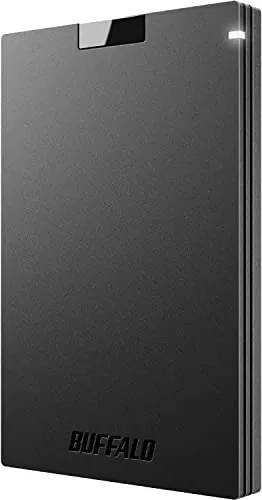
BUFFALO External SSD 500GB SSD-PG500U3B
- Compact SSD format with a 500GB capacity for portable files and game storage.
Comparison
The BUFFALO External SSD 500GB and BUFFALO Mini Station 2TB take different approaches to portable storage: the first prioritises SSD convenience, USB-C support and stated console compatibility, while the second prioritises 2TB capacity and value. The Mini Station leads on overall score, but the SSD is the stronger fit for PS4/PS5 use and users who need USB-C alongside USB-A.
#1 Overall Winner
Contender
Choose the BUFFALO External SSD 500GB for PS4/PS5 storage, USB-C devices and compact SSD convenience. Choose the BUFFALO Mini Station 2TB if you need much more space for Windows or Mac backups and can accommodate its Type-A, bus-powered connection.
Overall winner
Depends on your needs
| Feature | BUFFALO External SSD 500GB SSD-PG500U3B | BUFFALO Mini Station 2TB HD-PCFS2.0U3-BBA | Winner |
|---|---|---|---|
Storage capacity |
500GB |
2TB |
BUFFALO Mini Station 2TB HD-PCFS2.0U3-BBA |
Storage type |
Solid-state drive |
Mechanical hard disk |
Depends |
Listed read speed |
340MB/s |
No directly comparable drive read speed supplied |
BUFFALO External SSD 500GB SSD-PG500U3B |
USB connections |
USB-C and USB-A |
USB Type-A |
BUFFALO External SSD 500GB SSD-PG500U3B |
Computer compatibility |
Mac and PC |
Windows and Mac |
Tie |
Console compatibility |
PS4 and PS5 listed |
Not stated |
BUFFALO External SSD 500GB SSD-PG500U3B |
Portability score |
Higher |
Strong |
BUFFALO External SSD 500GB SSD-PG500U3B |
Usability score |
Higher |
Lower |
BUFFALO External SSD 500GB SSD-PG500U3B |
Reliability score |
Lower |
Higher |
BUFFALO Mini Station 2TB HD-PCFS2.0U3-BBA |
Value score |
Lower |
Higher |
BUFFALO Mini Station 2TB HD-PCFS2.0U3-BBA |
Warranty information |
Three years registered; two years unregistered |
Not provided |
BUFFALO External SSD 500GB SSD-PG500U3B |
Overall score |
Lower |
Higher |
BUFFALO Mini Station 2TB HD-PCFS2.0U3-BBA |
The SSD is the more suitable option for transfer-focused everyday work because it uses solid-state storage and lists a 340MB/s read speed. The Mini Station's mechanical HDD design is better understood as a capacity-first solution rather than a speed-first one. Its higher performance score in the supplied data should be read alongside the SSD's stronger speed score: the HDD performs well for general storage, while the SSD is the better fit when responsiveness and handling files on the move are more important.
The BUFFALO External SSD has the higher speed score and a listed 340MB/s read speed. Its product information also positions SSD storage as faster than an HDD for large, intensive tasks. The Mini Station's supplied interface figures should not be treated as a directly comparable drive-speed result, and its lower speed score reinforces its role as a capacity-oriented mechanical HDD. Select the SSD when transfer responsiveness is a priority.
The Mini Station has the higher reliability score, and its limited supplied reviews are generally positive about dependable use. The SSD has positive reports of reliable operation, but its review data also includes isolated complaints about data corruption and speed dropping well below expectations. These reports do not establish universal failure, but they make the Mini Station the more favourable choice on the supplied reliability scoring. Keep independent backups regardless of model.
The BUFFALO External SSD has the stronger usability score and is positioned as a compact plug-in storage device for PC, Mac and console use. Reviews generally describe it as easy to use, although PS5 setup may be less straightforward. The Mini Station scores lower because its bus-powered operation can create recognition issues on some systems; direct connection or a self-powered hub may be necessary. For routine computer storage with adequate power, both are practical, but the SSD is more convenient overall.
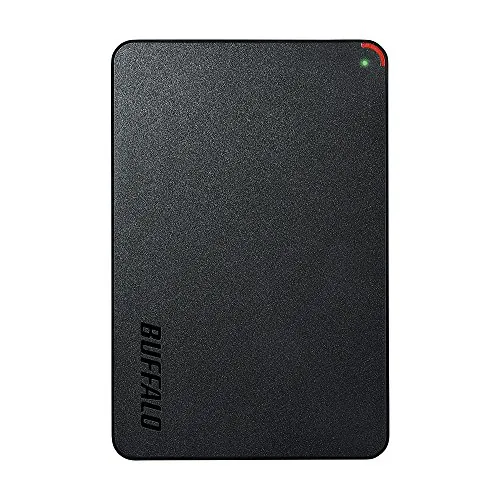
The SSD is designed for pocketable, on-the-go use and has the higher design score. Its USB-C and USB-A arrangement is practical across newer and older devices. The Mini Station remains compact at approximately 3.0 by 5.5 by 0.55 inches and 175g, making it easy to carry despite its larger capacity. Choose the SSD for the more connection-flexible travel design, or the HDD if a slightly larger portable drive is acceptable in exchange for 2TB.
Both products have the same build-quality score. The SSD is described as shock-resistant and rugged, but customer feedback is mixed: some users find it sturdy while others criticise a thin plastic shell. The Mini Station also uses a plastic enclosure, with one review describing it as more durable than expected. Neither supplied listing establishes a decisive construction advantage, so careful handling remains sensible for both portable drives.
The two drives have the same durability score. The SSD is marketed as shock-resistant with drop protection, an advantage in principle for travel, but review feedback raises concerns about its plastic shell. The Mini Station's compact plastic enclosure receives some positive durability feedback, though its mechanical HDD construction still warrants careful handling. The available evidence does not support declaring a clear durability winner.
Both drives are highly portable, but the SSD has the slightly higher portability score. Its 500GB solid-state format, compact dimensions and pocket-oriented positioning suit frequent carrying. The Mini Station is also compact and weighs approximately 175g, which reviewers describe as easy to transport. The choice is between the SSD's stronger mobility focus and the HDD's much larger capacity in a still-portable body.
The SSD has the broader feature set for mixed-device use, with USB-C and USB-A support, stated PS4/PS5 compatibility, a shock-resistant design and included Type-A cable with Type-C adapter. The Mini Station is simpler: a 2TB USB Type-A portable HDD with a supplied 50cm cable and fault-prediction-service compatibility mentioned in its description. Its principal feature advantage is storage capacity rather than connection or console versatility.
The SSD has the better setup score. It should be straightforward on computers, but one review describes extra steps for PS5 extended storage, including formatting guidance and use of Buffalo's DiskFormatter2 tool. The Mini Station has a lower setup score because bus-powered operation can prevent recognition when a computer or hub cannot provide enough power. Check your intended computer port and console requirements before choosing.
The SSD has the stronger compatibility score and explicitly supports Mac, PC, PS4 and PS5, along with USB-C and USB-A connections. The Mini Station is listed for Windows and Mac systems with Type-A USB, including older USB standards. For computer-only use, both can fit. For stated PlayStation support or a USB-C-equipped device, the SSD is the more clearly compatible option.
Connectivity is a clear SSD advantage. The SSD supports USB-C and USB-A and receives a substantially stronger connectivity score, which makes it easier to use across a wider range of current computers and devices. The Mini Station supports USB 3.1 Gen 1, USB 3.0 and USB 2.0, but it is specified for Type-A connections. Its bus-powered design can also require a direct connection or self-powered hub when available USB power is inadequate.
The SSD has the stronger power-efficiency score. The Mini Station is bus-powered and its listing specifically warns that insufficient power can stop it from being recognised, especially in some laptop or hub situations. That does not prevent normal use on a suitable port, but it is an additional practical requirement. The SSD is the safer choice where power availability and connection simplicity are important.
The Mini Station is the stronger value choice in the supplied scoring, combining 2TB of capacity with a higher value score. It makes the most sense for buyers whose primary requirement is storing large quantities of files. The SSD should not be dismissed solely because it has less capacity: its USB-C support, stated PS4/PS5 compatibility, stronger portability and more convenient solid-state format can justify it for users who need those attributes. Value depends on the intended device and workload.
Both products are from BUFFALO, so there is no meaningful brand-versus-brand distinction. The Mini Station receives a slightly higher brand-trust score, while the SSD listing provides clearer registered and unregistered warranty terms. Review feedback includes positive comments about BUFFALO customer service as well as one negative SSD support experience. The supplied data therefore supports checking current support and return terms for the specific seller before purchase.
Both products have broad Amazon review histories and close average ratings: 4.4 out of 5 from 4,056 reviews for the SSD and 4.2 out of 5 from 7,395 reviews for the Mini Station. The Mini Station has the slightly higher customer-satisfaction score, with feedback praising compactness and trouble-free use. SSD reviews frequently praise speed, size and ease of use, while durability and isolated reliability complaints are more mixed.
The SSD has clearer supplied warranty information: three years for registered devices and two years if unregistered. The Mini Station listing does not provide equivalent warranty terms, and its warranty-support score is lower. The SSD is therefore the better documented choice for buyers who want warranty clarity, although current coverage and seller return terms should always be confirmed before ordering.
The BUFFALO Mini Station 2TB is the better overall option on the supplied scoring, especially for buyers who want substantially more storage and a stronger value, reliability and customer-satisfaction profile. It is the logical choice for a large Windows or Mac data archive when a Type-A port and adequate USB power are available.
The BUFFALO External SSD 500GB remains the better specialist choice. Its solid-state design, USB-C and USB-A support, stated PS4/PS5 compatibility, higher usability score and stronger portability make it more adaptable for travel, active files and console-oriented storage. Its lower capacity and mixed durability and reliability feedback mean it is not the universal winner. In short, buy the Mini Station for 2TB capacity-led storage; buy the SSD for connection flexibility, compactness and stated PlayStation support.

Overall winner
Depends on your needs
The Mini Station 2TB has the higher overall score, supported by stronger value, reliability and customer-satisfaction results. However, the BUFFALO External SSD is the more practical choice when USB-C support, stated PS4/PS5 compatibility, easier day-to-day use and SSD-style portability matter more than maximum capacity.
The BUFFALO Mini Station HD-PCFS2.0U3-BBA offers 2TB, compared with 500GB on the BUFFALO External SSD SSD-PG500U3B. That gives the Mini Station four times the stated capacity, making it the clearer option for large photo, video or file archives.
The 500GB BUFFALO External SSD is the appropriate choice based on the supplied listings because it explicitly names PS4 and PS5 compatibility. One review notes that PS5 setup can require careful formatting and use of rear USB ports. The Mini Station listing does not state console compatibility.
The BUFFALO External SSD has the stronger connectivity score and lists both USB-C and USB-A support. The Mini Station supports USB 3.1 Gen 1, USB 3.0 and USB 2.0 through Type-A USB. Choose the SSD if USB-C access is important for your devices.
The SSD scores higher for usability and setup, and its product information presents it as a straightforward external drive. The Mini Station can require a direct computer connection or a self-powered hub when bus power is insufficient. Console use of the SSD may still involve additional formatting steps.
Both products are portable backup options, but they serve different priorities. The SSD is better for a smaller, USB-C-capable drive with stronger portability and convenience scores. The Mini Station is better for backups that need 2TB of space, provided your computer can supply sufficient USB power.
The Mini Station has a higher reliability score in the supplied scoring data. The SSD receives substantial positive feedback for speed and everyday use, but its review summary also includes mixed durability feedback and isolated complaints about data corruption or reduced performance. As with any external drive, maintain separate backups of important files.
The Mini Station has the stronger value score, chiefly pairing 2TB of capacity with a lower capacity-focused purchase proposition. The SSD should be chosen for its different benefits: stated console support, USB-C and USB-A connectivity, and a more convenient SSD design. Value depends on whether capacity or portability and connection flexibility matter more.
Check our rankings and expert guides to find the best electronics products for your goals.