#1 Overall Winner
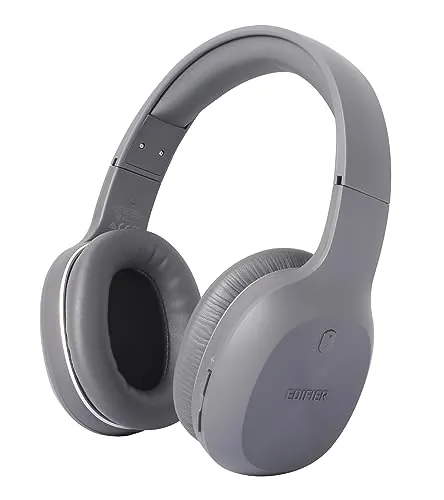
Edifier W600BT Wireless Over-Ear Headphones
- Comfort-focused over-ear fit with soft leatherette ear cups and lightweight build (168 g).
Comparison
The Edifier W600BT and Jabra Evolve 40 target different needs: Edifier is a wireless over-ear headphone built around comfort, portability, and battery life, while Jabra is a wired, UC-optimized work headset designed for consistent call performance. With a higher overall score and stronger value/battery/portability scoring, Edifier is the better all-round pick for everyday listening, but Jabra can win for desk-based calling workflows where USB connectivity and UC features matter most.
#1 Overall Winner
Contender
Pick Edifier W600BT if you want wireless over-ear comfort, long stated battery life, and strong value for everyday music/video plus calls.
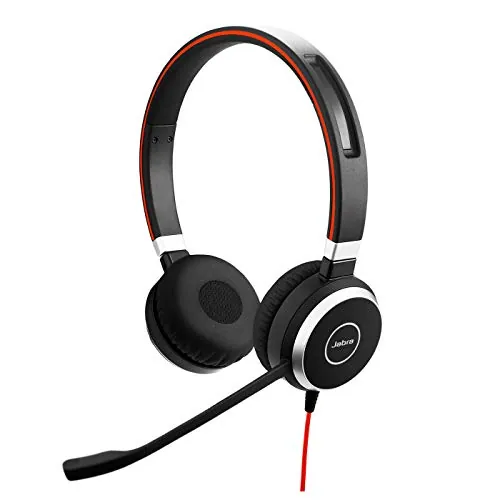
Pick Jabra Evolve 40 if you mainly work from a desk and want a UC-oriented wired headset (USB/3.5mm) with features like a busylight and a reputation for clear call audio.
Overall winner
Depends on your needs
| Feature | Edifier W600BT Wireless Over-Ear Headphones | Jabra Evolve 40 Professional Wired Headset (Stereo, UC-Optimized) | Winner |
|---|---|---|---|
| Overall score | 79 | 68 | Edifier W600BT Wireless Over-Ear Headphones |
| Form factor | Over-ear | On-ear | Depends |
| Connection type | Bluetooth 5.1 + 3.5mm (AUX cable included) | USB + 3.5mm (wired) | Depends |
| Battery/runtime | Up to 30 hours (listed) | Not applicable (wired) | Edifier W600BT Wireless Over-Ear Headphones |
| Dual-device capability | Dual Bluetooth connection (listed) | Not listed | Edifier W600BT Wireless Over-Ear Headphones |
| Call/UC focus | General-purpose headset use (Bluetooth mic) | UC-optimized; Skype for Business/Cisco certifications mentioned; busylight | Jabra Evolve 40 Professional Wired Headset (Stereo, UC-Optimized) |
| Audio quality (score) | 77 | 82 | Jabra Evolve 40 Professional Wired Headset (Stereo, UC-Optimized) |
| Connectivity (score) | 68 | 84 | Jabra Evolve 40 Professional Wired Headset (Stereo, UC-Optimized) |
| Usability (score) | 83 | 80 | Edifier W600BT Wireless Over-Ear Headphones |
| Portability (score) | 88 | 70 | Edifier W600BT Wireless Over-Ear Headphones |
| Build quality (score) | 76 | 58 | Edifier W600BT Wireless Over-Ear Headphones |
| Reliability (score) | 66 | 52 | Edifier W600BT Wireless Over-Ear Headphones |
| Value (score) | 88 | 63 | Edifier W600BT Wireless Over-Ear Headphones |
| Customer ratings (Amazon) | 4.4/5 (4,069 reviews) | 4.3/5 (3,295 reviews) | Tie |
| Warranty/support info provided | One-year warranty listed | Warranty length not specified in provided data | Edifier W600BT Wireless Over-Ear Headphones |
For real-world performance, the split is largely about calling consistency vs everyday wireless listening. The Edifier W600BT scores slightly higher on performance overall and is positioned for general audio with 40 mm drivers and long battery life, making it convenient across locations. The Jabra Evolve 40 scores strongly for audio quality and is repeatedly described as very clear for calls, which aligns with its UC-oriented purpose.
If your “performance” metric is meeting reliability and voice clarity at a desk, Jabra’s wired approach and call focus often matter more. If your performance metric is portable, all-day listening without cables, Edifier’s battery and portability advantage is difficult to ignore.
In this category, “speed” largely shows up as how quickly you can get connected and stay connected. Jabra Evolve 40 tends to feel faster and more consistent for PC use because USB/3.5mm avoids Bluetooth pairing steps. Edifier W600BT is often reported as easy to pair, but reconnection behavior is mixed in the review summary, which can slow down day-to-day switching for some users.
Reliability is a caution area for both. Edifier W600BT has mixed reliability feedback, including reports of units stopping after a few months, and its reliability score reflects that. Jabra Evolve 40 scores lower for reliability, with review summaries noting cases where it stops working after a short period (including adapter-related complaints).
If reliability is critical, consider buying based on return policy fit, and test early (mic, cable strain points, and reconnection behavior) within the return window.
Both score well for usability and setup, but they remove friction in different ways. Edifier W600BT is frequently described as easy to pair and comfortable to wear, though review summaries note that reconnecting can be a pain point for some users. Jabra Evolve 40 benefits from plug-and-play wired use for many setups, and reviews mention straightforward USB operation and practical call controls (such as the desk controller/puck).
Choose Edifier if you value wireless convenience and can tolerate occasional Bluetooth quirks; choose Jabra if you want a more predictable “plug in and start calling” routine.
The designs reflect different priorities. Edifier W600BT is an over-ear wireless headphone designed to be lightweight and comfortable, with breathable leatherette ear cups and a more travel-friendly, casual-use fit. Jabra Evolve 40 is an on-ear office headset design that emphasizes long-call comfort, boom-mic positioning, and desk workflow (including the busylight concept).
If you dislike on-ear pressure or want more passive isolation, Edifier’s over-ear style may suit you better. If you want a headset that “feels like office equipment” with call controls and UC intent, Jabra’s design makes more sense.
On the provided scores, Edifier W600BT rates higher for build quality. The review summary still flags mixed reliability, but the overall build and long-term satisfaction picture is stronger than Jabra’s in the provided data.
Jabra Evolve 40 is widely used in work settings, yet the aggregated feedback includes durability concerns such as headpiece cracking and wire issues. If you expect daily packing/unpacking or you’re hard on cables, that feedback is important to weigh.
On durability scoring, Edifier W600BT rates higher than Jabra Evolve 40. While both have negative durability anecdotes, Jabra’s aggregated review summary specifically flags issues like headpiece cracking and wire breakage, which is a common risk profile for wired headsets that are moved around frequently.
Edifier’s durability feedback is not universally positive either, but it has fewer durability red flags in the summary compared with Jabra.
Edifier W600BT is the more portable option thanks to its wireless design, low weight (168 g), and long stated battery life. It’s better suited to travel, moving between rooms, and phone use without a tether.
Jabra Evolve 40 is portable in the sense that it can be packed for commuting to the office, but the fixed cable and wired-first workflow make it less convenient for truly mobile listening.
Edifier W600BT focuses on consumer-friendly features: Bluetooth 5.1, dual-device connection, a built-in microphone, and the option to switch to wired use with the included 3.5mm cable. Its headline functional feature is the ability to move between devices and locations without re-cabling.
Jabra Evolve 40 is feature-built for work: UC optimization/certifications, a busylight that can auto-activate during calls, and support for both USB and 3.5mm connections. If you want workflow and call controls for office productivity, Jabra’s feature set is more specialized; if you want flexible wireless day-to-day use, Edifier’s feature choices are more lifestyle-oriented.
Both score well for setup. Edifier W600BT is commonly described as straightforward to pair and start using, with the added convenience of an included AUX cable as a backup. Jabra Evolve 40 often benefits from plug-and-play wired setup via USB, which many users find simplest for work laptops and meeting apps.
If you want to avoid Bluetooth setup and troubleshooting entirely, Jabra is usually the lower-friction path. If you want wireless flexibility and are fine with occasional reconnection quirks, Edifier’s setup is still generally easy.
Both are broadly compatible, but they approach it differently. Edifier W600BT lists compatibility with laptops, desktops, gaming consoles, tablets, phones, TVs, and more, using Bluetooth or 3.5mm. Jabra Evolve 40 is positioned for universal device use and explicitly targets leading UC platforms with certifications mentioned, which can matter in managed IT environments.
If you need a headset that aligns with UC platform expectations, Jabra has the edge. If you need consumer electronics flexibility with wireless plus AUX, Edifier is typically easier to use across casual devices.
Audio needs differ between these two. Jabra Evolve 40 scores higher on audio quality and is consistently reviewed as clear for calls, which is the core job of a professional UC headset. Some reviews also praise its sound for music, while others describe the speaker sound as more average—consistent with a business-first tuning.
Edifier W600BT is positioned around dynamic sound and bass with 40 mm drivers, and many users praise sound quality for music and video. However, feedback varies on bass/treble balance and maximum volume for some listeners, and the score reflects “good general sound quality” rather than a call-specialist profile.
Jabra Evolve 40 wins on connectivity for most work scenarios: it’s wired, supports USB and 3.5mm, and has a higher connectivity score, which typically translates to fewer surprises during meetings. Reviews commonly mention reliable laptop connection through USB.
Edifier W600BT offers Bluetooth 5.1 with a stated 10 m range and dual-device connection, which is excellent for switching between phone and computer without swapping cables. The main trade-off is that customer feedback on Bluetooth reconnection is mixed, making it less predictable than a wired headset if you frequently disconnect/reconnect.
Edifier W600BT is built around battery-powered use, with a stated up to 30 hours of playtime and a listed 3-hour charge time. This makes it better for commuting, travel, and moving around the house without thinking about charging every day.
Jabra Evolve 40 is wired, so battery life isn’t part of the decision—its advantage is that you don’t need to manage charging at all, which can be preferable for full-time desk work.
Both score similarly for power efficiency in the provided scoring, but they manage power differently. Edifier W600BT depends on its internal battery and is designed for long runtime per charge. Jabra Evolve 40 avoids battery concerns by operating as a wired headset, which can be more convenient for all-day desk use.
Edifier W600BT is the stronger value pick in the provided scoring, combining comfort, portability, battery life, and generally positive customer satisfaction into a package many reviewers consider good for the price. The main value risk is whether Bluetooth reconnection behavior or unit longevity becomes an issue for your usage pattern.
Jabra Evolve 40 offers value when its work features (USB connectivity, UC intent, call controls, busylight) directly improve your productivity and call clarity. However, mixed durability/reliability and mixed “worth it” sentiment in the review summary weaken its value case unless you specifically need a UC-focused wired headset.
On the provided scores, Jabra rates slightly higher on brand trust, reflecting its established presence in business communications headsets and UC ecosystems. Edifier is close behind and benefits from strong customer satisfaction and value positioning for consumer headphones.
If you prioritize a work-communications brand identity and UC orientation, Jabra may inspire more confidence. If you prioritize broad consumer adoption and value-driven performance, Edifier’s brand perception in the provided data remains strong.
Both products are well-rated on Amazon with thousands of reviews. Edifier W600BT has a slightly higher average rating (4.4/5 vs 4.3/5) and a higher customer satisfaction score, with common praise for comfort, lightweight wear, sound quality, and value. The most repeated negative theme is mixed Bluetooth reconnection and some early failures.
Jabra Evolve 40 receives frequent praise for call clarity and comfort, especially for work calls, but has more concentrated complaints around durability (headband/cable) and reliability, along with mixed opinions on whether it’s worth the price.
Edifier W600BT clearly lists a one-year warranty, which improves buyer confidence and sets expectations for support. Jabra Evolve 40 includes a “warranty statement” in the box contents, but the provided listing text does not specify warranty length or terms; combined with a lower warranty/support score, this makes the support picture less clear from the available data.
If warranty coverage is a deciding factor, Edifier is easier to evaluate from the information provided.
On the provided data and scores, the Edifier W600BT is the better overall choice for most shoppers: it scores higher overall and is especially strong for comfort, portability, battery life, and value. It makes sense as a single headset you can use across the home, commute, and office without being tied to a desk.
The Jabra Evolve 40 is still the better option for a specific audience—people who live in meetings and want a wired, UC-oriented headset with strong call clarity and productivity features (like the busylight) plus USB connectivity. The trade-offs are durability/reliability concerns in reviews and less flexibility away from a computer.
If you’re unsure, decide based on where you’ll use it most: mobile wireless listening (Edifier) vs desk-first professional calling (Jabra).

Overall winner
Depends on your needs
Based on the provided scoring, Edifier W600BT ranks higher overall (79 vs 68), driven by comfort, portability, battery life, and value. Jabra Evolve 40 can still be the better pick if your priority is a wired, UC-focused headset for consistent PC calling, with strong audio quality and connectivity scores for office use.
Jabra Evolve 40 is purpose-built for work calls, with UC optimization/certifications mentioned, USB connectivity, and frequent review praise for clear mic performance. The Edifier W600BT can handle calls over Bluetooth and is reviewed as usable as a headset, but it also has mixed feedback around Bluetooth reconnection reliability, which matters in day-to-day meeting use.
Edifier W600BT is the clear choice for battery-powered use, with a stated up to 30 hours of playtime and a listed 3-hour charge time. Jabra Evolve 40 is a wired headset and does not list battery runtime in the provided data, which typically suits desk setups where you don’t want to manage charging.
Both models receive comfort praise, but they cater to different preferences. Edifier W600BT is an over-ear, lightweight design with breathable leatherette ear cups, often preferred for longer listening because it surrounds the ear. Jabra Evolve 40 is on-ear with leather-feel cushions and is designed for all-day work use, though some users report fit issues.
Edifier W600BT is generally better for travel because it’s wireless, lightweight (168 g listed), and has long stated battery life. Jabra Evolve 40 can still travel well for laptop-based work, but it remains a wired headset with a fixed cable, which can be less convenient when moving around or using a phone away from a desk.
Yes. Edifier W600BT includes a 3.5mm AUX cable for wired listening when you don’t want to use Bluetooth or when the battery is low. Jabra Evolve 40 supports 3.5mm as well and also adds a USB connection option, which is useful for PCs and UC calling setups.
Jabra Evolve 40 tends to be the safer choice for stable day-to-day connectivity because it’s wired (USB/3.5mm) and scores higher on connectivity. Edifier W600BT is easy to pair for many buyers, but the review summary notes mixed Bluetooth reconnection experiences. If you frequently switch devices or rejoin meetings, that difference can matter.
Edifier W600BT scores stronger on value and has a large base of positive reviews highlighting comfort and “good for the price.” Jabra Evolve 40 can be worth it when its UC features (busylight, call controls, USB connectivity) directly improve your work setup, but customer value feedback is mixed in the review summary.
Neither model is spotless on reliability. Edifier W600BT has mixed reliability feedback, including reports of units stopping after a few months. Jabra Evolve 40 also has mixed reliability reviews and more pointed durability complaints (e.g., headpiece cracking and wire issues). If longevity is critical, prioritize retailer return terms and warranty clarity before buying.
Check our rankings and expert guides to find the best electronics products for your goals.