#1 Overall Winner
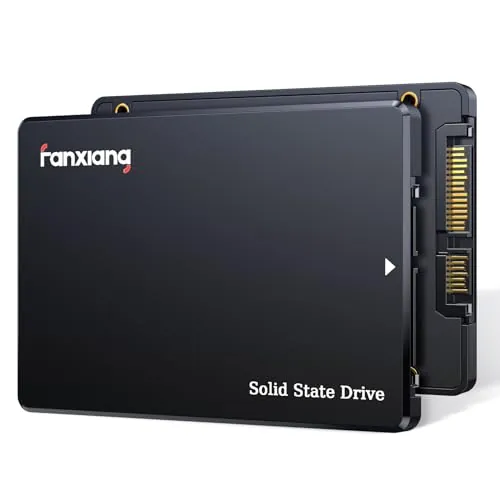
fanxiang S101Q 4TB SATA SSD
- 4TB of stated storage in a standard 2.5-inch SATA format.
Comparison
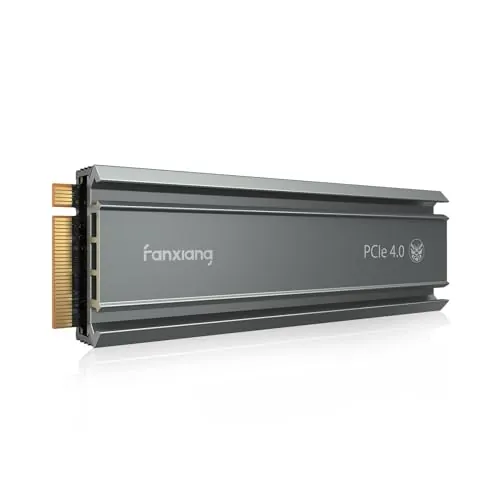
The fanxiang S101Q 4TB and S660 2TB are not interchangeable upgrades: the S101Q is a 2.5-inch SATA drive, while the S660 is a PCIe 4.0 M.2 NVMe drive built for PS5 and compatible desktops. The S660 is the overall performance leader, but the S101Q is the practical choice for SATA-only systems and buyers who need 4TB of stated capacity.
#1 Overall Winner
Contender
Choose the S660 for PS5 expansion or a compatible PCIe 4.0 M.2 desktop where speed and the included heatsink matter. Choose the S101Q for a SATA laptop or desktop upgrade when 4TB capacity and broad stated OS compatibility matter more than NVMe-class throughput.
Overall winner
Depends on your needs
| Feature | fanxiang S101Q 4TB SATA SSD | fanxiang S660 2TB PCIe 4.0 NVMe SSD | Winner |
|---|---|---|---|
Compared capacity |
4TB |
2TB |
fanxiang S101Q 4TB SATA SSD |
Interface |
SATA III 6Gb/s |
PCIe 4.0 x4 NVMe |
Depends |
Stated speed |
Up to 500MB/s read; 470MB/s write |
Up to 5000MB/s |
fanxiang S660 2TB PCIe 4.0 NVMe SSD |
Physical format |
2.5-inch, 7mm |
M.2 with heatsink |
Depends |
PS5 suitability |
Not listed for PS5 expansion |
Listed as PS5 compatible |
fanxiang S660 2TB PCIe 4.0 NVMe SSD |
Cooling provision |
Shock-resistant design listed |
Pre-installed heatsink |
fanxiang S660 2TB PCIe 4.0 NVMe SSD |
Operating-system compatibility |
Windows, Linux, Mac OS listed |
Desktop and PS5 use listed |
Depends |
Setup |
Strong setup score; easy-install feedback |
Strong setup score; easy PS5-install feedback |
Tie |
Overall score |
69 |
76 |
fanxiang S660 2TB PCIe 4.0 NVMe SSD |
Reliability score |
58 |
64 |
fanxiang S660 2TB PCIe 4.0 NVMe SSD |
Warranty/service |
3 years after-sales service |
5-year quality assurance |
fanxiang S660 2TB PCIe 4.0 NVMe SSD |
Customer rating |
4.5/5 from 5,646 reviews |
4.6/5 from 3,650 reviews |
fanxiang S660 2TB PCIe 4.0 NVMe SSD |
The S660 is the clear performance choice on the supplied data. Its PCIe 4.0 NVMe platform is rated up to 5000MB/s, compared with the S101Q's up-to-500MB/s read and 470MB/s write specification over SATA. Reviews for the S660 mention quick transfers and smooth PS5 use, while S101Q reviews consistently describe a meaningful upgrade from mechanical hard drives. In practical terms, the S101Q is suitable for a SATA upgrade, but the S660 has far more performance headroom on compatible hardware.
The S660 wins speed decisively. Its stated up-to-5000MB/s data transfer rate is an order of magnitude above the S101Q's up-to-500MB/s read rating. This matters most for large transfers, demanding games, and systems that can use PCIe 4.0 bandwidth. The S101Q can still deliver a major speed improvement over an HDD, as its reviews suggest, but it cannot match NVMe throughput.
The S660 has the higher reliability score, but neither drive is free from concern. The S101Q review overview notes some failures within two months, and one detailed 4TB review reported disappearing drives, varying reported capacity, and instability. The S660 review overview similarly identifies multiple reports of failure after one week. The evidence supports testing either drive promptly and keeping important files backed up rather than declaring either one a long-term reliability leader.
Both products have strong usability scores and are often described as easy to install. The better choice depends entirely on the host device. The S101Q is a familiar drop-in option for a compatible 2.5-inch SATA bay, while the S660 is a straightforward PS5 or M.2 desktop installation according to reviews. Neither requires a complex setup in the supplied data, but buyers should confirm the available connector before purchase.
The designs serve different installations. The S101Q uses a thin 7mm 2.5-inch enclosure, making it appropriate for many laptop and desktop drive bays. The S660 uses the compact M.2 format but comes with a heatsink, which supports its gaming and high-speed positioning while making clearance relevant. Choose based on the device's supported form factor, not on appearance or compactness alone.
Both drives receive the same build-quality score. The S101Q is described as shock resistant and is reviewed by some buyers as well made, while the S660's notable physical addition is its heatsink. Neither listing provides enough material or endurance detail for a decisive construction-quality win. Reported failures for both products also mean the general build score should not be treated as a guarantee of long-term dependability.
The S101Q has the slightly higher durability score and is listed as shock resistant, which is useful for a portable computer or a drive handled during installation. The S660's heatsink is intended to help maintain lower temperatures during intensive operation, but its review overview includes early-drive-death reports. The supplied data does not establish a clear long-term durability advantage for either product.
The S101Q has the higher portability score despite being the larger physical format, likely reflecting its slim 7mm profile, 38g weight, and review use in SATA-to-USB enclosures. The S660 is physically compact at 30g, but its intended internal M.2 installation and heatsink make it less naturally suited to the portable external-drive use described for the S101Q. For internal use, both are light storage components.
The S101Q focuses on conventional SATA upgrade features: 3D NAND, SLC cache, garbage collection, wear-leveling, RAID, ECC, TRIM, S.M.A.R.T, and shock resistance. The S660 adds a PS5-oriented package with PCIe 4.0 NVMe connectivity and a pre-installed heatsink designed for prolonged intensive use. The S101Q's feature set is more relevant to legacy computer upgrades; the S660's is more relevant to gaming storage and high-throughput M.2 systems.
Both products receive the same high setup score. S101Q reviewers describe simple drive replacement and quick OS installation, while S660 reviewers describe easy PS5 fitting, fast recognition, and simple formatting. The practical setup winner is a tie: selecting the SSD that matches the system's bay or slot will matter more than any difference in the installation process.
Compatibility is the central distinction. The S101Q is stated to work with Windows, Linux, Mac OS, laptops, desktops, and all-in-one computers that support a 2.5-inch SATA drive. The S660 is listed for PS5 and desktop systems with the required M.2 PCIe connection. Their compatibility scores are close, but the S101Q has broader explicitly stated computer OS coverage, whereas the S660 has the key PS5 advantage.
The S101Q connects through SATA III 6Gb/s and is stated to be backward compatible with SATA II and SATA interfaces, giving it broad relevance for older computers. The S660 uses PCIe 4.0 x4 NVMe and is listed for desktop and PS5 use. The S660 scores slightly higher for connectivity because its interface enables much greater throughput, but the S101Q wins when the device only offers a 2.5-inch SATA connection.
The S660 has a slightly higher power-efficiency score and includes a heatsink intended to manage temperatures during prolonged use. The S101Q also scores well and benefits from being a solid-state replacement for a mechanical drive, but the supplied data offers no direct measured power-consumption comparison. Treat the score difference as modest rather than a reason to override interface compatibility.
Value depends on the system and workload. The S101Q offers twice the stated capacity in this comparison and is frequently described as good value for revitalising older SATA computers. The S660 is priced only slightly higher in the supplied data yet provides PCIe 4.0 speed, PS5 suitability, a heatsink, and longer stated assurance, supporting its comparable value score. Neither should be selected on price alone, especially given reliability feedback; the correct format and a sensible backup strategy are part of the value calculation.
Both products are from fanxiang, so there is no cross-brand reputation advantage. The S660 receives a somewhat higher brand-trust score, helped by its stated five-year assurance, but both listings have review-based questions around long-term reliability and flash-type clarity. Buyers who place high importance on documentation consistency should verify the current product page and the specific capacity variant before ordering.
Both SSDs have strong aggregate customer feedback. The S101Q holds 4.5/5 from 5,646 reviews, with common praise for easy installation, capacity, performance, and value. The S660 holds 4.6/5 from 3,650 reviews, with frequent praise for PS5 operation, included heatsink, installation ease, and speed. The S660 has the slightly stronger satisfaction score, but the early-failure reports for both remain relevant.
The S660 has the clearer and longer stated coverage: a five-year quality assurance and five years of EU spare-part availability. The S101Q lists three years of after-sales service and lifetime technical support. This gives the S660 the advantage in supplied warranty-support scoring, although buyers should confirm the exact terms, seller, region, and claim process at the time of purchase.
The fanxiang S660 2TB is the better overall SSD in this comparison because it has the higher overall score, substantially higher stated speed, PS5 compatibility, a heatsink, and longer stated quality assurance. It is the logical choice for a supported PS5 or PCIe 4.0 M.2 desktop where fast game loading and transfers matter.
The fanxiang S101Q 4TB remains the better purchase for a different but common need: upgrading a SATA-only laptop or desktop while prioritising capacity. Its 4TB stated capacity, thin 2.5-inch format, and broad listed operating-system compatibility give it a clear role that the S660 cannot fill. Neither product has completely reassuring reliability feedback, so interface compatibility should be followed by careful early testing and routine backups. Buy the S660 for supported speed-focused use; buy the S101Q for SATA compatibility and larger stated storage.

Overall winner
Depends on your needs
The S660 is the stronger overall option in the supplied scoring because it leads in overall performance, speed, features, connectivity, customer satisfaction, and warranty support. However, it is only the better fit for a compatible M.2 PCIe system or PS5. Choose the S101Q instead when a 2.5-inch SATA connection or the larger stated 4TB capacity is the priority.
Yes. The S660 listing specifically identifies compatibility with Sony PlayStation 5 and positions the drive as PS5 storage expansion. Reviews also repeatedly describe successful PS5 installation and use. Before purchase, confirm the intended console model and ensure the heatsink-equipped drive fits the available expansion space.
The supplied S101Q data describes a 2.5-inch SATA SSD for laptops, desktops, and all-in-one computers. It is not listed as a PS5 M.2 expansion drive. For PS5 storage expansion, the S660 is the relevant product here because it is an M.2 PCIe SSD specifically listed as compatible with the console.
The compared S101Q model has 4TB of stated capacity, while the compared S660 model has 2TB. That makes the S101Q the capacity choice in this specific comparison. Capacity alone should not decide the purchase, though: the two drives use different physical interfaces and fit different devices.
The S660 is substantially faster on its stated specifications, with up to 5000MB/s transfer performance through PCIe 4.0. The S101Q is rated up to 500MB/s read and 470MB/s write over SATA. The S660's advantage requires compatible PCIe hardware; a SATA-only laptop or desktop cannot use it as a direct replacement.
Both products score equally well for setup and usability, and reviews for each commonly describe installation as easy. The practical answer depends on the device. The S101Q suits a computer with a 2.5-inch SATA bay, while the S660 suits a PS5 or desktop with an appropriate M.2 PCIe slot.
Yes. The S101Q has mixed reliability feedback, including one detailed 4TB report alleging inconsistent capacity reporting, disconnections, and unstable writes. The S660 has multiple reported early failures in the review overview. These reports do not describe every unit, but they make backups and prompt testing especially sensible for either drive.
The S660 has the stronger supplied warranty-support position. Its listing states a five-year quality assurance and five years of EU spare-part availability, whereas the S101Q lists three years of after-sales service plus lifetime technical support. Check the seller's current terms and the applicable regional coverage before ordering.
Check our rankings and expert guides to find the best electronics products for your goals.