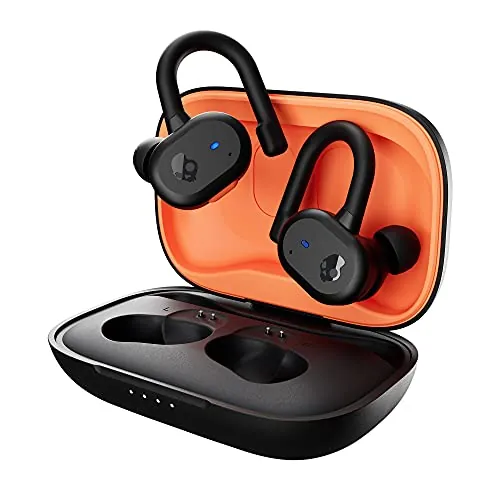
#1 Overall Winner
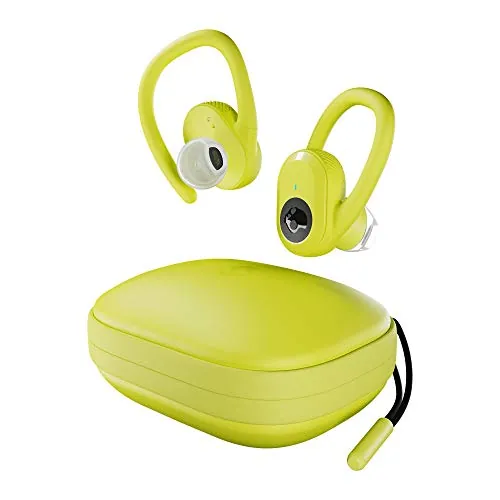
Skullcandy Push Active Wireless Earbuds (True Black/Orange)
- Secure workout fit with flexible over-ear hooks; many reviews say they stay put during exercise.
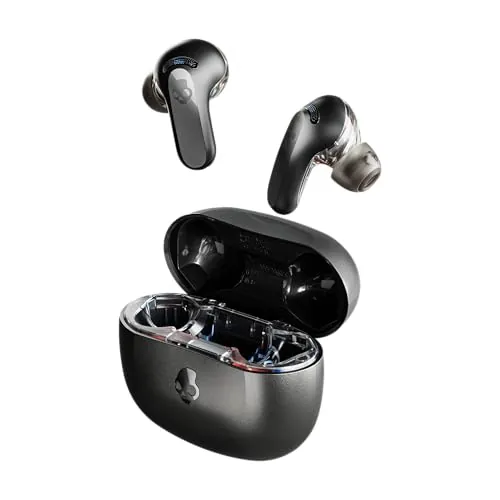
Comparison
Skullcandy Push Active and Skullcandy Rail ANC target active, everyday listening but take different approaches: Push Active focuses on a secure over-ear hook fit and a higher water-resistance rating, while Rail ANC adds adjustable active noise cancelling and higher audio/feature scores. If you want the most complete all-around package by score, Rail ANC leads; if you prioritize workout security and IP55 protection, Push Active is the more specialized pick.
#1 Overall Winner
Contender
Choose Skullcandy Rail ANC if you want active noise cancelling, stronger scored sound quality, and a more feature-forward, better-rated overall package.
Choose Skullcandy Push Active if your priority is a secure over-ear hook fit for workouts, a higher IP55 rating, and maximum rated total battery life.
If you’re sensitive to connection dropouts or long-term durability, read recent reviews carefully for both models—each has mixed reliability feedback.
Overall winner
Depends on your needs
| Metric | Skullcandy Push Active | Skullcandy Rail ANC | Winner | Explanation |
|---|---|---|---|---|
| Overall score | 59 | 72 | Rail ANC | Higher overall score indicates stronger all-around balance in the provided scoring data. |
| Noise control | Sound isolation | Active Noise Cancelling (4-mic, adjustable) | Rail ANC | Rail ANC adds ANC and Stay-Aware for noise management; Push Active relies on passive isolation. |
| Workout security | Over-ear hooks | Standard in-ear fit | Push Active | Hooks are designed to prevent slip-out; Rail ANC fit is praised by some but disputed by others. |
| Water/sweat resistance | IP55 | IPX4 | Push Active | Higher rating suggests better protection for sweat/water exposure. |
| Rated total battery | Up to 44 hours (10 + 34) | Up to 38 hours (10 + 28) | Push Active | Both are long-lasting, but Push Active is rated for longer total runtime. |
| Audio quality score | 58 | 81 | Rail ANC | Rail ANC is rated higher and receives more consistent praise for sound quality. |
| Feature score | 72 | 84 | Rail ANC | Rail ANC scores higher overall for features; both include app tuning and Tile. |
| Connectivity feedback | Mixed (some stable, some issues) | Significant complaints in reviews | Push Active | Both have connectivity issues reported, but Rail ANC reviews more often highlight disconnections/pairing problems. |
| Setup score | 78 | 68 | Push Active | Push Active scores higher for setup, suggesting a smoother first-use experience. |
| Value score | 62 | 74 | Rail ANC | Rail ANC’s higher value score aligns with its stronger audio/features and higher satisfaction score. |
For real-world earbud performance, Rail ANC leads in the provided scoring (higher performance and audio quality scores) and receives more frequent praise for loud, punchy sound. It also adds active noise cancelling, which can significantly change the listening experience in noisy environments.
Push Active performs best when the “performance” goal is practical workout use: the over-ear hook design is repeatedly praised for staying in place. Sound is more variable in feedback, with a mix of positive comments and complaints about volume or bass, so it can be more dependent on fit and personal preference.
Reliability is a concern area for both products, but Rail ANC scores higher for reliability and durability. Push Active’s review summary includes repeated reports of one earbud failing, charging issues, and early breakage, aligning with its lower reliability score.
Rail ANC also has mixed reliability: some users report units failing within weeks, while others report longer-lasting pairs. The biggest recurring reliability-like issue for Rail ANC is connection stability (disconnects and pairing problems), which can feel like “unreliability” even if the hardware is intact.
On usability, the scores are close, with a slight edge to Rail ANC overall, but Push Active scores notably higher for setup. Push Active’s over-ear hooks can make placement more consistent for workouts, and several reviews mention easy pairing and comfortable long sessions.
Rail ANC benefits from ANC and in-app controls/customization, but usability in practice can be affected by the connectivity issues noted in aggregated feedback (pairing problems and disconnections). For either earbud, getting the right eartip fit matters for comfort and perceived sound.
Design choice depends on how you plan to use them. Push Active is intentionally sport-forward with an over-ear hanger for stability, which many users value for gym and training. The trade-off is that the hook style can be less discreet and may interact with helmets or certain headgear (noted in reviews).
Rail ANC uses a more typical in-ear design and scores similarly for design. Some users like its styling, but fit feedback is more divided, so comfort and security may depend more on choosing the right eartip size.
Rail ANC scores higher for build quality and durability than Push Active. Review summaries for Push Active include multiple reports of early breakage and component failures (such as a button falling off or one earbud failing), which aligns with its lower durability and reliability scores.
Rail ANC still has mixed durability feedback—some users report early failures, while others report longer life. Overall, the provided scoring data suggests Rail ANC is the safer pick if build quality is a key concern between these two.
Rail ANC is the stronger durability pick based on the provided durability score and the overall review trend. While there are still early-failure reports, the durability feedback is more varied, with some users reporting longer use.
Push Active has more concentrated durability concerns in the aggregated review summary, including multiple reports of units breaking within a month and lower durability scoring. If you’re hard on gear, this difference is meaningful for long-term ownership.
Rail ANC scores higher for portability. Push Active includes over-ear hooks and at least one review notes the case is on the larger side compared with other earbuds, which can make pocket carry less convenient.
That said, portability is also about confidence in fit while moving. If you’re carrying and using earbuds primarily for workouts, Push Active’s stability-focused design can be a practical “portability” advantage even if the case is less compact.
Both models include app-based personalization (Personal Sound by Mimi, EQ tuning), Rapid Charge, and Tile finding. Push Active additionally highlights hands-free voice control via Skull-iQ and includes preset EQ modes plus Spotify Tap in its listing.
Rail ANC has the headline feature advantage: adjustable 4-mic ANC plus a Stay-Aware mode. It also has a higher feature score in the provided data, reflecting a more comprehensive noise-control and tuning toolkit for everyday listening.
Rail ANC scores higher for app experience, and reviews mention useful customization such as saving EQ presets and adjusting settings. It also supports firmware updates in the app (as noted in a review), which can help improve features over time.
Push Active supports Skull-iQ and Personal Sound, but its app experience score is lower and some feedback calls the app less desirable. If you plan to tweak EQ and controls regularly, Rail ANC has the stronger app profile in the provided data.
Both models lean on Skullcandy’s app ecosystem for smart features such as sound personalization and modes, and both include Tile finding. Push Active emphasizes hands-free voice control through Skull-iQ, while Rail ANC combines smart features with ANC and Stay-Aware as part of its everyday “focus vs awareness” toolkit.
By score, Rail ANC edges ahead on smart features, but which feels “smarter” will depend on whether you value voice commands (Push Active) or ANC/mode switching (Rail ANC).
Push Active has the higher setup score and multiple reviews describe pairing as easy. For buyers who want minimal friction on day one, that score advantage matters.
Rail ANC setup can be straightforward, but the product’s review summary highlights pairing problems for a meaningful number of users. If you’ve had Bluetooth issues in the past, setup consistency may be a deciding factor.
Both earbuds are designed for iPhone and Android use over Bluetooth and include mobile app support for sound customization. The provided scores show a small advantage to Rail ANC for compatibility.
In practice, compatibility can also be influenced by connectivity stability. Since Rail ANC has more reported pairing/disconnection issues, Push Active may feel simpler on some setups even if its scored compatibility is slightly lower.
Rail ANC is the stronger audio pick by score (audio quality score advantage) and by review patterns, with multiple users describing it as very loud with punchy bass. Some feedback notes the bass can be dominant enough to affect clarity in certain ranges, but overall sentiment trends positive for sound.
Push Active receives mixed sound feedback: many users like the listening experience, but others report low volume, tinny sound, or weak bass. Both earbuds support app EQ and Personal Sound, which can help tailor the sound signature, but it can’t fully compensate for unit-to-unit variation described in customer feedback.
Neither model is universally praised for connectivity, but Rail ANC has more prominent complaints in the aggregated review summary, including frequent disconnections and pairing problems. That can be especially frustrating if you switch devices often or rely on stable connections for work calls.
Push Active also has mixed connectivity feedback (some stable, some issues), and one review mentions a situation where a lost earbud stayed connected for an extended time. If connection stability is critical, reviewing recent user feedback for your specific phone model can help set expectations.
Both earbuds are positioned as long-battery models with Rapid Charge. Push Active is rated up to 44 hours total (10 in the earbuds + 34 in the case), while Rail ANC is rated up to 38 hours total (10 + 28). In scoring, Rail ANC has a slightly higher battery score, but Push Active has the higher stated total hours.
Real-world feedback for both includes reports of strong longevity as well as complaints about charging failures. If you rely on them daily, charging consistency may matter as much as the headline hour rating.
Rail ANC scores higher for power efficiency, and both earbuds are rated for long total battery life with Rapid Charge. Because Rail ANC includes ANC, real-world battery can vary depending on mode usage, but the provided scoring still rates it well for battery-related efficiency overall.
Push Active has a lower power efficiency score, yet the listing’s headline total hours are higher. If you prioritize maximum time between case charges, compare the rated totals; if you prioritize a stronger battery score profile, Rail ANC leads.
Based on the provided scoring, Rail ANC offers better overall value thanks to its higher value score and stronger performance/audio/feature scores, plus higher customer satisfaction scoring. Its ANC feature also expands where it makes sense to use it (commutes, offices), which can improve perceived value.
Push Active can still be good value for a specific buyer: if you need an over-ear hook fit and higher IP rating, those design advantages may matter more than ANC. However, the lower reliability and durability scoring can reduce value if you expect multi-year use.
Both products are from Skullcandy and include a 1-year USA limited warranty in the listing. In the provided scoring, Rail ANC rates higher for brand trust and warranty/support than Push Active.
That said, individual experiences vary: Push Active reviews include complaints about customer service, while Rail ANC feedback is more focused on performance and connectivity. If support experience is a priority, it’s worth reading recent buyer experiences and understanding warranty claim steps before purchase.
Rail ANC scores higher for customer satisfaction and has a slightly higher star rating (4.1 vs 4.0) in the provided data. Reviews frequently praise its sound and feature set, especially ANC and customization.
Push Active has a larger review count and is widely praised for fit stability and battery life, but has more prominent concerns around durability and reliability in the aggregated summary. For satisfaction, the difference often comes down to whether you want secure sport fit (Push Active) or better sound/ANC (Rail ANC).
Both earbuds list a Skullcandy 1-Year USA Limited Warranty. In the provided scoring, Rail ANC rates higher for warranty/support than Push Active.
Beyond the stated warranty, the only support-related feedback provided is mixed: Push Active includes at least one review describing poor customer service, while Rail ANC reviews focus more on product behavior. If warranty support matters, keep your proof of purchase and confirm coverage details for your region.
Skullcandy Rail ANC is the better overall pick in this comparison because it scores higher across the metrics that typically matter most for everyday earbuds—especially audio quality, features, value, and customer satisfaction—and it adds adjustable active noise cancelling for commuting and noisy spaces.
Skullcandy Push Active is still the better choice for a specific buyer: if you want the security of over-ear hooks and the higher IP55 rating for heavy training, it’s more purpose-built for exercise, and it’s rated for a longer total battery life. The trade-off is that reliability and durability feedback is more concerning, so it fits best when stability and sweat resistance matter more than ANC and top-tier sound scoring.
Overall winner
Depends on your needs
Based on the provided scoring, Skullcandy Rail ANC is the better overall option (higher overall score) thanks to stronger performance, audio quality, features, value, and customer satisfaction scores. Push Active can still make more sense if you prioritize a secure over-ear hook fit for workouts and the higher IP55 rating for sweat/water resistance.
No. Rail ANC includes adjustable 4-mic active noise cancelling and a Stay-Aware mode. Push Active is listed as noise isolating (sound isolation) rather than ANC, so it relies mainly on fit and passive sealing to reduce outside noise.
Both are rated for long battery life, but Push Active is listed up to 44 hours total (10 hours in buds + 34 in the case) versus Rail ANC up to 38 hours total (10 + 28). Reviews for both mention mixed charging experiences, so real-world results can vary by unit and usage.
Push Active is the more workout-specialized design thanks to its secure-fit over-ear hooks and higher IP55 rating. Rail ANC is also sweat resistant (IPX4) and some reviewers report it stays in during hikes, but overall fit feedback is more mixed, with some users reporting the earbuds can fall out.
In the provided scoring data, Rail ANC leads clearly for audio quality, and reviews frequently praise its loud, punchy sound. Push Active has mixed audio feedback: some users find the sound clear and enjoyable, while others mention low volume or weak bass. Both allow EQ and Personal Sound adjustments in the app.
Neither model is described as flawless in reliability. However, the scoring shows Rail ANC higher for reliability and durability than Push Active. Push Active reviews include reports of one earbud failing and breakage within a month. Rail ANC reviews also mention failures (including charging stops) and connectivity problems.
Push Active scores higher for setup and is frequently described as easy to pair, with hands-free voice control available through Skull-iQ. Rail ANC also supports app customization, but customer feedback more often highlights pairing/disconnection issues, which can make day-to-day use feel less consistent depending on your phone and environment.
Push Active has the stronger rating at IP55, while Rail ANC is rated IPX4. Both are positioned for physical activities, but if you train frequently in sweaty conditions or want extra peace of mind around water exposure, Push Active’s higher rating is a practical advantage.
Check our rankings and expert guides to find the best electronics products for your goals.