#1 Overall Winner
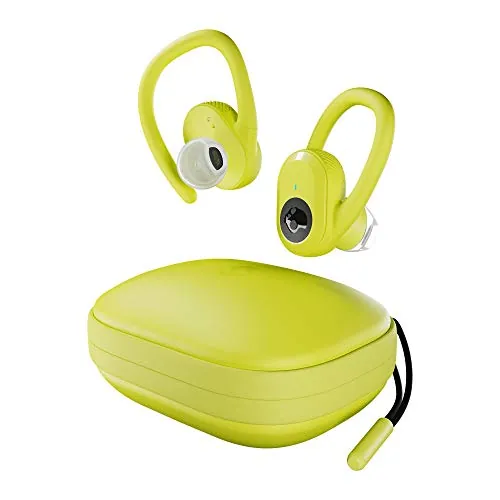
Skullcandy Push Ultra True Wireless In-Ear Earbuds - Electric Yellow
- Very long total battery claim: listed up to 42 hours total play time, with a case rated at 34 hours.
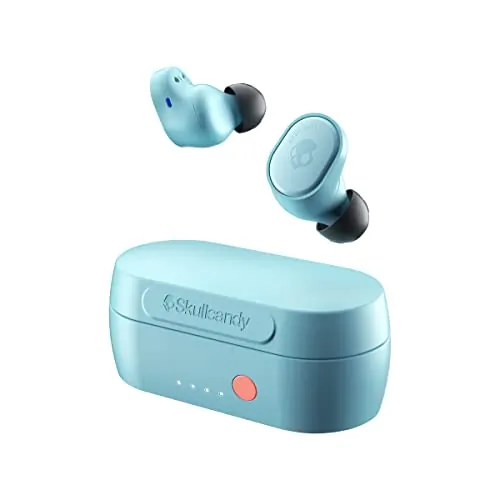
Comparison
Skullcandy Push Ultra and Skullcandy Sesh Evo are workout-friendly true wireless earbuds with Tile tracking and solo-bud use. Push Ultra focuses on an ear-hook, stay-aware design with a higher IP rating and longer listed total battery, while Sesh Evo scores better overall for usability, portability, value, and customer satisfaction. For most buyers, Sesh Evo is the safer all-round pick, but Push Ultra can be the better match for outdoor training and tougher weather exposure.
#1 Overall Winner
Contender
Choose Skullcandy Sesh Evo if you want the better all-rounder: higher overall scoring, better portability/value, Bluetooth 5.0 listed, and clearer warranty support.
Choose Skullcandy Push Ultra if your priority is workout security and protection: moldable ear hooks, IP67 waterproof/dustproof rating, stay-aware design, and a longer total battery claim—while accepting more mixed reliability/durability feedback.
Overall winner
Depends on your needs
| Metric | Skullcandy Push Ultra | Skullcandy Sesh Evo | Winner | Explanation |
|---|---|---|---|---|
| Overall score | 51 | 67 | Sesh Evo | Higher overall balance across usability, value, portability, and satisfaction. |
| Battery (listed total) | Up to 42 hours total (case listed 34 hours) | Up to 24 hours total (19 case / 5 buds) | Push Ultra | Push Ultra’s listing claims longer total play time. |
| Water/dust rating | IP67 (waterproof/sweatproof/dustproof) | IP55 (water resistant) | Push Ultra | IP67 is a higher protection level for harsher conditions. |
| Bluetooth version (listed) | Bluetooth 2.0 | Bluetooth 5.0 | Sesh Evo | Newer listed Bluetooth version, typically associated with better efficiency/compatibility. |
| Portability score | 55 | 88 | Sesh Evo | Scoring strongly favors Sesh Evo for carrying/travel convenience. |
| Controls & solo use | Full controls on both buds; either-bud use | Single-finger controls; solo mode | Tie | Both support one-bud listening and on-ear controls; differences are in implementation. |
| Sound/audio score | 60 | 69 | Sesh Evo | Audio quality scoring favors Sesh Evo overall. |
| Reliability score | 38 | 49 | Sesh Evo | Both have mixed feedback, but Sesh Evo scores higher on reliability. |
| Durability score | 35 | 50 | Sesh Evo | Push Ultra reviews mention hook breakage; Sesh Evo still has mixed reports but higher score. |
| Warranty/support | Not specified in provided data | 1-year US warranty stated | Sesh Evo | Sesh Evo provides clearer warranty info in the listing details. |
For everyday earbud performance (sound, stable playback, and general day-to-day use), Sesh Evo comes out ahead in the provided scoring, with higher overall performance and audio quality scores. Review sentiment also includes frequent praise for clear sound “for the price,” when the earbuds are working as expected.
Push Ultra can perform well for the specific use case it targets—outdoor walking/running where you want to keep some awareness of surroundings. However, the review summary includes more frequent complaints about one earbud not working, connection issues, and charging inconsistencies, which can directly impact real-world performance even if the sound itself is acceptable.
Neither product provides detailed latency or processing specs, but the provided scores give a small edge to Sesh Evo for speed/responsiveness. Sesh Evo’s description also emphasizes quick pairing and instant reconnection to the last used device after initial pairing.
For Push Ultra, reviewers describe occasional connection behavior issues (such as buds connecting unexpectedly), which can make the experience feel less responsive even if the audio playback itself is fine. If fast, simple reconnection is a priority, the available info favors Sesh Evo.
Reliability is a weak spot for both models in customer feedback, but Sesh Evo scores higher for reliability and has a higher customer satisfaction score. Sesh Evo’s reviews include repeated themes of charging failures and disconnections, yet there are also long-term positive ownership reports.
Push Ultra reliability is more heavily impacted by reports of one earbud failing, charging contact/seating issues, and connectivity problems. Its much lower reliability score reflects those themes. If you want the lower-risk choice based on the provided data, Sesh Evo is the better bet.
Sesh Evo is the easier day-to-day earbud in the provided scoring, with a higher usability and setup score. Its listing also highlights a straightforward pairing flow and single-finger controls for common actions (volume, tracks, calls, assistant, EQ).
Push Ultra has practical advantages for control access (controls on both earbuds), but usability is held back by review themes around finicky charging alignment in the case and occasional connection behavior (for example, buds connecting when not intended). If you don’t want to troubleshoot seating/charging contacts, Sesh Evo is the more user-friendly choice on balance.
The two models are designed for different priorities. Push Ultra uses a sport-focused design with moldable ear hooks to help the earbuds stay in place during movement, and a “stay-aware” fit that doesn’t prioritize a deep seal. Reviews note the set can be visually and physically bulky, including a large charging case.
Sesh Evo uses a more typical in-ear bud shape and scores slightly higher for design and much higher for portability. Fit feedback is still mixed—some find the buds too large—but its overall form factor is more aligned with pocket carry and casual, everyday use.
Based on the scores, Sesh Evo has stronger build quality than Push Ultra. Review feedback for Push Ultra includes reports of ear hooks breaking and earpieces failing after short periods, which aligns with its lower build quality and durability scoring.
Sesh Evo also has mixed durability feedback—some users report breakage or early failures—but there are also reviews describing long-term use and good condition over time. If you’re prioritizing lower risk of hardware failure, the available data favors Sesh Evo, though neither is free of quality-variation reports.
Sesh Evo rates higher for durability than Push Ultra in the provided scores. Push Ultra’s reviews specifically call out a structural weak point: the moldable ear hooks can break after repeated molding to fit the case and then re-molding to fit the ear.
Sesh Evo durability is still mixed—some users report early breakage—yet there are also accounts of heavy use over a year with the earbuds staying in good condition. Overall, the scoring and review mix suggest Sesh Evo is more durable on average, while Push Ultra’s hook mechanism is a potential failure point.
Sesh Evo is the clear winner for portability in the provided scoring. It’s designed around a standard in-ear bud form factor and earns a very high portability score.
Push Ultra is more workout-rugged but bulkier. Reviews describe the case as very large and less pocket-friendly, and the ear-hook design adds physical complexity. If you carry earbuds in a pocket or small bag every day, Sesh Evo is more convenient.
Both earbuds cover the core feature set most people want: on-ear music/call controls, the ability to use either earbud solo, and Tile tracking to help locate misplaced buds.
Push Ultra differentiates with a wireless charging case, moldable ear hooks, and a stay-aware design intended to let in more external sound. Sesh Evo emphasizes ease-of-use features such as first-time automatic pairing mode, instant pairing with the last device, and EQ mode selection from the earbuds. In the provided scoring, Sesh Evo also rates higher for smart features and app experience.
Sesh Evo is the only product here with a non-zero app experience score in the provided scoring. Both earbuds support Tile tracking, which relies on the Tile app for locating/ringing the buds, but the scoring suggests Sesh Evo delivers the more complete app-related experience overall.
Push Ultra has no app experience score provided and review feedback focuses more on hardware/charging behavior than software. If you want app-supported features and a more modern connected experience, the available data favors Sesh Evo.
Sesh Evo offers more in this category in the provided scoring, with higher smart features and app experience scores. Its listing also mentions voice/assistant activation, EQ mode selection, and Tile tracking (which requires the Tile app).
Push Ultra includes Tile tracking and on-ear controls, but its smart features score is much lower. If you care about app-linked features and a more modern feature set beyond basics, Sesh Evo is the stronger option on the provided data.
Sesh Evo scores higher for setup and emphasizes ease: it automatically enters pairing mode the first time and then reconnects to the last device used. That’s a strong fit for first-time true wireless buyers.
Push Ultra setup scores are solid, but real-world friction can come later from charging-seat sensitivity and occasional connection issues mentioned in reviews. If you want the simplest out-of-box experience, Sesh Evo is the better bet based on the provided details and score.
Sesh Evo is positioned as broadly compatible (“works with iPhone, Android and Bluetooth devices”) and has a higher compatibility score. A reviewer also mentions using it successfully with an Android phone, laptop, and desktop.
Push Ultra is listed as compatible with Bluetooth-enabled devices and supports standard wireless use. If you’re comparing strictly on provided data and scoring, Sesh Evo is the safer compatibility pick, especially given the newer listed Bluetooth version.
In the provided scoring, Sesh Evo rates higher for audio quality than Push Ultra. Customer feedback for both includes positive comments on sound, especially considering price, but neither product is described as offering active noise cancelling. Push Ultra is explicitly positioned as “stay-aware,” and reviewers note it doesn’t fully block outside sound.
If you want more isolation for commuting or noisy environments, neither listing claims ANC; sound isolation and fit will matter. If you want to hear what’s happening around you for safety, Push Ultra’s design intent and reviewer comments support that use case more directly.
Sesh Evo has the advantage on paper with Bluetooth 5.0 listed and a higher connectivity score than Push Ultra. Its description also highlights quick pairing behavior after initial setup.
Push Ultra lists Bluetooth 2.0 and a 10-meter range. Reviews mention intermittent connection issues for Push Ultra, and Sesh Evo’s review summary also includes frequent disconnections and Bluetooth problems. Between the two, Sesh Evo looks better from the provided specs and scores, but both have real-world connectivity complaints in customer feedback.
Battery is a split decision: Push Ultra lists much longer total battery (up to 42 hours) and scores higher for battery life, while Sesh Evo lists up to 24 hours total and scores lower on battery life.
However, charging reliability is part of battery ownership. Push Ultra reviews mention the earbuds needing precise placement in the case to charge, and Sesh Evo’s review summary includes multiple reports of buds that stop taking a charge. If you want the bigger battery claim and are comfortable being careful with seating the buds, Push Ultra has the advantage; if you want the better overall ownership balance, Sesh Evo still leads overall.
The scores suggest Sesh Evo has slightly better power efficiency than Push Ultra. That said, power efficiency is only part of the ownership experience: both models have customer reports of charging-related problems (Push Ultra: seating/contact sensitivity; Sesh Evo: some reports of buds no longer taking a charge).
If you want the longer total playback claim, Push Ultra leads on listed capacity; if you want the better balance score-wise, Sesh Evo edges it for efficiency.
Based on the provided scoring, Sesh Evo is the stronger value choice. It pairs higher overall performance and usability with strong portability and customer satisfaction scores, plus a stated 1-year US warranty, which improves confidence.
Push Ultra can still be good value for a specific buyer: someone who will actually use the IP67 protection and ear-hook stability and prefers the stay-aware design. The risk is that its lower reliability and durability scores mean the “value” depends more on getting a good unit and not running into the commonly reported hook/charging issues.
Both products come from Skullcandy, so brand familiarity is similar. In the provided scoring, Sesh Evo rates higher for brand trust and is supported by a larger review footprint and higher average rating on Amazon data.
Push Ultra has more mixed customer sentiment and lower reliability/durability scores, which can impact buyer confidence even within the same brand. If you’re choosing primarily on trust signals in the provided data, Sesh Evo looks stronger.
Sesh Evo leads on customer satisfaction in the provided scoring and also shows stronger Amazon rating and review volume (4.0 stars across 25,304 reviews vs 3.7 stars across 5,399 reviews for Push Ultra). Reviews frequently praise Sesh Evo’s sound and value, while still noting recurring charging/connectivity issues.
Push Ultra satisfaction appears more polarized: some users love the workout fit and battery, while others report discomfort, charging frustration, and durability problems. If you want the more consistently well-received option, Sesh Evo is ahead on the provided data.
Sesh Evo has clearer warranty/support information in the provided details, including a stated 1-year US warranty. One reviewer also mentions customer service sending a replacement quickly, which supports the support story within the provided review set.
Push Ultra references a “Fearless Use Promise” in the description, but no specific warranty term or support details are provided in the data here. If warranty clarity matters, Sesh Evo has the advantage.
Skullcandy Sesh Evo is the better overall choice in this matchup based on the provided scoring and Amazon review signals. It offers stronger usability, portability, value, and customer satisfaction, plus modern listed connectivity (Bluetooth 5.0) and a stated 1-year US warranty.
Skullcandy Push Ultra is still worth considering when your use case is more specialized: frequent workouts, outdoor running, and conditions where a higher water/dust rating matters. Its ear-hook design and stay-aware approach can be a genuine advantage for stability and safety. The trade-off is a noticeably higher risk of frustration from mixed reliability and durability feedback (especially around charging fit and hook breakage). For most people, Sesh Evo wins; for rugged training needs, Push Ultra can be the better fit.
Overall winner
Depends on your needs
Based on the provided scoring, Skullcandy Sesh Evo is the better overall pick (higher overall score). It rates stronger in areas that affect day-to-day ownership such as usability, portability, value, customer satisfaction, and warranty/support. Push Ultra can still make sense if you specifically want the ear-hook fit, IP67 protection, and the longer total battery claim.
Push Ultra is more purpose-built for intense workouts thanks to its moldable ear hooks and higher IP67 waterproof/dustproof rating. That said, reviews also mention comfort and hook durability issues for some users. Sesh Evo is also positioned for gym use with IP55 water resistance, but fit can be hit-or-miss depending on ear shape.
From the product details, Push Ultra lists up to 42 hours total play time, while Sesh Evo lists up to 24 hours total (with 19 hours in the case and 5 hours in the buds). Real-world feedback is mixed for both: Push Ultra gets praise for battery but also charging-seat issues, while Sesh Evo has repeated reports of units that stop taking a charge.
Push Ultra has the higher protection rating at IP67, described as waterproof, sweatproof, and dustproof—suited for heavy sweat, rain, and rinsing off. Sesh Evo is rated IP55, which is positioned as water resistant for sweat and light rain rather than full waterproofing. If environmental protection is a top priority, Push Ultra has the edge on paper.
Neither model is described as consistently flawless in the provided review summaries. However, the scoring indicates Sesh Evo rates higher for reliability and durability than Push Ultra. Push Ultra reviews frequently mention charging-fit sensitivity, connection problems, and ear-hook breakage. Sesh Evo reviews also mention disconnections and charging failures, but it has a higher overall customer satisfaction score and a much larger review base.
Push Ultra is explicitly described as a stay-aware design that lets you hear more of your surroundings when you need to, which some reviewers like for outdoor safety. Sesh Evo doesn’t emphasize an awareness feature in the provided listing details, though users can always use one earbud in solo mode when they want to stay aware. If awareness is your main goal, Push Ultra is the clearer match.
Based on the scores, Sesh Evo is the more portable option (very high portability score). For Push Ultra, reviews specifically call out the charging case as large and less pocket-friendly, and the ear-hook form factor can add bulk. If you want a simpler, more pocketable true-wireless setup, Sesh Evo is the safer bet from the provided data.
Yes. Push Ultra supports using either bud by itself and includes controls on both earbuds. Sesh Evo also supports solo mode for using either earbud independently. If one-bud listening is important for calls, work, or situational awareness, both can do it; the difference is more about fit style (hooks vs standard bud) and the broader reliability/portability trade-offs.
Check our rankings and expert guides to find the best electronics products for your goals.