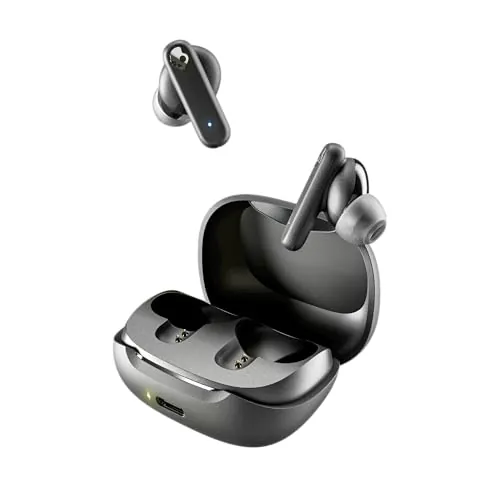
#1 Overall Winner
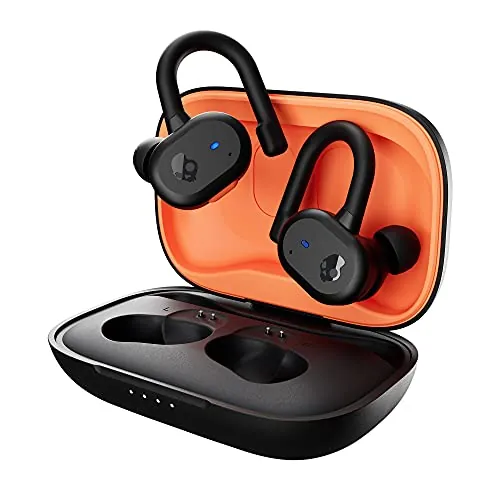
Skullcandy Push Active Wireless Earbuds (True Black/Orange)
- Workout-focused secure fit with flexible over-ear hooks designed to stay put.
Comparison
Skullcandy Push Active and Skullcandy Sesh Evo are IP55-rated true wireless earbuds with sound isolation and Tile tracking, but they target different buyers. Push Active focuses on a secure over-ear hook fit and a much higher total battery claim, while Sesh Evo scores higher overall thanks to portability and value. If you train hard and want earbuds that stay put, Push Active stands out; for a simpler, more pocketable everyday pair, Sesh Evo is the stronger all-rounder.
#1 Overall Winner
Contender
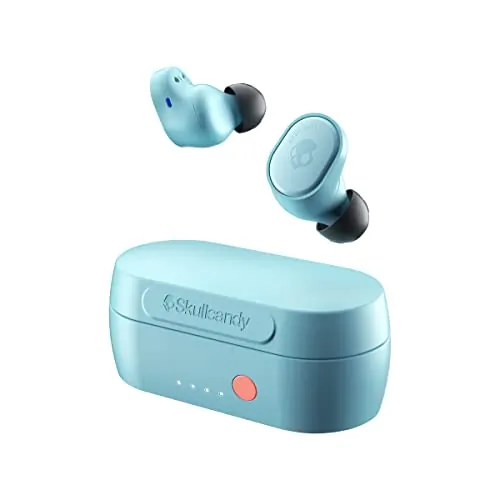
Choose Skullcandy Sesh Evo if you want a more portable, higher-scoring, better-value true wireless earbud for everyday listening and occasional workouts, and you like the option to use either earbud solo.
Choose Skullcandy Push Active if you work out frequently and want a secure over-ear hook design plus a longer total battery claim and extra app/voice features—while accepting more mixed durability and charging feedback.
Overall winner
Depends on your needs
| Metric | Skullcandy Push Active | Skullcandy Sesh Evo | Winner | Explanation |
|---|---|---|---|---|
| Overall score | 59 | 67 | Sesh Evo | Higher overall score in the provided electronics scoring data. |
| Fit for workouts | Over-ear hooks; strong fit feedback | Standard in-ear bud; mixed fit feedback | Push Active | Hooks are designed for secure training use; Sesh Evo fit varies by ear. |
| Total battery (claimed) | Up to 44 hrs (10 + 34) | Up to 24 hrs (5 + 19) | Push Active | Push Active lists a much higher total runtime claim. |
| Water/sweat resistance | IP55 | IP55 | Tie | Both list IP55 rating in the provided details. |
| Audio quality score | 58 | 69 | Sesh Evo | Scoring favors Sesh Evo for basic audio performance. |
| Features & extras | Skull-iQ voice control, Spotify Tap, Personal Sound by Mimi, Tile | Solo mode, Tile, onboard controls, EQ modes | Push Active | Both are feature-rich, but Push Active adds more app-driven and voice features. |
| Portability score | 67 | 88 | Sesh Evo | Sesh Evo is scored as much easier to carry/use on the go. |
| Connectivity score | 61 | 58 | Push Active | Small scoring advantage for Push Active; both have reported connectivity complaints. |
| Reliability & durability | Reliability 46; Durability 44 | Reliability 49; Durability 50 | Sesh Evo | Both are mixed in reviews, but Sesh Evo scores slightly higher on consistency/toughness. |
| Value score | 62 | 82 | Sesh Evo | Sesh Evo leads strongly on value in the provided scoring data. |
For day-to-day wireless earbud performance (stable listening, usable sound, and consistent operation), Sesh Evo comes out ahead in the scoring (performance 68 vs 60; audio 69 vs 58). Review sentiment also supports that it can deliver enjoyable sound for the price when it’s working properly.
Push Active performs best in real-world workout scenarios where fit security matters. Customers frequently praise that it stays in place during exercise, but performance feedback is more split on volume, bass, and long-term consistency (including reports of one earbud failing).
Reliability is a weak spot for both models in the provided data. Sesh Evo scores slightly higher (49 vs 46), but aggregated reviews mention common problems including one earbud failing, charging not working, and disconnects. Push Active reviews likewise include reports of one earbud failing completely, connection quirks, and inconsistent controls/app behavior.
If you choose either, plan to test pairing, charging, and independent earbud function early, and keep firmware/app tools and reset steps handy.
Usability scores are similar (both 70), but the day-to-day experience differs. Sesh Evo is positioned as easy to start using, with automatic first-time pairing and quick reconnection to your last device. Push Active also scores well for setup and offers voice-driven control, which can be helpful during workouts.
On the downside, reviews for both mention friction: Push Active users report app/controls quirks, while Sesh Evo users often point to connection dropouts or having to troubleshoot one earbud not working/charging.
Push Active is designed around sport stability, using a secure-fit over-ear hanger that many reviewers say prevents the earbuds from falling out. Sesh Evo uses a more typical in-ear “bud” design that’s easier to pocket but can be polarizing in fit, with some users saying it’s bulky or too large for their ear canals.
Design scores favor Push Active (74 vs 62), reflecting that its ergonomics and purpose-built workout approach land well for the right audience.
Neither model scores especially high for build quality, but Sesh Evo rates better (60 vs 52). Customer feedback for both is mixed: Push Active has multiple reports of early breakage and durability concerns, while Sesh Evo also has reports of breakage and charging dock issues.
If build consistency is your main concern, Sesh Evo’s scoring advantage is modest rather than decisive—either way, it’s smart to test thoroughly during the return window.
Durability scores favor Sesh Evo (50 vs 44), but both show mixed real-world feedback. Push Active has multiple customer reports of physical failure (for example, breaking within a month or buttons falling off), while Sesh Evo also has users reporting breakage within a week or charging dock issues that effectively end usability.
Neither looks like a “buy it for years with no worries” option based on the provided durability/reliability signals.
Sesh Evo is the portability winner by a wide margin in the provided scoring (88 vs 67). Push Active is still portable, but its sport-focused over-ear hook design and at least one reviewer comment about a larger case can make it less pocket-friendly for some users. If you want the easiest carry for commuting or travel, Sesh Evo fits that role better.
Both earbuds cover the essentials—true wireless design, sound isolation, IP55 resistance, Tile tracking, and Rapid Charge support. The difference is the type of features you get:
If you want maximum tools and customization, Push Active has the edge. If you want simpler features with fewer moving parts, Sesh Evo is the cleaner approach.
Neither product’s app experience scores especially high in the provided scoring. Push Active depends more on the Skull-iQ/Skullcandy app for its headline features (voice control, Personal Sound, EQ tuning), and reviews include some dissatisfaction with the app experience. Sesh Evo is less app-dependent day-to-day, but still relies on the Tile app if you want tracking features.
Push Active is the smarter, more feature-heavy model: it supports hands-free voice control through the Skull-iQ app and includes Spotify Tap and Personal Sound by Mimi. Sesh Evo focuses more on practical use features like solo mode and simple onboard controls, with a lower smart-features score in the provided data.
If you want voice-driven commands and deeper sound personalization, Push Active is the better match.
Both models score well for setup, with Push Active slightly higher (78 vs 72). Sesh Evo is described as entering pairing mode automatically the first time and then reconnecting to the last device, which is ideal for first-time true wireless users. Push Active pairing is also described as easy in reviews, and its voice features can be enabled through the Skull-iQ app.
Both products are designed for broad Bluetooth compatibility with iPhone and Android, and both score well for compatibility. Sesh Evo is described as pairing automatically on first use and reconnecting to the last device, and one long-term reviewer mentions using it with an Android phone plus laptop/desktop.
Push Active is also positioned for iPhone and Android and adds app-based controls via Skull-iQ, which may matter if you want hands-free voice features.
Both are sound-isolating earbuds with dynamic drivers, but the scoring points to Sesh Evo as the stronger choice for audio quality (69 vs 58). Reviews frequently describe Sesh Evo as clear and enjoyable for the price, although “when they work” is a recurring theme due to reliability/charging comments.
Push Active offers more tuning options (preset EQ modes, app EQ, and Personal Sound by Mimi), which can help tailor the sound. However, customer feedback is mixed: some find the sound great, while others report low volume or weak bass/tinny presentation.
Connectivity is mixed for both models. In scoring, Push Active is slightly ahead (61 vs 58), and it is described as supporting Bluetooth 5.2 in the product description (while the specs list Bluetooth 5.0). Sesh Evo lists Bluetooth 5.0.
Customer feedback flags different issues: Push Active reviews include complaints about connecting/disconnecting and stability for some users, while Sesh Evo’s aggregated feedback more frequently mentions disconnections and Bluetooth problems. If connection stability is your top priority, Push Active has a small data-driven edge, but neither is “problem-free” based on the provided reviews.
Push Active has the clear advantage on claimed battery: up to 44 hours total (10 hours in earbuds + 34 hours case). Sesh Evo lists up to 24 hours total (5 hours earbuds + 19 hours case). Both advertise Rapid Charge (10 minutes for ~2 hours).
However, reviews for both products mention charging issues and batteries failing over time. Push Active also scores higher for battery life in the provided scoring (78 vs 56), but real-world results may hinge on charging reliability and unit-to-unit consistency.
Sesh Evo is the stronger value pick in the provided scoring (value 82 vs 62) and also has a lower listed price in your data. Its high review count and solid customer satisfaction score suggest many buyers feel they get a good everyday earbud for the money—when they receive a reliable unit.
Push Active can still be good value for a specific buyer who will use the over-ear hooks, longer total battery claim, and extra app features. But mixed durability/charging feedback makes its value feel more dependent on getting a good unit and treating it as a workout-specific tool rather than a “set and forget” earbud.
Both products are from Skullcandy and include a 1-year US warranty. Brand trust scoring favors Sesh Evo (66 vs 60), and one review mentions quick customer service replacement for Sesh Evo. Push Active reviews include at least one strong complaint about customer service, so support experiences appear inconsistent across buyers and situations.
Both products average 4/5 stars in the provided listing data, but Sesh Evo has far more reviews (25,304 vs 7,177) and a higher customer satisfaction score (73 vs 66). Sesh Evo is often praised for sound and value, while Push Active is frequently praised for fit and battery life.
Negative patterns overlap: both models have recurring reports of one earbud failing and charging problems, which can heavily influence satisfaction depending on unit reliability.
Both include a 1-year US warranty in the provided details. Warranty/support scoring favors Sesh Evo (68 vs 58), and at least one Sesh Evo reviewer reports fast customer service replacement. Push Active’s reviews include a complaint about lack of customer service, so if support is important, consider buying from a seller/retailer with a straightforward return process and test early.
Skullcandy Sesh Evo is the better overall choice in this matchup based on the provided scoring: it ranks higher overall, scores better for audio quality, value, portability, customer satisfaction, and slightly edges out Push Active on reliability and durability. For many shoppers, that makes it the safer default recommendation for everyday listening.
Skullcandy Push Active still makes sense if you’re buying primarily for workouts and want the reassurance of an over-ear hook design, plus the longer total battery claim and extra app-driven features like hands-free voice control and Personal Sound by Mimi. The trade-off is that Push Active’s scores and reviews flag more concerns around durability and long-term consistency. If you go that route, prioritize early testing and keep return/warranty options in mind.

Overall winner
Depends on your needs
Based on the provided scoring, Skullcandy Sesh Evo ranks higher overall (67 vs 59). It scores especially well for value, portability, and customer satisfaction. Skullcandy Push Active can still be the better pick if you prioritize a secure workout fit with over-ear hooks and the longer total battery claim, but it’s held back by lower reliability/durability scoring and mixed long-term feedback.
Skullcandy Push Active is purpose-built for activity with flexible over-ear hooks and an IP55 rating, and reviews frequently praise the secure fit during workouts. Sesh Evo is also IP55-rated, but fit feedback is mixed and some reviewers mention the earbuds feeling large or falling out. If “won’t fall out” is the priority, Push Active is the safer bet on design.
On paper, Push Active offers the bigger battery claim: up to 44 hours total (10 hours buds + 34 hours case) versus 24 hours total on Sesh Evo (5 hours buds + 19 hours case). That said, both products have customer reports of charging issues, so real-world battery experience may depend on unit quality, charging habits, and how reliably the case contacts charge pins.
The scoring data favors Sesh Evo for audio quality (69 vs 58). Reviews for both are mixed: many customers enjoy Push Active’s sound and EQ options, but others report low volume or weak bass; Sesh Evo is often described as clear and good for the price. If you want more sound tuning tools, Push Active’s Skullcandy app features may appeal, but Sesh Evo looks stronger on basic audio scoring.
Neither is a runaway winner for reliability: both show mixed customer feedback, including reports of one earbud failing and charging problems. In the provided scoring, Sesh Evo is slightly higher on reliability and durability (49/50 vs 46/44 for Push Active). Push Active’s reviews also mention breakage within a month from some customers, while Sesh Evo has multiple reports of charging failures and disconnect issues.
In the provided specifications, both products list noise control as sound isolation, not active noise cancelling. That means they rely on the ear tips and in-ear seal to block outside noise. Several reviews for Push Active mention that the seal can reduce ambient awareness, which can be a benefit in the gym but a drawback for certain outdoor activities where you want to hear traffic or surroundings.
Sesh Evo is the more portability-focused option in the scoring data (very high portability score), and it’s positioned as simple to use with automatic first-time pairing and quick reconnection to the last device. Push Active is still straightforward to set up (strong setup score) and adds hands-free features, but at least one review notes the case is larger, and the over-ear hook design is more sport-specific.
Both include a microphone, but neither is consistently praised for call quality in the provided reviews. Push Active has at least one review noting distorted/low audio during calls and Discord; Sesh Evo reviews also mention the microphone not being very good for audios/calls. If calls are your main use, treat either as a “try and verify” purchase, and pay attention to return policies and early testing.
Yes. Both Skullcandy Push Active and Skullcandy Sesh Evo include built-in Tile finding technology in the provided details. Tile features require using the Tile app and registering the product. This can help locate earbuds if you misplace them, though real-world effectiveness can depend on whether the earbuds still have battery power and when they were last connected.
Check our rankings and expert guides to find the best electronics products for your goals.