#1 Overall Winner
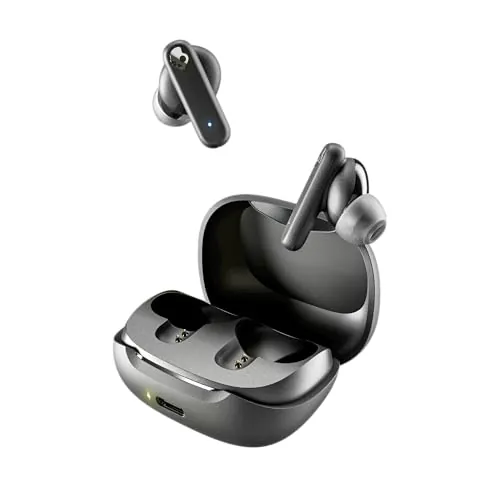
Skullcandy Rail ANC Wireless Earbuds (Rail ANC)
- Active Noise Cancelling: Adjustable 4-mic digital ANC plus a Stay-Aware mode for situational listening.
Comparison
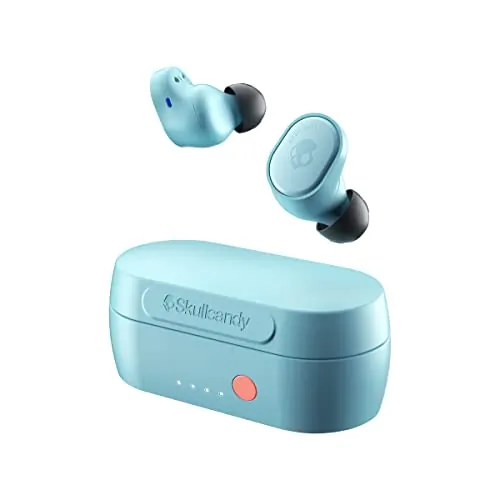
Skullcandy Rail ANC and Skullcandy Sesh Evo are both true wireless earbuds with Tile tracking, but they target different buyers. Rail ANC adds adjustable active noise cancelling and app-based sound personalization, while Sesh Evo focuses on simple controls, solo-earbud use, and a lower-cost entry point. On the provided scores, Rail ANC is the stronger all-around pick, while Sesh Evo is compelling if value and simplicity matter most.
#1 Overall Winner
Contender
Choose Skullcandy Rail ANC if you want ANC, longer stated battery life, and app-based sound personalization (Personal Sound/EQ).
Choose Skullcandy Sesh Evo if you want a lower-cost pair with solo-earbud use and a higher-rated IP55 water/sweat/dust design.
Either way: both models show mixed review patterns around connectivity and charging reliability, so buying with an easy return/exchange option is sensible.
Overall winner
Depends on your needs
| Metric | Skullcandy Rail ANC | Skullcandy Sesh Evo | Winner | Explanation |
|---|---|---|---|---|
| Overall score | 72 | 67 | Rail ANC | Higher overall rating in the provided scoring model. |
| Noise control | Active Noise Cancelling + Stay-Aware | Sound isolation | Rail ANC | Rail ANC lists adjustable 4-mic ANC; Sesh Evo does not list ANC. |
| Battery (stated total) | Up to 38 hrs (10 + 28) | Up to 24 hrs (5 + 19) | Rail ANC | Higher stated total listening time with case. |
| Rapid charge | 10 min = 2 hrs | 10 min = 2 hrs | Tie | Both listings include the same quick top-up claim. |
| Water resistance rating | IPX4 | IP55 | Sesh Evo | IP55 adds stronger protection and includes dust resistance. |
| Bluetooth version | 5.2 | 5.0 | Rail ANC | Newer Bluetooth version listed for Rail ANC. |
| App personalization | Personal Sound by Mimi + EQ in Skullcandy app | Not highlighted in listing | Rail ANC | Rail ANC clearly emphasizes app-based tuning and modes. |
| Solo earbud use | Not specified | Use Either Bud Solo | Sesh Evo | Sesh Evo explicitly supports using either earbud independently. |
| Connectivity sentiment | Mixed; frequent disconnect reports | Mixed; frequent disconnect reports | Tie | Both have notable complaints around dropouts/pairing stability. |
| Value score | 74 | 82 | Sesh Evo | Sesh Evo rates higher on value in the provided scoring. |
In everyday listening, Rail ANC rates higher for performance (78 vs 68) and audio quality (81 vs 69), and user feedback often highlights punchy sound and strong bass alongside app tuning. Sesh Evo is frequently described as good-sounding for the price, but its overall performance scoring is more modest.
Noise handling is also a major performance separator: Rail ANC is built around adjustable active noise cancelling, while Sesh Evo relies on passive isolation. If your “performance” needs include reducing ambient noise on commutes or in busy spaces, Rail ANC is the more purpose-built option.
For wireless earbuds, “speed” tends to show up as responsiveness (pairing/reconnect behavior and control response). Rail ANC scores higher for speed (62 vs 55), while Sesh Evo emphasizes quick pairing behavior in its description (first-time pairing mode and reconnect to the last device).
Because both products have notable review complaints about disconnects, real-world perceived “speed” may be affected more by connection stability than by the control system itself.
Reliability is a concern for both models in the provided data. Rail ANC scores higher (55 vs 49), but reviews still mention early failures for some users, including earbuds that stop charging after a month.
Sesh Evo has repeated review patterns around one earbud failing, intermittent disconnects, and units not charging in the dock. If reliability is critical, it’s worth prioritizing retailer return windows and being prepared to exchange a defective unit.
Usability is fairly close in the scores (Rail ANC 71 vs Sesh Evo 70). In practice, Sesh Evo is designed around simplicity—automatic first-time pairing mode and a control layout intended to manage common tasks with one finger. Rail ANC can be very user-friendly if you like customization, but you may spend more time in the app if you want to tailor ANC, Stay-Aware, EQ, and Personal Sound.
Both models have review mentions of connectivity friction (disconnects/pairing issues), which can negatively impact day-to-day usability when it occurs.
Rail ANC scores higher for design (73 vs 62) and is described by reviewers as stylish, with a case and earbud look some find distinctive. Fit feedback is mixed, but at least one reviewer notes they stayed secure during a long hike with sweat (after choosing the right ear tip size).
Sesh Evo is more utilitarian, and multiple reviews mention the earbuds feel large/bulky or too big for some ear canals. On the upside, some users prefer the bulkier shape because it can make button presses easier without pushing the earbud deeper.
Both products use plastic housings, and the scoring favors Rail ANC slightly for build quality (67 vs 60) and durability (58 vs 50). However, reviews for both include mixed durability stories—some users report long lifespans, while others report early failures, especially around charging.
If you want the higher protection rating for environmental exposure, Sesh Evo has the edge with IP55 versus IPX4 on Rail ANC, even though its build/durability scores are lower overall.
Durability scoring slightly favors Rail ANC (58 vs 50), but anecdotal review experiences vary on both sides. Rail ANC has reports ranging from units lasting 6+ months to failing in weeks, while Sesh Evo has both long-term success stories (multi-year use) and reports of breakage/charging failure within a week.
For environmental toughness, Sesh Evo has the stronger IP rating (IP55). For broader durability scoring, Rail ANC has a modest advantage.
Both are portable true wireless earbuds, but the scores favor Sesh Evo for portability (88 vs 79). That aligns with its simpler, no-frills positioning.
Rail ANC is still travel-friendly, but some users mention it’s a bit bigger than AirPods Pro-style earbuds. If you’re sensitive to bulk in your pocket or ears, Sesh Evo’s portability score advantage is worth considering—while keeping in mind fit feedback can still be mixed.
Rail ANC has the deeper feature set: adjustable 4-mic ANC, Stay-Aware mode, and customization in the Skullcandy app (Personal Sound by Mimi and EQ). It also includes Tile finding technology and rapid charging.
Sesh Evo focuses on practical core features: solo mode (use either earbud), Tile tracking, and a control scheme designed to handle playback, volume, calls, and voice assistant access without pulling out your phone. If you want “more modes and tuning,” Rail ANC leads; if you want “just the essentials,” Sesh Evo keeps things simpler.
Rail ANC has a stronger app experience score (74 vs 52) and clearly positions the Skullcandy app as part of the product (Personal Sound, EQ, and mode control). If you like to dial in sound and controls, this is a meaningful advantage.
Sesh Evo does not emphasize app features in the provided listing details, and its lower app experience score suggests the experience is either more limited or less central to ownership.
Rail ANC rates higher for smart features (70 vs 55) largely because it emphasizes app-driven features like Personal Sound by Mimi, mode switching (ANC/Stay-Aware), and settings customization. Some reviews also reference voice command functionality (e.g., “hey Skullcandy”), though experiences can vary.
Sesh Evo supports activating an assistant via controls (per description) but otherwise keeps smart features more basic and does not highlight advanced app-based personalization.
Sesh Evo scores higher for setup (72 vs 68) and its description highlights a beginner-friendly flow: the earbuds automatically enter pairing mode the first time, then reconnect to the last device used.
Rail ANC setup is still straightforward for basic pairing, but owners who want full capability will likely install the Skullcandy app to access personalization features and listening modes.
Compatibility scores are equal (72 vs 72). Both are Bluetooth earbuds intended to work with iPhone, Android, and other Bluetooth devices, and user reviews mention use with phones and computers (laptops/desktops) in the case of Sesh Evo.
Rail ANC adds an extra layer of compatibility consideration: if you want the full personalization features, you’ll rely on the Skullcandy app experience in addition to basic Bluetooth pairing.
On scoring, Rail ANC leads for audio quality (81 vs 69). Review feedback commonly praises its loud, bass-forward sound and the ability to tailor audio in the app (EQ and Personal Sound). Some listeners note the bass can become unbalanced or affect vocal clarity in certain situations.
Sesh Evo is often described as good or clear for the price, but microphone quality complaints show up in reviews (which affects call audio more than music). If your priority is sound tuning and a more premium listening feature set, Rail ANC is the safer bet based on the provided data.
Connectivity is a weak point for both, but Rail ANC scores higher (64 vs 58) and uses Bluetooth 5.2 compared with Sesh Evo’s Bluetooth 5.0. That said, customer feedback for both includes frequent disconnections and pairing issues, and Sesh Evo reviews also mention one-side dropouts for some users.
If stable Bluetooth is your top requirement, neither model is “problem-free” based on reviews; Rail ANC has a small scoring edge, but it still draws significant complaints in this area.
Rail ANC is the clear battery leader on paper and in scoring (battery life score 83 vs 56). It’s rated up to 38 hours total (10 hours earbuds + 28 hours case) and supports rapid charging (10 minutes for 2 hours). Reviews often praise battery life, though there are also reports of charging failures after short ownership periods.
Sesh Evo is rated up to 24 hours total (5 hours earbuds + 19 hours case) and also claims 10-minute rapid charge for 2 hours. However, customer feedback highlights concerns about battery/charging reliability for some units.
Rail ANC scores higher for power efficiency (72 vs 63). While both products offer rapid-charge claims, Rail ANC’s overall battery scoring suggests a more favorable power profile in the provided model.
In real-world use, reported charging failures for both models can dominate the ownership experience, so efficiency matters most when the charging system is working consistently.
Sesh Evo leads on value in the scoring (82 vs 74) because it delivers core true-wireless functionality, Tile tracking, and solo mode at a lower-tier feature set. It’s a sensible pick if you don’t need ANC and want a straightforward, budget-focused option.
Rail ANC can still be the better value for buyers who will regularly use ANC, awareness mode, and app-based personalization, and who want the higher stated battery life. The key is whether those extras justify the jump in complexity (and whether you’re comfortable with the mixed reliability/connectivity feedback).
This is effectively a tie on brand because both products come from Skullcandy. Scores are close (Rail ANC 69 vs Sesh Evo 66). In reviews, both products show a familiar pattern: many satisfied owners for the price/features, alongside recurring complaints about connectivity and charging reliability.
If brand trust for you means support responsiveness, note that Sesh Evo reviews include at least one example where customer service provided a quick replacement, but warranty/support experiences will still vary by case and seller.
Customer satisfaction scores slightly favor Rail ANC (77 vs 73), while Sesh Evo has a much larger review count overall. Rail ANC reviews frequently praise sound quality and features, but include significant complaints about connectivity, fit variance, and charging issues.
Sesh Evo reviews also praise sound and affordability, but similarly highlight charging failures, one-earbud issues, and disconnects. The takeaway: both have many happy users, but both have non-trivial quality consistency complaints.
Both products list a 1-year US warranty. Scores are close, with Sesh Evo slightly higher for warranty/support (68 vs 66). Beyond the stated warranty length, the provided data doesn’t include detailed policy terms, so your best move is to confirm warranty eligibility through the seller and keep an eye on the return/exchange window.
Skullcandy Rail ANC is the better overall choice in this matchup, with a higher overall score and clear advantages in audio quality, feature depth, and stated battery life. If you plan to use ANC during commutes, want an awareness mode, and like tuning EQ and Personal Sound in an app, it’s the more complete package on paper.
Skullcandy Sesh Evo remains a strong alternative when budget and simplicity come first. It adds a higher IP55 rating and explicit solo-earbud use, and it scores higher for value and portability. However, both models show recurring review complaints around disconnects and charging failures, so whichever you choose, prioritize an easy exchange/return option.
Overall winner
Depends on your needs
Based on the provided scoring, Skullcandy Rail ANC ranks higher overall (72 vs 67). It also scores stronger for performance, features, audio quality, and battery life. Sesh Evo can still be the better pick if your priority is a lower-cost option with simple controls and solo-earbud use, but it lacks active noise cancelling.
No. Rail ANC specifically includes adjustable 4-mic active noise cancelling and a Stay-Aware mode. Sesh Evo lists sound isolation rather than ANC, meaning it relies on passive isolation from the ear tips instead of active noise processing.
Rail ANC has the higher stated battery spec: up to 38 hours total (10 hours in the earbuds + 28 in the case), plus Rapid Charge (10 minutes for 2 hours). Sesh Evo is rated up to 24 hours total (5 hours earbuds + 19 hours case) and also offers a 10-minute rapid charge for 2 hours.
Both are positioned for active use, but Sesh Evo has the stronger protection rating on paper with IP55 (water, sweat, and dust resistant). Rail ANC is rated IPX4 (sweat and water resistant). If you expect dust exposure or want a higher-rated shell, Sesh Evo has the edge.
Both get praise for sound, but Rail ANC scores higher for audio quality (81 vs 69) and is frequently described as punchy with strong bass, plus it offers app EQ and Personal Sound tuning. Sesh Evo is often described as good/clear for the price, but reviews also note it’s not “anything to write home about” for some users.
Neither is a clear reliability leader. The scores lean slightly toward Rail ANC for reliability (55 vs 49) and durability (58 vs 50), but customer feedback for both mentions disconnects and charging failures (including one earbud not charging or units stopping taking a charge). If reliability is critical, consider buying from a retailer with easy returns.
Sesh Evo scores slightly higher for setup (72 vs 68) and its listing emphasizes automatic first-time pairing and quick reconnect to the last device. Rail ANC adds more tuning and modes via the Skullcandy app, which can improve the experience but may add extra steps if you want to customize ANC, EQ, and Personal Sound.
Yes. Both Rail ANC and Sesh Evo include Tile finding technology, intended to help you locate misplaced earbuds through the Tile app. Rail ANC specifies registering your product in the Tile app, and Sesh Evo describes “ringing” the earbuds after downloading Tile.
Sesh Evo scores higher on value (82 vs 74) and is positioned as a simple, affordable true-wireless option with Tile and solo mode. Rail ANC can still be better value for buyers who will use ANC, longer stated battery life, and app personalization—features that Sesh Evo doesn’t offer—so the “best value” depends on which features you’ll actually use.
Check our rankings and expert guides to find the best electronics products for your goals.