#1 Overall Winner
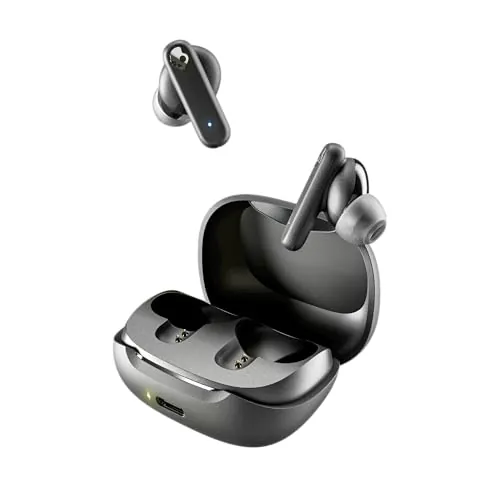
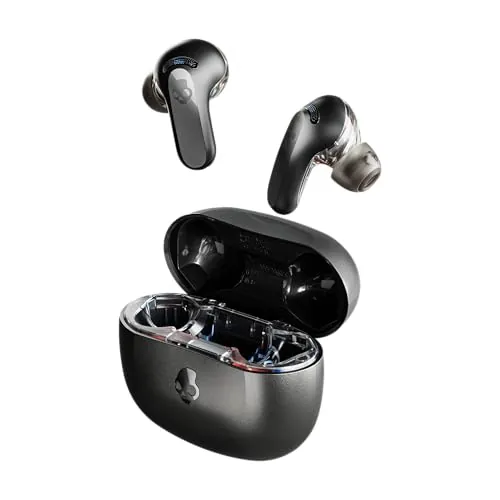
Skullcandy Rail ANC Wireless Earbuds
- Strong overall feature set with app controls and personalization (Skullcandy app with Personal Sound by Mimi, EQ, Stay-Aware mode).
Comparison
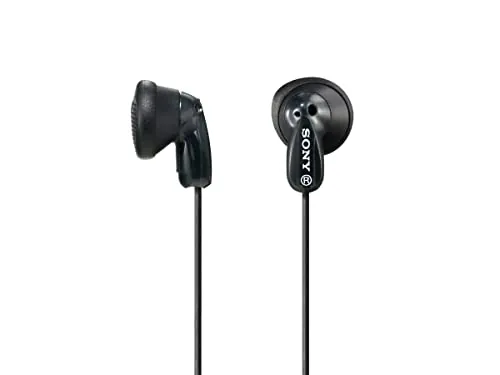
Skullcandy Rail ANC and Sony LinkBuds target very different listening styles: Rail ANC focuses on blocking noise with active noise cancelling, while LinkBuds use an open-ring design to keep you aware of your surroundings. On the provided scoring, Rail ANC is the stronger all-around pick (higher overall, audio, and battery), while LinkBuds are a better fit if you specifically want maximum awareness, portability, and stronger connectivity.
#1 Overall Winner
Contender
Choose Skullcandy Rail ANC if you want ANC for commuting/office focus, longer stated battery life, and strong sound customization through the app.
Choose Sony LinkBuds if you want an open-ring fit for comfort and natural awareness on walks/runs, plus excellent portability and better connectivity scoring—just don’t expect noise isolation or standout battery consistency.
Overall winner
Depends on your needs
| Metric | Skullcandy Rail ANC | Sony LinkBuds | Winner | Explanation |
|---|---|---|---|---|
| Overall score | 72 | 62 | Skullcandy Rail ANC | Higher overall balance, helped by audio, battery, and feature scores. |
| Noise control approach | Active Noise Cancelling (4-mic, adjustable) + Stay-Aware | None (open-ring design for ambient sound) | Depends on need | Choose Rail ANC to reduce noise; choose LinkBuds to stay naturally aware. |
| Audio quality (score) | 81 | 69 | Skullcandy Rail ANC | Higher audio score and strong review emphasis on punchy sound and EQ customization. |
| Features (score) | 84 | 83 | Skullcandy Rail ANC | Both are feature-rich; Rail adds ANC + Tile, LinkBuds add open design + Wide Area Tap and more. |
| Connectivity (score) | 64 | 78 | Sony LinkBuds | Higher connectivity score; Rail reviews mention frequent disconnects/pairing issues. |
| Battery life (score & stated) | 83; up to 38 hours total; Rapid Charge (10 min = 2 hrs) | 52; 20 hours total; quick charge (5 min = 60 min) | Skullcandy Rail ANC | Rail is stronger on both stated specs and battery scoring; LinkBuds have more battery complaints. |
| Portability (score) | 79 | 91 | Sony LinkBuds | LinkBuds are positioned as ultra-small/light and score exceptionally high for portability. |
| Customer satisfaction (Amazon) | 4.1/5 from 3,023 reviews | 3.5/5 from 3,865 reviews | Skullcandy Rail ANC | Higher average rating, though both have mixed feedback themes. |
| Reliability (score) | 55 | 43 | Skullcandy Rail ANC | Both have issues reported, but LinkBuds score lower and reviews mention charging/battery failures. |
| Best fit for environment | Better for noise reduction | Better for awareness | Depends on need | Rail suits commutes/office focus; LinkBuds suit home, walks, and situations where you must hear surroundings. |
For real-world listening performance, these earbuds excel in different conditions. Skullcandy Rail ANC is built for focused listening: its active noise cancelling and higher audio/performance scores align with review feedback praising punchy sound and good everyday impact. It’s typically the safer choice when you want to reduce outside distractions.
Sony LinkBuds prioritize a natural, “always aware” experience. In quieter environments, reviews describe clear, pleasant sound, but the open-ring design inherently limits isolation and can make noisy places harder to manage. If your “performance” definition includes awareness and comfort rather than isolation, LinkBuds can be the better performer for that specific use.
Both models support quick-charge features, but the details differ. Rail ANC claims Rapid Charge that delivers 2 hours of listening from 10 minutes of charging, while LinkBuds state 5 minutes for up to 60 minutes. In the provided scoring, LinkBuds rate slightly higher for speed, but battery consistency concerns in reviews can matter more than quick top-ups for some buyers.
If “speed” means fast recovery from a dead battery, both can help, but Rail ANC’s much larger stated total runtime may reduce how often you need to quick-charge in the first place.
Reliability is a concern for both, but the provided scores and review summaries point to fewer issues overall with Skullcandy Rail ANC than Sony LinkBuds. Rail ANC still has notable complaints—especially connectivity dropouts and reports of charging failures after a short period.
LinkBuds have repeated mentions of battery drain and charging-case issues, and a lower reliability score. If you want the lower-risk pick strictly on scoring context, Rail ANC is ahead, but neither reads as a “problem-free” option based on customer feedback.
Skullcandy Rail ANC leans on its app for personalization and control configuration. That can be a plus if you like tuning, but reviews and scoring context also flag setup/connection frustrations for some users (pairing and disconnections).
Sony LinkBuds can take a bit of learning for fit—multiple reviews mention experimenting with ring supporters and insertion to get stable comfort. Once fit is dialed in, the open design can feel effortless for casual use because you don’t need to toggle a transparency mode to hear your environment. Overall, Rail ANC tends to be simpler if you’re used to sealed earbuds and want isolation, while LinkBuds may feel more intuitive if you hate ear-canal pressure and prefer ambient awareness.
Sony LinkBuds clearly win on design distinctiveness and portability: the open-ring earbud shape is intended to keep ears feeling open, and the product scores very highly for design and portability. If you want earbuds that don’t “plug” your ears, LinkBuds are purpose-built for that.
Skullcandy Rail ANC uses a more traditional in-ear design aimed at sealing and supporting ANC. Reviews mention the buds can be slightly larger than some competitors, but also note stable fit for activities once the right tip is chosen. Design preference here mostly comes down to whether you want isolation (Rail) or openness (LinkBuds).
Both products use plastic housings and include a charging case, and both carry IPX4 water resistance for sweat and splashes. On provided scores, Skullcandy Rail ANC rates slightly higher for build quality and durability than Sony LinkBuds, though neither is presented as a rugged, premium build leader.
Customer feedback for both is mixed: Rail ANC has reports ranging from units lasting months to failures within weeks, while LinkBuds reviews include charging-case and earbud charging issues over time. If you prioritize consistency, the review context suggests checking return windows and keeping an eye on early charging behavior either way.
On durability scoring, Skullcandy Rail ANC rates slightly higher than Sony LinkBuds, but both sit in the middle of the pack. Real-world feedback is mixed: some Rail ANC users report units lasting months (or longer), while others report early failures; LinkBuds reviews similarly include both positive long-term use and reports of charging/battery failures over time.
For either model, durability will likely depend on getting a stable fit (to reduce drops), keeping the case contacts clean, and using return/warranty windows if charging behavior becomes inconsistent early on.
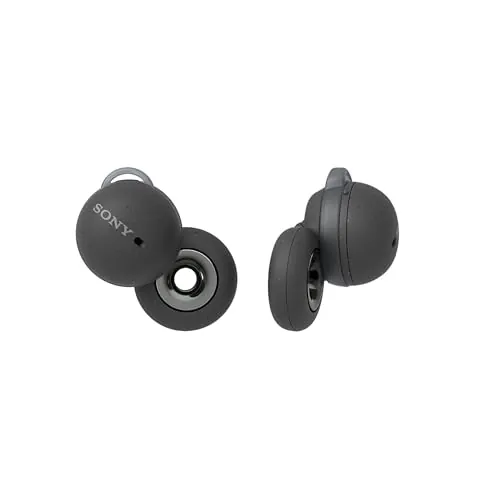
Sony LinkBuds are the portability winner. They score extremely high for portability and are described as ultra-small and light, with compact case measurements provided. If you want earbuds that disappear in a pocket and feel minimal in the ear, LinkBuds are designed for that.
Skullcandy Rail ANC still performs well for portability, but it’s a more conventional in-ear ANC earbud with a larger feature set (ANC mics, sealing tips), which can come with a slightly “bigger” feel versus the LinkBuds concept.
Both models are feature-forward. Rail ANC combines ANC, Stay-Aware mode, app-based EQ and Personal Sound by Mimi, and Tile finding for locating lost buds. It’s a practical bundle for commuting, workouts, and everyday use.
LinkBuds counter with their open-ring concept plus convenience features like Wide Area Tap, adaptive volume control, and multipoint (via firmware update). They also position strongly for calls with Precise Voice Pickup technology. If you want the most “different” feature set and you like the open-ear idea, LinkBuds stand out; if you want ANC + find-my functionality, Rail ANC is the more complete toolkit.
Both products lean on companion apps for getting the best experience. Skullcandy Rail ANC uses the Skullcandy app for Personal Sound by Mimi, EQ tuning, and feature controls. Users often like the ability to save EQ presets, though connectivity frustrations can reduce the “smoothness” of the experience for some.
Sony LinkBuds also have a strong app angle, with reviews mentioning EQ and additional Sony features. App experience scores are similar in the provided data. If you prefer minimal app involvement, LinkBuds’ open design provides awareness without needing a mode toggle, but you may still rely on the app for deeper customization.
Sony LinkBuds are stronger on smart features in the provided scoring, and the product listing emphasizes Alexa built-in, adaptive volume control, and smart interaction features. Reviews also mention app-based options such as EQ and other functions.
Skullcandy Rail ANC also includes smart-style functionality through the app (Personal Sound by Mimi, EQ, Stay-Aware), and some reviews mention voice command behavior. If you care most about ANC plus personalization, Rail is compelling; if you care more about assistant integration and ambient-first smart behaviors, LinkBuds have the edge in this category.
Setup is broadly similar—pairing true wireless earbuds to a phone—yet the friction points differ. Rail ANC can involve extra steps if you want full personalization (app setup and feature configuration) and some users report pairing problems.
LinkBuds may require more physical setup time because fit is crucial; multiple reviews mention experimenting with ring supporters and insertion technique. Both products have the same setup score in the provided data, so the better experience depends on whether you’d rather spend time on app configuration (Rail) or fit dialing-in (LinkBuds).
Both earbuds are positioned as compatible with iPhone and Android, and both are standard Bluetooth earbuds without a headphone jack. Sony LinkBuds score higher for compatibility and list a broad set of compatible devices (smartphones, tablets, desktops, laptops). Multipoint support (via firmware update) also helps when using multiple devices.
Skullcandy Rail ANC lists compatibility with various brands and models and uses an app for customization. If you want the most seamless multi-device routine, the provided scores favor LinkBuds.
Skullcandy Rail ANC has the advantage for audio quality in the provided scoring (81 vs 69). Review summaries frequently praise its sound, with multiple mentions of strong bass and the ability to fine-tune via EQ and Personal Sound by Mimi.
Sony LinkBuds are often described as clear and enjoyable for casual listening, but the open-ring design reduces the seal that typically boosts bass weight and isolation. Several reviews explicitly suggest they are not for “bass-head” listening and can be harder to use in loud environments. If you want immersive sound and the ability to shut out distractions, Rail ANC is the more appropriate pick; if you want balanced casual listening while still hearing the room, LinkBuds fit that niche.
Connectivity is a key separator. Both use Bluetooth 5.2, but the scoring favors Sony LinkBuds (higher connectivity and compatibility scores). LinkBuds also support multipoint connection (available via firmware update), which can be useful if you regularly switch between phone and laptop.
Skullcandy Rail ANC reviews and the aggregated summary mention frequent disconnections and pairing problems, which aligns with its lower connectivity score. If stable day-to-day connections are your top priority, LinkBuds are the safer choice on the provided data.
Skullcandy Rail ANC is clearly stronger on battery: it lists up to 38 hours total (10 hours earbuds + 28 hours case) and includes Rapid Charge (10 minutes for 2 hours of listening). Its battery life score is also high.
Sony LinkBuds list 20 hours total and a quick-charge option (5 minutes for up to 60 minutes). However, both the scoring and review summary highlight battery drain and charging issues as common pain points for LinkBuds. If you need fewer charging interruptions over a work week, Rail ANC is the more battery-oriented option.
On the provided scoring, Skullcandy Rail ANC rates higher for power efficiency than Sony LinkBuds. This lines up with the overall battery-life picture: Rail’s stated total runtime is much higher, and LinkBuds have more battery-drain complaints in the review summary.
Practically, if you want fewer charging cycles and less battery anxiety, Rail ANC is the more power-friendly choice in this comparison.
Using the provided value scores and the feature/performance context, Skullcandy Rail ANC offers stronger value overall. You’re getting ANC, long stated battery life with Rapid Charge, app-driven personalization, and Tile finding, and the Amazon rating is higher.
Sony LinkBuds can still be good value if (and only if) the open-ring design is what you’re specifically shopping for. Their excellent portability and strong connectivity/compatibility scores support that niche, but the weaker battery and reliability picture means they may not feel like the best value for buyers who need an all-purpose “only earbuds” solution.
On scoring, Sony rates higher for brand trust, which may matter to buyers who prioritize long-term ecosystem confidence. However, brand trust doesn’t fully offset product-specific concerns: LinkBuds score low for warranty/support in this dataset and include at least one detailed negative support experience in reviews.
Skullcandy scores slightly lower on brand trust here but includes a clearly stated 1-year USA limited warranty in the listing for Rail ANC. If you’re risk-averse, consider not only brand reputation but also how responsive the model has been in customer reliability feedback and how the warranty process is described.
Customer satisfaction leans toward Skullcandy Rail ANC. It has a higher Amazon star rating (4.1/5) with 3,023 reviews versus Sony LinkBuds at 3.5/5 with 3,865 reviews, and it also scores higher for customer satisfaction in the provided scoring.
Both products have polarized feedback: Rail ANC is praised for sound and value but criticized for connectivity and occasional charging failures; LinkBuds are loved for the open comfort concept but frequently criticized for battery/charging problems and mixed fit/comfort. If you want the “safer average experience,” the numbers favor Rail ANC.
Skullcandy Rail ANC includes a 1-year USA limited warranty in the listing, which provides clear baseline coverage information in the provided data.
For Sony LinkBuds, the provided scoring shows a much lower warranty/support score, and a review describes a frustrating support interaction and being denied an exchange once outside warranty. Since explicit warranty terms aren’t provided in the listing here, the best takeaway is that support experiences appear mixed—so confirm warranty coverage and keep purchase documentation if you choose LinkBuds.
Skullcandy Rail ANC is the better overall pick on the provided data. It scores higher overall and is the more complete “daily driver” thanks to active noise cancelling, stronger audio scoring, and much better battery performance on paper, backed by many reviews praising sound and value.
Sony LinkBuds are still the right choice for a specific type of buyer: someone who wants an open earbud that keeps ambient sound present naturally and prioritizes portability and connectivity over isolation. If you’re often in loud environments or you want one pair to cover everything, Rail ANC makes more sense. If you dislike sealed earbuds and your listening is mostly in quieter places where awareness is a feature, LinkBuds can be the more comfortable and practical experience—provided you’re okay with battery and reliability risks highlighted in reviews and scoring.
Overall winner
Depends on your needs
Based on the provided scoring, Skullcandy Rail ANC rates higher overall (72 vs 62). It scores strongly for audio quality, battery life, and features, plus it offers ANC. Sony LinkBuds make more sense if your priority is an open design for ambient awareness, top-tier portability, and stronger connectivity/compatibility scores.
No. The Sony LinkBuds list noise control as none and rely on an open-ring design that intentionally lets in ambient sound. The Skullcandy Rail ANC is built around adjustable 4-mic active noise cancelling and also includes a Stay-Aware mode for times you want more outside sound.
Skullcandy Rail ANC is the more practical pick for commuting and noisy places because it includes active noise cancelling and is designed to reduce distractions. The Sony LinkBuds are commonly described as not ideal for loud environments due to the open design and limited ability to block noise, even if they can be great for casual listening.
On paper, Skullcandy Rail ANC lists up to 38 hours total (10 hours in the earbuds plus 28 in the case) and includes Rapid Charge (10 minutes for 2 hours). Sony LinkBuds list 20 hours total with a quick-charge option (5 minutes for up to 60 minutes). Reviews for both mention battery/charging concerns, but LinkBuds score notably lower for battery.
Sony LinkBuds are purpose-built for awareness with their open-ring design that keeps ambient sounds present naturally, which many runners and walkers prefer. Skullcandy Rail ANC can also work outdoors thanks to IPX4 and a Stay-Aware mode, but they’re primarily designed to create a more isolated listening experience with ANC.
Scoring and review summaries point to Skullcandy Rail ANC having the edge in audio quality (higher audio score and strong praise for punchy bass and customizable EQ). Sony LinkBuds are often described as good and clear for casual listening, but the open design can limit bass impact because there’s no seal, and they may not get loud enough for certain noisy situations.
Neither model looks like a clear reliability winner based on the provided context. Rail ANC has mixed feedback including charging failures after a month and disconnect/pairing issues, reflected in a modest reliability score. LinkBuds also show mixed reliability, including reports of charging problems and uneven battery drain, and they score lower on reliability overall.
Both are designed for everyday wireless use, but they differ in learning curve. Rail ANC relies on the app for personalization and control settings, and some users report pairing/disconnect frustrations. LinkBuds may take time to fit correctly because of the ring supporters and open design, but they offer convenient controls like Wide Area Tap and are designed to keep you aware without toggling transparency modes.
Considering the provided value scoring and feature/performance context, Skullcandy Rail ANC comes out ahead on value (higher value score) because it bundles ANC, long stated battery life, and customization features that many users praise. Sony LinkBuds can still be good value if you specifically want the open-ring experience and portability, but battery and reliability concerns weigh more heavily here.
Check our rankings and expert guides to find the best electronics products for your goals.