#1 Overall Winner
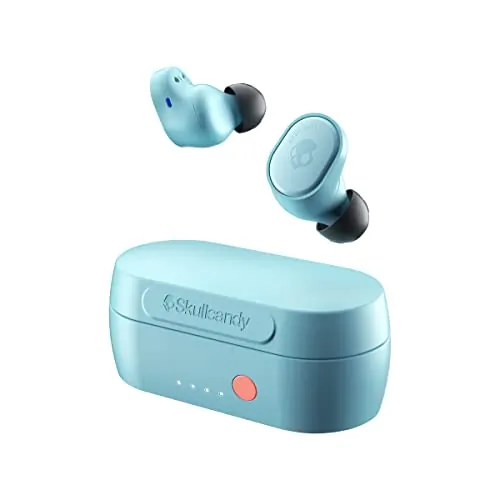
Skullcandy Sesh Evo in-Ear Wireless Earbuds, 24 Hr Battery, Microphone, Works with iPhone Android and Bluetooth Devices - Bleached Blue
- Tile tracking built in for finding misplaced earbuds via the Tile app.
Comparison
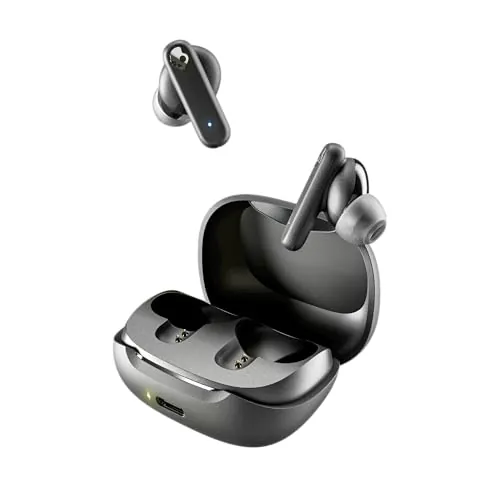
Skullcandy Sesh Evo and Skullcandy Smokin’ Buds are budget true wireless earbuds with noise-isolating in-ear fit, Bluetooth 5.0, and rapid charging. Smokin’ Buds scores higher overall and stands out for stronger audio and longer bud-only listening time, while Sesh Evo differentiates with Tile tracking and a higher IP rating (IP55). Both have mixed reliability/charging feedback, so your risk tolerance matters.
#1 Overall Winner
Contender
Choose Smokin’ Buds if you want the better sound-focused option with longer listening per charge (8 hours in the buds), easy touch controls, and the higher overall score.
Choose Sesh Evo if Tile tracking and a tougher IP55 rating matter, and you prefer a 24-hour total battery spec even if the bud-only runtime is shorter.
Either way: both models have mixed reliability/charging feedback—buy from a seller/return policy you’re comfortable with.
Overall winner
Depends on your needs
| Metric | Skullcandy Sesh Evo | Skullcandy Smokin’ Buds | Winner | Explanation |
|---|---|---|---|---|
| Overall score | 67 | 69 | Smokin’ Buds | Smokin’ Buds scores slightly higher overall in the provided scoring. |
| Sound quality | Good for price (audio score 69) | Stronger (audio score 82) | Smokin’ Buds | Higher audio score and consistent review praise for clear sound and bass. |
| Total battery (spec) | Up to 24 hours (5+19) | Up to 20 hours (8+12) | Sesh Evo | Sesh Evo lists higher total hours; Smokin’ Buds has longer bud-only time. |
| Single-charge listening (spec) | Up to 5 hours in earbuds | Up to 8 hours in earbuds | Smokin’ Buds | Smokin’ Buds is better for longer listening between case top-ups. |
| Water resistance | IP55 | IPX4 | Sesh Evo | IP55 adds dust resistance and higher ingress protection than IPX4. |
| Finding lost earbuds | Tile tracking built in | Not listed | Sesh Evo | Tile feature is a concrete differentiator for recovery if misplaced. |
| Controls | On-ear controls + EQ + assistant | Touch controls + EQ + assistant | Tie | Both cover core controls; preference comes down to button-style vs touch. |
| Connectivity (score + feedback) | Connectivity score 58; disconnection complaints | Connectivity score 61; some Bluetooth complaints | Smokin’ Buds | Smokin’ Buds scores slightly higher, though both have reported issues. |
| Reliability (score + feedback) | Reliability score 49; charging failures mentioned | Reliability score 42; repeated charging/one-bud failures mentioned | Sesh Evo | Neither is strong, but Sesh Evo scores higher for reliability in the dataset. |
| Portability | Portability score 88 | Portability score 88 | Tie | Both rate equally strong for carry and everyday portability. |
For day-to-day listening performance, Smokin’ Buds comes out ahead in the provided scoring (higher performance and audio-quality scores). Reviews frequently describe clear sound with satisfying bass, and several mention good results for calls and video watching.
Sesh Evo still performs well enough for casual use—many buyers cite good sound for the price—but its overall performance is held back by more frequent reports of connection dropouts and charging inconsistencies. If consistent playback and stronger sound is your priority, Smokin’ Buds is the more performance-oriented pick on the available data.
Reliability is a concern for both. Sesh Evo has mixed reports: some owners use them for years, while others report early failures, one earbud stopping, disconnections, and buds no longer taking a charge. Smokin’ Buds has an even weaker reliability profile in the provided scoring, and reviews repeatedly describe a pattern of one earbud failing to charge followed by the other.
If you want the safer reliability pick strictly by score, Sesh Evo has the edge—but neither model earns a strong reliability recommendation from the provided data.
Smokin’ Buds rates higher for usability and setup in the provided scores, and several reviews describe quick Bluetooth connection and simple everyday operation (including tap-to-pause). Sesh Evo is also designed to be straightforward—automatic first-time pairing mode and reconnection to the last device—but user feedback includes some confusion around indicator lights and more frequent troubleshooting for one-bud or connection issues.
If you want the more “set it and forget it” experience, Smokin’ Buds has the better usability profile in the dataset, though both can require occasional attention due to reliability/charging complaints.
Design-wise, Smokin’ Buds rates higher in the provided design score and is often described as comfortable and pocketable, though fit varies by ear. Sesh Evo is more polarizing: some users like the controls and stability, while others find the earbuds bulky or too large for their ear canals.
Both are standard in-ear true wireless designs with a noise-isolating seal. If comfort and a more universally liked shape is the priority, Smokin’ Buds has the better design signal in reviews and scoring, with the caveat that any in-ear earbud can be fit-sensitive.
Neither model stands out as a build-quality leader in the scoring: both sit in the high-50s/low-60s range for build quality, with reviews for each mentioning instances of early failures. Sesh Evo scores slightly higher for build quality than Smokin’ Buds in the provided data, but it also has mixed durability feedback (including reports of breakage and charging issues).
Smokin’ Buds highlights an enclosure made with 50% renewable plastics and recyclable packaging, but long-term charging failures are a repeated theme in reviews. If you’re prioritizing longevity, the data suggests being cautious with either choice.
Durability scores are low for both products, and review summaries include reports of breakage or early failure. Sesh Evo scores higher for durability than Smokin’ Buds in the provided dataset, but it still has notable complaints around charging failures and one-earbud issues.
Smokin’ Buds has particularly low durability scoring and repeated long-term charging/earbud failure stories. If you’re hard on earbuds or plan to use them many hours per day, it’s worth treating either choice as a budget option and prioritizing warranty/returns.
This is a tie in the provided data: both have an equally high portability score. They’re compact, cable-free earbuds with charging cases meant for pockets, bags, commuting, and travel. Reviews also mention using them on the go and keeping them in a purse/pocket.
If portability is your main goal, either option fits the brief; the bigger differentiators are sound tuning, battery breakdown (8 hours vs 5 hours per charge), and the presence of Tile tracking on Sesh Evo.
Both earbuds cover the essentials: media controls, call handling, voice assistant access, noise-isolating in-ear fit, and Rapid Charge. Sesh Evo has two standout feature advantages: Tile tracking (to ring/find misplaced buds) and IP55 water/sweat/dust resistance. It also explicitly highlights solo mode for using either earbud independently.
Smokin’ Buds counters with touch controls and quick access to preset EQ modes (Music/Movie/Podcast). If you’re prone to losing earbuds, Sesh Evo’s tracking is hard to replace; if you want sound presets and longer bud-only runtime, Smokin’ Buds is more attractive.
Sesh Evo has a clear app-related element: Tile functionality requires downloading the Tile app to ring/find earbuds, and its app-experience score is provided. Smokin’ Buds does not list a companion app in the provided data, and its app-related scores are not provided.
If you value an app-enabled “find my earbuds” workflow, Sesh Evo is the only one here with that defined app tie-in. If you prefer to avoid relying on an extra app, Smokin’ Buds may feel simpler—though it won’t offer Tile tracking.
Both products are designed to be quick to start: Sesh Evo notes automatic first-time pairing mode and instant pairing to the last device used, while Smokin’ Buds gets multiple review mentions for easy pairing and fast connection. Setup scoring favors Smokin’ Buds slightly.
The main setup caveat for both is troubleshooting when one earbud fails to connect/charge. If you’re not comfortable with resets and re-pairing steps, you may prefer whichever model feels simpler to you during the first week of ownership.
Both are designed for mainstream phone compatibility via Bluetooth. Sesh Evo explicitly calls out working with iPhone, Android, and Bluetooth devices, and at least one review mentions use with an Android phone, laptop, and desktop. Smokin’ Buds also markets iPhone/Android support and includes voice assistant activation and touch controls.
In the scoring, Sesh Evo rates slightly higher for compatibility. In practice, your best compatibility check is confirming your device supports Bluetooth audio and testing call controls and reconnect behavior during the return window.
Smokin’ Buds is the clearer audio winner on the provided scoring (audio score advantage) and on review sentiment, with many users praising clear sound and bass for music and podcasts. It also provides EQ presets (Music/Movie/Podcast) for quick tone changes without using your phone.
Sesh Evo is frequently described as good-sounding for the price and capable for music, but it lands lower on the audio score and its ownership experience can be affected by connectivity or charging issues. If sound quality is the main reason you’re buying earbuds, Smokin’ Buds is the stronger pick on the available data.
Both models use Bluetooth 5.0, but neither is flawless in real-world feedback. Sesh Evo has a lower connectivity score and aggregated reviews frequently mention disconnections and Bluetooth issues. Smokin’ Buds scores slightly better for connectivity, with multiple reviews noting quick pairing, though some buyers still report Bluetooth problems and one-earbud issues that can look like connectivity trouble.
If you’re sensitive to dropouts, Smokin’ Buds is the better bet by score, but the safest approach for either model is to test thoroughly during the return window on your specific phone/laptop.
On paper, Sesh Evo offers up to 24 hours total battery (5 hours in the earbuds, 19 in the case), while Smokin’ Buds offers up to 20 hours total (8 hours earbuds, 12 in the case). In practical terms, Smokin’ Buds is better for long single sessions away from the case, while Sesh Evo aims for more total time across multiple top-ups.
However, reviews for both products mention charging problems and inconsistent battery behavior. If battery reliability matters more than the spec sheet, pay close attention to early charging performance and keep firmware/reset steps handy.
Both earbuds score strongly for value in the provided scoring and are positioned as budget-friendly true wireless options. Smokin’ Buds has a slight edge on the value score and pairs that with higher audio/performance scoring, which can make it feel like the better “sound-per-dollar” option.
Sesh Evo can still be strong value if you’ll actually use its differentiators (Tile tracking and IP55), since those can prevent annoyance or replacement costs from lost earbuds and expand where you can comfortably use them. The biggest value risk for both is reliability: frequent charging failures can erase savings if replacements are needed.
Both products are from Skullcandy and include a 1-year USA warranty per the provided details. Brand-trust scoring is similar, with Sesh Evo slightly higher. Reviews show a mix of loyalty (repeat buyers and long-term use) and frustration (repeat failures, especially charging problems).
If brand support matters, note that at least one Sesh Evo reviewer reported quick customer service replacement. Beyond that, there isn’t enough provided information to compare support experiences consistently—so your best move is to confirm warranty handling and keep proof of purchase.
Customer satisfaction signals lean toward Smokin’ Buds: it has a higher star rating (4.4 vs 4.0) and a higher customer satisfaction score, with many reviews praising sound, comfort, and value. Sesh Evo has a much larger review count, which can reflect broader real-world experience, but its aggregated feedback includes more frequent complaints about disconnections and charging failures.
In both cases, satisfaction is split by fit and reliability—two of the most common reasons for returns in true wireless earbuds.
This is essentially a tie on provided information. Both Sesh Evo and Smokin’ Buds list a 1-year USA warranty, and both have the same warranty/support score in the dataset. One Sesh Evo review mentions a fast replacement from customer service, but there’s not enough comparable support feedback for Smokin’ Buds to draw a stronger conclusion.
If warranty support is important to you, verify warranty eligibility in your region and keep an eye on early charging behavior so you can act within the return window if needed.
If you’re choosing strictly on overall scoring and sound-forward performance, Skullcandy Smokin’ Buds is the better all-around pick here. It scores higher overall and leads clearly in audio quality, with many reviews describing clear sound and good bass. It also offers longer bud-only runtime, which matters more than total case hours for many people.
Skullcandy Sesh Evo is still a smart buy for the right user: Tile tracking is genuinely useful if you misplace earbuds, and IP55 protection is a meaningful step up for sweat and dust. The biggest limitation for both models is reliability—charging failures and one-earbud issues show up repeatedly. If you’re risk-averse, treat either as a budget purchase and lean on the return policy and 1-year warranty.
Overall winner
Depends on your needs
Based on the provided overall scores, Skullcandy Smokin’ Buds ranks slightly higher overall (69 vs 67). It also scores higher for audio and performance. Sesh Evo remains compelling if you want Tile tracking and a higher IP rating (IP55). In practice, the best pick depends on whether you prioritize sound/battery per charge (Smokin’ Buds) or tracking and tougher resistance (Sesh Evo).
Skullcandy Smokin’ Buds is the stronger option for sound in this comparison. It has a higher audio-quality score and many reviews describe clear sound and good bass for music and podcasts. Sesh Evo is also commonly described as good for the price, but its audio score is lower and its overall strengths lean more toward features like Tile tracking and higher water/dust resistance.
They’re close, but the strengths differ. Sesh Evo lists up to 24 hours total (5 hours in the earbuds + 19 hours in the case). Smokin’ Buds lists up to 20 hours total (8 hours earbuds + 12 hours case), which can be better for longer single-session listening. Reviews for both mention mixed experiences, including charging problems.
Skullcandy Sesh Evo has the higher protection rating at IP55, and it’s described as water, sweat, and dust resistant. Skullcandy Smokin’ Buds is rated IPX4, which is intended for sweat and water exposure like light rain. If you expect sweat plus dust exposure (outdoors/gym bag), Sesh Evo has the edge on paper.
On scores, Smokin’ Buds rates higher for usability and setup, and reviews often mention quick pairing and simple controls. Sesh Evo also aims for simplicity (first-time pairing mode and reconnecting to the last device), but some users report confusion around indicator lights and occasional troubleshooting. Either way, both are designed for basic, everyday phone use.
Yes. Both products are positioned as compatible with iPhone and Android phones and use Bluetooth for connectivity. Sesh Evo specifically notes it works with iPhone, Android, and Bluetooth devices, and reviews mention use with Android phones and computers. Smokin’ Buds also markets iPhone/Android support and includes touch controls plus voice assistant activation.
Neither model is a clear winner for reliability based on the provided data. Sesh Evo has mixed durability and reliability feedback, including reports of one earbud failing, disconnections, and charging problems. Smokin’ Buds also has repeated complaints about earbuds failing to charge or one side dying, reflected in very low reliability/durability scores. If reliability is your top priority, review the return/warranty terms carefully.
Both include built-in microphones, and many users report using them for calls. For Smokin’ Buds, reviews specifically mention phone/Zoom calls working well. For Sesh Evo, at least one review notes mic quality concerns (voice not coming through clearly), while others focus more on music listening. If calls are your main use, Smokin’ Buds has stronger call-oriented review mentions.
Both score strongly for value, and both are positioned as affordable true wireless earbuds. Smokin’ Buds edges value slightly in the provided scoring, helped by higher sound/performance scores. Sesh Evo can still be the better value if you specifically want Tile tracking, IP55 resistance, and the 24-hour total battery spec. With either model, factor in the mixed reliability/charging feedback when judging value.
Check our rankings and expert guides to find the best electronics products for your goals.