#1 Overall Winner
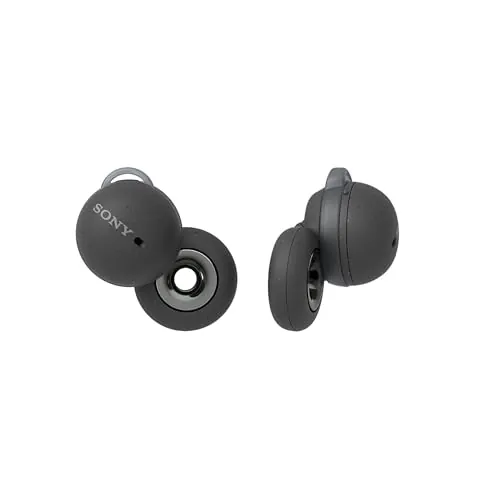
Sony LinkBuds Truly Wireless Earbud Headphones (Open-Ring, Gray)
- Open-ring design that keeps you aware of ambient sound while listening.
Comparison
The Sony LinkBuds and Sony MDRE9LP/BLK target very different buyers: LinkBuds focuses on true wireless convenience and an open-ring design for ambient awareness, while MDRE9LP/BLK is a simple, budget wired earbud. On the provided scores and Amazon satisfaction signals, MDRE9LP/BLK leads overall , but LinkBuds is the more feature-rich choice if you specifically want open-ear listening and smart controls.
#1 Overall Winner
Contender
Choose Sony MDRE9LP/BLK if you want a cheap, plug-and-play wired earbud with higher overall satisfaction and no charging/pairing to manage.
Choose Sony LinkBuds if you want true wireless earbuds designed for hearing your surroundings, plus extra features (app controls, voice assistant support, and multipoint via update), and you’re comfortable with more mixed battery and reliability feedback.
Overall winner
Depends on your needs
| Metric | Sony LinkBuds (Open-Ring) | Sony MDRE9LP/BLK | Winner | Explanation |
|---|---|---|---|---|
| Overall score | 62 | 72 | MDRE9LP/BLK | Higher overall score in the provided scoring data. |
| Design approach | Open-ring, ambient-sound-first | Traditional wired earbud | Depends | LinkBuds is specialized for awareness; MDR-E9LP is conventional and simple. |
| Connectivity | Bluetooth 5.2; multipoint via firmware update | 3.5 mm wired | Depends | Wireless convenience vs guaranteed plug-in connection (if you have a jack/adapter). |
| Features | Alexa, app features, Wide Area Tap, adaptive volume | Basic listening | LinkBuds | Feature score is much higher for LinkBuds and product details list multiple extras. |
| Portability | Very high (charging case, no cable) | Very light but has cable | LinkBuds | Both score high, but true wireless reduces cable management and boosts carry convenience. |
| Battery/charging | Up to 20 hours claim; mixed battery/charging feedback | No battery required | MDRE9LP/BLK | Wired avoids battery aging, drain, and case charging issues altogether. |
| Customer satisfaction | 3.5/5 from 3,865 reviews | 4.2/5 from 10,858 reviews | MDRE9LP/BLK | Higher average rating and a substantially larger review base. |
| Reliability trend | Mixed; low reliability score | Mixed, but higher reliability score | MDRE9LP/BLK | Scoring and review summary point to fewer recurring failure concerns. |
| Best use environments | Quiet-to-moderate environments where awareness matters | General basic listening with a wired source | Depends | Open design can struggle with loud noise; wired suits simple setups and backups. |
For everyday listening performance, the two products prioritize different outcomes. Sony LinkBuds are designed to blend your audio with real-world sound via the open-ring structure, which can be great for spoken word and casual listening where you still want to hear your surroundings. Reviews, however, point out limitations in louder environments, where the open design and mixed volume feedback can make it harder to stay immersed.
Sony MDRE9LP/BLK is a straightforward wired earbud that many buyers find “good enough” for music and podcasts, but performance impressions are inconsistent—some describe clear sound, others say it’s tinny or light on bass. If your definition of performance is feature-driven listening while staying aware, LinkBuds fits better; if it’s basic listening that just works, MDRE9LP/BLK tends to satisfy more consistently in the provided data.

Reliability is one of the clearest separators in the provided data. Sony LinkBuds has a low reliability score and review summaries mention charging problems and inconsistent battery behavior, with some users calling units unusable over time.
Sony MDRE9LP/BLK has mixed durability feedback too, but its reliability score is higher and the much larger review base skews more positive overall. If you’re trying to minimize the chance of battery/charging-related failures, the wired model is the safer bet.
MDRE9LP/BLK is typically easier to use because it’s wired: no Bluetooth pairing, no charging case, and no app requirements. The scoring data also reflects this with a very high setup score and higher usability score than LinkBuds.
LinkBuds can be very convenient day to day once fitted and paired, especially with touch/gesture controls and multipoint (via update). However, usability is more dependent on getting the fit right and having stable battery/charging behavior—both of which receive mixed feedback in the provided review summary.
Sony LinkBuds is the more distinctive design, using an open-ring earpiece shape intended to keep the ear open to ambient sound. It also scores very strongly in design and portability, and reviews frequently highlight comfort and “less claustrophobic” listening versus sealed in-ear buds.
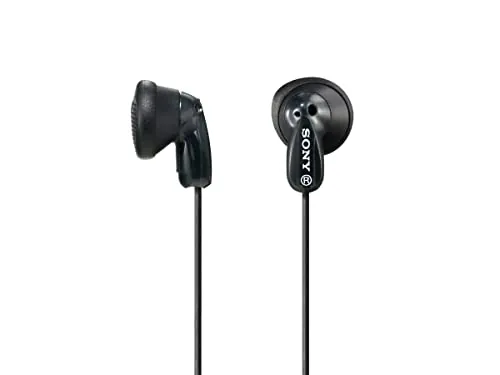
Sony MDRE9LP/BLK uses a classic rounded-tip earbud design with a thin cable. Many users appreciate it for comfort and low weight, but fit feedback varies and it lacks the specialized ambient-awareness engineering of the LinkBuds.
Both products receive mixed build-related signals in the provided data. LinkBuds has a midrange build quality score and customer feedback includes reliability concerns tied to charging and battery behavior over time. MDRE9LP/BLK also has a modest build quality score, and its reviews split between users who say they last a long time and users who report early breakage.
One practical difference: the wired model has fewer battery-related failure points, while LinkBuds adds charging contacts and a case that can create additional points of frustration if charging becomes inconsistent.
Durability feedback is mixed for both. MDRE9LP/BLK includes reports ranging from long-term repeat buying to breakage after a short time. LinkBuds also has mixed long-term feedback, with particular concerns around charging behavior and battery consistency.
If durability to you means “survives daily handling without charging issues,” the wired model avoids battery degradation and contact-related wear. If you need sweat resistance, LinkBuds has an advantage with its listed IPX4 rating (no equivalent rating is provided for MDRE9LP/BLK).
Both are highly portable, but in different ways. Sony LinkBuds offers true wireless portability with a small charging case and no cable management, reflected in a very high portability score. Sony MDRE9LP/BLK is extremely light and easy to pocket, but the cable can snag and tangle.
If you want the least friction while moving around the house, commuting, or exercising, the LinkBuds format tends to feel more “carry and go.” If you want a tiny, cheap backup you can replace easily, the MDR-E9LP is compelling.
Sony LinkBuds is the clear feature leader. The product details list Alexa built-in, Wide Area Tap controls, adaptive volume control, and multipoint connection (available via firmware update). Review content also references app features like EQ adjustments and behavior-based audio pausing.
Sony MDRE9LP/BLK is intentionally minimal: a wired earbud with silicone/foam comfort elements mentioned in reviews and a durable cord. If you want control options, firmware/app customization, and device switching, LinkBuds is the more capable option. If you want “no menus, no pairing,” the wired MDR-E9LP wins on simplicity.
Sony LinkBuds is the only product here with a meaningful app experience in the provided data, including an app experience score and multiple review mentions of EQ and feature controls. Some users also mention needing multiple apps, which may be a negative for those who want a minimal setup.
Sony MDRE9LP/BLK has no app component, which can be a benefit if you prefer to avoid accounts, updates, and app-based controls.
Sony LinkBuds includes smart/connected features such as Alexa built-in (as listed) and app-driven behavior and controls referenced in reviews. Sony MDRE9LP/BLK has no smart features in the provided data.
Sony MDRE9LP/BLK is simplest: plug into a 3.5 mm jack (or use an adapter) and you’re ready. This aligns with its very high setup score.
Sony LinkBuds requires Bluetooth pairing and may involve firmware updates to enable features like multipoint. Setup can still be straightforward, but it’s inherently more involved than a wired earbud.
Sony LinkBuds explicitly states Bluetooth compatibility with iPhone and Android, and it also lists compatibility with smartphones, tablets, desktops, and laptops. Sony MDRE9LP/BLK relies on a 3.5 mm jack and lists compatible devices as portable media players; many phone users will need a dongle/adapter.
If you move across modern devices without worrying about ports, LinkBuds is easier. If your devices have a headphone jack (or you prefer a wired connection for a PC/speaker), MDRE9LP/BLK is straightforward.
Neither product is positioned as a noise-cancelling, isolating earbud, so audio performance is influenced by your environment. Sony LinkBuds gets generally positive sound comments for casual use and clarity in reviews, but the open-ring structure can reduce perceived bass impact and makes it harder to overpower outside noise. Customers also disagree about volume performance.
Sony MDRE9LP/BLK has similarly mixed sound feedback: many buyers find it good for the price and clear for podcasts, while others describe it as tinny with weak bass. If you want more tuning options, LinkBuds has the advantage because reviews and product positioning reference app EQ and sound settings.
Sony LinkBuds wins on modern connectivity: Bluetooth 5.2, a stated range of 32.81 feet, and multipoint connection (available via firmware update). Reviews do note that wireless range can vary depending on the connected device, with some users reporting stuttering in certain setups.
Sony MDRE9LP/BLK uses a 3.5 mm headphone jack and a 3.94 ft cord. This can be more stable than Bluetooth in many cases, but only if your device supports a headphone jack (or you’re willing to use an adapter). Connectivity choice here is mainly about wireless convenience vs universal wired simplicity.
Sony LinkBuds lists up to 20 hours of total battery life and a 5-minute quick charge for up to 60 minutes of play time. However, the aggregated review overview includes recurring complaints about fast drain and charging issues, which can undermine the on-paper advantage for some buyers.
Sony MDRE9LP/BLK is wired and requires no charging, so there’s no runtime anxiety—though you do give up the freedom of true wireless use.
Sony MDRE9LP/BLK scores much higher for power efficiency because it doesn’t need its own battery—power draw is minimal and there’s no charging case overhead. Sony LinkBuds has to manage a rechargeable battery and case charging, and user feedback includes battery drain concerns, which can affect perceived efficiency.
Sony MDRE9LP/BLK offers stronger overall value in the provided data, supported by a much higher value score and broader customer satisfaction. The value isn’t only about price—it’s also about getting a simple product that meets expectations for many buyers with minimal setup and fewer battery-related worries.
Sony LinkBuds can still be good value for the right person because you’re paying for a specialized design (open-ring awareness) and a richer feature set (app controls, voice assistant support, multipoint via update). For buyers who will use those features daily, the extra complexity may be justified.
Both products come from Sony, and both have solid brand trust scores in the provided data. MDRE9LP/BLK scores higher on brand trust and has a long-running “repeat purchase” theme in reviews, suggesting buyers see it as a dependable staple.
LinkBuds still benefits from Sony’s ecosystem and app features, but the low warranty/support score and some negative support experiences in reviews may impact confidence for risk-averse shoppers.
Customer satisfaction favors Sony MDRE9LP/BLK. It has a higher Amazon star rating (4.2 vs 3.5) and a much larger review count, and its satisfaction score is notably stronger. Review summaries emphasize comfort and reliability for many buyers, though sound and durability remain mixed.
Sony LinkBuds has a sizeable review base too, but feedback is more polarized: many people love the open-ring comfort and awareness, while others cite fit issues, battery drain, charging problems, and inconsistent reliability.
Neither product has detailed warranty terms provided here, so the comparison relies on the provided warranty/support scores and review content. Sony LinkBuds has a lower warranty/support score and at least one review describes an unsatisfying support experience around exchanges and warranty timing. Sony MDRE9LP/BLK scores slightly higher, but still modest, and there’s no explicit warranty detail in the data.
For most shoppers comparing these two, the Sony MDRE9LP/BLK (MDR-E9LP) is the better overall pick in the provided data: it scores higher overall, has stronger value and customer satisfaction signals, and keeps ownership simple (no pairing or charging routines). It’s especially sensible as a low-cost everyday or backup earbud—provided you have a 3.5 mm jack or adapter.
The Sony LinkBuds remains the better choice for a specific type of buyer: someone who wants open-ear awareness with true wireless convenience and a richer feature set. If that design matches your lifestyle, it can be a great fit, but you should go in aware of the more mixed battery and reliability feedback compared with the wired alternative.
Overall winner
Depends on your needs
Based on the provided scoring, Sony MDRE9LP/BLK has the higher overall score (72 vs 62) and stronger customer satisfaction signals (higher rating and a much larger review count). Sony LinkBuds can still be the better pick if you specifically want true wireless convenience and an open-ring design that keeps ambient sound present.
Sony LinkBuds is purpose-built for situational awareness with its open-ring design, designed to blend outside sound with your audio. The MDRE9LP/BLK is also a non-noise-cancelling earbud style and some users report being able to hear the world around them, but it does not have the same open-ring design concept.
No. Both products list Noise Control: None in the provided specifications. That makes them better suited to quieter environments or users who dislike isolation, but it can also mean speech and music are harder to hear clearly in loud places compared with isolating or noise-cancelling options.
Sony LinkBuds clearly offers more features: Wide Area Tap controls, adaptive volume control, Alexa built-in, and multipoint connection (noted as available via firmware update). The MDRE9LP/BLK is a straightforward wired earbud focused on basic listening with minimal extra functionality.
If you want the simplest experience, Sony MDRE9LP/BLK is typically easiest because it’s wired: plug it into a 3.5 mm headphone jack (or an adapter) and play. Sony LinkBuds adds wireless pairing and app/firmware-related features, which can bring convenience, but may also add setup steps and troubleshooting if anything goes wrong.
By score and review summary, Sony MDRE9LP/BLK trends more reliable overall (higher reliability score and a very large pool of customer reviews). Sony LinkBuds has more mixed reliability feedback, including repeated mentions of battery drain and charging problems in the aggregated review overview and individual reviews.
Sony LinkBuds highlights calling features such as Precise Voice Pickup, and multiple reviews mention clear calls. The MDRE9LP/BLK product data does not emphasize microphone/call features to the same extent (and it’s primarily described as a lightweight wired earbud), so the LinkBuds is the safer choice if calls are a priority.
Sony LinkBuds explicitly lists compatibility with iPhone and Android via Bluetooth. Sony MDRE9LP/BLK uses a 3.5 mm headphone jack, so it can work well with devices that still include one, but many modern phones need a separate adapter. Checking your phone’s port situation is key before buying.
The LinkBuds specs list up to 20 hours of battery life and quick charging (5 minutes for up to 60 minutes). However, the aggregated review overview also includes reports of fast drain and charging issues. In other words, the feature claim is strong on paper, but real-world experiences appear mixed.
Check our rankings and expert guides to find the best electronics products for your goals.