#1 Overall Winner
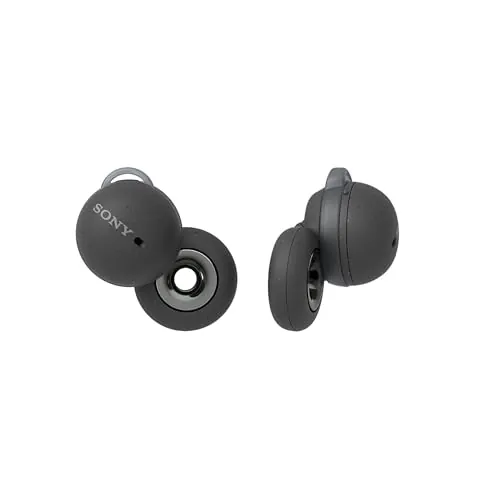
Sony LinkBuds Truly Wireless Earbud Headphones (LinkBuds, Gray)
- Open-ring design that keeps you aware of ambient sound while listening.
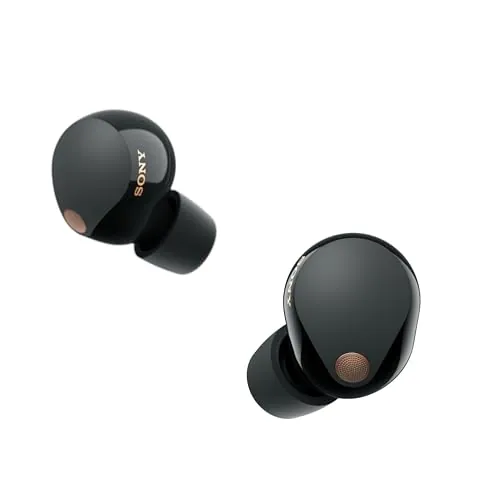
Comparison
The Sony LinkBuds and Sony WF-1000XM5 target very different listening styles: LinkBuds prioritize ambient awareness with an open-ring design, while the XM5 focuses on immersive listening with active noise cancellation. On scoring, the WF-1000XM5 comes out ahead overall thanks to stronger performance, audio, and battery results. LinkBuds remain a compelling choice if staying aware of your surroundings is the main goal.
#1 Overall Winner
Contender
Choose Sony WF-1000XM5 if you want a more traditional premium earbud experience: active noise cancellation, stronger audio performance, and longer stated playback with case.
Choose Sony LinkBuds if your priority is ambient awareness and a more open, breathable feel for casual listening, walking, or situations where you need to hear people and surroundings.
Both: fit and long-term reliability are mixed in customer feedback, so buy with a good return window and test early.
Overall winner
Depends on your needs
| Metric | Sony LinkBuds (Open-Ring) | Sony WF-1000XM5 | Winner | Explanation |
|---|---|---|---|---|
| Overall score | 62 | 72 | WF-1000XM5 | Higher overall score in the provided scoring data. |
| Noise control | None listed | Active Noise Cancellation | WF-1000XM5 | XM5 is built for isolation; LinkBuds are designed for ambient awareness. |
| Design approach | Open-ring, in-ear placement | Sealed in-ear buds | Depends | Choose LinkBuds for awareness; choose XM5 for immersion and isolation. |
| Audio quality score | 69 | 84 | WF-1000XM5 | Higher audio scoring, aligned with premium sound/ANC positioning. |
| Feature score | 83 | 88 | WF-1000XM5 | Both are feature-rich; XM5 scores slightly higher. |
| Connectivity | Bluetooth 5.2; multipoint via firmware | Bluetooth 5.3; multipoint listed | WF-1000XM5 | Newer Bluetooth version and slightly higher connectivity score. |
| Battery (stated) | 20 hours; 5 min quick charge → 60 min | Up to 8 hours; 24 with case; 3 min → 1 hour | WF-1000XM5 | Longer stated total with case and higher battery scoring, though both have mixed battery feedback. |
| Portability | Portability score 91 | Portability score 91 | Tie | Both rate extremely well for portability in the provided scoring. |
| Customer satisfaction (Amazon) | 3.5/5 from 3,865 reviews | 3.8/5 from 5,923 reviews | WF-1000XM5 | XM5 has a slightly higher star rating and more reviews in the provided data. |
| Reliability score | 43 | 46 | Tie (slight XM5) | Both are weak here; XM5 scores slightly higher but still indicates concerns. |
In real-world earbud performance, the biggest difference is that the WF-1000XM5 is designed for immersive listening and external noise reduction, while the LinkBuds are designed to keep outside sound present. That design choice heavily affects how they perform in typical situations like commuting, working in shared spaces, or listening outdoors.
Scoring reflects this split: WF-1000XM5 leads on overall performance (82 vs 68) and audio quality (84 vs 69). LinkBuds can feel more natural for casual listening and conversations because you don’t have to rely on transparency modes, but they are less suited to loud environments since they don’t isolate and customer feedback mentions limits in noisy settings.
Neither product is a “speed” device in the traditional sense, but responsiveness can show up as control lag, reconnection speed, and general snappiness. The WF-1000XM5 scores higher for speed (73 vs 64), which aligns with its newer processing platform positioning in the product description. LinkBuds still perform well for everyday use, but the scoring suggests XM5 is the more consistently responsive option.
Reliability is a concern for both products in the provided data. The LinkBuds have a low reliability score (43) and customer feedback includes battery drain, charging issues, and some users reporting units that became unusable. The WF-1000XM5 scores only slightly higher (46), and the aggregated review summary mentions multiple reports of earbuds stopping completely.
If you’re risk-averse, prioritize a strong return policy, test charging and pairing thoroughly during the return window, and pay attention to how stable the fit and charging behavior are for your routine.
Usability is close, with an advantage to WF-1000XM5 (74 vs 67). LinkBuds reviews suggest there can be a learning curve to getting insertion and stability right with the ring supporters, and comfort varies by ear shape. WF-1000XM5 uses a more conventional in-ear approach, but reviews still report mixed fit and comfort.
App complexity is mentioned in reviews (notably for XM5) as a potential drawback for buyers who want simple “set and forget” operation. In both cases, the best usability outcome depends on getting a stable fit and choosing the settings you actually need.
Design is where the two products diverge most. LinkBuds use an open-ring earpiece shape intended to avoid the sealed feeling of typical in-ear tips, which some reviewers find more breathable and less claustrophobic. WF-1000XM5 uses a more traditional in-ear bud shape built to create a seal for isolation and effective ANC.
Scores reflect the strengths: LinkBuds rate very strongly for design (82 vs 78) because the concept delivers a distinct use case. If you dislike in-ear sealing tips, LinkBuds may fit your preferences better. If you want isolation and ANC performance, XM5’s design is inherently better suited.
Based on scoring, WF-1000XM5 rates higher for build quality (77 vs 61). Both list plastic enclosure material, but the XM5 positions itself as a premium product with an improved texture/feel in the description. LinkBuds are ultra-small and lightweight, but customer feedback is mixed overall and the scoring suggests a more average hardware impression.
Durability scoring is relatively close, with a small advantage to WF-1000XM5 (58 vs 54). Both are water resistant in the provided specs, and LinkBuds explicitly list IPX4 protection against sweat and splashes. Since customer feedback for both includes battery/charging complaints, long-term durability may be influenced as much by battery health as by physical wear.
It’s effectively a tie: both have a portability score of 91, and both come with compact charging cases. LinkBuds are positioned as ultra-small and light, while WF-1000XM5 list a very low item weight in the specs. If you want the least “in-ear plugged” feeling while still being ultra-portable, LinkBuds’ design may feel more convenient for frequent in/out use.
Both models are feature-rich for true wireless earbuds, but they emphasize different things. The LinkBuds highlight interaction and awareness features like Wide Area Tap, Adaptive Volume Control, and a design that keeps you connected to ambient sound. The WF-1000XM5 adds premium listening features centered on active noise cancellation, noise-isolating tips, and Sony’s newer processing platform as described in the product copy.
Scores are high for both (LinkBuds 83; WF-1000XM5 88). If you want “more features for immersive listening,” XM5 has the edge. If you want “features that support open, always-aware use,” LinkBuds are the more purpose-built option.
Both products rely on Sony’s companion app for tuning and features (as reflected in the scoring and review content). LinkBuds score higher for app experience (74 vs 67). For WF-1000XM5 specifically, reviews mention the app can feel complicated for users who don’t want to tinker, even if it’s powerful for EQ and feature control.
If you like customizing sound and behaviors, either can work well. If you prefer minimal setup and minimal configuration, the app complexity noted in reviews is worth considering—especially on the premium XM5.
Both earbuds include voice assistant support (Alexa is explicitly mentioned in both titles), and both score well for smart features. LinkBuds score a bit higher (76 vs 72), helped by their awareness-first concept and adaptive behaviors (like adaptive volume). WF-1000XM5 leans more toward smart features that support isolation and premium listening (ANC and related processing), but some users may not use every advanced option.
Setup scores are close (WF-1000XM5 at 70 vs LinkBuds at 68). In practice, both are Bluetooth earbuds with app-assisted configuration. The more meaningful setup difference tends to be fit setup: LinkBuds may require experimenting with ring supporter sizes and insertion technique, while WF-1000XM5’s performance (especially ANC and bass) can depend on getting a good seal with the included tip sizes.
Compatibility is strong on both. LinkBuds explicitly list compatibility with smartphones, tablets, desktops, and laptops, and both product titles reference iPhone/Android compatibility (LinkBuds explicitly) and Bluetooth-enabled devices (XM5). Scores are close: LinkBuds slightly higher (80 vs 78).
One practical difference is that XM5 is described as more “premium” and feature-dense, which can mean you’ll rely more on Sony’s app to get the most out of it—something some reviewers find complex.
The WF-1000XM5 leads on audio quality by score (84 vs 69) and is designed for detailed, immersive playback with isolation and ANC support. It also lists a wide frequency range in its specifications, and reviews include strong praise for bass and overall sound.
The LinkBuds can deliver good clarity for casual listening, and some reviews praise their balanced sound—especially after EQ adjustments. However, the open-ring design won’t create the same seal as an in-ear tip, which can reduce perceived bass and make volume feel less effective in noisy environments. In short: XM5 for “focus and fidelity,” LinkBuds for “open, aware listening.”
Connectivity is strong on both, with a slight edge to WF-1000XM5. LinkBuds list Bluetooth 5.2 and a stated range of 32.81 feet, plus multipoint available via firmware update. WF-1000XM5 list Bluetooth 5.3 and a 10-meter range, plus multipoint listed.
Scores are close (LinkBuds 78; XM5 82). Reviews for both include some reports of connection quirks. If you frequently switch between devices, multipoint support on both can be useful, but it’s worth confirming firmware status (especially for LinkBuds).
Battery is one of the clearer separators in scoring: WF-1000XM5 rates higher (76 vs 52). Specs also favor the XM5 for single-session listening: it states up to 8 hours playback (24 with case), while LinkBuds state 20 hours battery life and reviews reference roughly 4–5 hours per charge for some users.
Both support quick charging (LinkBuds: 5 minutes for up to 60 minutes; XM5: 3 minutes for up to 1 hour). Importantly, both products have mixed customer feedback about battery and charging consistency, so real-world results may vary.
Power efficiency favors WF-1000XM5 in scoring (74 vs 55). This lines up with its stronger battery life score and stated runtime. LinkBuds can still be convenient with quick charging and case battery, but customer feedback mentions battery drain and charging issues, which can undermine efficiency in day-to-day use.
Value scores are the same in the provided data (61 vs 61), which is notable given the very different prices. That suggests the WF-1000XM5 is expected to justify its cost through stronger audio performance, ANC, and battery scoring, while the LinkBuds justify themselves through their unique open-ring design, portability, and feature set at a much lower price.
Because both have reliability concerns in reviews and scoring, value will depend heavily on whether you actually need ANC and immersive audio (XM5) or you specifically want an always-aware listening style (LinkBuds).
Both products are Sony, and brand trust scores are strong overall, with WF-1000XM5 higher (83 vs 74). That said, customer feedback for both includes reliability complaints, and LinkBuds’ warranty/support score is low in the provided data. If after-sales support is a deciding factor, buy from a seller with clear return policies and keep purchase documentation.
Amazon ratings are mixed for both. LinkBuds show 3.5/5 from 3,865 reviews, and WF-1000XM5 show 3.8/5 from 5,923 reviews. Review summaries for both highlight a split: many users praise sound/features, but there are recurring complaints about fit, battery/charging behavior, and reliability.
If you’re deciding based on reviews, focus on patterns that match your use case: LinkBuds feedback often revolves around comfort/awareness versus volume in noise, while XM5 feedback often revolves around fit/seal affecting ANC and the risk of failures over time.
Warranty/support data is limited and uneven in the provided scoring. LinkBuds have a low warranty support score and a detailed negative support interaction appears in the reviews. WF-1000XM5’s warranty support score is not provided (0), so a direct comparison isn’t possible from the scoring alone. Given reliability concerns on both, prioritize retailer return windows and any optional protection you’re comfortable with.
If you want the best all-around traditional earbud experience from these two, the Sony WF-1000XM5 is the better overall option on the provided scoring, with advantages in audio performance, ANC capability, and battery results. It’s the more logical choice for commuting, travel, and focused listening where isolation matters.
The Sony LinkBuds still make sense if you specifically want an open listening style that keeps you connected to your environment—something the XM5’s sealed design and ANC approach can’t replicate. The key caution for both models is consistency: reviews and scores point to reliability and battery/charging complaints. Whichever you pick, fit testing and early troubleshooting within the return window are essential to getting a good outcome.
Overall winner
Depends on your needs
Based on the provided scoring, the Sony WF-1000XM5 rates higher overall (72 vs 62). It leads in performance and audio-oriented categories, and it adds active noise cancellation. The Sony LinkBuds can still be the better pick if you specifically want an open-ring design that keeps you aware of your surroundings during everyday listening.
The Sony WF-1000XM5 is the clear choice for commuting and travel because it includes active noise cancellation, plus Noise Isolation Earbud Tips and dual feedback microphones. The Sony LinkBuds list no noise control and are designed to let ambient sound in, which is useful for awareness but typically not ideal for loud trains, buses, or offices.
By the provided scores, WF-1000XM5 leads in audio quality (84 vs 69) and performance overall. LinkBuds reviews often like the clarity for casual use, but the open-ring design doesn’t create a seal, which can limit bass impact in many ears. If you want more immersive listening, the XM5’s in-ear/ANC approach is the safer bet.
The Sony LinkBuds are purpose-built for this. Their open-ring design is meant to blend music and calls with natural ambient sound, helping you hear what’s happening around you. The WF-1000XM5 are designed to block outside noise with isolation and ANC, so they’re typically the opposite kind of listening experience.
Both list long total battery with the case, but they approach it differently. LinkBuds state 20 hours battery life and a 5-minute quick charge for up to 60 minutes. WF-1000XM5 state up to 8 hours listening time and 24 hours with case, plus a 3-minute quick charge for up to 1 hour. Reviews for both mention some charging/battery issues.
Scores suggest a modest advantage for WF-1000XM5 in usability (74 vs 67), but it’s not one-sided. LinkBuds offer practical controls like Wide Area Tap and adaptive volume behavior, while XM5 uses touch controls and has a very feature-rich app experience. Several reviews mention Sony’s app can feel complicated for people who don’t want to tinker.
Yes—both show mixed reliability signals in the provided data. LinkBuds have a low reliability score and customer feedback mentions fast drain and charging issues, plus some “unusable” reports. WF-1000XM5 also has a low reliability score, with the review summary noting that multiple customers reported the earbuds stopped working completely. If reliability is a top priority, consider buying from a retailer with straightforward returns.
Both can work for fitness use, since both list water resistance (LinkBuds explicitly IPX4). The decision is mostly about environment: LinkBuds can be better if you want awareness outdoors, while WF-1000XM5 can be better if you want to reduce gym noise with ANC. Fit is a key variable for both models based on the mixed fit feedback.
Both list multipoint connection, though on LinkBuds it’s noted as available via a firmware update. WF-1000XM5 list Bluetooth 5.3, while LinkBuds list Bluetooth 5.2. In practice, stable multipoint performance can still depend on your devices and updates, and reviews for both models mention some connectivity quirks.
Check our rankings and expert guides to find the best electronics products for your goals.